A climbing shoe should grip the rock like a second skin, hold your foot firm on the smallest edge, and let you feel exactly what your toes are standing on. The worst climbing shoes of 2026 fail at it in ways that leave a climber slipping off footholds, nursing sore toes, or watching the rubber peel away after a month. They slide on small edges, pinch in all the wrong places, or fall apart long before the rubber should be worn. Climbers buy them hoping for a shoe that sticks to the wall and stays comfortable through a session. What they get is a shoe that slips, a shoe that hurts, or a shoe that comes apart at the seams.
Rubber That Slides on Small Holds
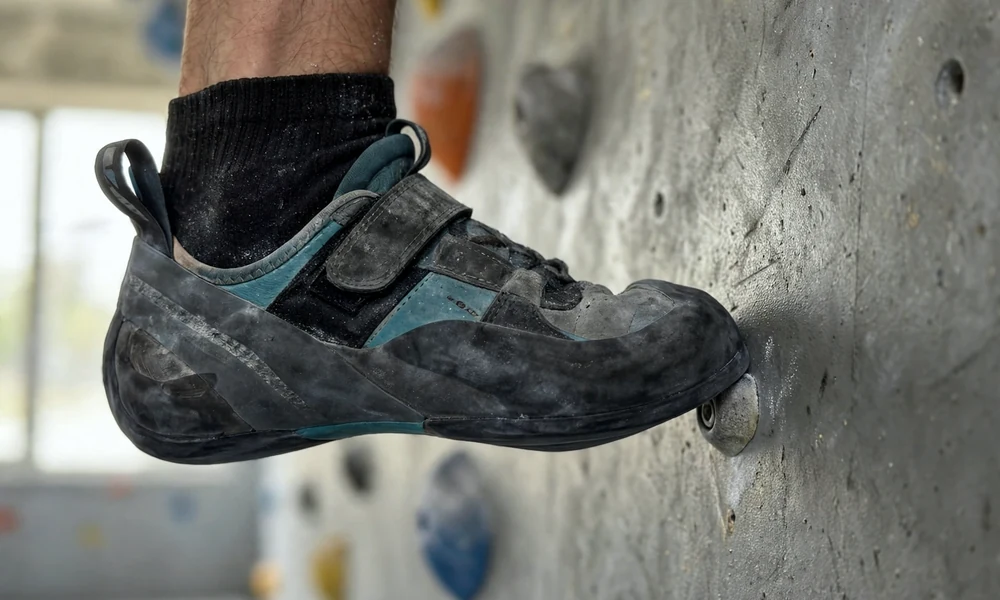
The rubber on a climbing shoe is the whole point of it, and the worst rubber slides when it matters most. A shoe with hard, cheap rubber will not stick to a small edge or a smooth slab, so the foot skates off the hold just as the climber commits their weight to it. The problem is worst on polished indoor holds, where a good shoe smears and grips and a bad one slides, and on tiny edges outdoors, where the rubber needs to be soft enough to mould around the hold.
Look for a shoe with soft, sticky rubber from a known maker, and check the sole before you buy: it should feel tacky to the touch, not hard and shiny, and it should be thick enough to last but soft enough to grip. Keep the rubber clean, because chalk dust and dirt kill grip, and brush the soles before a hard climb. A shoe with good rubber sticks to a small edge and stays there, and a shoe with hard rubber will slide on the same hold. Test the shoe on a slab in the shop if you can, because a shoe that slides on a gentle slope will slide everywhere else too.
Fit That Pinches or Slips
A climbing shoe fits tighter than any other shoe, and the worst ones get the fit wrong in both directions at once. A shoe that is too tight pinches the toes, curls them under, and leaves the climber in pain within ten minutes, while a shoe that is too loose lets the foot slide forward, so the toes never reach the front of the shoe and the climber cannot stand on a small edge. The worst shoes are the ones that fit badly in a way that cannot be fixed: a heel that bags and slips, a toe box that crushes the big toe, or an arch that digs in with every step. A shoe that does not fit is a shoe that hurts, and a shoe that hurts is a shoe that will be left in the bag.
Try the shoe on properly before you buy, standing on a small edge if the shop has one, and feel whether your toes reach the front without being crushed. A good climbing shoe feels tight but not painful, with the heel cupped firmly and no empty space at the back. The shoe will stretch a little with wear, so a snug fit that feels firm on day one is right, while a fit that hurts on day one will hurt more later. Walk around the shop for ten minutes, because a shoe that pinches in the shop will pinch worse on the wall. A shoe that fits is a shoe you forget you are wearing, and a shoe that does not is a shoe you will always be thinking about.
Toes That Go Numb
A climbing shoe curls the toes to put power into the front of the foot, and the worst shoes curl them too far. A shoe with an aggressive downturn that suits an expert will crush a beginner’s toes, cut off the circulation, and leave the feet numb within minutes, so the climber cannot feel the holds at all. A shoe that makes your feet numb is a shoe that is working against you, however good the rubber is, because climbing is a sport of feeling the rock through your feet.
Choose the downturn to match your climbing, not the photograph: a flat, comfortable shoe suits a beginner and a long session, while a downturned shoe suits steep, hard routes and short bursts. If your toes go numb within ten minutes, the shoe is too aggressive for you, whatever the shop said, and a flatter shoe will let you climb longer and better. Take the shoes off between climbs, let the blood back into your toes, and never climb through numbness, because numb feet make mistakes. A shoe that lets you feel the holds is a shoe that helps you climb, and a shoe that numbs your feet is a shoe that should have stayed on the shelf.
Laces and Straps That Fail
A climbing shoe is held on by laces or straps, and the worst ones fail exactly when the shoe is loaded. A lace that is too short, too slippery, or threaded through eyelets that tear will not hold the shoe tight, so the foot slides forward on every move, and a strap that stretches or slips lets the heel lift, so the shoe never feels secure. The problem is worst on cheap shoes, where the eyelets are thin metal that pulls out, the straps are elastic that goes slack after a month, and the closure cannot be adjusted finely enough to get the fit right. A shoe that cannot be tightened properly is a shoe that cannot be trusted, because the fit changes with every move and the climber never knows where their foot is.
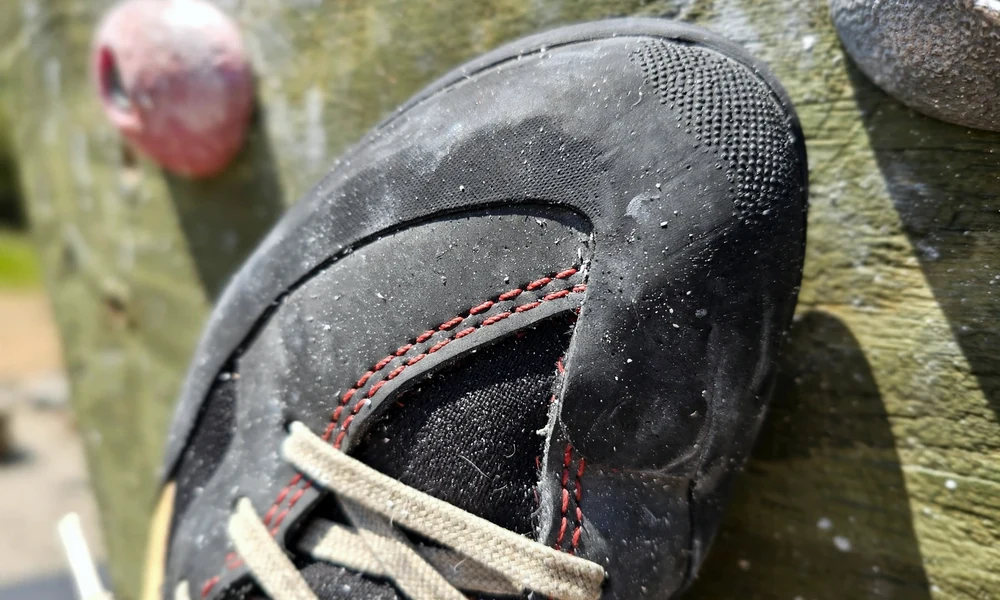
Look for a shoe with laces long enough to tie properly, eyelets that are reinforced, and straps with a firm hook-and-loop fastening that holds after hundreds of uses. A lace-up shoe gives the finest adjustment, which suits a climber who wants to tune the fit, while a strap shoe is faster to take on and off, which suits a bouldering session. Check the closure in the shop by tightening it fully and pulling the shoe: if the heel lifts or the foot slides, the closure is not doing its job. A shoe that stays tight is a shoe that climbs with you, and a shoe that loosens is a shoe that will let you down on the wall. If the rest of the outdoor kit needs sorting, our guide to the best hiking boots of 2026 covers the boots that carry you to the crag in the first place.
Soles That Peel and Split
A climbing shoe is glued together under heat and pressure, and the worst shoes come apart at the glue. The sole peels away from the upper at the toe, where the shoe flexes on every move, and once the peel starts it spreads, so the shoe that was fine last week has a flap of rubber hanging off it today. The rand, the strip of rubber around the edge, splits too, usually where it meets the sole, and a split rand lets the shoe flex in the wrong place, so the foot moves inside the shoe and the grip goes with it.
Check the sole and the rand before you buy: the bond should be even all the way around, with no gaps, no bubbles, and no glue showing at the edges. Flex the shoe firmly and watch the toe, because a sole that lifts even slightly when the shoe bends will lift more on the wall. A well-made shoe holds together for months of hard use, and the rubber wears down evenly rather than peeling away. If the sole starts to peel, a cobbler can sometimes save it, but a shoe that peels in the first month is a shoe that should go back. A shoe with a solid bond is a shoe that lasts, and a shoe that splits is a shoe that will not see the season out.
Smell and Sweat That Never Leave
A climbing shoe is worn without socks, tight against bare skin, and the worst ones turn into a problem within weeks. Sweat soaks into the lining, bacteria grow in the warm, damp leather, and the shoe starts to smell so badly that it clears the changing room. The smell is not just unpleasant: a shoe full of bacteria irritates the skin, causes blisters and rashes, and makes the climber dread putting the shoes on. The problem is worst on shoes with a lining that cannot be washed, and on synthetic uppers that trap moisture, so the shoe never dries out between sessions. A shoe that stinks is a shoe that has become a health problem, not just a smelly one.
Look for a shoe with a lining that can be washed, or at least aired properly, and dry the shoes after every session with the tongues pulled out, in a cool place away from direct heat. Stuffing the shoes with newspaper draws the moisture out, and a quick wash with mild soap once a month keeps the bacteria down. Never leave the shoes in a closed bag after climbing, because a warm, damp bag is exactly where bacteria grow fastest. A shoe that dries out between sessions stays fresh for years, and a shoe that never dries will smell within a month. If the rest of the training kit needs sorting, our guide to the best running shoes of 2026 covers the shoes that keep your feet fresh on the ground as well as on the wall.

What to Buy Instead
The climbing shoes worth buying share a short list of features, and none of them is expensive on its own. Soft, sticky rubber that grips small edges, a fit that is snug but not painful, and a downturn that matches your climbing, not the photograph. Laces or straps that hold the shoe tight, a sole and rand bonded evenly all the way around, and a lining that can be aired and washed. If a shoe fails any one of those checks, keep looking.
Fit matters as much as build, and the shoe should suit the climbing in front of you rather than the climbing in the photograph. A flat, comfortable shoe for a beginner and long sessions, a downturned shoe for steep routes, and a shoe that fits your foot shape, not someone else’s. A shoe that fits your foot and your climbing is a shoe that gets worn every session, and a shoe that fights either will be left in the bag. If the training needs music too, our guide to the best sports headphones of 2026 covers the headphones that stay put while you move.
The Bottom Line
The worst climbing shoes of 2026 share a pattern: rubber that slides on small holds, fit that pinches or slips, toes that go numb, laces and straps that fail, soles that peel and split, and smell and sweat that never leave. Avoid those six failures and you avoid almost every climbing-shoe regret. Check the rubber, try the fit on a small edge, and buy the downturn that matches your climbing. Do that, and the shoe you buy will be the one that sticks to the wall for seasons, not the one that slips on the first hard move.