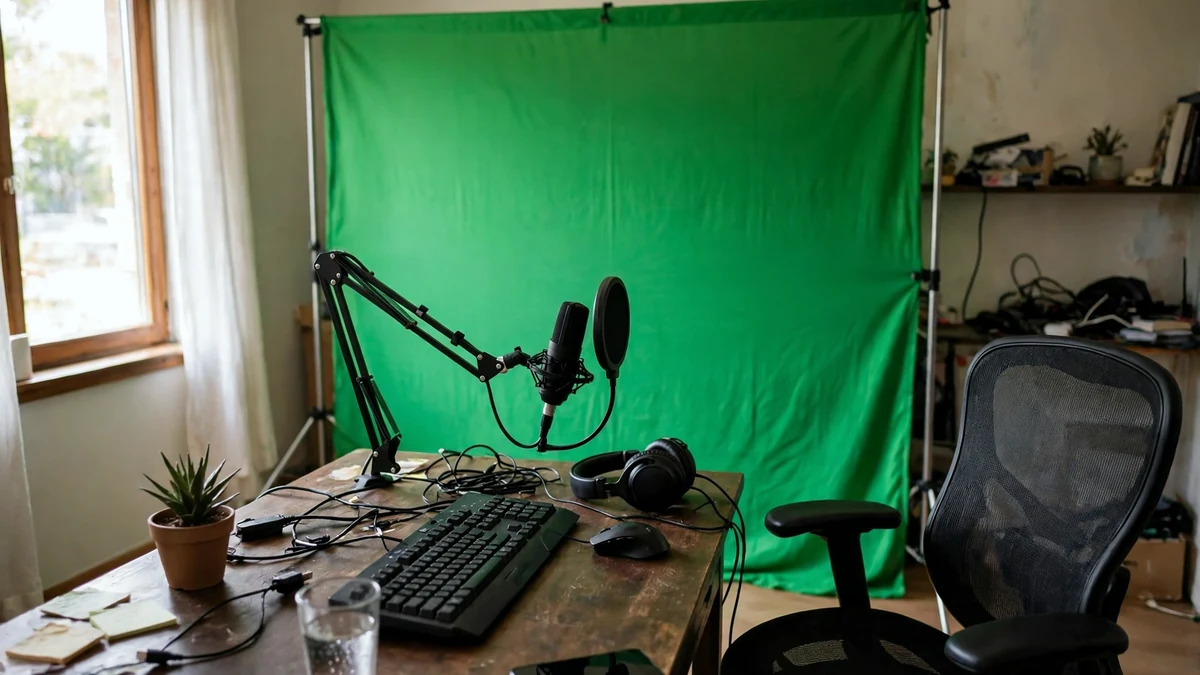
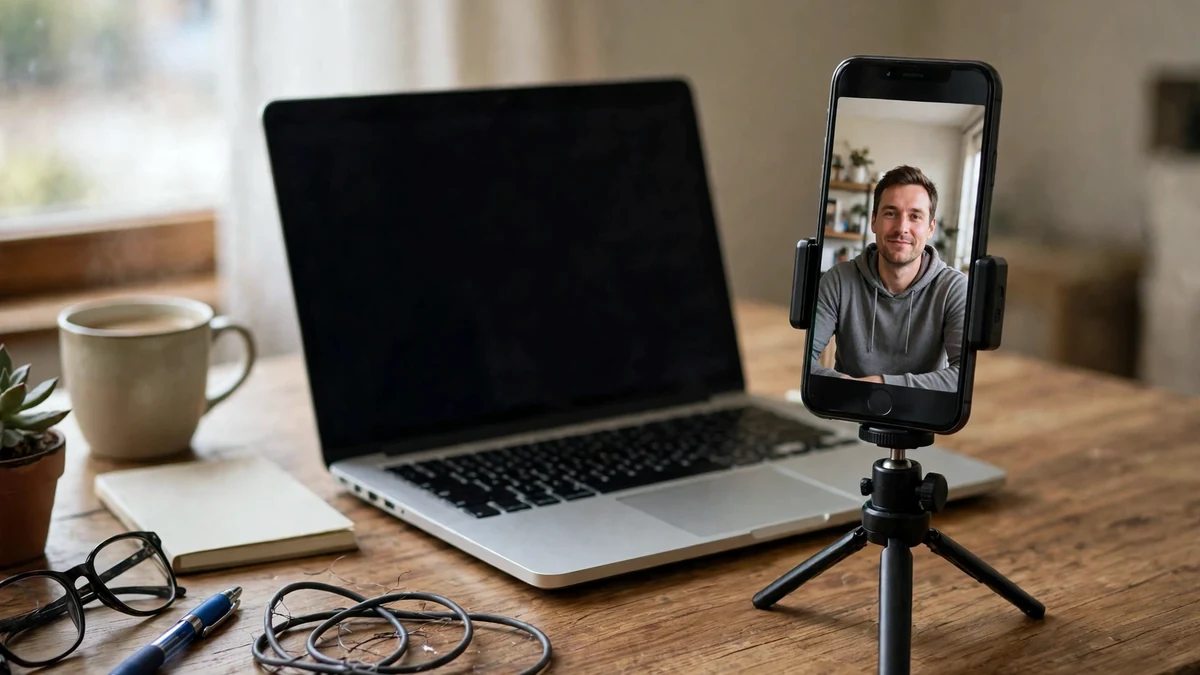
A ring light for video has one job: to put soft, even light on your face so the camera sees you clearly, and to keep doing it for the whole recording without flickering, glaring, or falling over. The worst ring lights for video in 2026 fail at it in ways that ruin a take. They flicker on camera, shift your skin to grey or orange, reflect in your glasses, or topple over mid-sentence. Creators buy them hoping for a cheap upgrade that makes every video look professional. What they get is a light that flickers, a light that glares, or a light that drops the phone halfway through a stream.
Flicker That Ruins the Recording
A ring light looks steady to the eye and flickers on camera, and the worst lights flicker badly. Cheap LEDs pulse faster than the eye can see, and the camera catches the pulsing as rolling bands across the picture, which are almost impossible to fix in editing. The problem is worst on cheap rings, where the dimmer works by switching the LEDs on and off rapidly, so the flicker gets worse as you turn the brightness down, and on lights with no proper driver, where the brightness wavers with the power supply. A light that flickers is a light that ruins every recording it touches, because the bands are in the footage, and no edit can take them out.
Look for a ring light that is sold as flicker-free, and test it before an important recording by filming a short clip at every brightness level, then watching it back on a big screen. A good light stays steady from full brightness down to a quarter, with no bands and no pulsing, at any setting. Check the light on your real camera too, because a light that looks fine on a phone can flicker on a webcam, and the camera you record with is the one that matters. A light that stays steady is a light worth recording with, and a light that flickers is one that will waste every take.
Colour That Shifts Skin Tones
A ring light should make skin look natural, and the worst lights turn it grey, green, or orange. Cheap LEDs with a low colour rendering index do not reproduce skin tones properly, so a face that looks healthy in the room looks sickly on camera, and the colour shifts as the brightness changes, so the skin looks different at the start of the recording than at the end. The problem is worst on lights with a fixed colour temperature, which look right in one room and wrong everywhere else, and on lights where the warm and cool LEDs are not balanced, so the light is patchy. A light that shifts skin tones is a light that makes the creator look worse, not better, which is the opposite of what it was bought for.
Look for a ring light with adjustable colour temperature, from warm 3,000K to daylight 5,600K, and a colour rendering index above 90, which means skin tones look natural rather than grey or green. Match the light to the room: warm bulbs mean a warm setting, a window means daylight, and neutral is the safest choice when in doubt. Test the light on a real call before it matters, and look at your skin on the preview, because a light that flatters in the shop can still look wrong in your room. A light that keeps skin natural is a light that earns its place, and a light that shifts it is one that should go back.
Glare in Glasses
A ring light sits in front of the face, and the worst ones reflect in glasses. The circle of LEDs shows up as a bright ring in each lens, hiding the eyes and making the creator look like they are staring into a headlight. The problem is worst on large rings placed close to the face, where the reflection fills the whole lens, and on lights with no diffuser, where each LED shows up as a separate hard dot. A light that glares in your glasses is a light that hides your eyes, and a creator whose eyes are hidden is a creator the audience cannot connect with, however good the video is otherwise.
Look for a ring light with a diffuser over the LEDs, which softens the light and spreads the reflection, and move the ring slightly to one side and a little higher than eye level, which pushes the reflection out of the lenses. Reduce the brightness until the reflection fades, because most people set their ring far too bright on the first try, which washes out the face and makes the glare worse. A smaller ring placed further away can help too, because the reflection shrinks with the distance. A light that can be positioned to avoid glare is a light that works for glasses wearers, and a light that cannot is one that will hide your eyes in every video.
Stands That Wobble and Fall
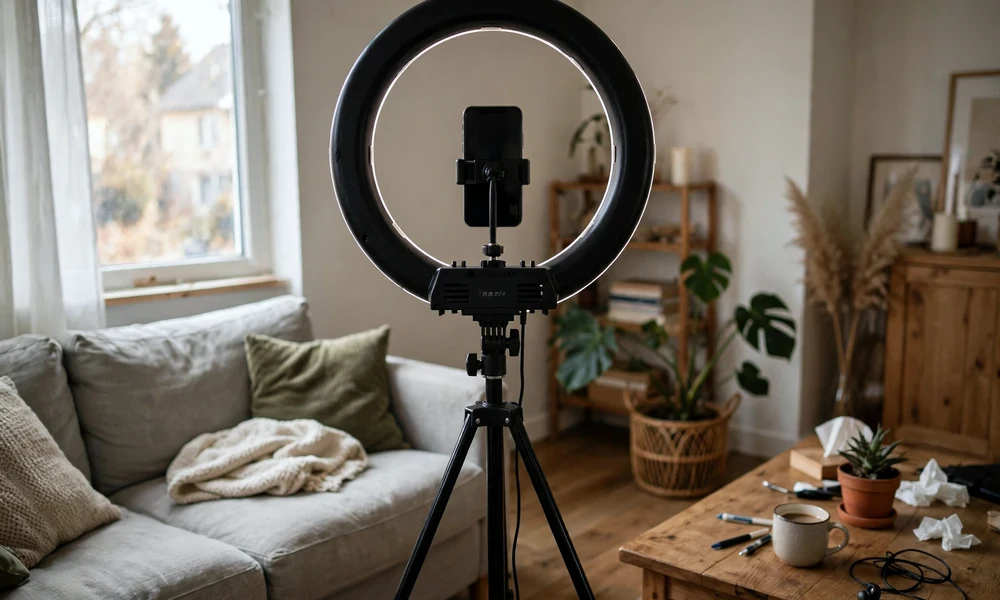
A ring light sits on a tripod, and the worst stands wobble and fall. A thin tripod with a narrow base topples at the slightest nudge, and a tall 18-inch ring on a flimsy stand acts as a sail, so the whole thing falls over the moment someone walks past. The problem is worst on cheap stands, where the legs are thin, the locks are plastic, and the base is too small for the ring it holds. A stand that falls is a stand that drops the light and anything mounted in it, and a ring light that falls mid-stream is a recording ruined and a phone or camera possibly broken.

Look for a ring light with a solid tripod, a wide base, and metal locks that hold the legs firmly. Check the stand in the shop by setting it up, extending it fully, and tapping the leg: a good stand stays put, and a bad one wobbles. Keep the stand on a flat floor, away from walkways, and hang a small weight from the centre hook if the stand has one, because the extra weight steadies it. A stand that holds firm is a stand that keeps the light where you put it, and a stand that wobbles is one that will fall over at the worst moment. If the wider lighting picture needs sorting, our guide to the webcam lights that make you look sharp on calls covers the clip-on and panel lights that suit a fixed desk.
Mounts That Drop the Phone
A ring light for video usually holds a phone in the middle, and the worst mounts drop it. A phone mount with a weak spring, hard plastic jaws, or a grip that does not fit the phone with its case on will let the phone slip out, usually mid-recording, and a phone that falls from the middle of a ring light falls onto a hard floor. The problem is worst on cheap mounts, where the jaws are too narrow for a large phone, too loose for a small one, or press on the side buttons, so the phone changes volume or switches off. A mount that drops the phone is a mount that has failed at the one thing it exists to do, because the phone is the camera, and a camera on the floor records nothing.
Check the mount before you buy: it should open wide enough for your phone in its case, grip firmly with soft pads, and clear the side buttons. Test it with your phone, tilt the ring forward, and shake it gently, because a mount that holds on a desk but slips when tilted will drop the phone when you adjust the angle. Look for a mount with a locking screw as well as a spring, because a screw holds the phone even if the spring weakens. A mount that holds the phone is a mount you can trust, and a mount that drops it is one that will cost you a screen. For the wider camera picture, our comparison of the best and worst webcams of 2026 explains the cameras that pair with a good light.
Heat on Long Streams
A ring light runs for hours on a long stream, and the worst ones overheat. Cheap LEDs with no heat sinking get hotter and hotter, so the light dims as the recording goes on, the colour shifts, and in the worst cases the plastic housing warps or the light cuts out altogether. The problem is worst on large rings run at full brightness for hours, where the heat has nowhere to go, and on lights with no ventilation at all. A light that overheats is a light that cannot be trusted for a long recording, because the light at the start of the stream is not the light at the end, and a stream that goes dark halfway through is a stream that loses its audience.
Look for a ring light with a metal body or proper ventilation, which lets the heat out, and run the light at half brightness where you can, because half brightness is usually enough and it runs far cooler. Check the light after an hour of running: it should be warm, not hot, and the brightness and colour should be the same as when you started. Give the light air around it, and never cover it with cloth or paper, because a covered light overheats faster. A light that stays cool is a light that stays steady, and a light that overheats is one that will fade on you mid-stream. If the ring itself needs a closer look, our guide to the top ring lights for video calls and content covers the sizes and stands that suit different rooms.

What to Buy Instead
The ring lights for video worth buying share a short list of features, and none of them is expensive on its own. Flicker-free LEDs that stay steady at every brightness level, adjustable colour temperature from warm 3,000K to daylight 5,600K, and a colour rendering index above 90. A diffuser over the LEDs, a solid tripod with a wide base, and a phone mount that opens wide enough for your phone in its case and locks with a screw. If a light fails any one of those checks, keep looking.
Fit matters as much as build, and the light should suit the room in front of you rather than the room in the photograph. A 10 to 12 inch ring suits most desks, an 18 inch ring suits a dedicated recording space, and a clip-on ring suits a laptop that moves. A light that fits the room is a light that gets used every day, and one that fights the room will be left in a corner. Buy the light for the video you actually make, and test it on a real recording before it matters.
The Bottom Line
The worst ring lights for video in 2026 share a pattern: flicker that ruins the recording, colour that shifts skin tones, glare in glasses, stands that wobble and fall, mounts that drop the phone, and heat on long streams. Avoid those six failures and you avoid almost every ring-light regret. Film a test clip at every brightness, check the colour on your skin, and shake the mount. Do that, and the light you buy will be the one that makes every video look professional, not the one that flickers halfway through the stream.