A travel camera bag has one job: to carry thousands of pounds worth of camera and lenses safely through airports, stations, and streets, and to give you the camera in your hand the moment the picture appears. The worst camera bags for travel in 2026 fail at it in ways that leave a photographer with a bag that will not fit the cabin, gear that gets wet, or a camera that is out of reach when the moment passes. They rip at the seams, fail at the gate, or weigh so much that the walk ruins the day. Travellers buy them hoping for a bag that disappears on the back and protects the kit inside. What they get is a bag that leaks, a bag that is gate-checked, or a bag that slows them down at every step.
Carry-On Sizes That Fail at the Gate
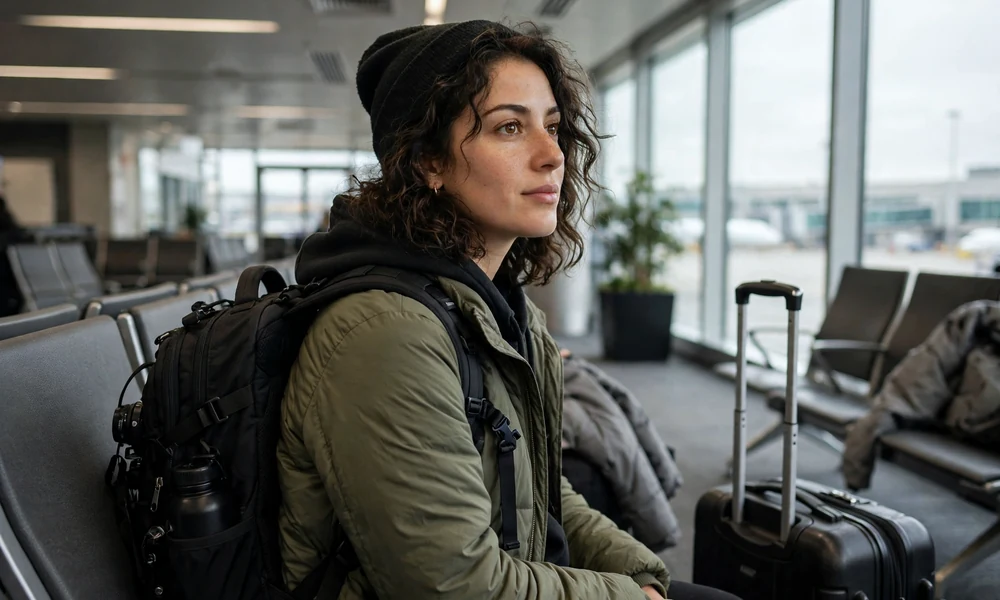
A travel camera bag has to fit the airline cabin, and the worst bags fail at the gate. A backpack a centimetre too deep, too tall, or too wide will be gate-checked, and cameras and lenses should never go in checked luggage, where they are thrown, stacked, and left in the cold. The problem is worst on bags bought without measuring, because the size on the label is the size of the bag empty, and a full bag bulges beyond it.
Measure the bag against your airline’s limits before you buy, and check the depth in particular, because depth is where most bags fail. A bag with compression straps that pull the load tight stays within its limits, while a bag that bulges cannot be squeezed into the sizer. Pack the bag as you will travel, then measure it full, because an empty bag that fits and a full bag that does not are the same bag. A bag that fits the cabin is a bag that keeps your kit with you, and a bag that does not is a bag that will hand your cameras to the baggage handlers. If the cameras themselves need sorting, our guide to the best travel cameras of 2026 covers the bodies that suit a trip.
Zips That Burst Under a Full Kit
A travel camera bag is packed full and opened a dozen times a day, and the worst zips burst under the strain. A cheap zip with small teeth splits open when the bag is full, or jams halfway and will not close at all, and a bag that will not close cannot protect anything. The problem is worst on bags where the main zip runs around three sides, because the whole length is under strain, and on bags packed to the limit, where the zip takes the pressure of everything inside. A zip that fails on the road, in a station or an airport, is a failure that cannot be fixed there, because there is no way to repair a burst zip while travelling, and a bag that cannot be closed is a bag that cannot be carried.
Check the zips before you buy: they should be large-toothed, smooth-running, and protected by a storm flap, and the pulls should be big enough to work with cold hands. Never overfill the bag, because a bag stuffed full puts the zip under constant strain, and the strain will find the weakest tooth. Pack heavy things low and close to your back, and leave a little room so the lid closes without force. A bag with a strong zip and a sensible load will last for years of travel, and a bag with a cheap zip will burst on the first trip. If the bag itself needs a closer look, our guide to the what makes a great camera bag worth carrying explains the padding and dividers that matter most.
Rain That Gets In on the Road
A travel camera bag is out in the rain, and the worst ones let the rain in. Water-resistant fabric will shrug off a light shower, but it will not survive a downpour, a bag set down in a puddle, or a long walk in steady rain, and a bag that leaks soaks everything inside. The zips are often the way in, because water enters through zips before it enters through fabric, and a bag with unsealed zips and no rain cover is a bag that will fail in the first storm.
Look for a bag with a rain cover stored in a dedicated pocket, because a bright, waterproof shell that pulls over the whole bag in seconds is the only reliable protection in heavy rain. Check the zips too, because weather-sealed zips, storm flaps, and a coated base all help, and a bag that sits in wet grass should have a waterproof bottom panel. Dry the bag thoroughly after every wet outing, because a damp bag left closed will grow mould and stiffen the fabric. A bag that stays dry in heavy rain is a bag worth travelling with, and a bag that leaks in a shower is a bag that should never have left the shop.
Weight That Wears You Down
A travel camera bag is carried all day, and the worst ones wear the traveller down. A heavy bag with thin straps, no waist belt, and a back panel that does not breathe turns a day of walking into a day of aching shoulders and a sweating back, and a traveller who is tired of carrying the bag will stop carrying the camera, which means they will stop taking photographs. The problem is worst on bags that are heavy before anything is put in them, because the weight of the bag adds to the weight of the kit, and a bag that starts heavy only gets heavier.

Look for a bag that is light when empty, with padded straps, a ventilated back panel, and a waist belt that genuinely takes the load off your shoulders. Try the bag loaded and walk around for ten minutes before you buy, because a bag that feels fine for a minute can feel heavy after an hour. Pack only the kit you will actually use, because every extra lens is weight you will carry all day, and a bag that is packed light is a bag that gets carried happily. A bag that carries comfortably is a bag that stays on your back, and a bag that wears you down will be left in the hotel room.
Theft on the Move
A travel camera bag holds everything valuable a traveller owns, and the worst ones invite theft. A bag with zips on the outside, no lock, and a shape that advertises the camera inside is a bag that tells every thief in a station exactly what to take. The problem is worst in crowds, on trains, and in markets, where a bag that can be opened from behind is a bag that can be emptied without the owner noticing. A bag that cannot be locked is a bag that cannot be left unattended, which means it cannot be left on a train seat, in a cafe, or anywhere else a traveller stops. A bag that invites theft is a bag that has failed at the most basic security.
Look for a bag with zips that sit against your back, a lockable main compartment, and a shape that does not advertise the camera inside. A plain-looking bag attracts less attention than one covered in camera branding, and a bag with a cut-proof strap is harder to snatch. Never leave the bag unattended, and keep it in front of you in a crowd, because a bag on your back is a bag you cannot watch. A bag with real security is a bag you can travel with, and a bag without it is a bag you must watch all the time. If the backpack form suits you better, our guide to the best camera backpacks of 2026 covers the packs that spread the weight across both shoulders.
Access That Makes You Miss the Shot
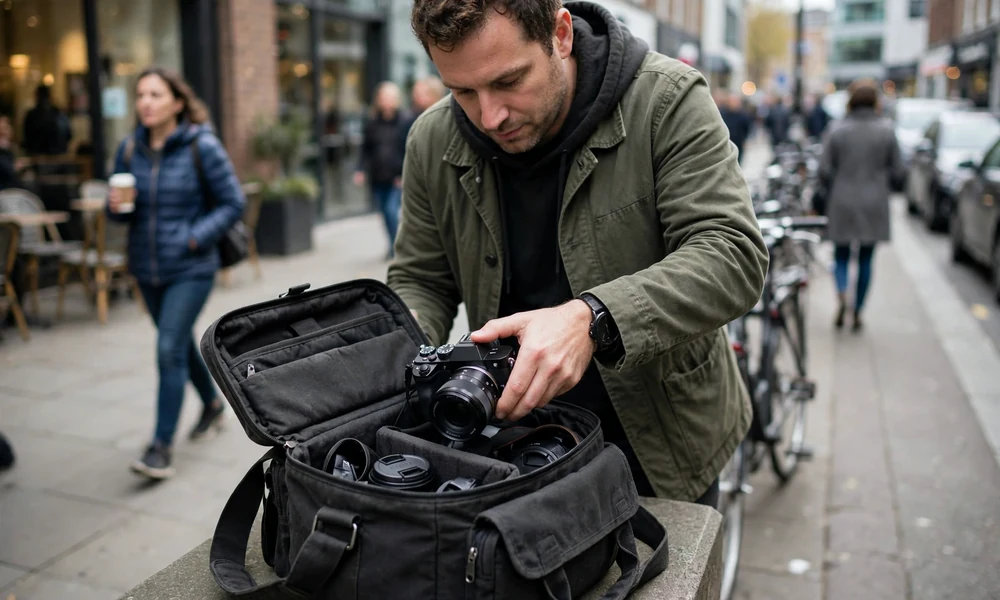
A travel camera bag has to give you the camera quickly, and the worst ones make you miss the shot. A bag that has to be taken off, set down, and unzipped fully every time you want the camera is a bag that will make you miss the moment, because the moment does not wait for a bag. The problem is worst on bags with a single top opening, where the camera sits at the bottom under everything else, and on bags where the dividers flop over and bury the camera. A bag that is slow to open is a bag that teaches you to leave the camera in the hotel, and a camera left in the hotel takes no photographs at all.
Look for a bag with side access, which lets you swing it around on one strap and pull the camera out without taking it off, or a rear panel that opens the whole interior at once. Check the dividers too, because they should be thick, adjustable, and firm enough that nothing moves when you shake the bag. A bag with fast access is a bag that keeps the camera in your hand, and a bag that is slow is a bag that will make you miss the shot. Test the access in the shop by timing how long it takes to get the camera out, because a bag that takes a minute is a bag that will cost you photographs.
What to Buy Instead
The camera bags for travel worth buying share a short list of features, and none of them is expensive on its own. A size that fits the cabin, measured full, with compression straps that pull the load tight. Large-toothed zips under a storm flap, a rain cover in a dedicated pocket, and a waterproof base. A light bag with padded straps, a waist belt, and a back panel that breathes. Zips against your back, a lockable compartment, and side access that gets the camera out in seconds. If a bag fails any one of those checks, keep looking.
Fit matters as much as build, and the bag should suit the trip in front of you rather than the trip in the photograph. Measure it against your airline, try it loaded for ten minutes, and picture the camera coming out in a crowd. A bag that fits the trip is a bag that gets carried every day, and a bag that fights the trip will be left in the hotel. Buy the bag for the travel you actually do, and pack only the kit you will use.
The Bottom Line
The worst camera bags for travel in 2026 share a pattern: carry-on sizes that fail at the gate, zips that burst under a full kit, rain that gets in on the road, weight that wears you down, theft on the move, and access that makes you miss the shot. Avoid those six failures and you avoid almost every travel-bag regret. Measure the bag full, check the zips, and try it loaded before you buy. Do that, and the bag you buy will be the one that carries the kit for years, not the one that hands your cameras to the baggage handlers.