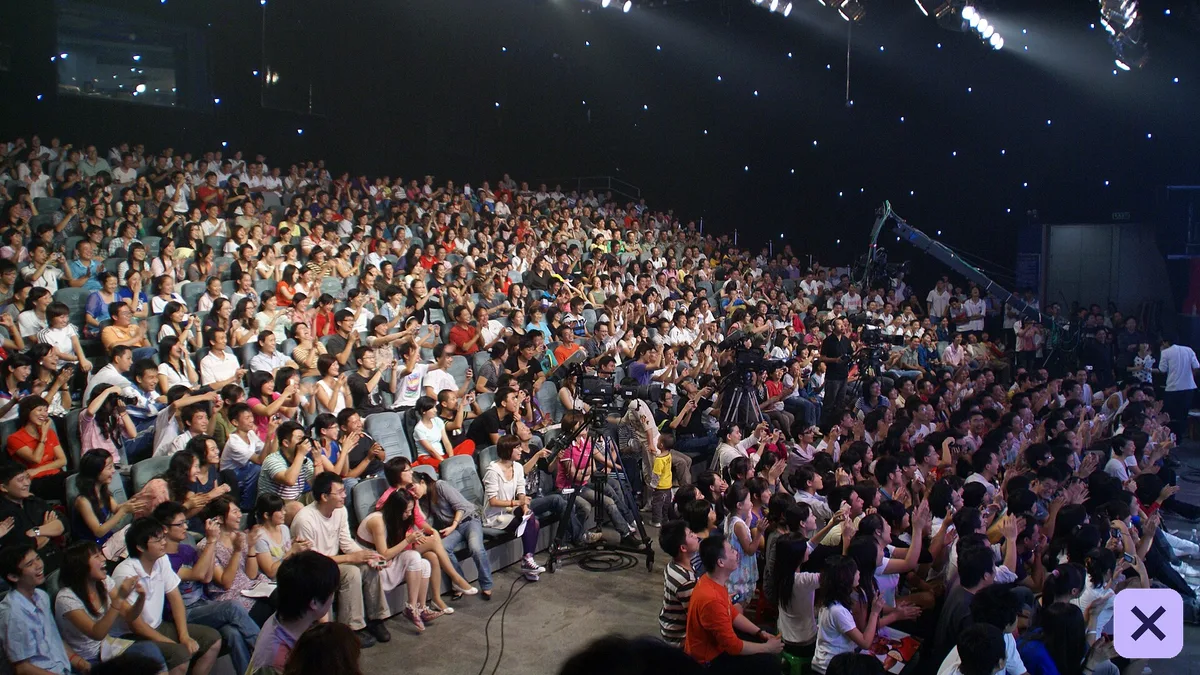
The Worst Sitcoms of 2026
The worst sitcoms of 2026 are not hard to spot, but they are surprisingly hard to switch off, because they borrow the shape of a good comedy without doing any of the work that makes one funny. The living room looks right, the cast is standing in the right places, and somebody says something that is clearly meant to be a joke, yet nothing lands, and the silence that follows is filled by a laugh track that sounds as if it is trying to convince you that you missed something. This guide ranks the worst sitcom types by pattern, not by naming any show, actor or writer, because the failures repeat across different casts and premises. Learn the patterns and you can spot a bad sitcom in five minutes.
Key takeaways
- The worst sitcoms fail in the same few ways: a laugh track doing the work of the jokes, a premise that runs out fast, and characters who never change.
- A sitcom that explains its own joke, repeats it, or has another character laugh at it has already lost the audience.
- One-note characters are the clearest warning sign: if you can describe a character in a single word after three episodes, the writing has stopped.
- Stale premises, recycled misunderstandings and shouting matches dressed up as conflict are not comedy, they are noise.
- Judge a sitcom by its second episode: a good premise can survive a weak pilot, but a bad pattern only gets louder.
How the worst sitcoms of 2026 were chosen
Every type below was scored on five measures. Joke quality comes first: does the writing earn its laughs from character, situation and timing, or lean on a laugh track, a catchphrase or a pratfall? Character depth is second: do the people on screen grow and surprise you, or simply repeat the same trait in every scene? Premise strength is third, because a sitcom needs somewhere to go after the pilot, and a premise that is only a single gag will be exhausted by the second episode. Pacing is fourth: the best sitcoms let a joke land, while the worst rush from one shout to the next. Rewatch value is fifth, because a good episode gets funnier the second time, while a bad one feels longer on every return.
Two notes before the list. First, no real show, actor or writer is named as the worst anywhere in this guide, because the point is the pattern, and the same pattern turns up in many different shows. Second, a sitcom can be loud, broad or silly and still be good, so volume alone is never the charge here. The failures below are about writing that stops trying. Readers who enjoy ranking television by type will find the same approach in our guides to the worst talk shows of 2026 and the worst game shows of 2026, where the faults are also patterns, not people.

Comparison table: the worst sitcoms of 2026
| Rank | Sitcom type | Main fault | First warning sign |
|---|---|---|---|
| 1 | The laugh-track crutch | Canned laughter replaces jokes | Laughter after lines that are not funny |
| 2 | The one-joke premise | Premise exhausted in the pilot | Every episode repeats the same gag |
| 3 | The one-note character parade | Characters defined by a single trait | You can sum up each person in one word |
| 4 | The shouting-match family | Volume stands in for conflict | Every argument ends in a scream |
| 5 | The recycled misunderstanding | Same mix-up, different week | The plot could be solved by one sentence |
| 6 | The workplace that never works | A job used as wallpaper | Nobody on screen ever does any work |
| 7 | The nostalgia reboot of a feeling | Old warmth, no new jokes | References replace writing |
The worst sitcoms of 2026
1. The laugh-track crutch: the worst sitcom type of 2026
The laugh-track crutch is the worst sitcom type of 2026 because it is dishonest in a way the other failures are not. The jokes are not merely weak; the show knows they are weak, and it papers over the gap with recorded laughter that arrives on cue whether or not anything funny has happened. A good studio audience can lift a good show, but a canned track on a bad one is a confession.
2. The one-joke premise: funny once, then never again
The one-joke premise is a sitcom built on a single idea that was probably funny in the pitch meeting and has nowhere to go after that. The first episode is often watchable, because the idea is new, but by the second episode the show is already repeating itself, and by the fourth it is openly recycling the pilot with different costumes. The characters have no second gear, because the premise is the whole show, so every story is the same story told slightly louder. If you can predict an episode’s ending from its opening scene three weeks in a row, the premise is finished.

3. The one-note character parade: a cast of catchphrases
The one-note character parade gives every member of its cast a single trait and then refuses to let any of them develop beyond it. One person is always angry, one is always naive, one is always sarcastic, and one is always the voice of reason, and those four notes are played in the same order in every episode. The result is not a cast but a set of labels, and the jokes are written for the labels rather than for people. Real sitcom characters contradict themselves, change their minds and grow out of their early habits, and when a show will not let that happen, the audience stops caring.
4. The shouting-match family: volume instead of conflict
The shouting-match family sitcom mistakes noise for drama and volume for comedy. Every disagreement becomes a screaming match, every dinner becomes a slammed door, and every episode ends with a hug that is supposed to make the shouting feel like love, even though nothing has actually been resolved. The problem is not that families argue, because good sitcom families argue all the time, but that these arguments have no stakes and no shape: nobody is wrong in an interesting way, and nobody learns anything. After a while the shouting becomes background noise, and the audience stops listening.
5. The recycled misunderstanding: one sentence would end it
The recycled misunderstanding builds an entire episode on a mix-up that any sensible person would clear up in a single sentence, and then spends twenty minutes making sure nobody says that sentence. A message is misread, a gift is misinterpreted, a visitor is mistaken for somebody else, and instead of talking to each other, the characters talk past each other until the truth comes out in the final scene. The first time this happens it can be charming, but the fifth time it is insulting, because the audience can see the solution from the first minute. Comedy should come from understandable mistakes, not from a script that forbids plain speaking.

6. The workplace that never works: a job as wallpaper
The workplace that never works uses an office, a shop or a studio as a backdrop and then forgets that anybody there is supposed to have a job. The characters arrive, exchange jokes, eat lunch and leave, and no work is ever done, no customer is ever served, and no deadline is ever real, which means the setting contributes nothing except a place for the cast to stand. If you could move the whole cast to a different job and lose nothing, the job was never part of the show.
7. The nostalgia reboot of a feeling: references instead of jokes
The nostalgia reboot of a feeling tries to sell you the warmth of an older show without writing any new jokes of its own. It brings back a familiar living room, a familiar catchphrase or a familiar theme, and then waits for the audience to feel something, as if recognition were the same thing as laughter. References can be a fine seasoning in a comedy, but here they are the whole meal, and the new material underneath them is thin, cautious and afraid to take a risk. Nostalgia works when a show earns it by being good in its own right, and it fails when a show asks the audience to do the remembering for it.
What to avoid when choosing a sitcom in 2026
The most common mistake is to keep watching out of loyalty to the first episode, when the first episode was the only one with a new idea. Give a new sitcom two episodes, and if the second repeats the first, move on. Avoid shows where the laugh track is louder than the dialogue, where every character can be summed up in a single word, and where each plot could be solved by one honest sentence. The same test works across television, and our guide to the best and worst television shows of 2026 uses the same test: does the show earn its moments, or does it borrow them from a format, a catchphrase or a memory? A sitcom that trusts its audience lets a joke breathe, lets a character change, and lets a scene end quietly.
Checklist: spotting a bad sitcom in five minutes
- Listen for the laugh track: if it laughs at lines that are not funny, the writing is failing.
- Describe each character in one word; if that word is all there is, the cast was labelled, not written.
- Ask whether the plot could be solved by one honest sentence; if it could, the misunderstanding is forced.
- Check whether anyone on screen ever does any real work, or whether the setting is only wallpaper.
- Watch the second episode: if it repeats the first, the premise is already exhausted.
- Try to remember a joke afterwards; if you can only remember a catchphrase, the show has no jokes.
Frequently asked questions
What makes a sitcom the worst of 2026?
A sitcom earns that verdict when its failures are patterns, not accidents: a laugh track replacing jokes, a premise that runs out in one episode, characters who never change, and the same misunderstanding every week.
Why does this guide not name any real sitcom?
Because the same faults turn up in many different shows, and naming one would miss the point. Ranking the patterns helps viewers spot a bad sitcom in any show, without turning the guide into a list of targets.
Is a laugh track always a bad sign?
No. A live audience can lift a strong script. The warning sign is a track that laughs at lines that are not funny, because then it is covering for writing that has not earned the reaction.
Can a sitcom with a weak pilot get better?
Yes, sometimes, which is why this guide judges a show by its second episode. A good premise can survive a shaky start, but a show that repeats its pilot in episode two will not widen later.
Are loud sitcoms always bad sitcoms?
No. A sitcom can be loud, broad and silly and still be well written. The fault is shouting used as a substitute for conflict, character or jokes, which is a writing problem, not a volume problem.
How do I pick a sitcom worth watching in 2026?
Look for characters who surprise you, jokes you can repeat the next day, and a premise that opens up new stories. If the second episode is better than the first, keep watching; if it is the same episode again, switch off.
Bottom line
The worst sitcoms of 2026 stop trying: they let a laugh track do the laughing, repeat a single joke until it is worn out, freeze their characters in place, and fill the silence with shouting. Learn the patterns, trust the second episode, and spend your evenings on comedies that earn their laughs.