
A Guide to Hair Ties That Hold Without the Damage in 2026
The best hair ties in 2026 are the ones you forget you are wearing: they hold a ponytail through a full day, leave no dent when you take them out, and do not pull strands out with them. The difference is rarely the price on the packet. It is the material, the width, the join, and how you use it, and this guide covers all four so you can pick a hair tie that holds without the damage.
Key takeaways
- The best hair ties spread pressure across a wide, soft surface, because a thin cord concentrates force on a few strands and breaks them.
- Scrunchies and fabric-covered elastics are the gentlest everyday choice, while spiral coil ties leave the least crease and suit thick hair.
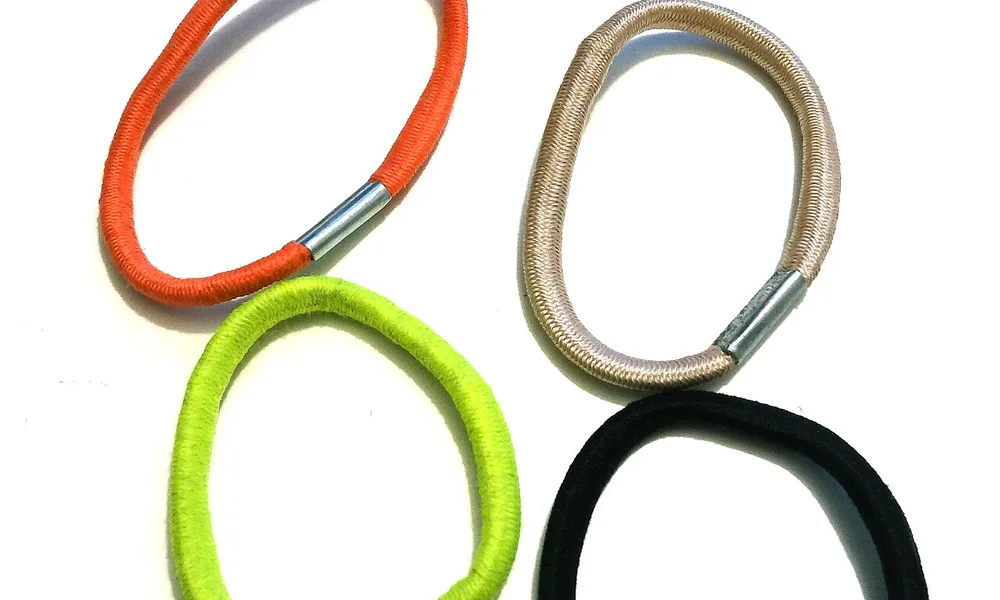
- A metal join is the part most likely to snag and snap hair, so seamless ties or ties with a smooth, covered join are worth seeking out.
- Match the tie to your hair: fine hair needs a light, small tie, thick hair needs a wide, strong one, and curly hair needs a soft, stretchy one.
- Never wind a tie too tight or yank it out.
How the best hair ties were chosen
Every type below was judged on hold, gentleness, comfort, durability and value. Hold comes first: whether a ponytail stays put through a normal day without constant retying. Gentleness is second, judged on creasing, snagging and breakage after a week of daily use.
Two notes before the list. First, no single tie is the best for everyone, because hair varies so much in thickness, length and texture that the right tie depends on the hair it holds. Second, technique matters as much as the tie itself: even the gentlest scrunchie will damage hair if it is wound too tight or ripped out. Brushing gently first helps; see our guide to choosing a hairbrush that actually helps your hair.
Comparison table: the best hair ties of 2026
| Rank | Hair tie type | Best for | Watch out for |
|---|---|---|---|
| 1 | Seamless fabric-covered elastics | Everyday ponytails, most hair types | Cheap ones lose stretch quickly |
| 2 | Scrunchies | Gentle hold, thick and curly hair | Can slip on very fine, straight hair |
| 3 | Spiral coil ties | No-crease hold, thick hair, workouts | Stretch out over time, hard to shrink back |
| 4 | Silk and satin ties | Sleep, fragile and damaged hair | Weakest hold, highest price |
| 5 | Wide ribbon ties | Low ponytails, no-dent styling | Poor hold for high ponytails and sport |
| 6 | Thick no-crease elastics | High ponytails, long days | Can be too strong for fine hair |
| 7 | Thin mini elastics | Braids, half-up styles, children | Snap easily, easy to lose |
The best hair ties of 2026
1. Seamless fabric-covered elastics: the best all-round hair ties
The seamless fabric-covered elastic is the best hair tie for most people, most days. It is a loop of elastic wrapped in soft fabric with no metal join and no glued seam to catch on hair. The fabric spreads the pressure across a wider band than a bare cord, so it holds firmly without cutting a sharp line into the hair, and the smooth surface slides out without snagging. Test before you commit by stretching a tie to twice its length and letting it go.
2. Scrunchies: the gentlest hair ties for thick and curly hair
Scrunchies are the gentlest hair ties you can buy, and the best choice for thick, curly or easily damaged hair. The gathered fabric spreads the load across a wide, soft ring, so no single strand takes much force, and the fabric cushions the hair instead of gripping it. They hold a ponytail or bun securely without the tight pinch of a thin elastic, and they leave the faintest crease of any tie type when you take them out. The trade-off is hold on fine, straight hair, where a big soft scrunchie can slide down over the course of the day. The fix is a smaller scrunchie with a firmer elastic core, or a velvet one, which grips better than silk or cotton.
3. Spiral coil ties: the best hair ties for no creases
Spiral coil ties, the ones that look like old telephone cords, are the best hair ties when you hate the dent a normal tie leaves. The coil spreads the pressure unevenly across the hair, which works in your favour: no single line of pressure is strong enough to leave a crease, so your hair falls straight again the moment you take the tie out. They have two weaknesses. First, the plastic stretches out over time and the coil goes loose; a dip in hot water shrinks some brands back, but not all of them, and it never works as well as the first time.

4. Silk and satin ties: the best hair ties for sleep and fragile hair
Silk and satin ties are the best hair ties for sleeping and for hair that is already fragile, bleached or breaking. The smooth surface creates almost no friction, so hair slides against the tie instead of catching and snapping, and a loose low ponytail or braid held with a silk tie survives the night with far less frizz and far fewer broken strands. The price is hold. Silk ties are the weakest holders on this list, and a high ponytail tied with one will droop by the afternoon. That is fine, because that is not their job. Use them for loose overnight styles, low buns and gentle half-up looks, and keep a stronger tie for the daytime.
5. Wide ribbon ties: the best hair ties for a dent-free low ponytail
Wide ribbon ties are the best hair ties for a low ponytail that needs to look smooth when you let it down. A flat ribbon, usually an inch or more wide, spreads the pressure across a broad band, so it leaves almost no mark and does not pull the hair into a tight kink at the nape. They are not the tie for a high ponytail or a workout, because a flat ribbon has little grip and a high ponytail will slide down within the hour. The best ribbon ties have an elastic core hidden inside the ribbon, which gives them some spring, and a small silicone grip strip on the inside, which stops the slide.
6. Thick no-crease elastics: the best hair ties for high ponytails
Thick no-crease elastics are the best hair ties for a high ponytail that has to last all day. They are wide, dense and strong, with a smooth surface and no metal join, and they hold heavy hair up without sagging or needing a midday re-tie. The catch is that the same strength that holds thick hair can overwhelm fine hair. On fine hair, a thick elastic pulls too hard at the roots, leaves a headache behind the ears, and can snap the fragile strands around the hairline. If your hair is fine, size down to a medium band and accept that you may need to re-tie once during the day.
7. Thin mini elastics: the best hair ties for braids and half-up styles
Thin mini elastics are the best hair ties for the small jobs: the end of a braid, a half-up twist, a tiny section pinned back, a child’s ponytail. They are small, discreet and nearly invisible in the hair, which is exactly what a finishing tie should be. They are also the easiest ties to misuse. A mini elastic wound three or four times around a braid will snap the hair at the end, and one yanked out of a finished braid will take strands with it. Wind it twice at most, and cut it out with small scissors instead of pulling it free when a style is set.
Matching the hair tie to your hair type
Fine hair needs the lightest touch. Choose a small, soft tie, wind it twice rather than three times, and avoid anything with a metal join or a rough seam. A silk scrunchie or a small seamless elastic will hold a ponytail without dragging at the roots, and a light mist of hair spray at the crown will do more for hold than a tighter tie ever will. Thick hair needs width and strength: a thin tie will vanish into a thick ponytail and hold nothing, so choose a wide scrunchie, a large coil tie or a thick no-crease elastic, and wind it three times without guilt. Short hair needs a small tie with real grip, because there is less hair to anchor the ponytail, and a velvet or silicone-lined band will hold where a smooth one slides.

Mistakes that cause breakage
The most common mistake is tying wet hair up tight. Wet hair stretches and is far more likely to snap, so a tight ponytail on wet hair is the fastest route to breakage. Another mistake is pulling a tie out by yanking it down the length of the ponytail, which drags the tie across every strand and snaps the fragile ones. A further mistake is keeping a stretched-out tie: a tie that has lost its spring holds only if you wind it four or five times, and that many tight loops is what damages hair. On second-day hair, a little dry shampoo at the roots gives a ponytail grip and volume without another wash.
Checklist: buying hair ties that hold without the damage
- Choose a seamless tie with no metal join and no rough seam.
- Pick the width for your hair: wide for thick hair, small and soft for fine hair.
- Stretch the tie before buying: a good one springs back to its original size at once.
- Replace ties when they go slack, because winding a tired tie tighter is what breaks hair.
- Move your ponytail position daily so the same strands never take the same strain.
- Store ties loosely, not wound tight around a hook, so the elastic keeps its spring.
Frequently asked questions
Do hair ties damage your hair?
Yes, if they are thin, tight or rough, and if you yank them out. A wide, soft, seamless tie worn loosely causes very little damage.
Which hair tie leaves the least crease?
Spiral coil ties leave the least crease, because the coil spreads pressure unevenly and no single line is strong enough to dent the hair.
Are scrunchies better than normal hair ties?
For gentleness, yes: the wide fabric spreads pressure and cushions the hair. For hold on fine, straight hair, a normal seamless elastic grips better.
How often should you replace hair ties?
Replace fabric elastics every two to three months of daily use, or as soon as they stop springing back. Coil ties last longer but should go when they stretch out and no longer shrink back in hot water.
Can you sleep in a hair tie?
Yes, if it is a silk or satin scrunchie and the style is loose: a low, loose braid or a soft top bun. Never sleep in a tight ponytail with a thin elastic, because the same pressure all night on the same strands causes breakage and a sore scalp.
What is the best hair tie for workouts?
A large spiral coil tie or a thick no-crease elastic. Both hold through sweat and movement, and coil ties do not go slack when they get wet. Avoid silk ties and ribbon ties for exercise: they slip within minutes.
The bottom line
The best hair tie is the one that holds your hair without hurting it, and that tie depends on your hair. For most people, a seamless fabric-covered elastic does the everyday job, a scrunchie is the kindest choice for thick or curly hair, and a spiral coil tie is the answer when you hate the dent.


