What Is Hair Spray — and How Much Do You Really Need in 2026?
Hair spray is the most misunderstood product in the bathroom cabinet. Most people use far more than they need, hold the can too close, and then blame the product when their hair feels stiff, looks dull, or falls flat by lunchtime. Used properly, it is a light, invisible net that holds a style in place without anyone knowing it is there. Used badly, it is a helmet.
This guide explains what hair spray actually is, how the types differ, and how much you really need for your hair type and style. The short answer is less than you think: a few short bursts from the right distance, layered lightly, hold better and look better than one long drenching spray ever will.
Key takeaways
- Hair spray is a fine mist of polymers that dries into a light net around the hair, holding its shape without gluing strands together.
- Most people need two or three short bursts, not one long spray: hold the can twenty to thirty centimetres away and keep it moving.
- Flexible hold suits everyday styles; firm and extra hold are for updos, curls and humid days.
- Spraying too close causes stiffness, white residue and crunch, because the product lands wet and concentrated in one spot.
- Hair spray washes out with normal shampoo, but daily heavy use needs a proper wash or build-up makes hair dull.
What hair spray actually is
At its simplest, hair spray is a liquid that turns into a fine mist and dries into a thin, flexible film on the hair. Its working ingredients are polymers, long molecules that coat each strand and link lightly to neighbouring strands. The carrier liquid evaporates within seconds, leaving the polymers behind as a barely-there net. That net holds the shape: it resists gravity and humidity but flexes when the hair moves, which is why a good spray never feels like glue.
The propellant pushes the product out as a fine, even mist, and the fineness of that mist matters. A good spray breaks the liquid into tiny droplets that land evenly and dry almost instantly; a poor one spits out larger droplets that land wet and leave damp patches that go stiff. That is why distance matters: from twenty to thirty centimetres, the mist spreads and dries before it reaches the hair, landing as a dry, even veil. From five centimetres, it lands as a wet blast on one small area, and that area goes hard.
The types of hair spray, and which one you need
Nearly every spray falls into one of four types, and the right one depends on your hair and your style rather than the brand name.
Flexible-hold spray
Flexible hold is the everyday workhorse: a soft, touchable hold that keeps a blow-dry in shape and tames flyaways without making the hair feel set. It brushes out easily, layers well, and suits straight or wavy hair worn down. If you only buy one spray, buy this one.
Firm and extra-hold spray
Firm hold is for styles that have to survive something: an updo, a wedding, a humid day, or curls that drop within an hour. The film is stronger and stiffer, locking the shape in place, but it shows more easily if you use too much, so use it in short bursts and only where the style needs locking.
Volumising and texturising spray
Volumising sprays lift fine or flat hair at the roots, and texturising sprays add grip to hair too smooth to hold a style. Both add a little roughness and body to the hair shaft. They suit fine hair that collapses by midday and updos that need grip, but they can feel dry, so use them at the roots and lengths, not the ends.
Shine and finishing spray
Shine sprays are the lightest of all, made to add gloss and settle flyaways after styling. They offer almost no hold, so they are a finishing step, not a styling product. A light mist over a finished style smooths the surface and catches the light, which suits dark hair that can look dull indoors.
| Type | Best for | Hold | Finish | Watch out for |
|---|---|---|---|---|
| Flexible hold | Everyday styles, hair down | Light to medium | Soft, touchable | Not enough for updos |
| Firm / extra hold | Updos, curls, humid days | Strong | Set, slightly stiff | Stiffness if over-applied |
| Volumising / texturising | Fine, flat, slippery hair | Medium | Fuller, grippy | Can feel dry |
| Shine / finishing | Final gloss, flyaways | Almost none | Glossy, smooth | No real hold |
How much hair spray do you really need
For most everyday styles, two or three short bursts are enough: one over the top, one underneath or at the sides, and a final light mist for flyaways. That is it. A can used this way lasts for months, and the hair still moves, still shines, and still feels like hair.

People overuse it because they judge the result too soon. Hair spray needs ten to twenty seconds to dry and set, and in that window the hair can feel damp and look unfinished, so the instinct is to spray more. Resist it: spray, wait, then judge. If the style still moves too much, add one more short burst, not three.
The two-second rule
Think in bursts, not seconds of continuous spraying. One burst lasts about a second, and the can should keep moving across the hair rather than pointing at one spot. Two bursts from twenty-five centimetres cover the whole head. A five-second spray from close range dumps roughly ten times as much product onto one area, causing stiffness, white residue and a style that looks sprayed rather than styled.
How much changes with your hair type
Fine hair needs the least, because it is easily weighed down: one or two light bursts of flexible hold at the roots and outer layer are enough, and volumising spray at the roots does more than extra hold ever will. Thick hair can take more, at the ends and underneath, where its weight fights the style. Curly hair benefits from a light mist over finished curls to stop frizz, but too much makes curls crunchy, so spray from further away. Short hair needs the least, often a single burst.
How to apply hair spray properly
Good application takes less than a minute once you know it. Style your hair first, completely, with your hair dryer and brush, because spray locks in whatever shape the hair is already in. Hold the can twenty to thirty centimetres away, about a forearm’s length, and keep it moving in a slow sweep. Spray in short bursts, wait fifteen seconds, then check before deciding whether you need more.
For extra hold without stiffness, use layers: spray lightly, let it dry, then add a second light layer if needed. Two thin layers hold better than one heavy one and stay flexible, so the hair still moves naturally. For updos, spray from above and underneath, then smooth flyaways by spraying product onto your hands and running them over the surface, not the hairline.
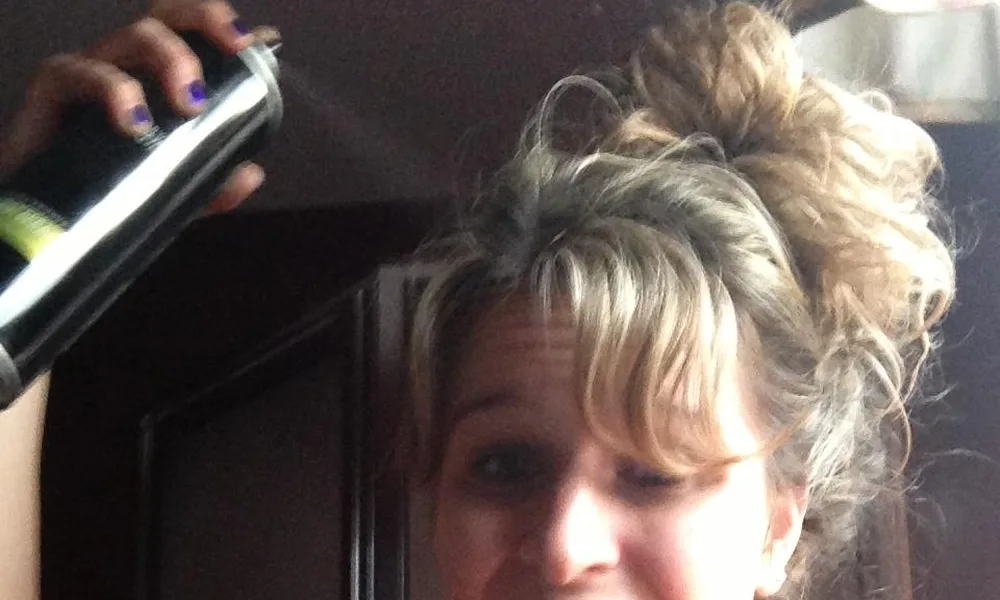
The mistakes are always the same: spraying too close, spraying the same spot twice, spraying before the hair is styled, and spraying onto wet hair, where the product dries into a stiff, sticky film. If your hair ever feels crunchy, the cause is almost always distance or quantity, not the spray, and the fix costs nothing.
Hair spray and the health of your hair
Hair spray does not damage the hair shaft the way heat or bleach does, because it sits on the surface. The real issue is build-up: a film left on day after day attracts dust, makes hair dull, and can leave the scalp itchy, especially if you also use a dry shampoo that saves bad hair days between washes. The answer is washing it out properly: a normal shampoo removes a normal amount, but after several days of heavy use, wash twice, working shampoo through the lengths and scalp, with conditioner on the ends. Our guide to the best shampoos for every hair type can help you pick a wash that clears build-up without stripping the hair.
Daily use is fine as long as hair is washed regularly; if your scalp feels tight or hair looks dull even after washing, take a break for a few days. People with sensitive scalps or fine hair should stick to flexible hold and keep spray off the scalp, using it on the lengths and outer layer instead of the roots.
Hair spray checklist
- Style your hair completely before spraying, because spray locks in the shape already there.
- Hold the can twenty to thirty centimetres away and keep it moving.
- Use short one-second bursts, two or three in total, and wait fifteen seconds before judging.
- Match the hold to the style: flexible for everyday wear, firm only for updos, curls and humid days.
- Layer lightly if you need more hold, rather than spraying one heavy coat.
- Wash it out at the end of the day, and wash twice after several days of heavy use.
Frequently asked questions
Is hair spray bad for your hair?
No, not when used normally and washed out. Hair spray coats the surface rather than changing the hair’s structure, so it does not damage hair the way heat or chemical treatments can. Problems come from build-up when it is layered on without washing, which makes hair dull and the scalp itchy, and both are fixed by a proper wash.
How long does hair spray last?
A good application holds all day, and firm hold can hold an updo through an evening. Humidity is the main enemy: on a damp day, even a strong spray softens after a few hours. Flexible hold typically lasts eight to ten hours on dry hair; firm hold lasts longer but feels stiffer.
Can I use hair spray every day?
Yes, if you wash it out regularly and do not let layers build up over days. If hair looks dull or your scalp feels tight, cut back for a few days, wash twice, and use a lighter flexible-hold formula when you go back to it.
Does hair spray work on curly hair?
Yes, but lightly and from a distance. A fine mist over finished curls controls frizz, but spraying too close or too much makes curls crunchy and pulls them apart. Flexible hold is usually best for curls, because it keeps the movement that makes curly hair look good.
Why does my hair feel stiff and crunchy after hair spray?
Almost always because the can was too close or the spray went on too heavily. Hold the can twenty to thirty centimetres away, use short bursts while it moves, and let each layer dry before adding more. If hair is already crunchy, brush gently once the spray is dry: a good flexible spray softens and the style still holds.
Can I brush hair spray out?
Yes. A good flexible-hold spray brushes out easily and leaves hair soft, which is how you tell a good spray from a bad one. Firm hold takes more brushing and may leave residue, so if you brush out your style every night, flexible hold is the better daily choice.
The bottom line
Hair spray works best when you barely notice it: a few short bursts from a forearm away, layered lightly onto a finished style, while the hair still moves and shines. The can is not the problem, and neither is your hair. The distance and the quantity are the problem, and both are free to fix. Spray less, spray further away, wait before you judge, and your hair spray will finally do the job it was made for.