How to Choose a Hairbrush That Actually Helps Your Hair in 2026
Choosing a hairbrush sounds simple until you stand in front of a wall of them and realise they all claim to do the same job. Yet the right hairbrush can make your hair smoother, shinier and easier to manage, while the wrong one can snap strands, scratch your scalp and turn a two-minute brush into a pile of broken ends. The difference is in the shape, the bristles and the way the brush meets your hair type, and this guide walks through all three so you can pick a hairbrush that actually helps your hair instead of quietly damaging it.
A hairbrush does more than untangle. It spreads the natural oils from your scalp along the lengths, which gives healthy hair its shine, and it smooths the cuticle so light reflects evenly. A bad brush does the opposite: stiff bristles scratch the scalp, tug at knots, and break hair at its weakest point. Because you use a brush every day, the small daily difference between a good brush and a bad one adds up fast.
Key takeaways
- Match the brush to your hair type first: paddle brushes for long, straight hair, round brushes for blow-drying, wide-tooth combs for wet and curly hair, and detangling brushes for knots.
- Choose bristles that glide: boar bristles for shine, flexible nylon pins for detangling, and smooth ball-tipped pins.
- Never brush soaking wet hair with a regular brush, because wet hair stretches and snaps far more easily than dry hair.
- Brush from the ends upward in short strokes, working knots out gently instead of dragging the brush from the roots down through a tangle.
- Clean your brush every week, because a dirty brush puts old oil, dust and product straight back into clean hair.
How we judged the best hairbrushes
Every hairbrush here was judged on the same five points: how smoothly it moved through hair without snagging; how little breakage it caused; how comfortable it felt on the scalp, with no scratching; how well it matched its intended job, from detangling to blow-drying; and how easy it was to clean and how long it stayed in good condition. Price came last, because a well-made brush lasts for years.
The best hairbrushes at a glance
| Hairbrush | Best for | Bristles | Use | Approx. price |
|---|---|---|---|---|
| Wooden paddle brush | Long, straight hair | Wooden pins | Daily smoothing | $12–$30 |
| Boar bristle brush | Shine, fine hair | Boar bristle | Smoothing, polishing | $20–$60 |
| Round brush | Blow-drying, volume | Nylon and bristle mix | Styling with heat | $15–$40 |
| Detangling brush | Knots, thick hair | Flexible nylon | Wet or dry detangling | $8–$20 |
| Wide-tooth comb | Wet, curly hair | Wide teeth | Gentle detangling | $5–$15 |
Paddle brushes: the everyday workhorse
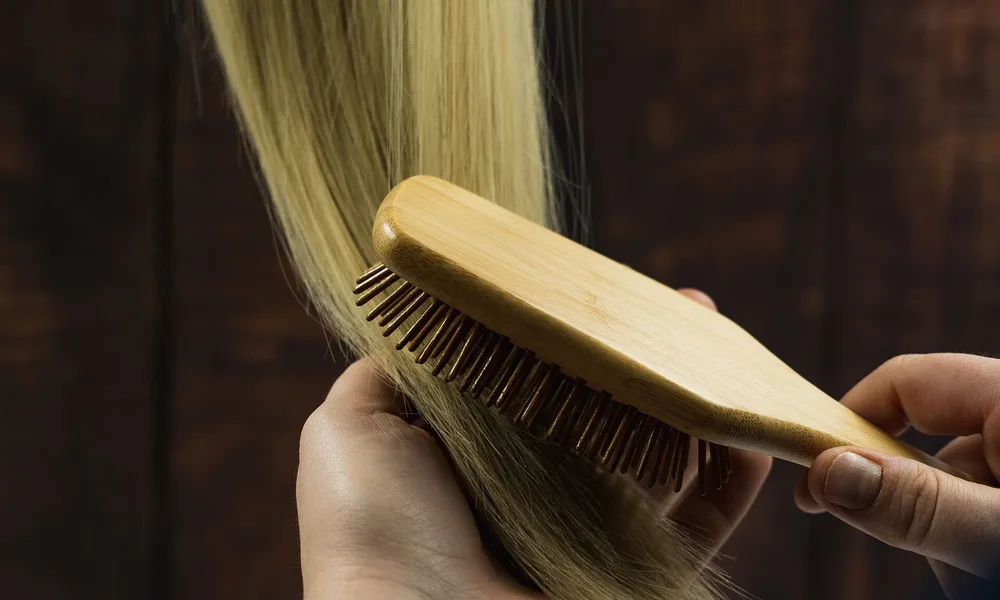
The paddle brush is the brush most people should own first, because it does the daily job better than any other shape. Its wide, flat base covers a large section of hair with each stroke, which smooths long, straight hair quickly and spreads scalp oils evenly from roots to ends. Wooden pins are the best choice: they glide without creating static and stay gentle on the scalp. Use a paddle brush on dry hair, starting at the ends and working upward in short strokes, and it will smooth and polish without pulling. It is less useful for styling with a hair dryer, and it struggles with very curly hair, because its wide base cannot get between curls without creating frizz. Replace it if the ball tips fall off, because bare pins scratch the scalp.
Boar bristle brushes: the shine makers
Boar bristle brushes are the oldest type of hairbrush, and they are still the best at making hair shine. The bristles are firm but flexible, and they pick up the natural oils from the scalp and carry them along the hair shaft as you brush, which coats each strand lightly and gives it a soft, glossy finish. That is why they are the best hairbrushes for fine hair that looks dull. They work best on straight or slightly wavy hair, and they are not detanglers, so always detangle first with another brush or a comb. For a full look at which brushes are worth buying and which to avoid, our guide to the best and worst hairbrushes compares the best and worst side by side.
Round brushes: the blow-drying partner
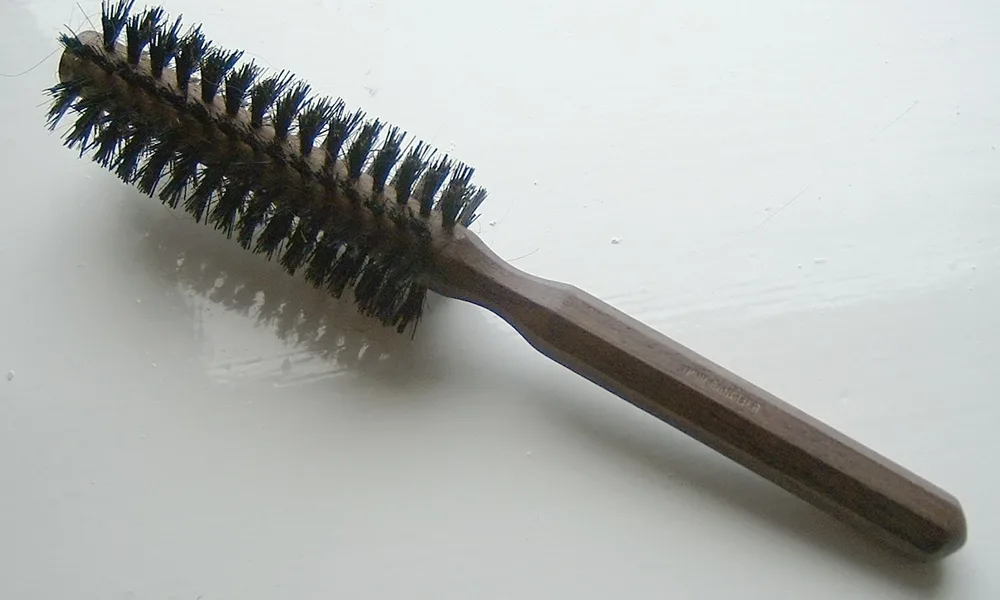
Round brushes exist for one job, which is styling hair with a hair dryer, and they do it better than any other shape. Wrapping hair around the barrel and pulling it through the heat creates the tension that smooths hair and adds volume at the roots. Barrel size decides the result: a small barrel creates curls, while a large one creates smooth volume. Round brushes need technique, and the most common mistake is using one on soaking wet hair. Towel-dry first, then rough-dry until the hair is about eighty per cent dry, and only then pick up the round brush for the final smoothing. Work in sections, keep the dryer nozzle pointing down the hair shaft, and let each section cool on the brush before you release it.
Detangling brushes: the knot solvers
Detangling brushes are designed for the job every other brush does badly, which is getting knots out without breaking hair. Their long, flexible, widely spaced bristles bend around a tangle instead of forcing through it. That flexibility is why they work on wet hair and on thick, curly hair, where knots form easily. Use it on damp hair after washing, starting at the ends and working upward, and never drag it from the roots down through a knot. If you hit a stubborn tangle, hold the hair above the knot so the pull does not reach the roots, and work the bristles through the bottom of the knot first. Detangling brushes are inexpensive, usually under twenty dollars, yet they save more hair than any other brush you can buy.
Wide-tooth combs: the gentlest option for wet and curly hair
Wet hair is at its weakest, because water swells the shaft and stretches the bonds inside it, and a brush with many pins can snap it easily. A wide-tooth comb is the safest tool for wet hair, because its teeth are far apart and glide through without catching. It is also the best tool for curly hair, because it separates curls without pulling them into frizz. A wide-tooth comb will not smooth hair the way a paddle brush does, and it will not add shine the way a boar bristle brush does, but it will get hair knot-free without breakage, and that is its job. Choose a comb with smooth, seamless teeth, because a ridged moulded comb can snag and split hair.

How to brush your hair properly
Technique decides whether brushing helps or harms, and the rules are simple. Always start at the ends, not the roots, because brushing from the roots drags every knot downward and tightens it. Work in short strokes, clearing the bottom few centimetres first, then move a little higher and repeat until the brush runs smoothly from roots to ends. Brush dry hair before washing, not after, because brushing before a shower removes loose hairs and loosens build-up so the shampoo can work properly. After washing, detangle gently with a comb or detangling brush, and wait until the hair is dry before using a paddle brush.
Mistakes that damage hair
Brushing soaking wet hair with a regular brush is the worst mistake, because wet hair stretches and snaps. The second is dragging a brush from the roots through a knot, which tightens the tangle and breaks the hair above it. The third is using a brush with missing ball tips or sharp, broken bristles, which scratch the scalp and split the hair shaft. The fourth is never cleaning the brush, so every stroke puts old oil and dust back into clean hair. The fifth is brushing too hard or too often, which wears down the cuticle and leaves hair dull and frizzy. The sixth is using the wrong brush for your hair type, such as a boar bristle brush on thick, curly hair. Most of these mistakes are easy to fix, and fixing them is free. What you wash with matters too, and our guide to the best shampoos for every hair type explains how to pair the right shampoo with the right brush.
Cleaning and caring for your hairbrush
A hairbrush needs cleaning every week, and the routine takes two minutes. Pull the loose hair out of the bristles with your fingers or a comb, then wash the brush in warm water with a drop of shampoo, working the bristles gently to loosen oil and product. Rinse well, then leave the brush to dry bristle-side down on a towel. Replace a brush when the bristles bend or lose their ball tips, or when the cushion sags. Most brushes last one to two years with daily use. Conditioner also affects how easily hair brushes out, and our guide to the best conditioners for soft, healthy hair covers which formulas leave hair smoothest for brushing.
Before you buy: a checklist
- Match the shape to your hair: paddle for long straight hair, round for blow-drying, wide-tooth comb for wet and curly hair, detangling brush for knots.
- Check the bristles: they should flex without snapping, feel smooth on the back of your hand, and have intact ball tips with no sharp edges.
- Hold the brush and check the handle: it should feel balanced and comfortable, with a grip that does not slip when your hands are damp.
- Choose the right size: a large brush for long, thick hair, a small one for short hair, and a compact one only for travel.
- Look for a brush that is easy to clean, with bristles you can pull hair from.
- Buy from a maker you trust and expect to keep the brush for a year or more.
Frequently asked questions
What is the best hairbrush for fine hair?
A boar bristle brush is usually best for fine hair, because its soft bristles smooth the cuticle and spread scalp oils without pulling. A wooden paddle brush with smooth pins is a good second choice.
Should I brush wet or dry hair?
Brush dry hair with a paddle or boar bristle brush, and detangle wet hair only with a wide-tooth comb or a flexible detangling brush. Wet hair stretches and breaks far more easily than dry hair.
How often should I clean my hairbrush?
Remove loose hair after every use, and wash the brush properly once a week with warm water and a drop of shampoo. If you use a lot of styling product, wash it twice a week, because product build-up on the bristles transfers straight back into clean hair.
Can a hairbrush really make hair shinier?
Yes, and the effect is real rather than cosmetic. Brushing spreads the natural oils from your scalp along the hair shaft, which smooths the cuticle so it reflects light evenly.
Why does my hair break when I brush it?
Breakage usually comes from brushing wet hair, dragging a brush through knots from the roots, or using a brush with damaged bristles. Start at the ends, work upward, and replace any brush with broken bristle tips.
When should I replace my hairbrush?
Replace it when bristles bend, break or lose their ball tips, when the cushion sags or splits, or when cleaning no longer removes the build-up on the base. Most brushes last one to two years with daily use.
The bottom line
The best hairbrush for your hair is the one that matches your hair type, glides without snagging, and feels comfortable on your scalp. A paddle brush smooths long straight hair, a boar bristle brush adds shine, a round brush styles with heat, a detangling brush clears knots safely, and a wide-tooth comb protects wet and curly hair. Pair the right brush with the right technique, brush from the ends upward, and keep the brush clean.