
Flat Irons That Give You Sleek Hair Without the Damage in 2026
A good flat iron should leave your hair smoother than it found it, not drier, rougher and thinner at the ends. The best flat irons in 2026 glide through a section once, seal the cuticle flat, and leave hair shiny and soft. The worst need three or four passes over the same strand, snag on the way down, and leave a faint smell of singed hair behind. The difference is rarely the price. It is the plates, the heat control, and the way you use the tool, and this guide covers all three so you can get sleek hair without paying for it in damage.
Flat irons press hair between two heated plates, and heat is both the point and the risk. Enough heat reshapes the bonds inside the hair shaft so a wave lies straight, and the smooth plates polish the surface as they pass. Too much heat, or the same heat applied too many times, dries the hair out, lifts the cuticle, and eventually snaps the strand. That is why the flat irons that protect hair best are not the hottest ones. They are the ones that heat evenly, hold a steady temperature, and let you choose a lower setting that still works in one slow pass.
Key takeaways
- Choose plates for your hair type: ceramic for fine or damaged hair, and titanium for thick or coarse hair.
- Use the lowest heat that straightens in one pass, usually 150 to 180 degrees for fine hair and 180 to 210 for thick hair, and never go above 230 degrees.
- Always use a heat protectant before the iron touches your hair, because it is the cheapest insurance your hair will ever get.
- Straighten only fully dry hair, in thin sections, with one slow pass, and let each section cool before you touch it again.
- Plate width matters as much as heat: narrow plates suit short hair and fringes, while wide plates straighten long, thick hair far faster and with fewer passes.
How we judged the best flat irons
Every flat iron here was judged on the same five points: how smooth and shiny hair looked after a single pass; how evenly the plates heated, with no hot spots; how easily the iron glided without snagging; how precisely the temperature could be set and held; and how quickly it straightened a full head of hair, because fewer passes mean less damage.
The best flat irons at a glance
| Flat iron | Best for | Plates | Width | Approx. price |
|---|---|---|---|---|
| Gentle ceramic flat iron | Fine, damaged hair | Ceramic | 25 mm | $45–$90 |
| Fast titanium flat iron | Thick, coarse hair | Titanium | 40 mm | $70–$140 |
| Compact travel flat iron | Short hair, travel | Ceramic | 20 mm | $30–$60 |
| Wide-plate salon flat iron | Long, very thick hair | Titanium ceramic | 45 mm | $90–$180 |

Ceramic plates: the gentle everyday choice
Ceramic plates are the safest starting point for most people, and the best flat irons for fine, thin or damaged hair. Ceramic heats evenly across the whole plate, so there are no hot spots that scorch one strand while another stays wavy. It produces a gentle, even heat that is less likely to shock hair already fragile from colouring or bleaching. The trade-off is speed: ceramic heats more slowly than titanium and sometimes needs a second pass on very thick hair, but for fine and medium hair it usually straightens in one slow glide. When you shop, look for genuine ceramic plates rather than a thin coating over cheap metal that chips within a year, and check that the plate edge feels perfectly smooth, with no ridge where it meets the housing, because that ridge catches and snaps hair.
Titanium plates: the fast choice for thick hair
Titanium plates heat faster, hold their temperature better, and transfer heat more efficiently than ceramic, which is why they are the best flat irons for thick, coarse or very curly hair. A titanium iron can straighten a thick section in a single pass where ceramic might need two, and fewer passes mean less total heat exposure even though the plate runs hotter. Titanium is less forgiving: a careless pass at 230 degrees can scorch fine hair in seconds. If your hair is thick and takes forever to straighten, choose a wide titanium plate of at least 40 millimetres, set it to the lowest point that still works in one pass, usually 190 to 210 degrees, and always use a heat protectant. For a full comparison of how straighteners differ from curling tools, our guide to the best curling irons for effortless waves explains which tool suits which finish.
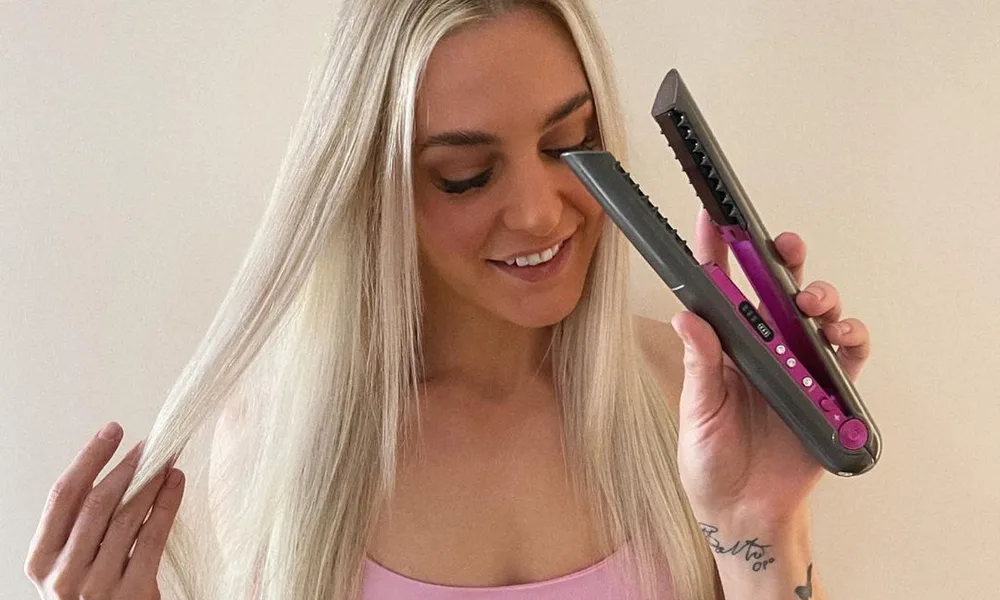
Plate width: the choice most people get wrong
Plate width changes how fast you finish and how much heat your hair absorbs, yet it is the detail most buyers ignore. Narrow plates, around 20 to 25 millimetres, suit short hair, fringes, and the fiddly sections around the ears and nape, where a wide plate cannot get close to the roots. The downside is speed: straightening long hair with a narrow plate takes many more passes, and every extra pass is extra heat. Wide plates, around 40 to 45 millimetres, are the best flat irons for long, thick hair because they cover more hair per pass and cut styling time in half, and fewer passes mean less damage. Wide plates struggle with short layers and can press creases into hair if you clamp too hard near the roots. If you can only own one iron, a 30 millimetre plate is the compromise that handles medium-length hair well.
Heat settings: lower is almost always better
The biggest mistake in flat ironing is using more heat than the hair needs. Most irons go up to 230 degrees, but very few heads of hair need that much. Fine hair usually straightens at 150 to 170 degrees, medium hair at 170 to 190, and thick hair at 190 to 210. The right temperature is the lowest one that straightens a thin section in a single slow pass, and you find it by starting low and working up in ten-degree steps, not by starting at maximum. An iron with a digital display is worth the extra money, because a dial with no numbers leaves you guessing, and guessing usually means too hot. Steady heat matters too: cheap irons swing by twenty degrees as you work, so one section gets scorched while the next barely straightens.

How to straighten without damage
The routine matters as much as the tool. Start with clean, fully dry hair, because straightening damp hair boils the water inside the shaft and causes damage no conditioner can fix. Rough-dry first, or let hair air-dry completely, and never clamp the iron onto hair that still feels damp at the roots. Our guide to the best hair dryers covers which dryers get hair dry gently and quickly before you start ironing. Spray or smooth a heat protectant through the lengths and comb it through so every strand is coated. Then divide the hair into thin sections, about two to three centimetres wide, and clip the rest out of the way. Take one section, comb it smooth, clamp the iron near the roots without pressing it against the scalp, and glide down in one slow movement, taking about five seconds from roots to ends. Let the section cool before you touch it, because hair sets its shape as it cools, and handling it while hot creates frizz. Work through the head section by section, and resist going back over finished sections.
Mistakes that damage hair
Straightening wet or damp hair is the worst mistake, because the water inside the hair turns to steam and blisters the shaft from the inside. The second is going over the same section again and again, which is usually a sign the section was too thick or the temperature too low, and the fix is thinner sections, not more passes. The third is clamping too hard, which creases the hair and crushes the cuticle. The fourth is skipping heat protectant, which is like going out in the sun without sunscreen: you might not see the damage today, but it accumulates. The fifth is straightening every day without a break, because even gentle heat adds up and hair needs rest days. The sixth is using a damaged iron: chipped plates or a hinge that no longer closes evenly will snag and scorch hair, so replace the iron when the coating fails.
Before you buy: a checklist
- Match the plate material to your hair: ceramic for fine or damaged hair, titanium for thick hair, tourmaline for frizz.
- Pick the plate width for your length: narrow for short hair and fringes, wide for long, thick hair.
- Choose a digital temperature display with settings from 150 degrees upward, so you can use the lowest effective heat.
- Check that the plates are smooth, with no ridge or chip, and that the hinge closes evenly along the full length.
- Look for a swivel cord at least two metres long, so the iron never tugs while you work around the back of your head.
- Confirm the iron heats up in under a minute, holds its temperature, and has an automatic shut-off for safety.
Frequently asked questions
What temperature should I use on my flat iron?
Fine hair usually needs 150 to 170 degrees, medium hair 170 to 190, and thick hair 190 to 210. Start at the lowest setting for your hair type and increase in ten-degree steps until a thin section straightens in one slow pass. Never go above 230 degrees.
Can I use a flat iron on wet hair?
No, unless the iron is specifically designed as a wet-to-dry tool with vents for steam, and even then it is harder on hair than drying first. Straightening wet hair boils the water inside the shaft, which causes breakage and split ends. Always dry your hair completely first.
Do I really need heat protectant?
Yes, every single time. Heat protectant forms a thin barrier that slows heat transfer into the hair shaft and reduces moisture loss, and it costs far less than repairing damaged hair. Apply it evenly through the lengths and comb it through before styling.
How often can I straighten my hair?
Two or three times a week is fine for most healthy hair with a good iron, low heat and heat protectant. Daily straightening is possible if your hair is strong and you keep the temperature low, but watch for dryness and split ends, and take rest days whenever you can.
Why does my hair frizz again an hour after straightening?
Frizz usually means humidity is getting back into the hair, the sections were too thick to straighten fully, or the cuticle was not sealed by a slow, even pass. Try thinner sections, a tourmaline iron, and a light smoothing serum on the cooled hair.
When should I replace my flat iron?
Replace it when the plate coating chips or peels, the plates no longer close evenly, the temperature swings noticeably, or the iron snags hair it used to glide through. Most well-made irons last three to five years with regular use.
The bottom line
The best flat irons for sleek hair without the damage are the ones that match your hair type, heat evenly, and let you use the lowest effective temperature. Ceramic suits fine hair, titanium suits thick hair, and the right plate width cuts your styling time and your pass count in half. Pair the right iron with heat protectant, dry hair, thin sections and one slow pass, and you get the sleek finish without the dryness and split ends. If you want to see how straighteners compare with the rest of the market, our guide to the best and worst hair straighteners puts the best and worst side by side.


