Mascaras That Make Your Eyes Pop in 2026
Mascara is the one makeup product that can change your whole face in thirty seconds, and it is also the one most likely to let you down by lunchtime. A good mascara opens up the eye: lashes look longer, darker and more defined, and the effect lasts from morning until you choose to take it off. A bad one clumps, flakes into your eyes, smudges down your cheeks in the rain, and leaves you looking more tired than you did without it.
This guide is about the mascaras that make your eyes pop in 2026, and matching the right one to your own lashes: the brush and formula for short, straight, sparse or fair lashes, and how to apply it so it looks like your lashes, only better.
Key takeaways
- The brush matters more than the formula: a good brush separates and coats every lash, while a bad one clumps them together no matter how good the mascara inside is.
- Match the mascara to your lashes: short lashes need length, straight lashes need curl hold, sparse lashes need volume, and fair lashes need deep pigment.
- One thin coat, then a second while it is still damp: waiting until the first coat dries is the fastest way to clumps and spider lashes.
- Smudge-proof is a real claim to test: a mascara that transfers to your under-eye by noon has failed.
- Replace it every three months: old mascara dries out, clumps, and is the most likely product in your bag to carry bacteria near your eyes.
What makes eyes pop: length, volume, curl and definition
Eyes pop when four things happen at once, and a good mascara delivers all four without overdoing any of them. Length makes the lashes visible from further away, so the eye looks bigger. Volume thickens the lash line, so the eye looks defined even without eyeliner. Curl lifts the lashes up and away from the eye. Definition keeps every lash separate, so the result looks like lashes, not spikes.
Most mascaras promise all four and deliver one or two well. A lengthening mascara adds visible length without making lashes look spidery, and a volumising mascara thickens the lash line without weighing the curl down. The best do both at once, without needing three coats, because a third coat is where clumps begin.
Our comparison of the best and worst mascaras of 2026 judges tubes on exactly these four qualities. This guide answers the other half of the question: which mascara makes your particular lashes look their best.
Matching mascara to your lashes
Start with your own lashes, not with the prettiest tube. Look at them in a mirror in daylight: are they short, straight, sparse, fair, or long already? Each type needs a different mascara, and the wrong match is the most common reason a well-reviewed mascara disappoints.
Short lashes need length and a small brush. A narrow brush reaches the corners without painting your eyelid, and a lengthening formula adds visible length in two coats. Straight lashes need curl hold above all: a waterproof or tubing formula, which sets firmer than a regular one, holds a curl far longer, especially if you curl first and apply while the curl is fresh. Sparse lashes need volume and a full brush that loads enough product to thicken the lash line, applied with a gentle zigzag at the roots so the base looks dense.
| Your lashes | Best mascara type | Best brush | Watch out for |
|---|---|---|---|
| Short | Lengthening | Small, narrow | Big brushes that paint the eyelid |
| Straight | Waterproof or tubing, curl-holding | Curved | Heavy formulas that drop the curl |
| Sparse | Volumising | Large, full | Thin formulas that add nothing |
| Fair or blonde | Deep black pigment | Any, well-loaded | Brown-black that looks too soft |
| Long already | Defining, light volume | Plastic bristles, separating | Heavy volume that looks spidery |
| Sensitive eyes | Fragrance-free, tubing | Small, soft bristles | Flaking formulas near the eye |
The brush does most of the work
The brush is the second thing to understand, because it does most of the work. A large, full brush loads a lot of product and suits long lashes that need volume. A small, narrow brush gives control on short lashes and reaches the corners without painting your eyelid. A curved brush lifts and curls, while a straight brush lengthens. Plastic bristles separate lashes cleanly; fibre brushes hold more product but can overload the lash.
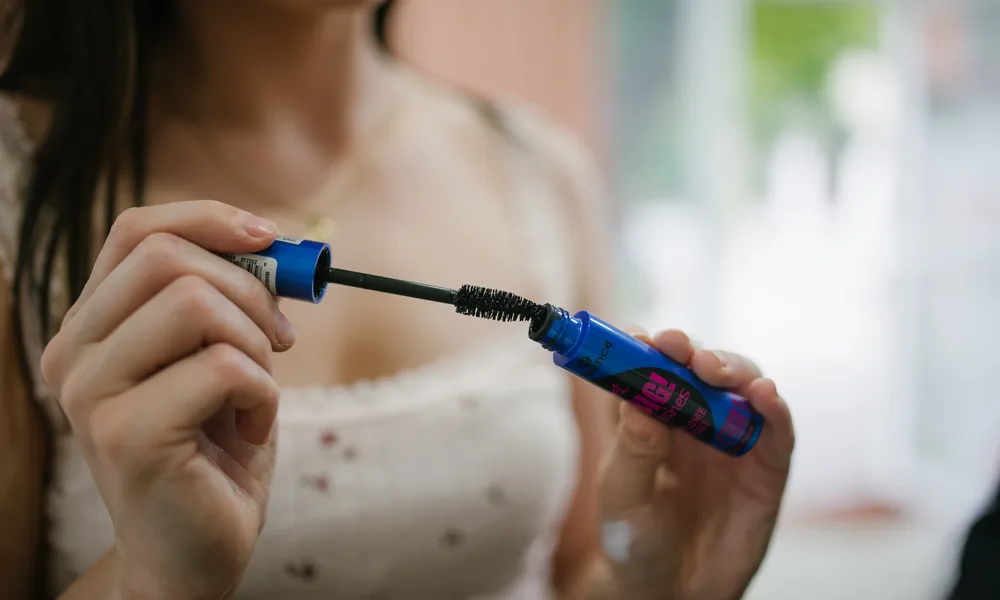
Before you buy, look at the wand: bristles should be straight and even, and it should wipe cleanly at the neck of the tube. A wand that comes out overloaded will clump whatever the formula is, so wipe it once before you start. If the brush is wrong for your lashes, even a good formula will look messy.
Formula types: regular, waterproof and tubing
Formula type is the third test, and knowing which one you are buying matters more than the promises on the packaging. A regular mascara washes off with soap and water and is the easiest to remove, but it is also the first to smudge, especially if your skin is oily or your eyes water. A waterproof mascara survives rain, tears and swimming, yet needs an oil-based remover and harder rubbing, which is rough on lashes and skin. A tubing mascara wraps each lash in a tiny tube that slides off with warm water: it rarely smudges and removes gently, though it can look less dramatic than a volumising formula.
For most days, a regular or tubing mascara is the better choice: easier on the lashes and easier to remove. Save waterproof for weddings, long hot days and swimming. If your eyes water often, a tubing mascara is usually the best compromise, because it will not smudge and it removes with warm water alone.
How to apply mascara so your eyes pop
Application is where most of the pop comes from, and the technique is simple once you know it. Lashes should be clean and dry before you start, with no leftover mascara or oily eye cream on them, because oil stops the formula gripping. Curl first if you use a curler, and apply while the curl is fresh. Our guide to eye creams that actually work explains which formulas sit well under makeup without making lashes slippery.

Apply the first coat to the top lashes from root to tip with a gentle zigzag, which coats each lash and builds volume at the base. Then add the second coat while the first is still slightly damp: waiting until the first coat dries is the fastest way to clumps, because the second coat sticks to the first in lumps instead of blending in. For the lower lashes, hold the wand upright and use the tip, because a full brush will paint the skin underneath. Two coats are enough: a third coat is where spider lashes begin, and no amount of combing fixes them once they have set.
A little eyeliner along the upper lash line makes mascara look fuller, because it fills the gaps between lashes at the root, and our comparison of the best and worst eyeliners of 2026 covers the ones that stay put beside mascara. Keep the rest of the eye quiet on most days.
Mascara for straight, sparse and mature lashes
Straight lashes are the hardest to make pop, because the curl drops as soon as the formula dries. The fix is a combination: curl first, then use a curl-holding formula, waterproof or tubing, and apply it in two thin coats while the curl is fresh. Hold the curler for ten seconds at the base, then a few seconds halfway along the lash, and apply the mascara immediately. Heavy volumising formulas work against you here, because their weight pulls the curl down within the hour.

Sparse lashes need the opposite approach: volume at the roots, built with a zigzag motion, and a second coat that thickens the lash line. Mature lashes, often drier and more brittle, need a gentle formula that does not flake into the eye. A tubing mascara suits them well, because it removes with warm water and no rubbing.
Keeping the pop all day, and taking it off kindly
Wear is the test that separates a good mascara from a merely pretty one. A good mascara lasts a full working day without flaking into your eyes, smudging under the lower lashes, or transferring to the brow bone when you blink. It survives a rainy walk and a long meeting, and it does not run when your eyes water. Test it on one eye first, for a full day: two coats on one eye in the morning, then check at midday and evening. One that fails by lunch will not improve with a different technique.
Removal tells the truth about a mascara, because lashes are easy to lose and slow to regrow. A good one comes off with warm water or a gentle remover, while a bad one needs hard rubbing that costs you lashes. Hold a warm, damp cloth over closed eyes for thirty seconds, then wipe gently downwards. Never pump the wand, keep the tube out of heat and sunlight, and replace it after three months.
Mascara buying checklist
- Work out your lash type first: short, straight, sparse, fair, long or sensitive, and pick the brush and formula that match it.
- Check the wand before you buy: straight, even bristles, the right size for your eyes, and a neck that wipes the wand cleanly.
- Choose the formula for your life: tubing for watery eyes and easy removal, waterproof only for rain, tears and swimming.
- Test it on one eye for a full day before committing, checking for smudging, flaking and lost curl.
- Apply two thin coats, the second while the first is still damp, and stop there: a third coat is where clumps and spider lashes begin.
- Replace the tube every three months, keep it out of heat and sunlight, and throw it away at once if it smells different or stings.
Frequently asked questions
Why does my mascara clump?
Usually because the first coat dried before the second went on, the wand was overloaded, or the mascara is old. Wipe the wand, apply the second coat while the first is still damp, and replace any tube older than three months.
Should I use waterproof mascara every day?
No, for most people it is too hard on lashes for daily use, because it needs oil-based remover and hard rubbing. Save it for rain, tears and swimming, and use a regular or tubing mascara on ordinary days.
What is tubing mascara, and is it better?
Tubing mascara wraps each lash in a tiny tube that slides off with warm water, so it rarely smudges and removes gently. It is better for watery or sensitive eyes, though it can look less dramatic than a volumising formula.
How do I make my mascara last longer in the tube?
Do not pump the wand, keep the cap sealed, and store it out of heat and sunlight. Pumping pushes air in and dries the formula out.
Can mascara make short lashes look longer?
Yes, with a lengthening formula and a small, narrow brush. Two thin coats, applied with a zigzag from root to tip, add visible length without spider lashes.
Is it safe to share mascara?
No. Mascara is the one makeup product that should never be shared, because the wand carries bacteria straight to the eye. Even a single shared use can cause an eye infection, so keep your tube to yourself.
The bottom line
The mascaras that make your eyes pop in 2026 are the ones matched to your lashes: a small brush and length for short lashes, a curl-holding formula for straight ones, volume at the roots for sparse ones, and deep black pigment for fair ones. Apply two thin coats while the first is still damp, test it on one eye for a full day, and replace the tube every three months.