
Eyeliner is the smallest line in your makeup bag and the one with the most power to change your face. A good eyeliner sharpens the eyes in under a minute: the lash line looks fuller, the eye looks bigger and more awake, and the line stays exactly where you put it until you decide to take it off. A bad one skips, tugs, fades to grey by lunchtime and smudges down onto your cheeks in the rain. The difference is rarely the price on the pencil.
This comparison puts the best eyeliners of 2026 head to head against the worst, judging them the way you would actually wear them: how the line looks in daylight, how the tip or pencil behaves on real skin, whether the colour stays true through a long day, tears and weather, and whether you reach for the same one again tomorrow. The same honest testing sits behind our comparison of the best and worst eyeshadows of 2026, because a beauty product earns its place the same way whatever it is: it has to work on a real person on a real day.
Key Takeaways
- The tip matters more than the formula: a good tip draws a clean line in one stroke, while a blunt or scratchy one drags the skin and leaves a broken, uneven line no matter how good the pigment is.
- Test on your eyelid, not your hand: the eyelid is warmer, oilier and thinner than your hand, and an eyeliner that looks perfect on your wrist can skip and smudge on your eye.
- Smudge-proof is a real claim to test: an eyeliner that transfers to your brow bone or under-eye by noon has failed, however sharp it looked at eight in the morning.
- Pencil, liquid and gel do different jobs: pencils soften and smudge, liquids give the sharpest line, and gels give the darkest line with the most control, so the best choice depends on the look you want.
- Replace it on time: an old eyeliner dries out, drags, and is the product most likely to carry bacteria close to your eyes, so a dull or dry tip is a sign to throw it away.
How Eyeliner Actually Works
An eyeliner is mostly pigment, wax or film-formers, and a carrier that lets it flow. The pigment, almost always black, brown-black or brown, darkens the lash line. The wax gives a pencil its body and grip, so it holds a line without sliding. The film-formers in a liquid liner coat the skin in a thin layer that sets as it dries, which is why a good liquid can survive rain and tears. Change the balance and you change everything: too much wax and the pencil is stiff and scratchy, too little and it smears at the first sign of warmth.
The tip is the second thing to understand, because it does most of the work. A fine felt tip draws a thin, precise line and flicks a wing with one movement. A brush tip is softer and more forgiving, and it suits a hand that is still learning. A pencil tip gives a softer, smokier line and can be smudged with a finger or a brush before it sets. A gel liner, applied with a small angled brush, gives the darkest and most even line of all, but it needs a steady hand and a brush that is cleaned after every use.

What Makes an Eyeliner One of the Best
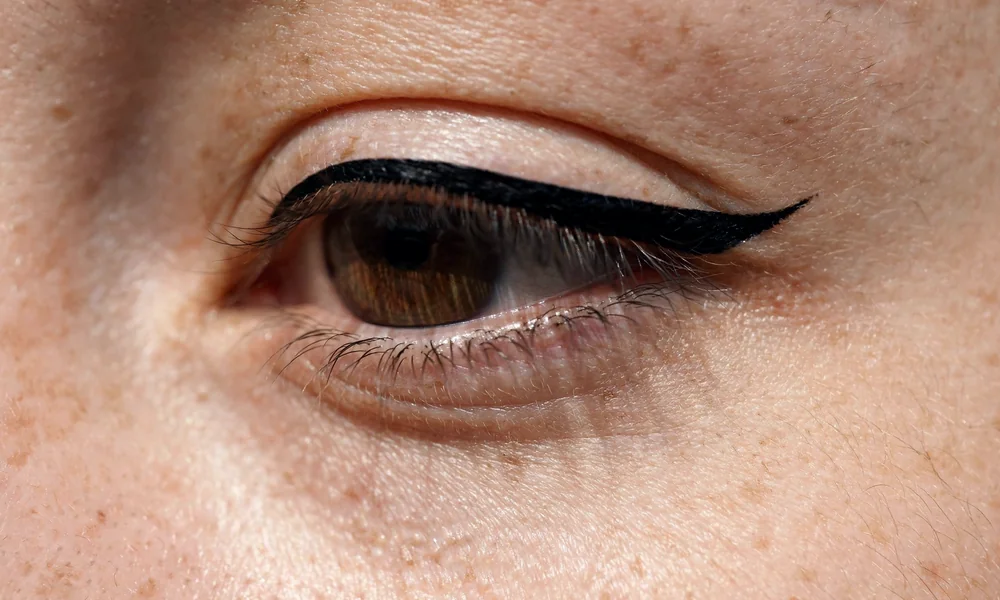
The best eyeliners of 2026 share one quality above all others: they draw the line you meant to draw, the first time. The tip glides without tugging at the delicate skin of the eyelid, the pigment comes out dark and even from the first stroke, and the line looks the same on both eyes without endless correction.
Staying power is the second mark of a good eyeliner. A good one sets within a minute and then stays put through a working day, a walk in the rain and a long evening, without fading to grey or transferring onto the brow bone. It survives oily eyelids better than most, because it grips the skin rather than sitting on top of it. By five in the afternoon it looks almost as sharp as it did at eight in the morning, with only a gentle softening at the very ends.
Colour is the third test, and it is subtler than it sounds. A good black eyeliner is a true, deep black on the skin, not a dark grey that looks washed out in daylight. A good brown eyeliner is warm and soft rather than muddy, and it suits lighter skin without looking harsh. A good coloured eyeliner, whether navy, plum or green, shows its true colour in one stroke rather than needing three layers to build up. The colour you see in the shop should be the colour you see on your eye.
Comfort matters too, because eyeliner sits closer to the eye than almost any other product. A good eyeliner does not sting, water the eyes, or leave them red and irritated by the end of the day. It does not flake into the eyes, and it does not leave a gritty feeling when you blink. For people who wear contact lenses, this matters even more: a good eyeliner stays on the lash line and does not migrate onto the lens.
Finally, a good eyeliner is honest about how long it lasts. The tip stays sharp and clean for weeks, the pencil sharpens without crumbling, and the cap seals properly so the product does not dry between uses. A good eyeliner also comes off kindly at night: warm water or a gentle remover takes it away without hard rubbing, and there is no black shadow left under the eyes the next morning.
What Makes an Eyeliner One of the Worst
The worst eyeliners fail at the first stroke and keep failing. The tip skips across the skin, leaving a dotted, broken line where there should be a smooth one. The pencil drags and tugs, pulling at the eyelid and making your eye water before you have finished one eye, let alone both. The liquid comes out pale and patchy, so you go over it again and again until the line is thick and uneven. No amount of technique rescues a tip that was badly made.
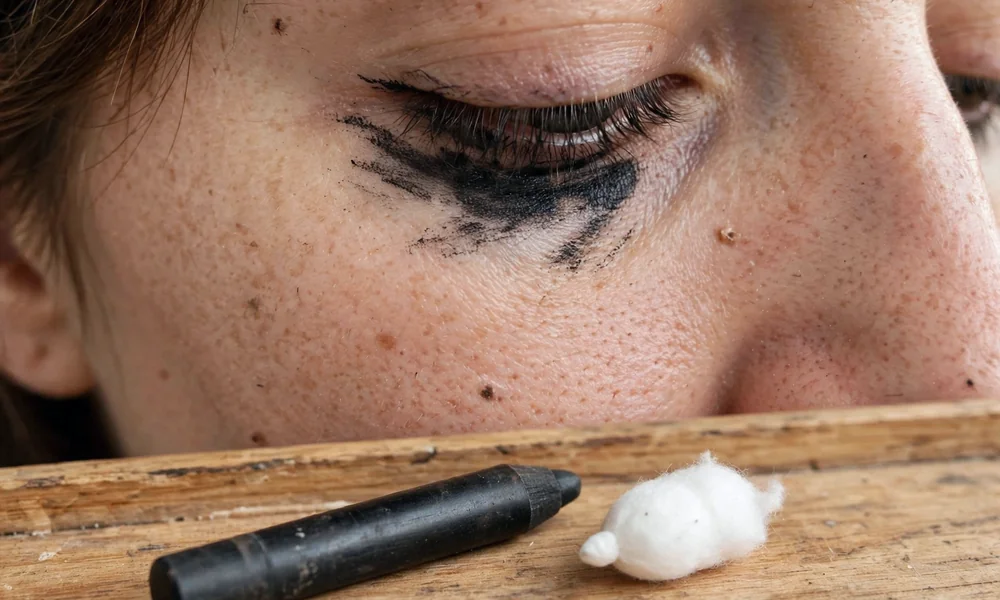
Smudging is the classic failure, and it shows up fast. A bad eyeliner looks sharp for twenty minutes and then starts to move: it transfers onto the brow bone, creeps into the crease, and by lunchtime there is a grey smudge under each eye that makes you look tired rather than defined. Oily eyelids make it worse, and warm weather makes it worse still, because the formula never truly sets. A line that wanders is not a look, it is a mistake you have to keep checking in every mirror you pass.
Fading is the quieter failure, and it is just as annoying. A bad eyeliner starts as a strong black and ends the day as a pale, uneven grey, with the outer corners gone entirely and the inner corners the only part still visible. The wing, if you managed one at all, is the first thing to disappear. Some bad eyeliners fade unevenly, leaving a dark patch in the middle of the lash line and nothing at either end, which looks worse than no eyeliner at all.
Irritation is the failure that matters most, because it is about your eyes, not your appearance. A bad eyeliner stings the moment it touches the lash line, makes the eyes water, and leaves them red and sore by the evening. Some flake into the eyes during the day, which is painful and, for contact lens wearers, genuinely risky. If an eyeliner makes your eyes unhappy, stop using it: no look is worth sore eyes.
How to Test an Eyeliner Before You Commit
The best test is the one you do on your own eyelid, on a normal day, and it takes less than a minute in the shop. Draw a short line along the outer half of your upper lash line, and a small wing if that is the look you wear. Check three things straight away: does the tip glide without tugging, is the colour dark and even in one stroke, and does the line look the same when you open your eye as it did when it was closed. If any of those fails, put the pencil back.
The second test is the wait, and it is the one most people skip. Wear the line for a full day before you decide, because an eyeliner that looks perfect at ten in the morning can be a smudged mess by three in the afternoon. Check it after lunch and at the end of the day: is the line still sharp, and has any colour transferred to the brow bone or under the eye. The same patience pays off across your whole routine, because a base that holds helps every line you draw, as our comparison of the best and worst moisturizers of 2026 shows: skin that is calm and settled keeps makeup in place far longer than skin that is dry or greasy.
Colour and finish deserve their own test, because they change in daylight. Step outside or stand by a window and look at the line in natural light: a black should still be black, a brown should still be warm, and a coloured liner should show its true shade. Try the wing too, because a good felt tip flicks a clean wing in one movement, while a bad one leaves a blunt, rounded end that needs fixing with a cotton bud.
Finally, test the removal, because it tells you how the formula treats your skin. At the end of the day, take the eyeliner off with warm water or your usual gentle remover, and notice how much effort it takes. A good eyeliner comes away cleanly without hard rubbing, and there is no dark shadow left behind the next morning. A bad one needs repeated scrubbing and leaves the skin around your eyes red and tender. The lashes matter here too, because a sharp line and a good lash look belong together, as our comparison of the best and worst mascaras of 2026 shows, and a liner that is easy to remove makes the whole routine kinder to your eyes.
The Verdict
The best eyeliners of 2026 are not the most expensive ones, and they are not the ones with the most dramatic advertising. They are the ones that draw a clean, dark line in one stroke without tugging, hold that line through rain, tears and long days without smudging or fading, and come off gently at night without costing you comfort or skin. They treat your eyes kindly, stay sharp for weeks, and make your eyes look like a better version of your own.
The worst eyeliners fail at the first stroke and keep failing: a skipping tip, a line that fades to grey by noon, smudges under your eyes, a wing that disappears before lunch, and a pencil that dries out before you have used half of it. No technique rescues them, and the money you save on the pencil you spend again in time, cotton buds and irritation. Spend a little more on an eyeliner that behaves, test it on your own eyelid first, and your eyes will look better for longer with far less effort.


