
Mascara is the one makeup product almost everyone owns, and the one most likely to disappoint. A good mascara opens up the whole eye in thirty seconds: lashes look longer, darker and more defined, and the effect lasts from morning until you choose to take it off. A bad one clumps, flakes into your eyes by lunchtime, smudges down your cheeks in the rain, and leaves you looking tired rather than awake. The difference is rarely the price on the tube.
This comparison puts the best mascaras of 2026 head to head against the worst, judging them the way you would actually wear them: how the lashes look in daylight, how the brush behaves, whether the formula survives a long day, tears and weather, and whether you reach for the same tube again. The same honest testing sits behind our comparison of the best and worst lipsticks of 2026, because a beauty product earns its place the same way whatever it is: it has to work on a real person on a real day.
Key Takeaways
- The brush matters more than the formula: a good brush separates and coats every lash, while a bad one clumps them together no matter how good the mascara inside is.
- One thin coat, then a second while it is still damp: waiting until the first coat dries is the fastest way to clumps and spider lashes.
- Smudge-proof is a real claim to test: a mascara that transfers to your brow bone or under-eye by noon has failed, however good it looked at eight in the morning.
- Removal tells the truth: a good mascara comes off with warm water or gentle remover, while a bad one needs hard rubbing that costs you lashes.
- Replace it every three months: old mascara dries out, clumps, and is the most likely product in your bag to carry bacteria near your eyes.
How Mascara Actually Works
A tube of mascara is mostly water or oil, wax, pigment and film-formers. The wax gives it body and hold, so the curl stays up. The pigment, almost always black or brown-black, darkens the lash. The film-formers coat each lash in a thin layer that sets as it dries. Change the balance and you change everything: too much wax and the mascara is stiff and clumpy, too little and the curl drops within an hour, too much pigment and it smudges at the first sign of moisture.
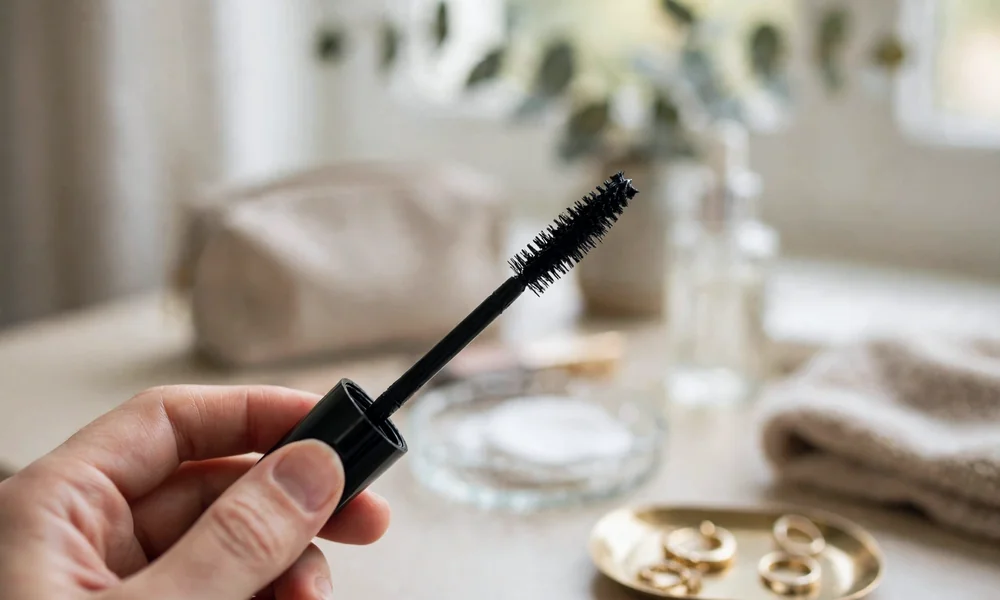
The brush is the second thing to understand, because it does most of the work. A large, full brush loads a lot of product and suits long lashes that need volume. A small, narrow brush gives control on short lashes and reaches the corners without painting your eyelid. A curved brush lifts and curls, while a straight brush lengthens. Plastic bristles separate lashes cleanly and are easy to wipe; traditional fibre brushes hold more product but can overload the lash. If the brush is wrong for your lashes, even a good formula will look messy.
Formula type is the third test. A regular mascara washes off with soap and water and is the easiest to remove, but it is also the first to smudge. A waterproof mascara survives rain, tears and swimming, yet needs an oil-based remover and hard rubbing, which is rough on lashes and skin. A tubing mascara wraps each lash in a tiny tube that slides off with warm water: it rarely smudges and removes gently, though it can look less dramatic than a volumising formula. Knowing which type you are buying matters more than the promises on the packaging.
What Makes a Mascara One of the Best
The best mascaras share one quality above all others: they coat without clumping. The first coat goes on smoothly, separating each lash and darkening it from root to tip. The second coat, applied while the first is still slightly damp, adds length and volume without sticking lashes together into spikes. The result looks like your lashes, only better: longer, darker, defined, with no flakes, no blobs at the roots and no black dots on the eyelid.
Length and volume are where the best mascaras earn their money, and they do it honestly. A good lengthening mascara adds visible length without making lashes look spidery or stiff. A good volumising mascara thickens the lash line without weighing the curl down, so the lift you get from a curler at eight in the morning is still there at five in the afternoon. The best formulas do both at once, and they do it without needing three coats, because a third coat is where clumps begin.
Wear is the test that separates the good from the merely pretty. A good mascara lasts a full working day without flaking into your eyes, smudging under the lower lashes, or transferring to the brow bone when you blink. It survives a rainy walk and a long meeting, and it does not run when your eyes water. It does not make your eyes sting or itch, even after eight hours, and it does not leave your lashes feeling stiff or brittle.
Finally, the best mascaras are kind to the eyes and lashes underneath. They do not sting on application, they do not flake into the eye, and they do not leave lashes dry and snapping when you remove them. They come off without hard rubbing, which matters because lashes are easy to lose and slow to regrow.
What Makes a Mascara One of the Worst
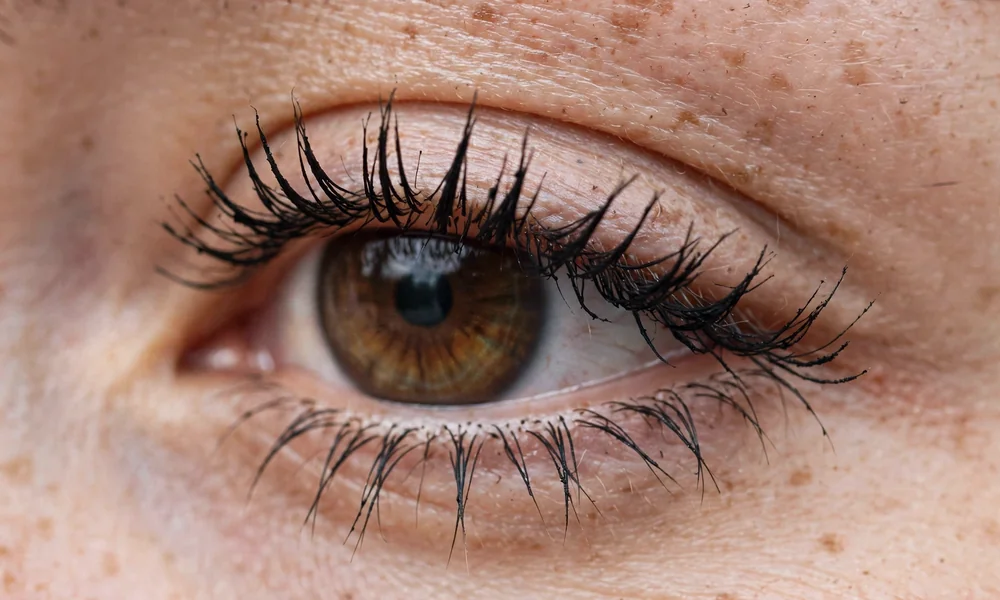
The worst mascaras announce themselves the moment the wand comes out of the tube. The brush is overloaded with product, the formula is gloopy, and the first stroke deposits a clump at the root that no amount of combing will fix. The wand is often the culprit: too big for the eye, bristles that bend, or a brush that holds so much mascara it paints the eyelid as well as the lashes. You spend more time cleaning up with a cotton bud than applying the product itself.
Clumping is the classic failure, and it has one main cause: a formula that dries too fast. If the first coat sets before you can add the second, the second coat sticks to the first in lumps instead of blending in, and the lashes glue themselves together into spikes. Old mascara does the same thing, because the solvent has evaporated and the formula has thickened. A mascara that clumps on the second day you own it has a bad formula; a mascara that starts clumping after two months is simply old and should be replaced.
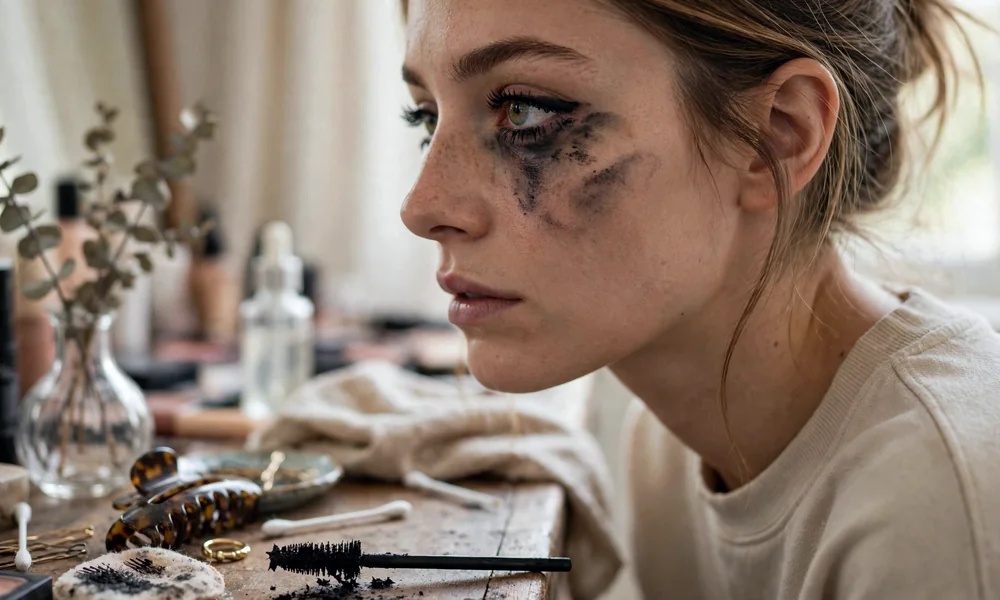
Smudging is the failure that shows up later and embarrasses you more. A mascara that looks perfect at eight in the morning can leave panda eyes by noon, especially if your skin is oily or your eyes water. The pigment migrates onto the skin under the lower lashes and onto the brow bone with every blink, and once it has transferred, it is hard to clean without removing the rest of your makeup.
Flaking is the failure that hurts. Dry, brittle mascara sheds tiny black flakes into the eye all day, causing irritation, watering and redness, and the watering makes the smudging worse. Flaking usually means the formula is too dry, too old, or badly balanced: the film that coats the lash cracks instead of flexing as you blink. The same problem appears when a formula promises dramatic volume but delivers it with a heavy, stiff coating, as our comparison of the best and worst foundations of 2026 found with heavy formulas that crack instead of moving with the skin.
Then there is the tube itself. A wand that does not wipe cleanly at the neck, a cap that does not seal, a formula that dries out in six weeks: these are small failures that add up to a product you stop reaching for. A mascara that smells sharp or stings the moment it touches the lash line should be thrown away at once, because the eye is the worst place to gamble with a product that has turned.
How to Test a Mascara Before You Commit
Test it on one eye first, and wear it for a full day. Apply two coats to one eye in the morning and nothing to the other, then check in a mirror at midday and again in the evening. Has it smudged, flaked, or lost its curl? Does the eye feel irritated? A mascara that survives a full day on one eye will survive a week on two, and one that fails by lunch will not improve with a different technique.
Watch the first coat, because it tells you almost everything. A good first coat is even and separating, with no blobs at the root and no lashes stuck together. If the first coat clumps, the second will only make it worse. Wipe the wand on the neck of the tube before you start: a wand loaded with product is the most common cause of clumps.
Choose the shade and type for your life, not for the advertising. Black suits most people and gives the most definition, while brown-black looks softer on fair skin and in daylight. If your eyes water, or you live somewhere rainy, a tubing mascara is usually a better choice than a regular one, because it will not smudge and it removes with warm water alone.
Prep decides the result more than the mascara does. Lashes should be clean and dry before you start, with no leftover mascara or oily eye cream on them, because oil stops the formula gripping. Curl your lashes first if you use a curler, and apply the mascara while the curl is fresh. Apply the first coat to the top lashes from root to tip with a gentle zigzag, then the second while the first is still slightly damp. For the lower lashes, hold the wand upright and use the tip, because a full brush will paint the skin underneath. As with scent, the product has to suit you, not just look good in the shop, as our comparison of the best and worst perfumes of 2026 shows.
Finally, respect the three-month rule and it will save you trouble. Write the date you opened the tube on the bottom with a pen, keep it out of sunlight and heat, and never pump the wand in and out of the tube, because that pushes air in and dries the formula out faster. If a mascara smells different from when you bought it, or has gone thick and stringy, throw it away.
The Verdict
The best mascaras of 2026 are not the most expensive ones, and they are not the ones with the most dramatic advertising. They are the ones that coat each lash without clumping, hold a curl all day, survive rain and long hours without smudging or flaking, and come off gently at night without costing you lashes. They treat your eyes kindly, stay smooth for three months, and make your lashes look like a better version of your own. Buy one of those and the rest of the routine becomes easy.
The worst mascaras fail at the first stroke and keep failing: clumps at the root, smudges by noon, flakes in your eyes, a curl that drops within the hour, and a tube that dries out before you have used half of it. No technique rescues them, and the money you save on the tube you spend again in time, cotton buds and irritation. Spend a little more on a mascara that behaves, test it on one eye first, and your eyes will look better for longer with far less effort.


