
A Guide to Eye Creams That Actually Work in 2026
Eye creams have a reputation problem, and most of it is earned. Too many of them are tiny jars of ordinary moisturiser sold at three times the price, promising to erase dark circles and wrinkles overnight. The truth is smaller and more useful: a good eye cream can genuinely help with puffiness, dryness and fine lines, because the skin around the eyes is thinner and drier than the rest of your face, and it needs a gentler, richer formula.
This guide works through the eye creams that actually work in 2026, concern by concern: dark circles, morning puffiness, fine lines, dryness and sensitivity.
Key takeaways
- Match the eye cream to the concern: caffeine and cold help puffiness, vitamin C and niacinamide help pigmentation, and retinol or peptides help fine lines.
- Dark circles caused by thin skin or shadows will not disappear with any cream, but pigmentation-based circles can fade with steady use over eight weeks.
- A pea-sized amount for both eyes is enough: more eye cream does not work faster, it just migrates into your eyes and stings.
- Apply eye cream with your ring finger, dabbing gently along the orbital bone, never rubbing or pulling the skin.
- Sleep, salt and allergies cause more puffiness than any cream can fix, so an eye cream works best alongside seven hours of sleep and a cool compress.
What an eye cream can and cannot do
The skin around your eyes is about half a millimetre thick, roughly a third of the thickness of the skin on your cheeks. It has fewer oil glands, so it dries out faster, and it moves constantly: you blink around twenty thousand times a day, and every smile and squint folds the same patch of skin.
What an eye cream can do is hydrate that thin skin, smooth the fine lines caused by dryness, calm morning puffiness, and gradually fade pigmentation. What it cannot do is remove dark circles caused by thin skin showing the blood vessels underneath, erase deep wrinkles, or lift sagging skin.
Dark circles: what helps and what does not
Dark circles have three different causes, and only one of them responds well to cream. Pigmentation circles are brownish, often worse after sun exposure, and they fade slowly with vitamin C, niacinamide or a gentle brightening ingredient used every morning under sunscreen. Vascular circles are bluish or purple, more visible when you are tired or pale, and they come from blood vessels showing through thin skin. No cream thickens skin enough to hide them, though caffeine can temporarily tighten the area and make them look slightly lighter.
The third kind is a shadow, not a colour at all: hollows under the eyes, often inherited, that catch the light badly. Cream cannot fill a hollow. If the colour stays put when you press, it is pigmentation, and a brightening eye cream used for eight weeks is worth trying.

Puffiness and tired morning eyes
Morning puffiness is mostly fluid, not fat. Overnight, lying flat lets fluid collect in the loose tissue under the eyes, and salt, alcohol, allergies and poor sleep all make it worse. That is why puffiness is worst first thing and fades by lunchtime, and why an eye cream alone will never fully fix it. The fastest relief is cold: a cool compress, a chilled spoon, or an eye cream kept in the fridge for ten minutes before use.
Caffeine is the ingredient that helps most here, because it temporarily tightens blood vessels and reduces the look of swelling. A caffeine eye cream, applied in the morning with a gentle dabbing motion, can make a visible difference within half an hour, though the effect fades by evening. Sleep is the real treatment: seven to eight hours, with your head slightly raised, reduces morning fluid more than any product. Our guide to sleep masks that actually help you rest is worth reading if broken sleep is behind your puffiness.
Fine lines and crow’s feet: retinol or peptides
Fine lines around the eyes fall into two groups, and they need different treatment. Dehydration lines are shallow, appear when your skin is dry, and disappear within days of using a good hydrating eye cream. True fine lines, the ones that stay put even when your skin is well moisturised, come from years of smiling, squinting and sun, and they need an ingredient that changes how skin renews itself.
Retinol is the strongest option, but the eye area needs a much gentler version than the rest of your face. Look for an eye cream with a low dose of retinol or retinal, use it only at night, and start twice a week, building up slowly. Some mild dryness in the first weeks is normal, but watering eyes, persistent redness or flaking means it is too strong for you. Peptides are the gentler alternative: they signal the skin to make more collagen, work without irritation, and suit anyone who cannot tolerate retinol around the eyes.
Dryness and crepey skin around the eyes
Crepey, papery skin under the eyes is usually a hydration problem before it is an ageing problem. The eye area has almost no oil glands, so in winter, in dry rooms or after too much cleansing, it loses water fast and the surface crinkles. A rich eye cream with ceramides, squalane or shea butter repairs that barrier and smooths the texture within a week or two.
If your face moisturiser is gentle and fragrance-free, it can do much of this job on its own, and our comparison of the best and worst moisturisers of 2026 covers the ones that are safe to bring close to the eyes. An eye cream earns its place when your face cream is too strong, too fragranced or too light for the job.
How to apply eye cream properly
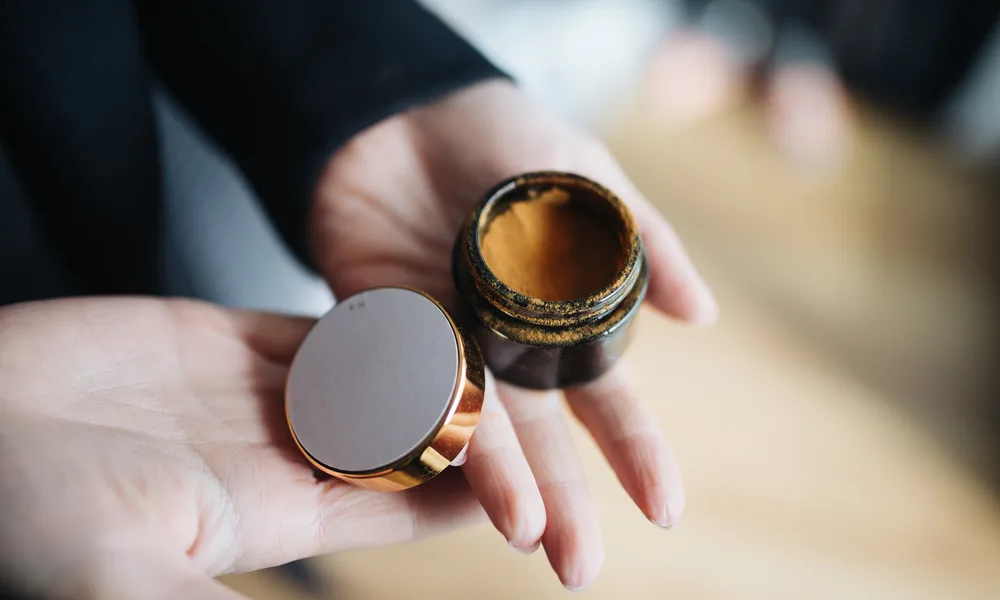
How you apply eye cream matters as much as which one you buy, because the skin here is easy to damage. Use your ring finger, which naturally presses more lightly than your index finger. Take a pea-sized amount for both eyes, warm it between your fingertips for a second, then dab it gently along the orbital bone, the bony ridge you can feel around your eye socket, from the inner corner outwards.
Never rub, pull or drag the skin, and never apply cream on the eyelid itself unless the product specifically says it is safe there. Creams applied too close to the lashes migrate into the eye overnight, causing watering, milia or stinging in the morning.
Eye creams by concern compared
| Concern | Best ingredient | When to use it | Results in |
|---|---|---|---|
| Morning puffiness | Caffeine, plus cold | Morning, chilled if possible | 30 minutes |
| Brown dark circles | Vitamin C or niacinamide | Morning, under sunscreen | 6 to 8 weeks |
| Blue or purple circles | Caffeine, plus sleep | Morning | Slight, temporary |
| Fine lines | Low-dose retinol or peptides | Night only for retinol | 8 to 12 weeks |
| Dry, crepey skin | Ceramides, squalane, shea butter | Morning and night | 1 to 2 weeks |
| Sensitive, reactive eyes | Peptides, fragrance-free formulas | Morning or night | 4 to 6 weeks |
Morning and night: a simple eye routine
A good eye routine needs two products at most, not a shelf of them. In the morning, use a light, brightening eye cream with vitamin C or caffeine, applied after your serum and before moisturiser and sunscreen. This is the cream that makes you look awake, and it should sink in quickly so concealer sits neatly over it. If your eyes are puffy, keep this cream in the fridge and apply it cold.
At night, use a richer cream: peptides for firmness, a low-dose retinol eye cream for fine lines, or a ceramide cream if dryness is your main problem. Apply it after cleansing, before or after your face moisturiser, and let it sink in before bed so it does not transfer to your pillow.
Ingredients that earn their place
A short ingredient list tells you more than a long list of promises. Caffeine is worth paying for if puffiness is your problem, and it works within the hour. Vitamin C and niacinamide are worth paying for if your circles are brownish pigmentation, and they need six to eight weeks of daily use. Peptides are worth paying for if your skin cannot tolerate retinol, and low-dose retinol is worth paying for if it can.
Ceramides, glycerin, hyaluronic acid and squalane are the quiet workhorses that keep the eye area hydrated and comfortable, and they belong in almost every eye cream. A good serum for the rest of your face often does more for glow than an expensive eye cream does for the eyes, so spend the most on the product that covers the most skin, and keep the eye cream simple.
Eye cream buying checklist
- Work out your real concern first: puffiness, pigmentation, fine lines, dryness or sensitivity, and pick the ingredient that matches it.
- Check the ingredient list for one proven active at a sensible strength, not a long list of extracts in tiny amounts.
- Choose fragrance-free formulas for the eye area, because fragrance is the most common cause of watering and irritation here.
- Buy the smallest size first, and patch test on the outer corner of one eye for three days before using it on both eyes.
- Use a pea-sized amount for both eyes, applied with your ring finger along the orbital bone, never rubbed or pulled.
- Give it eight weeks before judging it for dark circles and fine lines, and keep using sunscreen every morning alongside it.
Frequently asked questions
Do I really need a separate eye cream?
Not always. If your face moisturiser is gentle, fragrance-free and rich enough, it can do the job. A separate eye cream is worth it when your face cream is too strong, too fragranced, or too light for the thin skin around your eyes.
Can eye cream remove dark circles completely?
Only pigmentation-based circles fade much with cream, and even those improve rather than vanish, over six to eight weeks. Circles caused by thin skin, visible vessels or hollows under the eyes will not disappear with any cream.
Why does my eye cream make my eyes water?
Usually because too much was applied too close to the lash line, and it migrated into the eye overnight. Use less, keep it on the orbital bone, and switch to a fragrance-free formula if watering continues.
Can I use retinol eye cream every night?
Build up to it slowly, starting twice a week, and only increase if your eyes stay comfortable. The skin here is thin, so daily retinol is too much for many people, and a few nights a week still gives results.
Should I apply eye cream before or after moisturiser?
Either order works, as long as the eye cream reaches your skin. Most people apply it after serum and before moisturiser, which keeps the richer face cream from pushing the eye cream into the eyes.
At what age should I start using eye cream?
There is no set age. Start when you notice dryness, puffiness or fine dehydration lines, which for most people is in their late twenties or thirties.
The bottom line
An eye cream that actually works is a simple one, matched to a real concern: caffeine and cold for puffiness, vitamin C or niacinamide for brownish dark circles, peptides or gentle retinol for fine lines, and ceramides for dryness. Use a pea-sized amount, dab it on with your ring finger, give it eight weeks, and wear sunscreen every morning. The best eye cream will not make you look ten years younger. It will make you look rested, comfortable and like yourself on a good day, and that is exactly what it should do.


