Hand soap is the product you use more than any other in your home, and the one you think about least. You wash your hands a dozen times a day or more, and the soap by the sink quietly decides whether your hands feel clean and comfortable or dry, tight and sore by the evening. A good hand soap cleans properly, rinses away without a trace, and leaves your skin feeling normal. A bad one leaves a slippery film, a lingering chemical smell, or hands so dry they crack.
This comparison puts the best hand soaps of 2026 head to head against the worst, judging them the way you would actually live with them: how well they clean, how they treat your skin after weeks of daily use, how they lather and rinse, how they smell, and whether the bottle or bar is pleasant to use. Our comparison of the best and worst body washes of 2026 covers the same questions for the shower
Key Takeaways
- Cleaning power is the baseline: a good hand soap cleans properly in one wash, while a bad one leaves a film behind.
- Skin kindness is the real test: the best soaps keep hands comfortable after weeks of daily washing, while the worst dry them out.
- Lather is not cleaning: a big lather feels satisfying, but it proves nothing about cleaning.
- Scent should be subtle: the best soaps smell clean and fade fast, while the worst leave a strong perfume on your hands.
- Bar or liquid is a trade-off: bars are cheaper and last longer, liquids are more hygienic and easier to share.
How Hand Soap Actually Works
Soap cleans because its molecules have two ends: one end loves water and the other loves grease. When you lather up, the grease-loving ends grab the dirt, oil and germs on your hands, and the water-loving ends let the water carry the whole lot away when you rinse. What changes between soaps is what else is in the formula: moisturisers that protect your skin, fragrances that make it smell pleasant, and harsh cleansers that strip away more than the dirt.
Antibacterial soap is worth a word, because it is widely misunderstood. Ordinary soap already removes germs by washing them away, and health authorities have long said that plain soap and water are enough for everyday hand washing. Antibacterial soaps add chemicals that kill bacteria on contact, but they do not clean any better, and they can irritate skin and contribute to bacteria becoming resistant. For everyday washing, a good plain soap does the job.
Your skin is the other half of the story. The skin on your hands is washed, dried, chilled and scrubbed dozens of times a day, and it has very few oil glands to protect itself. A good soap respects that: it cleans without stripping away the natural oils that keep skin soft, and it often adds a little glycerine or moisturiser back in. A bad soap treats your hands like a dirty dish, stripping everything away and leaving skin tight, dry and prone to cracking.

Liquid, Foam, Bar or Powder: Which Format Wins?
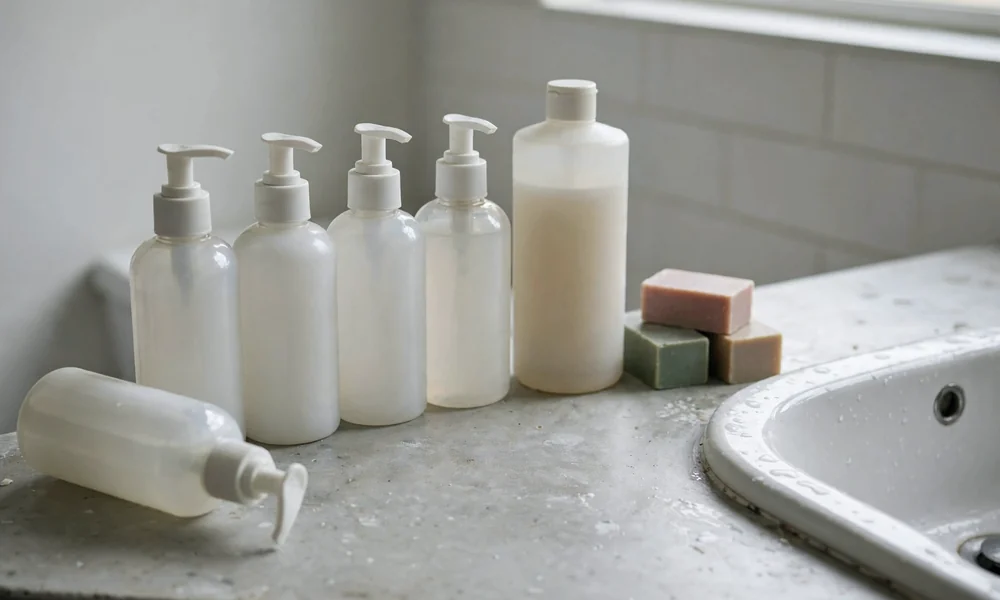
Liquid soap is the most common format, and for good reason: it is easy to use, it gives the same amount every time, and nobody has to touch the same bar. The best liquids pump out a smooth, creamy lather that rinses clean in seconds. The worst are thin and watery, so you need three pumps to get any lather, or so thick and gloopy that they leave a sticky residue on the sink and on your hands. A good pump matters too: it should give the right amount with one press and not clog, drip or squirt sideways onto the mirror.
Foaming soap is liquid soap with a special pump that mixes the soap with air, so a small amount of product makes a big cloud of foam. It feels luxurious, it is easy for children to use, and it rinses off fast. The trade-off is that it is mostly air, so the bottle runs out quickly, and it can feel too light to clean properly, which tempts people to use far more than they need. A bar is the oldest format and still the cheapest. Its weakness is hygiene and mess, because a bar sits in a dish, collects water, and is shared by everyone in the house.
The Best Hand Soaps of 2026
The best hand soaps of 2026 share a handful of qualities that show up within the first week of use. They clean properly in a single wash, lifting grease, food smells and garden dirt without needing a second round. They leave your hands feeling like hands, not like they have been scrubbed with washing-up liquid: comfortable, soft, and free of that tight, dry feeling that makes you reach for hand cream.
Scent is where the best hand soaps show restraint. A good hand soap smells clean and pleasant while you wash, and then fades within a minute or two, leaving no perfume on your hands to clash with your food, your work or your perfume. The best scents are simple: clean linen, light citrus, soft herbs, or almost nothing at all.
Value is the quiet quality that separates the best from the merely pleasant. A good liquid soap should last a household several weeks, not a few days, and a good bar should last for weeks of daily use without turning into a thin, cracked sliver. Refills make the best soaps better still, because they cost less per wash and use far less plastic. The cheapest soap on the shelf is rarely the cheapest per wash, because a thin formula that needs three pumps costs more in the end than a richer one that needs a single pump.
Skin kindness is the quality that turns a good hand soap into one you keep buying for years. The best formulas are built for hands that are washed all day, with glycerine, shea butter or other moisturisers that leave skin soft rather than stripped. This is the same care that goes into a good deodorant, and our comparison of the best and worst deodorants of 2026 shows how much difference a gentle formula makes to skin that is used every day.
The Worst Hand Soaps of 2026
The worst hand soaps fail in ways that are obvious within days. The most common failure is dryness: the soap cleans well enough, but it strips the skin so harshly that hands feel tight within an hour and start to crack at the knuckles within a week. These soaps are often the cheapest on the shelf, loaded with strong cleansers and no moisturisers, and they treat your hands like a greasy pan.
Residue is the second great failure, and the most annoying one, because it defeats the point of washing. The worst soaps leave a slippery, waxy film on your hands that no amount of rinsing seems to remove, or a sticky layer that picks up dust and dirt the moment you touch anything. This happens when the formula is too heavy, too cheap, or loaded with ingredients that do not rinse clean. A good soap should leave your hands feeling clean and dry after rinsing, not coated, and if your hands feel slimy after washing, the soap has to go.
Scent is the third failure, and it is the one guests notice before you do. The worst hand soaps smell of cheap perfume, of chemicals, or of a heavy sweet fragrance designed to fill a room. Worse still, some scents cling to your hands and transfer to everything you touch, so your food tastes faintly of soap and your paperwork smells of flowers.
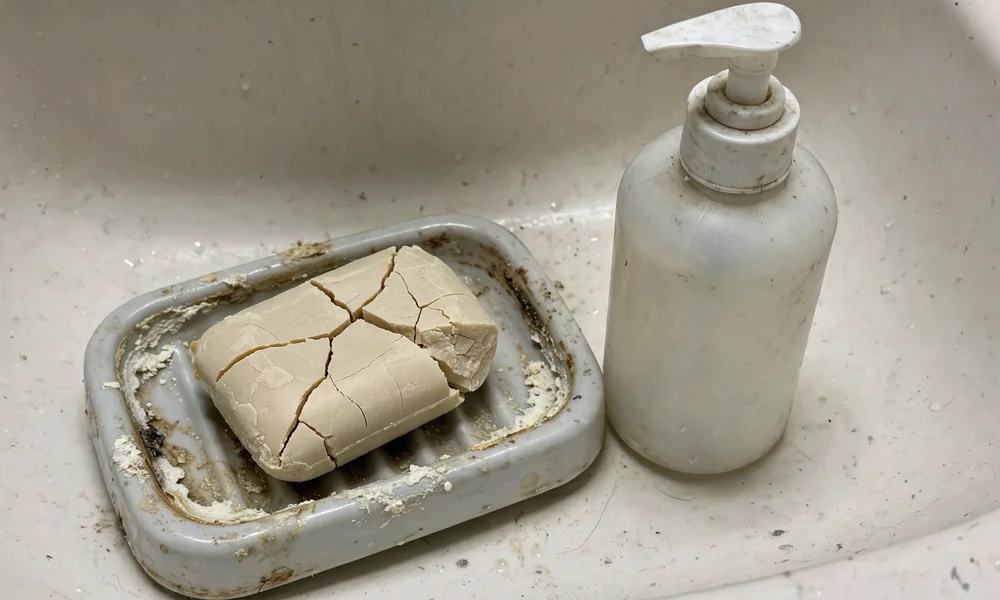
The last failure is the bottle or the bar itself. A pump that clogs, drips, or needs three hard presses to give anything is a daily irritation, and a bottle that topples over or leaks in a bag is worse. A bar that turns to mush in its dish, splits into pieces, or leaves a slimy ring on the sink is just as bad. The best hand soaps are pleasant to use every time, and the worst remind you of their faults a dozen times a day, which is a dozen times too many.
How to Test a Hand Soap Before You Commit
The honest way to test a hand soap is to use it for a full week, because the first wash tells you about scent and the seventh day tells you about everything else. On day one, notice how it lathers, how it smells, and how it rinses. By day three, notice whether your hands feel normal or tight after washing. By day seven, notice whether your knuckles are dry or cracked, whether the sink has a sticky ring, and whether the bottle is already half empty. A soap that passes all of those tests is a keeper, and one that fails any of them is not worth finishing.
Give your hands a break between tests, because switching soaps every day tells you nothing. Use one soap for a week, then give your hands a day or two with a plain gentle product before trying the next one. The most common mistake is using too much: more soap does not mean cleaner hands, it means more residue and more drying, because the extra product sits on the skin and strips away more oil. One pump of liquid, or a few seconds of lathering with a bar, is enough. If you need more than that, the soap is not working, and adding more of a failing product will not fix it.
Who Should Pick What
If your hands are dry, cracked or sensitive, a gentle liquid or a moisturising bar is your best bet, because it will clean without stripping your skin. Look for glycerine, shea butter or fragrance-free on the label, and avoid strong antibacterial formulas. If you share a bathroom with children, a foaming soap is the easiest choice, because it is fun to use and rinses fast, though it will run out quicker. If you want the cheapest option that still works well, a good bar is hard to beat, and it produces almost no plastic waste. If your hands are washed constantly for work, in healthcare, cooking or cleaning, choose a soap built for frequent use and pair it with a good hand cream, because no soap alone can keep up with that much washing. Our guide to why hand cream matters more than you think in 2026 explains what to look for once the washing is done.
The Verdict
The best hand soaps of 2026 are the ones you forget about: they clean properly in one wash, they rinse away without a trace, they leave your hands comfortable all day, and their scent is so subtle you barely notice it. The worst are the ones you notice a dozen times a day, for all the wrong reasons: the tight, dry skin, the slippery film that will not rinse off, the perfume that clings to your hands, and the pump that clogs every morning. Choose by how a soap treats your hands after a week of daily use, not by how it smells in the shop, and once you find one that works, stick with it, because a soap you can rely on is one less thing to think about every time you wash your hands.