Why Induction Cooktops Are Taking Over Kitchens in 2026
Induction cooktops are taking over kitchens in 2026, and the shift is no longer a trend among early adopters. It is showing up in renovation plans, in new-build specifications, and in appliance aisles where shoppers used to reach for gas without a second thought. The reason is simple: induction cooktops boil water in about half the time of gas, hold a simmer gas cannot match, and wipe clean in seconds because the glass barely gets hot.
This guide explains why induction has pulled ahead, how it works, and how to choose the right model: the types on sale in 2026, the power and sizing questions that catch buyers out, the cookware that works, and the models that perform best in everyday cooking.
Key takeaways
- Induction sends 85 to 90 percent of its energy into the pan, against roughly 40 to 55 percent for gas, so it cooks faster and the kitchen stays cooler.
- A litre of water reaches a rolling boil in about three minutes on induction, against five to six minutes on a typical gas burner.
- Only magnetic cookware works: stainless steel with a magnetic base and cast iron are fine, while aluminium, copper and glass are not.
- Most built-in induction hobs need a dedicated 240-volt circuit on a 40 to 50 amp breaker, so check your electrical panel first.
- Flex zones and precise digital controls are the features worth paying for; a boost function and a reliable simmer matter more than preset modes.
The numbers behind the switch
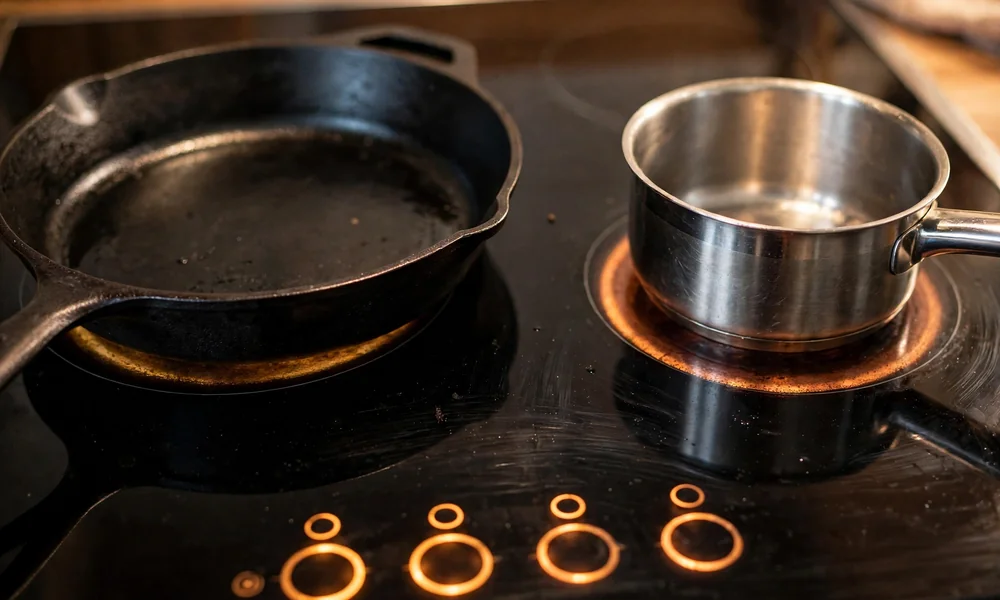
The case for induction starts with physics. A copper coil under the glass creates a magnetic field that excites the metal of the pan itself, so the pan becomes the heating element. Almost all of the energy goes into the food and almost none escapes into the room, which is why a kitchen with induction stays noticeably cooler in summer.
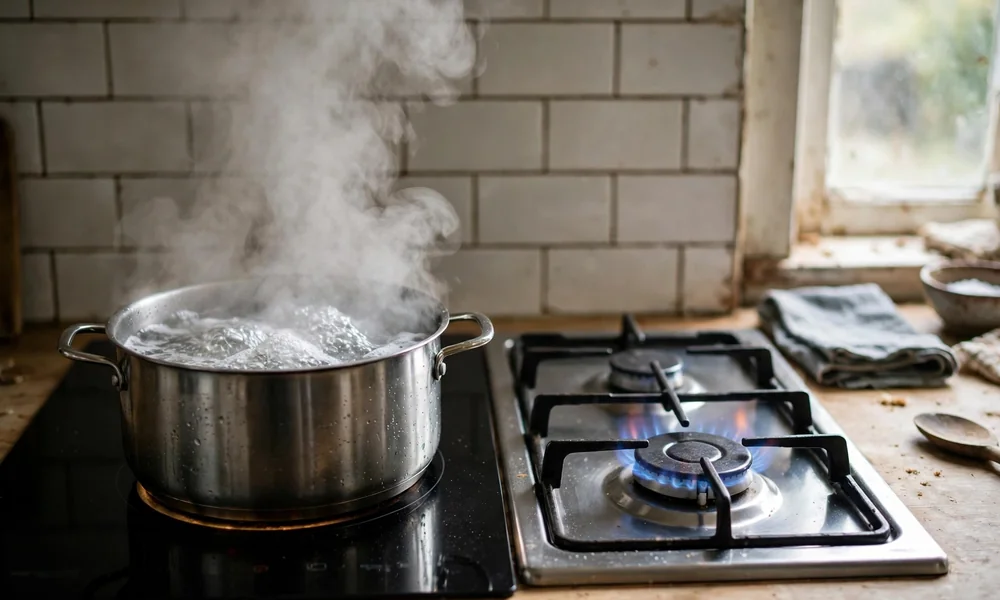
Speed is the difference people notice first. Induction brings a litre of water to a rolling boil in around three minutes, against five to six minutes for gas and longer for an electric coil. Across a week of cooking those saved minutes add up, and the gap is widest when you are in a hurry: searing a steak, boiling pasta, or getting a stir-fry pan properly hot.
Control is the difference people notice second. Turn a zone down and the heat drops within seconds, because there is no heavy element or flame to cool off. Chocolate melts without scorching, sauces hold a gentle simmer without catching, and a low setting stays low instead of flickering. Gas still gives a visible flame that many experienced cooks love, and our comparison of induction vs gas cooktops lays out where each one wins. But for repeatability, induction is steadier: the same number gives the same heat every time.
Safety and cleaning complete the argument. There is no open flame, no gas to leak and no combustion, so the fire and carbon monoxide risks of gas do not apply. Most hobs switch off when a pan is lifted, and child locks are standard. Cleaning is a wipe, not a chore: the glass stays relatively cool, spills rarely burn on, and there are no burner caps, grates or drip trays to scrub.
Induction vs gas vs electric: the honest comparison
No hob wins on every measure. This table compares the four main types on the things that matter day to day.
| Feature | Induction | Gas | Electric coil | Radiant glass |
|---|---|---|---|---|
| Boil time, 1 litre | ~3 minutes | 5 to 6 minutes | 7 to 8 minutes | 6 to 7 minutes |
| Energy into pan | 85 to 90% | 40 to 55% | 65 to 70% | 65 to 75% |
| Control | Precise, instant | Visual, instant | Slow | Slow |
| Cleaning | Wipe the glass | Scrub grates | Scrub coils | Spills bake on |
| Cookware | Magnetic only | Any pan | Any flat pan | Any flat pan |
| Safety | No flame, auto shut-off | Open flame, gas leak risk | Hot element stays hot | Hot glass stays hot |
| Install | 240V circuit often needed | Gas line needed | Standard outlet | 240V circuit often needed |
The trade-off is clear. Induction wins on speed, efficiency, control, cleaning and safety. Gas wins on cookware freedom and the visible flame, and it suits round-bottomed woks better than any flat zone. Coil and radiant glass are the budget options, but both respond slowly and are harder to keep clean. For most modern kitchens, induction is the best overall choice.
The five types of induction cooktop in 2026
Induction comes in five main forms. Portable single-zone hobs are the cheapest way in: a countertop unit that plugs into a standard outlet, ideal for a rental or a small kitchen, and useful as an extra burner at holidays. Their limit is power, usually around 1,800 watts, and one zone.
Built-in 30-inch hobs are the standard replacement for a gas or electric cooktop, with four zones in the space most kitchens already have. Built-in 36-inch hobs add a fifth zone or a wider flex zone for larger kitchens. Flex-zone hobs let two zones join into one long cooking area for a griddle, and bridge elements do the same job on simpler models. Induction ranges combine an induction hob with an electric oven in one unit, the simplest swap if you are replacing a whole cooker.
Which size should you buy? Measure the cutout, not the hob: a 36-inch model needs the extra width, and the worktop cannot be stretched afterwards. If three pans at once is your normal maximum, four zones are plenty.
Sizing and power: the questions that catch buyers out
The most common induction mistake is ordering the hob before checking the electrics. Most built-in hobs need a dedicated 240-volt circuit on a 40 to 50 amp breaker, and if your panel is full the electrician’s bill can add several hundred to the project, so check the panel and get a quote first. Portable units run on a standard outlet.
A typical zone delivers 1,800 to 2,500 watts, and a boost function can push one zone to 3,000 watts or more for a few minutes. That boost is what boils water in three minutes, so it is worth having. Note that most hobs share power across zones, so running all four at full power at once is rarely possible.
Ventilation still matters. Induction produces little waste heat, but cooking still produces steam, grease and smells, so a good extractor remains essential. Plan the extraction at the same time as the hob, not afterwards.
Cookware: the magnet test
Induction only works with magnetic pans, its one real drawback. The test takes five seconds: hold a fridge magnet against the base. If it sticks firmly, the pan works. Stainless steel with a magnetic base works well, and cast iron works brilliantly. If you are starting from scratch, our guide to the best cookware sets for beginners explains what to look for in a first set, and many of those sets are induction-ready.
Aluminium, copper, glass and most non-stick pans will not work unless they have a magnetic base bonded on. A cast iron skillet is the classic induction companion: magnetic, long-lasting, and happy with the high heat a boost function delivers. Our guide to the best cast iron skillets covers the sizes and finishes worth owning. One warning: cast iron is heavy, and dragging it across a glass hob can scratch the surface, so lift rather than slide, and keep the base clean.
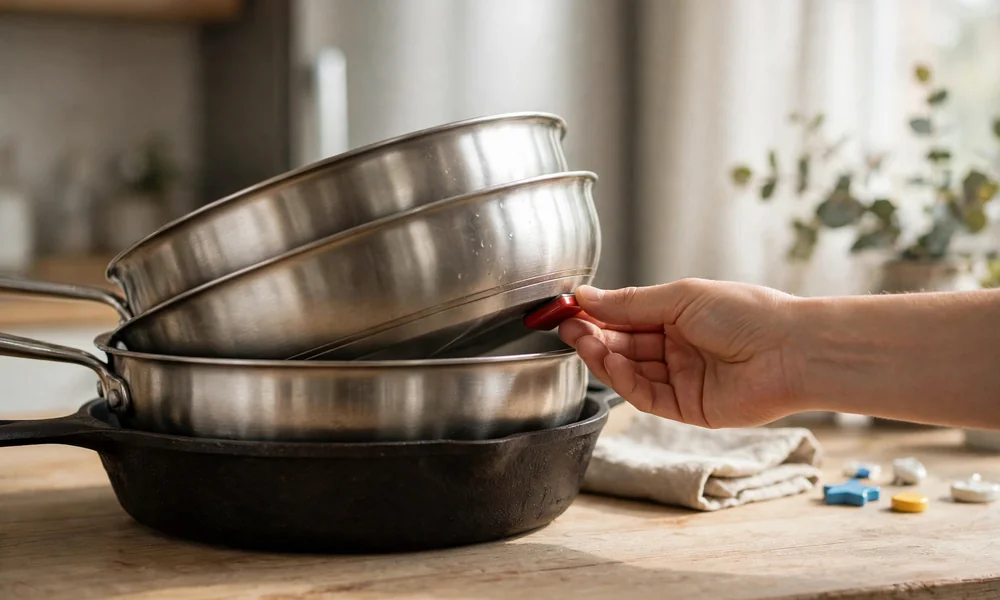
Adapter discs exist for non-magnetic pans, but they are a compromise: they slow the hob, waste energy, and can overheat. They are fine as a stopgap for one beloved copper pan, not a long-term solution. Budget for two or three new pans if your set fails the magnet test: a large frying pan, a medium saucepan and a stockpot cover almost everything, and cost far less than the hob itself.
The best induction cooktops of 2026
We judged the models below on heating speed, simmer control, cleaning, build quality and value. All are built-in hobs unless noted.
Best overall: Bosch 800 Series 30-inch
The Bosch 800 Series is the benchmark. It boils fast, holds a low simmer without flickering, and has the most intuitive touch controls we used. The flex zone joins two zones for a griddle. It is not the cheapest hob, but it is the one most buyers should start with.
Best for large kitchens: Samsung 36-inch with flex zone
Samsung’s 36-inch model suits cooks who use several pans at once: five zones, a wide flex area, and a boost function that boils water in about three minutes. The Wi-Fi features are forgettable; the cooking is not.
Best value: Frigidaire Gallery 30-inch
Frigidaire proves that good induction does not need a luxury price: four zones, a solid boost, and controls simple enough to use without the manual. For the price it is the best value on this list.
Best portable: Duxtop 1800W single zone
The Duxtop is the portable that converts sceptics: it plugs into a standard outlet, boils a litre of water in about four minutes, and costs a fraction of a built-in hob. It suits a rental, a dorm room, or testing induction before renovating.
Best range: GE Profile 30-inch induction range
If you are replacing a whole cooker, the GE Profile induction range is the simplest swap: a fast, precise hob, a spacious and even oven, and a unit that fits a standard 30-inch opening, with no new worktop cut needed.
Before you buy: the six-point checklist
- Measure the cutout in your worktop and the clearance below it, and buy a hob that fits the hole you have.
- Check your electrical panel for a spare 240-volt circuit on a 40 to 50 amp breaker, and get an electrician’s quote before ordering.
- Test every pan you own with a fridge magnet, and budget for replacements if your favourites fail.
- Cook on a portable induction hob for a week if you can, to learn the controls and confirm you like the feel.
- Choose a flex or bridge zone if you cook with a griddle, and a boost function on at least one zone.
- Plan extraction at the same time as the hob, because steam and grease still need somewhere to go.
Frequently asked questions
Is induction really faster than gas?
Yes, measurably. Induction boils a litre of water in about three minutes, against five to six minutes on gas, because 85 to 90 percent of its energy goes into the pan.
Will my existing pans work on induction?
Only if they are magnetic. Hold a fridge magnet to the base: if it sticks firmly, the pan works. Stainless steel with a magnetic base and cast iron work well; aluminium, copper and glass usually do not.
Do induction cooktops need special wiring?
Most built-in models need a dedicated 240-volt circuit on a 40 to 50 amp breaker; portable single-zone hobs run on a standard outlet. Check your panel and get an electrician’s quote before you order.
Is induction safe for households with children?
It is the safest hob type for families: no open flame, the glass stays relatively cool, most hobs switch off when a pan is removed, and child locks are standard. The glass can still be hot from the pan, so the usual care applies.
Can induction cooktops scratch?
The glass can scratch if heavy pans are dragged across it, especially cast iron with a rough base. Lift pans rather than sliding them, and keep bases clean.
Does induction work during a power cut?
No. Induction needs electricity, so a power cut stops all cooking, while gas hobs can often be lit manually. If outages are common where you live, keep a portable gas burner as a backup.
The bottom line
Induction cooktops are taking over kitchens in 2026 because they are better at the things that matter every day: faster to boil, steadier to simmer, safer around children, and easier to clean. The trade-offs are manageable: you may need new pans and a 240-volt circuit, and gas still wins for wok cooking and power cuts. Measure your cutout, check your electrics, test your pans with a magnet, and buy the best hob your budget allows.