Buying your first cookware set can feel harder than learning to cook itself. Shelves are full of 10-piece, 12-piece and 15-piece boxes, each promising to be the best cookware set for beginners, yet most new cooks only ever reach for the same three pans. The good news is that you do not need a professional kitchen to cook well at home, and you certainly do not need to spend a fortune to get started.
The best cookware sets for beginners in 2026 are the ones that make everyday cooking easier rather than more complicated. They heat evenly, clean up without a fight, feel comfortable in your hand and cover the meals you actually cook, from scrambled eggs and pasta to stir-fries and Sunday sauces. A thoughtful starter set grows with you instead of gathering dust in a cupboard.
This guide compares the best beginner-friendly options by material, size and value, explains what each piece is really for, and flags the common mistakes that waste money.
Key takeaways
- A beginner needs four core pieces: a frying pan, a saucepan, a sauté pan and a stock pot.
- Nonstick is the easiest starting point, while stainless steel lasts longest and handles high heat.
- Always check your hob type before buying, because not every set works on induction.
- Heavier bases heat more evenly and stop food burning in hot spots.
- A good starter set costs less than buying the same pieces one by one.
What a beginner actually needs
Most cookware sets are sold on piece count, but piece count is a poor guide to value. A 15-piece box sounds generous until you realise it counts every lid, and sometimes even the utensils, as a separate piece. What matters is how many useful cooking vessels you get and whether they match the way you cook.
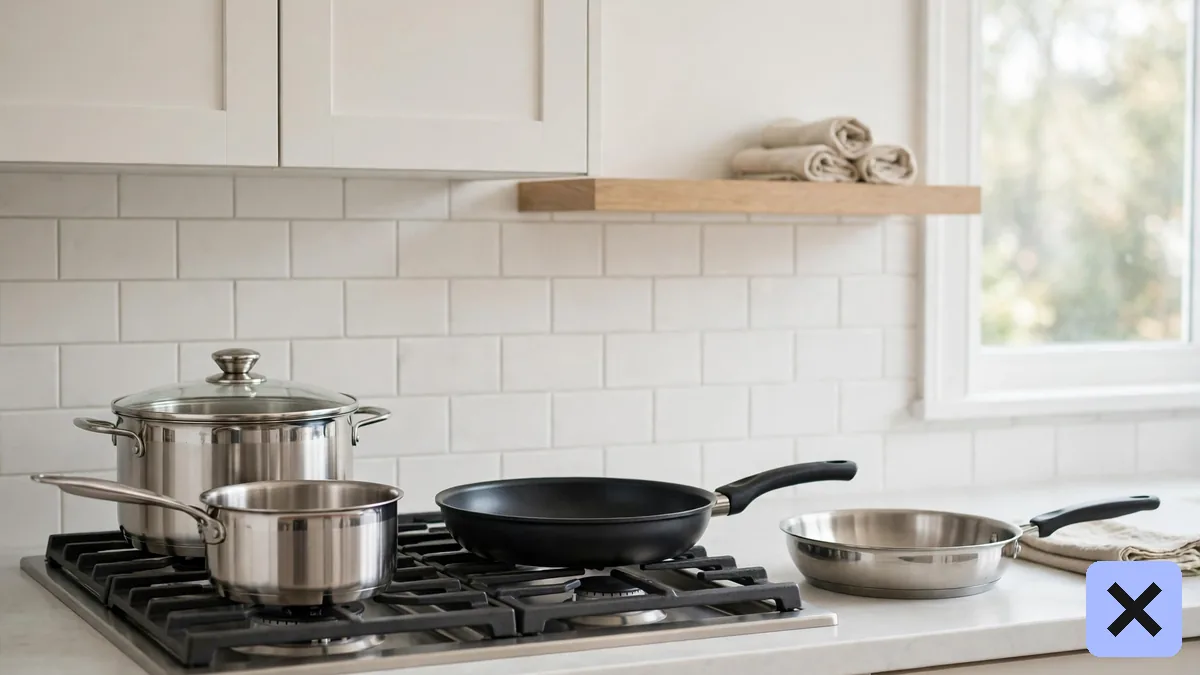
For most beginners, four pieces cover almost everything. A medium frying pan handles eggs, pancakes and searing. A saucepan is the workhorse for rice, sauces and reheating soup. A sauté pan with straight sides and a lid is ideal for one-pan dinners, curries and shallow frying. A large stock pot takes care of pasta, stews and batch cooking. If your set includes those four, plus lids, you are well equipped.
Buy the set that nails the basics, and add specialist pieces later when you know you will actually use them.
The best cookware sets for beginners in 2026
The sets below are grouped by material, because material decides how a pan cooks, how it should be cleaned and how long it will last. There is no single best material for everyone, so the right choice depends on your hob, your habits and how much maintenance you are willing to do.
| Set type | Best for | Heat control | Maintenance | Price range |
|---|---|---|---|---|
| Nonstick | Everyday ease | Good | Low | Budget friendly |
| Stainless steel | Long-term value | Excellent | Moderate | Mid-range |
| Hard-anodised aluminium | Even heating | Very good | Low | Mid-range |
| Ceramic | Low-fat cooking | Good | Moderate | Mid-range |
| Cast iron | High-heat searing | Excellent | High | Budget to premium |
Best nonstick set for beginners
Nonstick is the friendliest place to start. Eggs slide out, fish does not tear, and washing up takes seconds rather than a long soak. Modern nonstick coatings are far tougher than the flaky pans of a decade ago, and a good set will survive several years of daily use if you treat it kindly.
Nonstick should not be pushed to the highest temperatures, and metal utensils will shorten its life. Use wooden or silicone tools and avoid the dishwasher when you can.
Best stainless steel set for beginners
Stainless steel is the buy-it-once option. It tolerates high heat, metal utensils, the dishwasher and years of hard use without complaint. It also rewards good technique: preheat the pan and add oil before the food goes in.
Delicate foods like eggs and fish can stick if the pan is too cold or too hot, so stainless steel suits patient cooks who enjoy the process. If you want cookware you will still be using in twenty years, this is the material to choose.
Best hard-anodised set for beginners
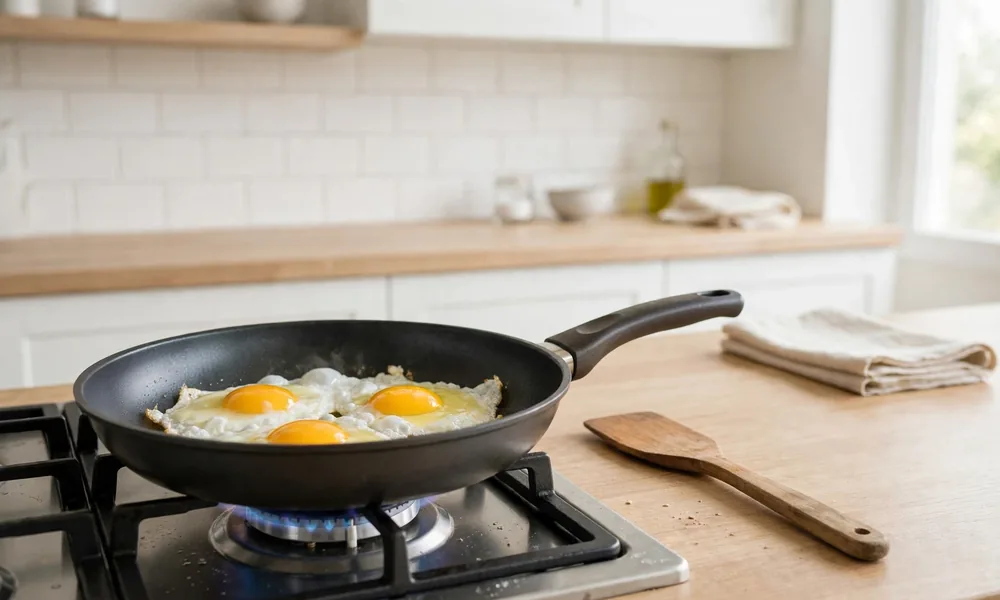
Hard-anodised aluminium sits between nonstick and stainless steel. The anodising process hardens the surface, so these pans are tougher than ordinary aluminium, heat very evenly and usually carry a nonstick interior. They are a strong all-rounder for cooks who want even browning without the weight of steel.
Look for a thick, flat base, because thin aluminium warps and creates hot spots. A good hard-anodised set feels reassuringly solid when you pick it up, and the handles should stay cool on the hob.
Best ceramic set for beginners
Ceramic-coated cookware has become a popular choice for cooks who want a nonstick surface without a traditional chemical coating. Food releases easily, the pans look attractive on the hob, and they are ideal for low-fat cooking since very little oil is needed. If you are still deciding between coating types, our guide to ceramic vs stainless steel cookware explains how the two materials compare in everyday use.
Ceramic coatings do wear faster than other nonstick surfaces, especially if they are overheated or scrubbed harshly. Treat them gently, keep the heat at medium, and expect to replace the most-used pan after a few years. For many beginners, that is a fair price for effortless cooking.
Best cast iron set for beginners
Cast iron is the oldest cookware material still in daily use, and for good reason. Nothing sears a steak or bakes cornbread quite like it, and a well-seasoned skillet becomes naturally nonstick over time. It is also the cheapest route to serious performance if you buy a single skillet and a Dutch oven rather than a full set.
Cast iron needs seasoning, drying and occasional re-oiling, and it is heavy enough that smaller cooks may find it awkward.

How to choose the right set for your kitchen
Your hob is the first thing to check. Gas hobs accept almost anything, but induction hobs only work with magnetic-based cookware, which usually means stainless steel, cast iron or induction-ready aluminium. Buying a beautiful set that will not heat on your hob is the most expensive beginner mistake of all, so confirm compatibility before you order. Our comparison of whether your hob is induction or gas is a useful starting point if you are unsure what you have.
Next, think about size. A frying pan of 24 to 28 centimetres suits one or two people, while families should look for 28 to 30 centimetres. Saucepans of 16 and 20 centimetres cover most jobs, and a stock pot of at least five litres makes pasta night far less cramped.
Weight matters more than most shoppers expect. A pan that is too heavy will stay in the cupboard, especially when it is full of stew. Pick the pan up in the shop if you can, or check the weight in the specifications. Comfortable handles that stay cool, lids that fit snugly and pour spouts that actually pour are small details that make a big difference over hundreds of meals.
Cookware materials explained
Understanding a little about materials helps you cook better with whatever you buy. Each material behaves differently on the heat, and a technique that works beautifully in one pan can fail in another.
Nonstick coatings
Nonstick coatings work by creating a slick surface that food cannot grip. They excel at delicate foods and low-fat cooking, but they degrade above very high temperatures. Keep them at medium heat, use soft utensils and replace a pan when the coating starts to flake or food begins to stick in patches.
Stainless steel
Stainless steel is an alloy, usually with an aluminium or copper core sandwiched inside the base to spread heat. The best beginner sets use a tri-ply construction, with the conductive metal running up the sides as well as the base. Cheaper sets have only a disc on the bottom, which works but browns less evenly.
Cast iron and carbon steel
Cast iron and carbon steel both build up a natural nonstick layer called seasoning, which is simply oil baked onto the surface. Carbon steel is lighter and responds faster to heat changes, which is why professional chefs love it for sautéing. Both need drying immediately after washing to prevent rust, and both improve with use, so they reward cooks who stick with them.

Mistakes beginners should avoid
The most common error is buying too much. A huge set looks like value, but the extra pieces often duplicate what you already own. Start with the core four pieces and let your cooking tell you what is missing. A wok, a griddle or a second frying pan can wait until you have a recipe that needs one.
The second mistake is overheating empty pans, which damages coatings and warps bases. Always add a little oil or food before the pan gets screaming hot, and let pans cool before washing them. The third mistake is stacking pans without protection, which scratches nonstick and ceramic surfaces.
Finally, do not forget the rest of your kitchen. If you are building a first kitchen from scratch, the best air fryers for families are worth a look alongside your cookware, since they handle weeknight dinners with very little effort.
Beginner cookware checklist
Run through this list before you buy, and again when the set arrives.
- Check every piece works on your hob type, especially induction.
- Confirm the set includes a frying pan, saucepan, sauté pan and stock pot.
- Pick up each pan and check the weight and handle comfort.
- Look for a thick, flat base that sits evenly on the burner.
- Make sure lids fit snugly and handles stay cool during cooking.
- Read the care instructions and confirm the cleaning routine suits you.
Frequently asked questions
How many pieces should a beginner cookware set have?
Five to ten pieces is the sweet spot for most beginners. That usually means four or five pans plus lids. Larger sets add pieces you may never use, while smaller sets often miss a key item such as a stock pot.
Is nonstick or stainless steel better for beginners?
Nonstick is easier and more forgiving, so it suits cooks who are still building confidence. Stainless steel lasts longer and handles higher heat, so it suits cooks who want to invest once. Many experienced home cooks eventually own both and use each where it shines.
Can I use metal utensils on nonstick pans?
Metal utensils will scratch and shorten the life of a nonstick coating. Wooden, silicone or nylon tools are safer and cost very little. Stainless steel and cast iron, by contrast, handle metal utensils without any problem.
Do I need a different set for an induction hob?
You need cookware with a magnetic base, which most stainless steel and cast iron pieces have. Many aluminium sets are now made induction-ready with a steel plate in the base, so check the packaging for the induction symbol rather than assuming.
How long should a beginner cookware set last?
A good nonstick set lasts three to five years with regular use, while stainless steel and cast iron can last decades. Ceramic coatings tend to wear sooner, often within two to three years for the most-used pan. Proper care extends the life of every material.
Is it cheaper to buy a set or individual pans?
A set is almost always cheaper per piece than buying the same pans separately, often by 20 to 30 per cent. The exception is when you only need one or two pieces, or when a set forces you to pay for pans you will never use.
The bottom line
The best cookware set for beginners in 2026 is the one that matches your hob, covers the four core pieces and feels good to cook with every day. Nonstick wins on ease, stainless steel wins on longevity, and hard-anodised aluminium is the best all-rounder for most first kitchens. Buy the basics, learn your pans, and add specialist pieces only when your cooking asks for them.


