The Worst Skiers of 2026: Seven Types Who Make the Mountain Worse for Everyone
The worst skiers of 2026 are not the slowest people on the mountain or the ones with the oldest skis. They are the skiers who turn a shared slope into a hazard for everyone around them: the one who straight-lines down a busy piste with no control, the one who pushes into the lift queue, and the one who stops dead in a blind spot just below a rollover. This guide ranks the worst types of skier by the trouble they cause, so you can spot them from the lift, give them room, and keep your own day intact.
Key takeaways
- The worst skier is a behaviour, not a skill level: a slow, careful beginner is far safer than a fast skier with no control.
- Speed without the ability to stop is the most dangerous habit on the mountain.
- Blind spots, choke points and lift queues are where bad habits turn into collisions, so give those places extra room.
- Cross-country skiers cause trouble too, mainly by trampling the set tracks other skiers depend on.
- You cannot fix another skier, but you can read the slope and keep a wide berth around the worst types.
How the worst skiers of 2026 were chosen
Every type below was scored on five measures. Danger comes first: how likely is this habit to cause a collision or an injury to someone else? Disruption is second, judged on how much of the slope the habit spoils. Frequency is third, because a habit you meet on every run matters more than a rare annoyance. Self-awareness is fourth: the worst types rarely realise they are the problem. Avoidability is fifth: a habit you can spot early and steer around scores lower than one that appears without warning.
Two notes before the list. First, no single person is named as the worst, because the same bad patterns appear in many places. Second, skiers share the mountain with others, so the ranking weighs the whole slope. Readers who want the other side of the slope will find the same logic in our guide to the worst snowboarders, while the places where bad skiing hurts most are covered in our guide to the worst ski resorts.
Comparison table: the worst skiers of 2026
| Rank | Skier type | Worst habit | Best response |
|---|---|---|---|
| 1 | The straight-liner | Points skis downhill and goes, with no turns and no way to stop | Stop well to the side and let them pass |
| 2 | The queue jumper | Slides into the lift line from the side and crowds the gate | Hold your place and let the lift staff sort it |
| 3 | The blind-spot stopper | Stops just below a rollover or in a narrow choke point | Slow down early and pass wide, never stop with them |
| 4 | The black-run beginner | Snowploughs across a steep run, blocking the whole width | Wait for a gap, then pass with a wide margin |
| 5 | The rope-ducker | Ducks under closed ropes into trees and avalanche terrain | Stay on the marked run and report closed-area entry |
| 6 | The track trampler | Walks and skates over the set cross-country tracks | Keep to your own lane and warn them politely once |
| 7 | The piste poser | Stops mid-piste to film, pose and check the phone | Pass above them and keep moving |
The worst skiers of 2026
1. The straight-liner: speed with no brakes
The straight-liner is the worst skier on the mountain because the danger is real and immediate. They point their skis straight down a busy piste, pick up speed with every metre, and have no plan for stopping except falling over or hitting something soft. On a crowded afternoon they arrive silently from behind at twice the speed of the traffic, leaving a spray of snow and frightened faces.
Turning and stopping are the first things any skier learns, and the straight-liner has chosen to skip them in favour of speed. They are worst on blue runs full of families, where runs merge, and in mogul fields, where they bounce from bump to bump with no line. The only safe response is distance: stop well to the side and let them pass.
2. The queue jumper: the lift line is not optional
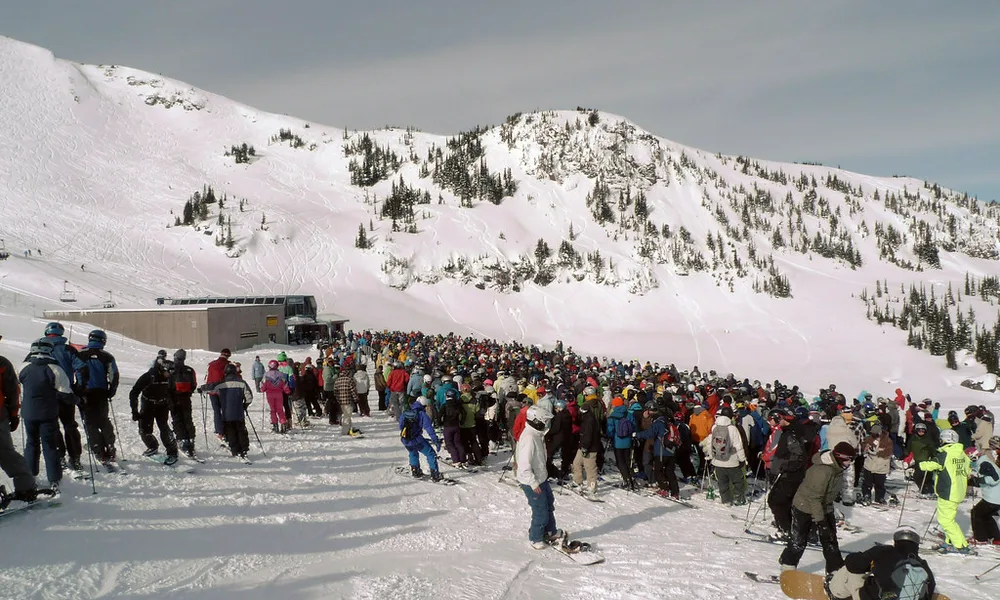
Every skier waits in line, and the queue jumper is the one who decides the rule does not apply to them. They slide in from the side near the gate or crowd forward a little at a time. On a powder morning, when the queue is an hour long and everyone is cold, a single jumper can set off pushing, shouting and bad tempers.
The habit poisons the mood before the run even starts. A lift queue is a small test of mountain manners, and the jumper fails it in front of fifty witnesses. Hold your place, keep your skis tidy, and let the lift staff deal with the jumper.
3. The blind-spot stopper: invisible until it is too late
The blind-spot stopper is the skier who rests in exactly the place no one can see them: just below a rollover or in the middle of a narrow traverse. They are usually tired, or waiting for a friend, and they sit down in the snow right where the next skier will appear at speed, with a second to react.
This habit is worst on steep, rolling pistes and on cat tracks, where the run narrows to the width of a road and there is nowhere to swerve. A good skier stops at the side of the run, where they can be seen from above, and never below a blind crest.
4. The black-run beginner: the wrong run at the wrong level
The black-run beginner is not a bad person, just a skier on the wrong run. They have skied a few blues, a friend has told them they are ready, and they drop into a steep black run and discover that they are not. What follows is a slow, wide snowplough across the entire width of the piste, blocking everyone behind them.
The trouble is not the slow speed but the unpredictability. A beginner on a black run turns without looking, stops without warning, and slides sideways across the fall line, so no one behind can judge where they will go next. Wait for a gap and pass with a wide margin.
5. The rope-ducker: closed means closed
The rope-ducker treats a closed sign as a suggestion. They slip under the rope at the edge of the piste and drop into the trees, the powder bowl, or the slope the patrol has closed for avalanche control. For a few turns it looks like freedom: untouched snow, no crowds, no tracked-out piste. Then the risks arrive: a tree well under fresh snow, a cliff band below the roll, or a slab the patrol closed the slope to protect.
This type is worst because the consequences fall on other people. When a rope-ducker is hurt or lost, it is the ski patrol who goes in after them, in the same dangerous terrain.
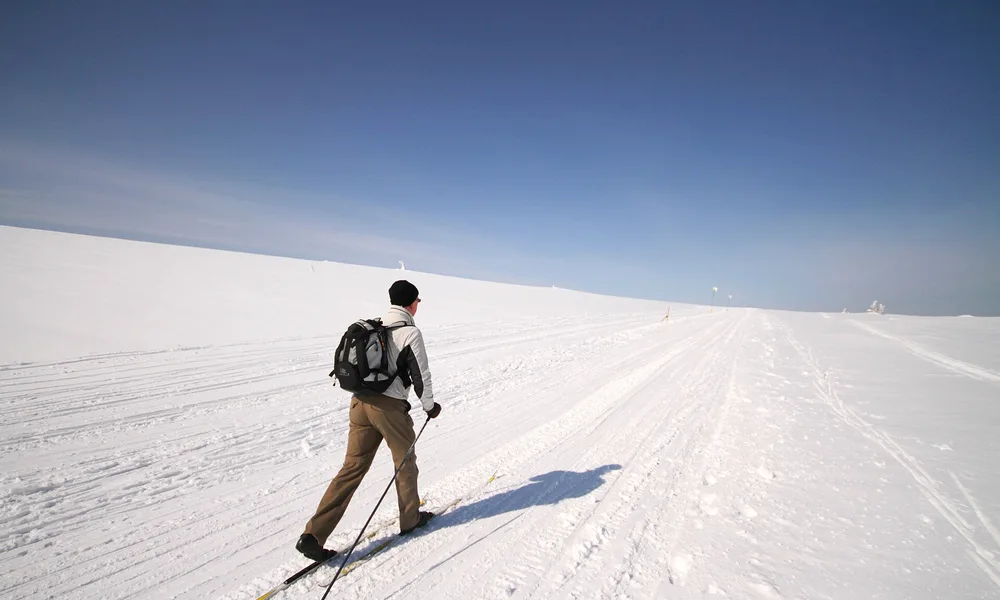
6. The track trampler: the cross-country pest
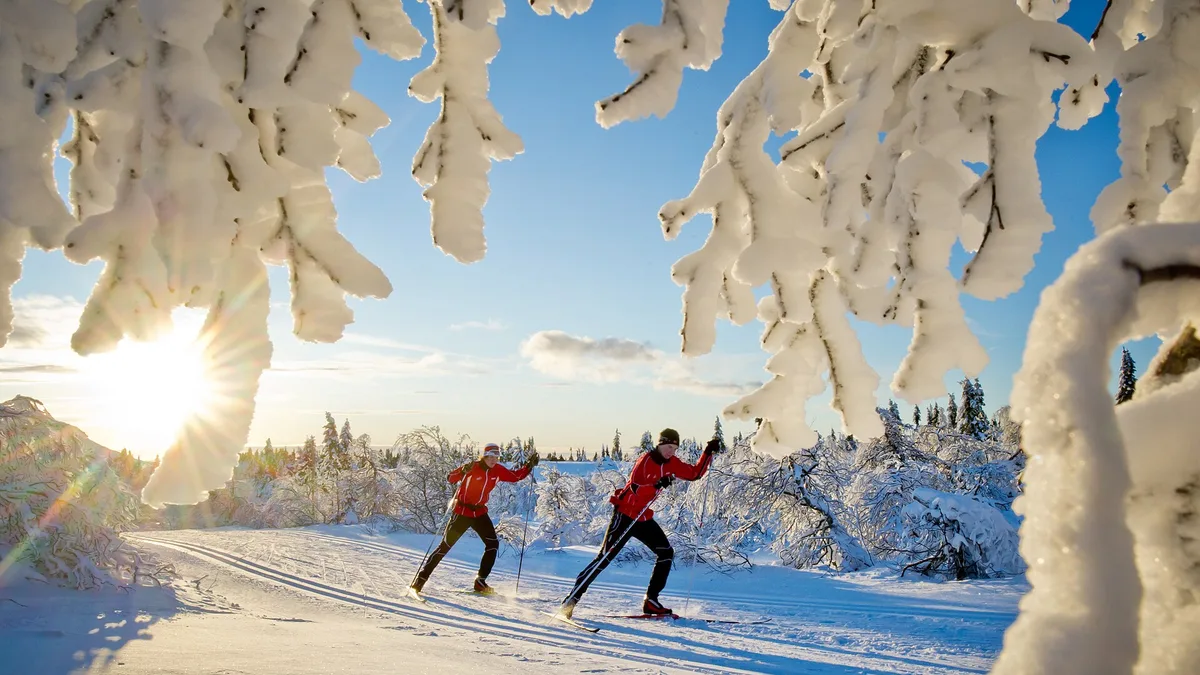
Cross-country skiing has its own worst type, and it is the track trampler. The groomed tracks, two neat parallel grooves in the snow, are the whole point of a cross-country trail: they guide the skis, save energy, and let a skier glide for hours. The trampler walks down the middle of the tracks in boots or skates across them sideways, and leaves a churned mess behind.
The habit is worst on the classic trails, where the tracks are the trail. A skater has their own wide lane and a walker has the edge, but the trampler uses the tracks as a footpath and ruins them for the classic skiers who need them most. Keep to your own lane, and one polite word is usually enough.
7. The piste poser: the mountain is not a studio
The piste poser treats the middle of the run as a photo studio. They stop where the view is best, plant their poles, and spend five minutes filming, posing and checking the phone while the traffic piles up behind them. The run behind them fills with skiers who must swerve around a stationary person.
What makes the poser the worst in small doses is the sheer pointlessness of the blockage. A rest at the side of the piste costs nothing and gives the same view, but the poser wants the middle of the run, in the fall line, where the camera angle works. Pass above them and keep moving.
What to avoid when you meet the worst skiers
The most common mistake is trying to teach the worst skier a lesson on the spot. Shouting at a straight-liner, blocking a queue jumper, or stopping to argue with a poser only adds another hazard to the slope. The better move is to ski defensively: look uphill before you turn, keep your speed in check where runs merge, and assume the skier ahead may stop without warning. Our guide to the worst ski boots makes the same point about control: the kit that lets you stop and turn properly keeps everyone safe.
Checklist: staying safe around the worst skiers
- Look uphill before every turn and before you set off from a stop.
- Never stop below a rollover, in a narrow traverse or in the middle of the run.
- Give the straight-liner a wide berth and let them pass before you turn.
- Hold your place in the lift queue and let the staff handle jumpers.
- Stay out of closed areas and off the set cross-country tracks unless you are skiing in them.
- Ski within your level, and drop down a run grade when the mountain gets busy.
Frequently asked questions
Who is the worst type of skier?
The straight-liner: a skier who points downhill at high speed with no ability to turn or stop. Speed without control is the most dangerous habit on the mountain.
Are beginners among the worst skiers?
Not on their own. A slow, careful beginner on an easy run is one of the safest skiers on the mountain. The problem is a beginner on a run far above their level.
Is it ever safe to stop on a piste?
Yes, at the side of the run, where skiers from above can see you. Never stop below a rollover, in a narrow section, or in the middle of the fall line.
What should I do about a queue jumper?
Hold your place, keep your skis tidy and let the lift staff deal with it. Confronting a jumper yourself usually makes the queue worse, not better.
Why are closed runs and ropes so strict?
Closed areas hide hazards the patrol has found: avalanche risk, tree wells, cliff bands and thin cover. Ducking a rope puts you and the rescue team at risk.
How do I avoid the worst skiers on a busy day?
Ski early, use the quieter lifts, and pick the runs that suit your level. The worst habits cluster on the busiest pistes at midday.
Bottom line
The worst skiers of 2026 are the ones who forget that the mountain is shared: the straight-liner who cannot stop, the jumper who will not queue, the stopper who rests where no one can see them, and the rest of the list that follows the same pattern. Read the run, keep your distance, stop where you can be seen, and ski within your level, and the worst skiers will stay a story you tell at lunch instead of a collision you remember for the wrong reasons.