The Worst Lanyards to Pass Over: The Worst Sports Lanyards of 2026
The worst sports lanyards of 2026 are not the plainest ones on the stall. The worst sports lanyards fail in basic ways: the print frays away in weeks, the clip snaps and drops your pass on the floor, the cord tangles into a knot every time you take it off, or the badge flips over and hides exactly when you need to show it. This guide ranks the worst types, by lanyard alone, so you can spot a bad one before it loses your ticket, your pass or your patience.
Key takeaways
- A sports lanyard has one job: keep your pass, ticket or badge where you can show it, without losing it.
- A clip that snaps is worse than no lanyard at all, because your pass falls without warning and you only notice at the gate.
- Printed designs that fray and fade are the most common fan-merch disappointment.
- A lanyard that tangles, twists or flips will hide your badge at the worst moment.
- Check the clip, the print, the cord and the breakaway catch before you trust any sports lanyard.
How the worst sports lanyards were chosen
Every type below was scored on five measures. Clip strength comes first: does the clip hold your pass through a whole day, or does it pop open in a crowd? Print quality is second: does the design stay readable after wear and washing, or fray, crack and fade? Cord comfort is third: does the strap sit flat and light on your neck, or twist, dig in and tangle? Safety is fourth, because a lanyard without a breakaway catch is a hazard if it snags. Value is fifth: does the price match what you get?
Two things to keep straight before the list. First, this is about the lanyard itself, the strap and clip a fan wears around the neck, not the souvenir stall as a whole, and our guide to the worst sports souvenirs covers the wider keepsakes that waste your money. Second, a lanyard is not a keyring: a keyring holds keys in a pocket, while a lanyard holds a pass around your neck, and our guide to the worst sports keyrings covers the keyring types. Third, no single lanyard is named as the worst: the same bad patterns turn up in many shops.

Comparison table: the worst sports lanyards of 2026
| Rank | Lanyard type | Main fault | Worst moment |
|---|---|---|---|
| 1 | The snap-open clip lanyard | Clip pops open on its own | Pass on the floor at the gate |
| 2 | The fraying print lanyard | Print frays and fades in weeks | Blank by the second match |
| 3 | The tangle-prone cord lanyard | Thin cord twists into knots | Ten minutes untangling |
| 4 | The badge-flipper | Badge spins and shows its back | Turned away at the gate |
| 5 | The no-breakaway lanyard | No safety catch if it snags | Caught and yanked hard |
| 6 | The neck-sawing narrow strap | Thin strap digs into the neck | Sore neck by half-time |
| 7 | The stiff braided lace lanyard | Hard plastic lace that never softens | Left in a drawer |
The worst sports lanyards of 2026
1. The snap-open clip lanyard: the worst lanyard of all
The snap-open clip lanyard is the worst type of sports lanyard, because it fails at the one job a lanyard has: keeping your pass attached to you. The clip looks shut in the shop, and the first crowded concourse proves otherwise. A weak spring or a thin plastic hook pops open with the lightest tug, and your pass drops to the floor without a sound. Test the clip before you trust it: open and shut it ten times, tug the pass hard and twist it side to side. If the clip pops open once, it will pop open when it matters. A good clip needs a firm press to open, snaps shut with a click you can feel and holds under a hard pull. A lanyard that drops your pass is not a keepsake, it is a queue at the ticket office.
2. The fraying print lanyard: a design that falls apart
The fraying print lanyard is the cruellest kind of sports lanyard, because it looks perfect on the stall and then falls apart around your neck. The design is printed on the surface of a cheap strap rather than woven into it, and a few weeks of rubbing against your collar and jacket is enough to lift the edges. Within weeks the letters are half gone, and soon the strap is plain fabric with a ghost of a slogan. Check the print with a fingernail before you pay: if it lifts at the edge, it will not last the season. A design woven into the strap, or dyed through the fabric, will outlast a printed one by years.

3. The tangle-prone cord lanyard: a knot every time
The tangle-prone cord lanyard looks tidy in the shop: a slim cord, a neat loop and nothing to catch. The trouble starts the first time you take it off. A thin, round cord twists on itself, and by the time you put it back on it has tied itself into a knot that takes ten minutes to undo at the turnstile. A good lanyard strap is flat and wide enough to stay untwisted, and it hangs straight from the neck without rolling. Scrunch the strap in your hand and let it fall before you buy: if it drops into a twist, it will twist every time you take it off. A lanyard should hang, not tangle.
4. The badge-flipper: always showing the wrong side
The badge-flipper is the lanyard that cannot keep your pass facing forward. The holder hangs from a single thin hook, so the badge spins freely, and every step flips it over to show its blank back. You reach the checkpoint, hold up your pass, and the steward sees nothing but the back of the holder. A good lanyard holds the badge flat with a wide clip or a double hook, and the holder stays facing out as you walk. Test it by walking around the shop with the badge on: if it flips once in a minute, it will flip a hundred times on matchday. A pass you cannot show is a pass you do not have.
5. The no-breakaway lanyard: a snag waiting to happen
The no-breakaway lanyard is the one with no safety catch at the back of the neck: a single loop of strap that will not come apart if it catches on something. In a crowd that is a real hazard. A lanyard can snag on a seat, a fence or a turnstile, and without a breakaway catch the strap yanks your neck instead of parting. Check the back of the neck before you buy: if there is no breakaway join, walk away, whatever the design. A lanyard that cannot let go when it must is a risk, and every decent sports lanyard has one.
6. The neck-sawing narrow strap: thin is not light
The neck-sawing narrow strap confuses thinness with comfort. It is a strap barely wider than a shoelace, and it looks light and unobtrusive in the shop. Then you wear it for a whole day with a pass hanging from it, and the narrow edge digs into the back of your neck with every step. A good lanyard strap is wide enough to spread the weight, at least the width of a thumb, and soft enough at the edges not to cut in. Try it on loaded with a pass and wear it for five minutes in the shop: if it digs in, it will only dig in more once you are hot and moving. A lanyard should disappear around your neck, not saw at it.
7. The stiff braided lace lanyard: hard as rope, soft as never
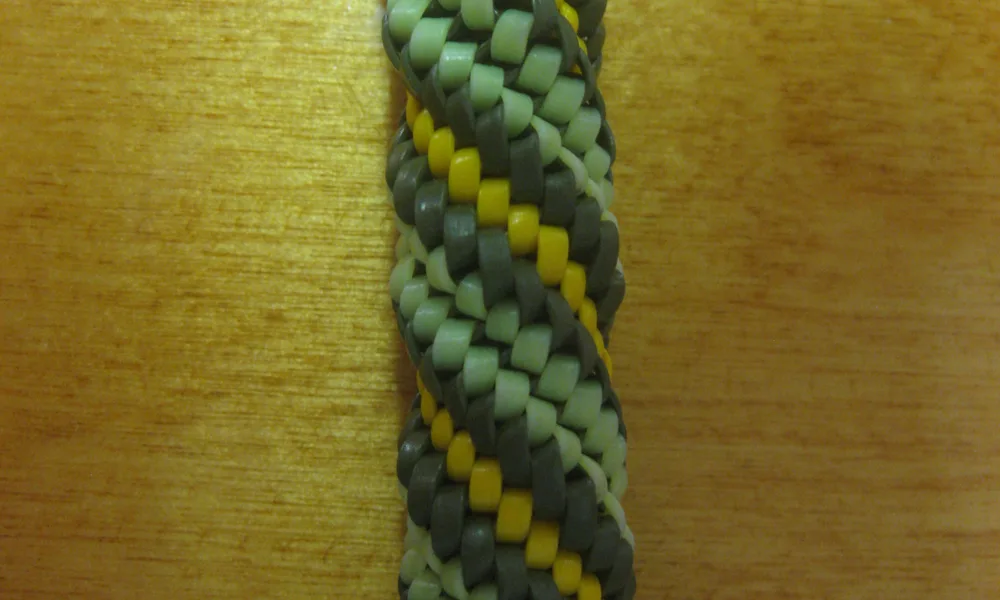
The stiff braided lace lanyard looks charming in the shop, all woven plastic lace and craft-market colours, and it feels like a lanyard that will soften with wear. It does not soften. The plastic lace is stiff, the braid holds its shape like a ring of rope, and the lanyard hangs in a hard loop that digs into the neck and catches on everything. A good braided lanyard is made from soft, flexible cord that moves with you, and you should be able to fold it flat without feeling it fight back. If the lanyard feels like a bangle in the shop, it will feel like one all season, and you will leave it in a drawer. The same trap waits in other fan gear, and our guide to the worst sports mugs shows how the wrong material ruins a souvenir.
What to avoid when buying a sports lanyard
Start with the clip test: open and shut it ten times and tug hard, because a clip that pops once will pop when it matters. Check the print with a fingernail, because surface print lifts and woven or dyed designs last. Scrunch the strap and let it fall, because a strap that twists will tangle every time you take it off. Walk with the badge on, because a pass you cannot show is a pass you do not have. Check the back of the neck for a breakaway catch, because a lanyard without one is a hazard. Wear it loaded for five minutes, because a narrow strap that digs in will only get worse. The checks take less than a minute.
Checklist: buying a sports lanyard
- Click the clip ten times and tug hard: if it pops open once, it will fail.
- Scratch the print with a fingernail: if it lifts at the edge, it will fray within weeks.
- Scrunch the strap and let it fall: if it drops into a twist, it will tangle every time.
- Walk with the badge on: if it flips in a minute, it will flip all day.
- Check the back of the neck for a breakaway catch: no catch means no buy.
- Wear it loaded for five minutes: a narrow strap that digs in will only get worse.
Frequently asked questions
What is the worst type of sports lanyard?
The snap-open clip lanyard, because it fails at the one job a lanyard has. A clip that pops open drops your pass without warning, and no print or colour makes up for that.
How can I tell if a lanyard clip will hold?
Open and shut it ten times, then tug the pass hard. A good clip needs a firm press to open and snaps shut with a click.
Why does the print fade off my sports lanyard?
Because the design is printed on the surface rather than woven into the strap. A woven or dyed-through design lasts far longer.
Do I need a breakaway catch on a sports lanyard?
Yes. The catch pops open if the lanyard snags, instead of yanking your neck. It clips back together in seconds, and every decent sports lanyard has one.
Why does my lanyard badge keep flipping over?
Because the holder hangs from a single thin hook and spins freely. A wide clip or a double hook holds the badge flat.
Is a wide lanyard better than a narrow one?
For all-day wear, yes. A wide strap spreads the weight and sits flat, while a narrow strap digs in and rolls. Choose a strap at least the width of a thumb.
Bottom line
The worst sports lanyards of 2026 are the ones that cannot do the one job a lanyard has: keep your pass where you can show it. A clip that snaps, a print that frays, a cord that tangles or a badge that flips will cost you more than the price of the lanyard. Click the clip, scratch the print, scrunch the strap and check the breakaway catch before you pay.