A Guide to Glove Boxes That Keep Every Pair Together in 2026
A glove box is a storage box made to hold gloves, and it solves a problem every glove owner knows: gloves are easy to buy and hard to keep as a pair. A good glove box keeps every pair together, keeps dust and damp out, and lets you see what you own at a glance.
A glove box here is a storage box for the gloves you wear: leather gloves, winter knit gloves, driving gloves and work gloves kept at home. It is not the glove compartment in a car, which is a dashboard cubby, and it is not the sealed glovebox chamber used in a laboratory. Our guide to jewelry boxes worth buying to protect your collection covers small compartments for rings and necklaces, and this one covers the larger, flatter home that gloves need.
Key Takeaways
- A glove box earns its price by keeping pairs together: one box with a place for every pair ends the daily hunt for the missing glove.
- Measure your longest gloves first, then buy a box at least that long, because a box that is too short will crease leather and crush knit.
- Wood and leather boxes protect best against knocks and dust, while fabric and wicker boxes breathe better and suit knit gloves.
- Keep leather gloves flat, never folded hard, and keep knit gloves dry and aired, because damp ruins both materials fastest.
- A lid that closes properly matters more than the outside: a box that stays shut keeps dust, light and moths out.
What a Glove Box Actually Does
A glove box has one job: give every pair of gloves a fixed home, so the pair stays together and the gloves stay in the shape they were bought in. Leather gloves left in a heap crease across the fingers, and the creases become cracks. Knit gloves left loose in a drawer stretch at the cuffs and pick up fluff.
The second job of a glove box is protection. Gloves collect dust fast, and leather dries out in dry air while knit suffers in damp air. A box with a close-fitting lid keeps dust out, and the right material keeps the inside dry without drying the gloves themselves. A glove box is one of a family of boxes made for a single thing: watch boxes give every watch its own cushioned slot, and hat boxes give each hat a rigid round home that holds its shape.
The Main Types of Glove Box Compared
Almost every glove box falls into one of five families. The right one depends on the gloves you own, how often you wear them, and where the box will live.
| Box type | How it is made | Best for | Watch out for |
|---|---|---|---|
| Wood boxes | Rigid wood with a hinged or lift-off lid | Leather gloves and dresser display | Heavy, and cheap wood can warp |
| Leather boxes | Leather or leather-look outside, soft lining inside | Smart gloves and gifts | Thin leather scuffs easily |
| Fabric boxes | Fabric over board, often with dividers | Knit gloves and closet shelves | Will not stop a heavy knock |
| Wicker boxes | Woven wicker with a fabric lining | Everyday gloves by the door | Gaps let dust in |
| Lidded trays | A shallow open tray with a loose lid | Gloves worn daily | No dividers, pairs can mix |
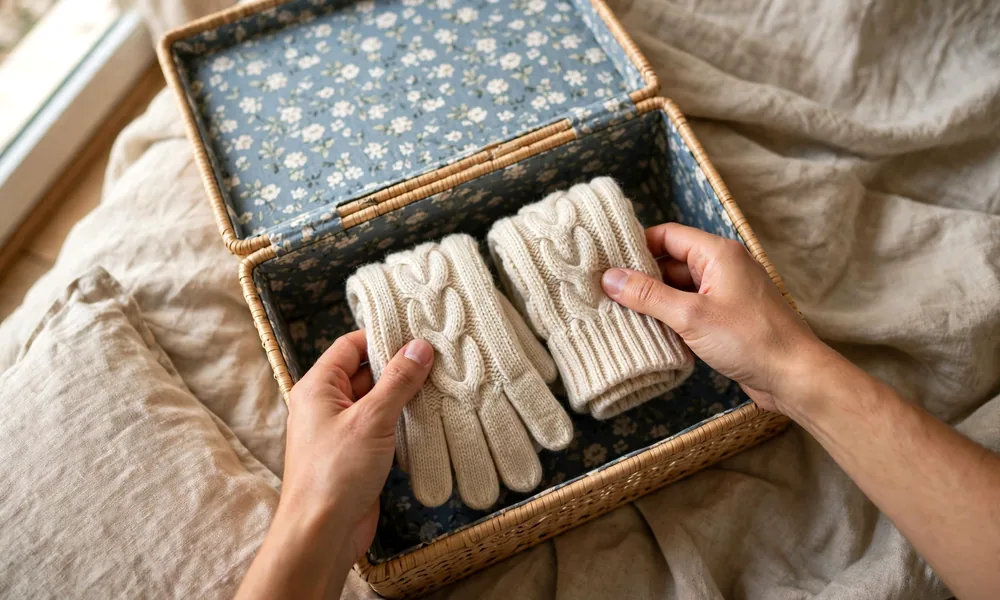
Wood boxes: the strongest home for leather gloves
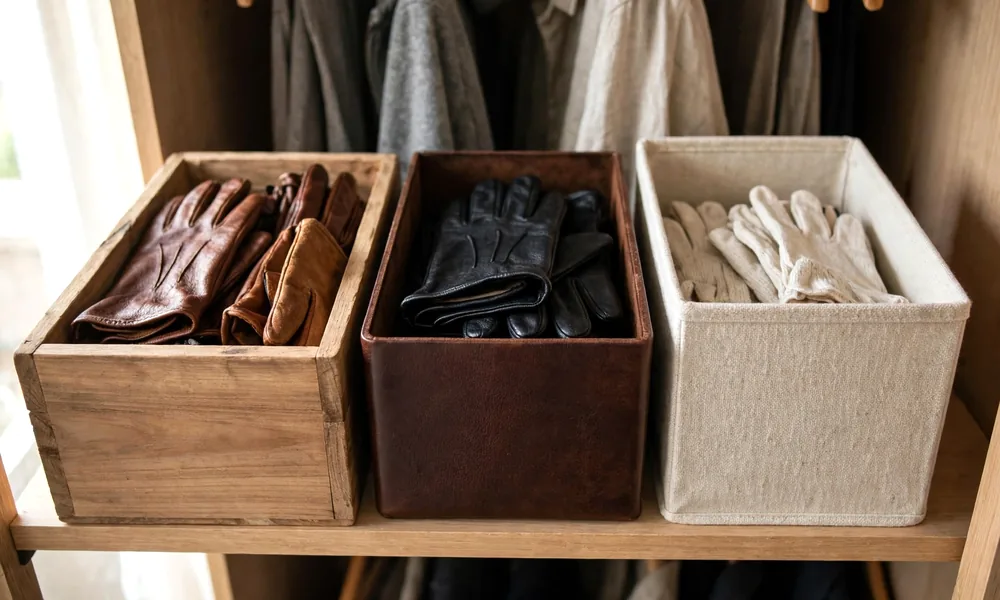
A wood glove box is a rigid box with a hinged or lift-off lid, and it is the strongest home a pair of leather gloves can have. The rigid sides stop anything in the drawer or on the shelf from pressing on the gloves, and the lid keeps dust out. The box to buy is one with a smooth, lined interior, because bare wood can be rough enough to mark soft leather.
Leather boxes: smart on the dresser
A leather glove box is a box with a leather or leather-look outside and a soft lining inside, and it is the box that looks best on a dresser. The lining matters more than the outside, so choose velvet, suede or soft cotton that cushions the gloves instead of scratching them. The weakness is the outside: thin leather scuffs easily, so check the thickness before you buy.
Fabric and wicker boxes: the breathable options
Fabric and wicker boxes are the breathable options, and they suit knit gloves best. A fabric box is fabric over board, often with dividers, and it lets air move through the box, which keeps knit dry and stops the musty smell that builds up in a sealed box. A wicker box is woven wicker with a fabric lining, and it suits everyday gloves kept by the door, where the box is opened several times a day. Neither will stop a heavy knock, so they are not the box for expensive leather gloves kept in a crowded drawer.
How to Size a Glove Box
Measure your longest gloves first, then buy a box at least that long, plus a little spare room. Lay your longest pair flat and measure from the tip of the middle finger to the end of the cuff: most adult gloves run 25 to 30 centimetres, and long driving gloves and gauntlets can run longer. Width matters too: count your pairs, allow about 8 to 10 centimetres of width per pair laid flat, and add two spare spaces for the pairs you will buy next.
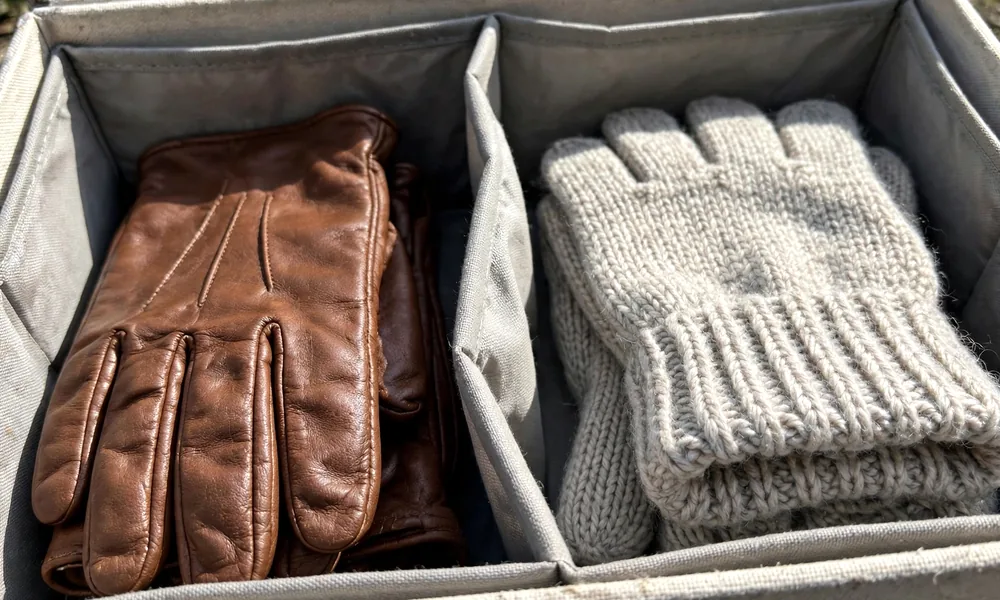
A shallow box of 5 or 6 centimetres holds one layer of gloves lying flat, which is what leather gloves need. A deeper box of 10 centimetres or more holds two layers, which suits knit gloves that can be stacked without harm, but leather gloves stacked two deep will press on each other and crease. If you own both leather and knit, buy a box with a removable divider or a shallow tray that sits on top: leather flat on the bottom, knit in the tray above.
Storing Leather Gloves and Knit Gloves
Leather gloves should lie flat, never folded hard across the fingers, and never rolled. Lay each pair flat, one glove on top of the other, fingers pointing the same way, and keep pairs apart so the leather of one pair does not rub the leather of another. Never put damp leather gloves away: wet leather dries stiff, and a stiff glove cracks when it is worn again.
Knit gloves are more forgiving but they have their own enemies: damp, moths and stretching. Knit gloves should go into the box clean and fully dry, because damp wool in a closed box grows mildew, and mildew smells and weakens the yarn. Moths eat wool and cashmere, so a cedar block or a lavender sachet in the box is worth having, replaced every few months.
Where to Keep a Glove Box
A glove box by the front door is the most useful place for everyday gloves: the gloves are where you put them on, and they go back in the box when you come in, so the pair never gets separated. A glove box on the bedroom dresser suits the best gloves: leather gloves and dress gloves, kept flat and out of the light.
The wrong places are the bathroom, the kitchen and anywhere damp. A bathroom is the worst home for a glove box: steam and damp get into the box, leather goes stiff and knit grows mildew. The right place is a cool, dry room, out of direct sunlight, where the box is easy to reach. If the box is hard to reach, the gloves will not go back in it, and the box will sit empty while the gloves pile up nearby.
Mistakes That Ruin Gloves in Storage
The first mistake is stuffing gloves into a box that is too small: a glove folded to fit will crease, and a creased leather glove will crack. The second mistake is putting gloves away damp: wet leather dries stiff and cracks, and damp knit grows mildew. The third mistake is mixing gloves with other things in the same box. The fourth mistake is forgetting moths: wool and cashmere gloves in an unprotected box will be eaten. The fifth mistake is keeping the box in sunlight or by a radiator, which fades leather and dries it out.
Checklist: Choosing a Glove Box
- Measure your longest gloves first and buy a box at least that long, plus a little spare room for the next pair.
- Count your pairs and allow 8 to 10 centimetres of width per pair laid flat, with two spare spaces for growth.
- Choose wood or leather for expensive leather gloves, and fabric or wicker for knit gloves that need air.
- Check the lid closes flush and the hinge stays tight, because a box that stays shut keeps dust, light and moths out.
- Check the lining is soft enough not to mark leather, and that the box has a centimetre of clearance above the top layer.
- Keep the box in a cool, dry place out of sunlight, and put it where the gloves are used, not where it looks tidy.
Frequently Asked Questions
What size glove box do I need?
Measure your longest pair flat, from the tip of the middle finger to the end of the cuff, and buy a box at least that long. Most adult gloves run 25 to 30 centimetres. Allow 8 to 10 centimetres of width per pair, and check the box is 5 to 6 centimetres deep for one flat layer.
Are glove boxes the same as jewelry boxes?
No. A jewelry box has small compartments, ring rolls and necklace hooks for pieces that tangle and scratch each other. A glove box is a larger, flatter box for gloves, which need to lie flat and stay in pairs. The two boxes solve different problems, and a jewelry box is too small and too divided to hold gloves.
Can I store leather gloves and knit gloves in the same box?
Yes, if they are kept apart. Leather gloves should lie flat on the bottom, and knit gloves can sit in a shallow tray above them, or in a divided section. Do not let leather rub against knit, and do not stack leather two deep, because the weight will crease the pair underneath.
Do glove boxes stop moths?
A box with a lid that closes properly keeps moths out, but only if the gloves go in clean. Moths are drawn to dirt and body oils on wool, so clean knit gloves before storing them, and add a cedar block or lavender sachet, replaced every few months.
Where is the best place to keep a glove box?
By the front door for everyday gloves, on the bedroom dresser for the best leather pairs, and on a closet shelf for seasonal gloves. The box needs a cool, dry place out of direct sunlight. Never keep it in a bathroom or kitchen, where steam and damp will ruin leather and knit.
Can I use a glove box for other things?
You can, but it works best when it holds gloves and nothing else. Keys, coins and pens scratch leather and snag knit. If the box is big enough, a scarf laid flat on top of the gloves is harmless, but a box that becomes a general drawer will stop keeping pairs together.
The Bottom Line
A glove box is a simple piece of storage with a simple job: keep every pair together, keep the gloves flat, and keep dust, damp and moths out. Measure your longest gloves, buy a box that fits them with room to grow, choose wood or leather for the best pairs and fabric or wicker for knit, and keep the box where the gloves are used.