
Hat boxes that store hats without crushing in 2026 solve a problem every hat owner knows: a good hat is easy to buy and hard to keep. Left on a shelf, the brim bends. Hung on a hook, the crown sags. Stuffed in a cupboard, it comes out creased, dusty and a size smaller than you remember. A good hat box ends that slow damage. It gives each hat a round, rigid home that holds its shape, keeps dust and damp out, and lets you stack hats safely instead of piling them on top of each other.
The best hat boxes of 2026 do more than hold a hat. They protect the brim, which crushes first and shows damage most. A box that fits the brim flat, with a lid that closes without pressing on the crown, keeps a hat looking new for years.
Key Takeaways
- A hat box must fit the brim flat: measure the widest brim you own and buy a box at least that wide, plus a little spare room.
- Round boxes suit wide-brimmed hats and fedoras, while oval boxes fit caps and cloches and stack more neatly on a shelf.
- Rigid board and leather boxes protect against crushing, while fabric boxes travel well but will not stop a heavy object from denting a crown.
- Store hats crown-down or brim-flat with tissue inside the crown, and never stack a hat directly on another hat without a box between them.
- Keep hat boxes in a cool, dry place away from radiators and damp, because heat warps felt and damp grows mould on straw.
What a Hat Box Actually Does
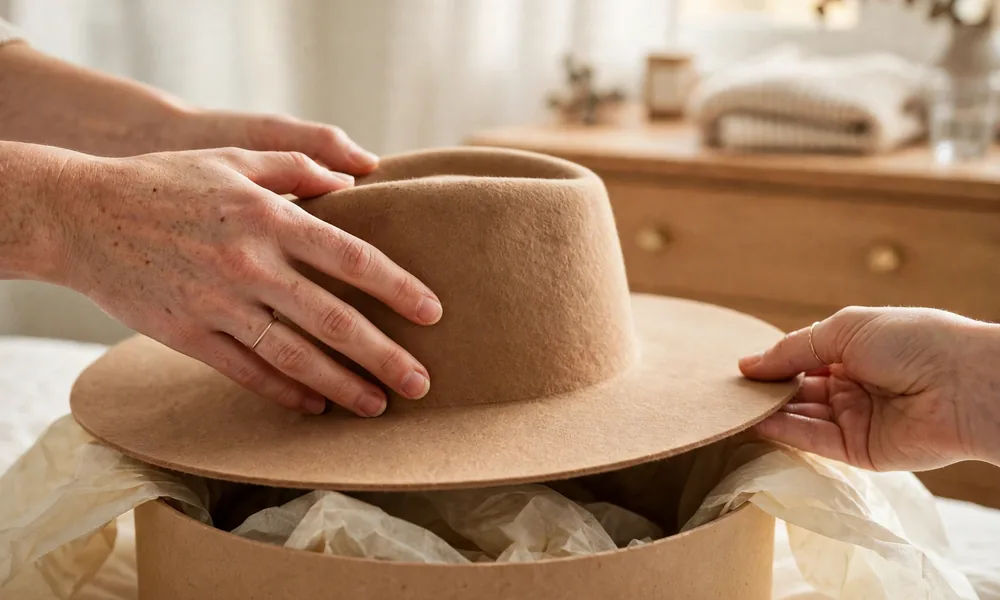
A hat box is a rigid container shaped to hold a hat without pressing on it. The box carries the weight, the hat simply rests inside. That is what separates a hat box from an ordinary storage box: a general box has a flat lid and square corners that press on a brim and dent a crown, while a hat box is round or oval, with a lid that sits clear of the hat.
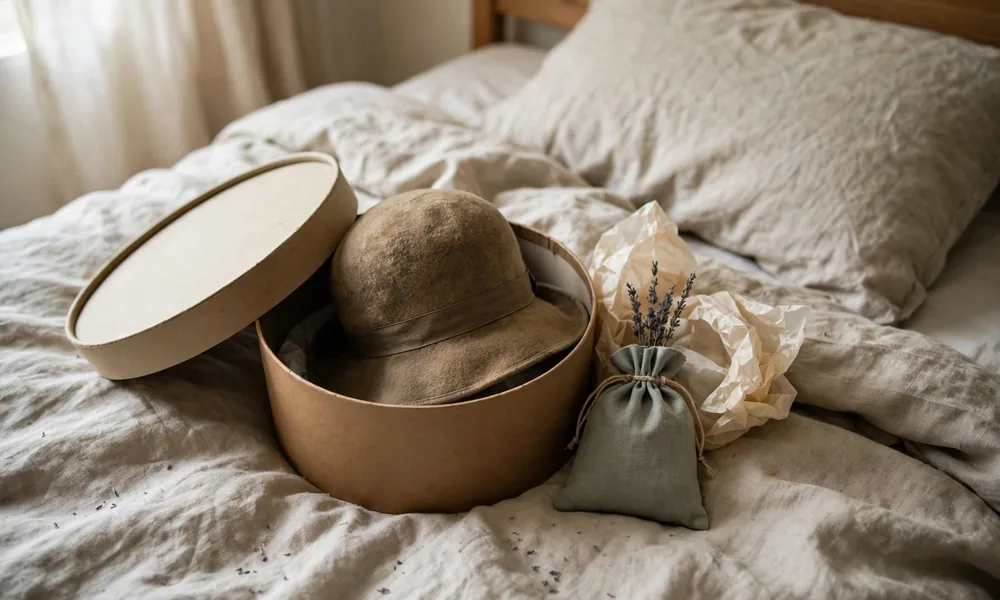
The other job of a hat box is to keep the hat clean and dry. Hats collect dust fast, and felt and straw both suffer in damp air. A box with a close-fitting lid keeps dust out. Acid-free tissue inside the crown stops it from collapsing inward, and a small sachet keeps moths away from wool felt.
The Main Types of Hat Box
Most hat boxes fall into four groups, and the right one depends on the hats you own, how often you wear them, and where the boxes will live.
Round hat boxes
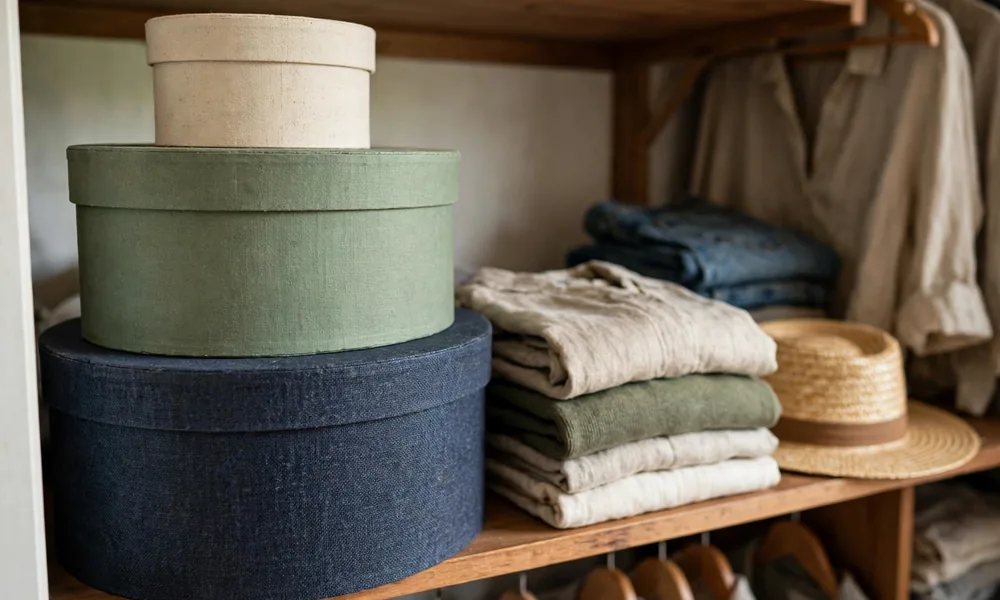
The round hat box is the classic: a cylinder with a lift-off lid, usually in rigid board, leather or fabric-covered board. Round boxes fit wide-brimmed hats, fedoras and straw hats best, because the brim sits flat in a full circle with nothing pressing on its edge. They stack well and look good on a shelf. Their weakness is wasted space: a round box holding a small hat leaves a lot of empty air, and round boxes do not pack tightly against a wall.
Oval and square hat boxes
Oval boxes suit hats that are longer than they are wide, such as cloches, caps and fascinators, and they sit flat against a wall. Square boxes are the most practical for storage: they stack neatly and waste no shelf space. Their weakness is the corners. A square box can press on a round brim at four points, so check the brim sits flat and does not touch the corners.
Leather and rigid board boxes
Leather and rigid board are the most protective materials for a hat box. A rigid board box with a reinforced rim will survive being stacked under other boxes, and a leather box will survive being carried, dropped and knocked about. Their weakness is price and weight. A leather hat box costs several times a board one, and a rigid board box full of hats is heavy to lift down from a high shelf.
Fabric and collapsible hat boxes
Fabric hat boxes are light, soft-sided and often collapsible, folding flat when empty. They are the best choice for travel and seasonal storage, because a folded box takes up almost no room. Their weakness is protection. A fabric box will not stop a heavy object from denting a crown, and it cannot be stacked under anything heavier than itself.
Hat Boxes Compared
| Type | Best for | Watch out for | Price in 2026 |
|---|---|---|---|
| Round | Wide brims, fedoras, straw hats | Wastes shelf space, loose fit for small hats | Low to mid |
| Oval and square | Cloches, caps, tight shelves | Corners pressing on a round brim | Low to mid |
| Leather and rigid board | Valuable hats, stacking | Heavy, costs more | Mid to high |
| Fabric and collapsible | Travel, seasonal storage | Little crush protection, cannot stack | Low |
Materials: What Protects a Hat
The material of a hat box decides how much crushing it can take and how long it lasts. Rigid board is the workhorse: light, cheap and strong enough to stack, provided the rim is reinforced and the lid fits snugly. Look for board at least two millimetres thick with a clean, smooth inside, because rough board sheds fibres onto felt. Leather is the premium choice. It resists scuffs, survives drops and ages well, but it needs occasional conditioning and it costs several times a board box. A leather box is worth it for a hat you wear often and travel with.
Fabric-covered board sits between the two: lighter than leather, tougher than plain board, and available in colours that suit a bedroom. The fabric must be glued smoothly with no bubbles or loose edges, or it will peel within a year. Plain fabric boxes with no board inside are the lightest option but the weakest, and they belong in travel and seasonal storage. Whatever the material, check the inside: a lining of smooth cotton or acid-free tissue is ideal, while bare board will mark a light-coloured hat.
How to Size a Hat Box
Size is where most hat box purchases go wrong. A box that is too small crushes the brim, which is exactly the damage it was bought to prevent. A box that is too big lets the hat slide around, which creases the crown and wears the brim edge. The right box fits the brim flat with a finger-width of spare room around the edge, and the lid closes without touching the top of the crown.
Measure before you buy. Take the widest hat you own, lay it brim-down on a table, and measure across the brim at its widest point. That number, plus two or three centimetres, is the diameter your box needs. Then measure the crown height and add two centimetres for tissue. A wide fedora needs a box around forty centimetres across, while a small cloche may need only thirty. If you own several hats of different sizes, buy boxes in two sizes rather than one: a box that fits a sun hat will swallow a cap. Small hats need their own smaller boxes, and our guide to the best baby hats covers the hats themselves for the youngest wearers.
Hat Boxes vs Wardrobe Boxes
The nearest neighbour to a hat box is the wardrobe box, the tall cardboard box used for moving clothes on hangers. Our guide to the best wardrobe boxes covers the ones that protect clothes in a move, and the difference is in the job. A wardrobe box protects clothes from dust and creasing while they hang. A hat box protects a hat from crushing while it rests.
The same logic applies to general storage. A hat box is not a substitute for proper household storage, and a general storage box is a poor substitute for a hat box. Our guide to the best under-bed storage covers the boxes that hide clutter under a bed, and they are useful for the hat boxes themselves: a hat box stored under a bed stays dust-free, provided nothing heavy sits on top of it.
Mistakes That Crush a Good Hat
The first mistake is buying a box that is too small. A brim folded to fit a box stays folded, and felt remembers a crease for months. Measure the brim, add a little spare room, and never force a hat into a box. The second mistake is stacking hats without boxes between them. Two hats in one box press on each other, and the lower hat takes the weight of the upper one. One hat per box is the rule.
The third mistake is storing hats in a damp or hot place. Damp grows mould on straw and stains felt, while heat from a radiator warps felt and dries leather boxes until they crack. Keep hat boxes in a cool, dry room, away from radiators and outside walls. The fourth mistake is skipping the tissue. A ball of acid-free tissue inside the crown stops it from collapsing inward, and a sheet over the brim stops dust settling on the felt.
Hat Box Checklist: Before You Buy
- A diameter at least as wide as your widest brim, plus two or three centimetres of spare room.
- A lid that closes without touching the top of the crown, and a rim strong enough to stack under other boxes.
- A smooth, lined interior that will not shed fibres or mark a light-coloured hat.
- A rigid shell if the box will be stacked or carried, and a fabric shell only for travel or seasonal storage.
- Room for tissue inside the crown and over the brim, without forcing the lid shut.
- A size that fits the shelf, wardrobe or under-bed space where the box will actually live.
Frequently Asked Questions
What size hat box do I need?
Measure across your widest brim and add two or three centimetres. That is the diameter you need. Then measure the crown height and add two centimetres for tissue. A wide fedora usually needs a box around forty centimetres across.
Can I store more than one hat in a box?
One hat per box is the rule. Two hats in one box press on each other, and the lower hat takes the weight of the upper one. If space is tight, buy smaller boxes for smaller hats rather than doubling up.
Are fabric hat boxes any good?
Yes, for travel and seasonal storage. Fabric boxes are light and fold flat when empty. They are poor protection against crushing, so never stack anything heavy on top of one, and never store a valuable hat in one long-term.
How do I stop a hat from losing its shape in a box?
Put a ball of acid-free tissue inside the crown to support it, lay a sheet of tissue over the brim, and store the hat crown-down or brim-flat. Never store a hat on its side, where the crown takes the weight.
Where should hat boxes live?
In a cool, dry place: a wardrobe shelf, the top of a wardrobe, or under a bed. Keep them away from radiators, damp outside walls and direct sunlight, all of which damage felt, straw and leather.
How do I clean a hat box?
Wipe rigid and leather boxes with a dry or slightly damp cloth, and vacuum fabric boxes with a soft brush attachment. Never soak a board box, and let any box dry fully before putting a hat back inside it.
Bottom Line
The best hat box is the one that fits your widest brim flat, closes without touching the crown, and is rigid enough to stack. Buy for fit and a lid that shuts, not for looks alone, and keep the boxes cool and dry with tissue inside the crown. A hat that keeps its shape for years is worth far more than the box that protects it.


