
Tissue Paper That Makes Gifts Look Finished in 2026
Tissue paper is the quiet finishing touch that separates a gift that looks thrown together from one that looks properly finished. It is the soft layer tucked inside a gift bag, the cushion around something fragile, and the coloured flare above the rim just before the present is handed over. The best tissue paper in 2026 is light, strong for its weight, and coloured all the way through. This guide covers the types worth buying, the weights that hold up, and the techniques that make a gift look wrapped with real care.
Key Takeaways
- Tissue paper finishes and cushions: it fills, protects, and decorates, while wrapping paper covers and ribbon ties.
- Paper around 17 to 22 grams per square metre is the sweet spot: light enough to scrunch and flare, strong enough not to tear at the first touch.
- Colour should run through the sheet; surface-printed tissue fades at the folds and looks cheap.
- Two or three sheets per bag is usually right: one to cushion the bottom, one around the gift, and one or two flared on top.
- Keep white plus one or two accent colours in stock and you can finish almost any gift without a last-minute shop run.
What Tissue Paper Actually Is
Tissue paper is a very thin, soft paper made to be scrunched, folded, and layered rather than stretched or pulled tight. It is judged on three things: how it feels in the hand, how it holds a shape once flared, and how its colour looks in daylight. Good tissue feels smooth and slightly silky, springs back gently when scrunched, and keeps its colour even at a sharp fold. Poor tissue feels rough, tears when pulled, and turns pale and patchy at the creases.
It helps to be clear about what tissue paper is not. It is not wrapping paper: wrapping paper is a flat sheet or roll that you cut, fold, and tape around a gift to cover it completely, and tissue is far too thin for that job. It is not a gift bag either: a gift bag is a ready-made carrier, and tissue is what goes inside it. And it is not ribbon: ribbon is the tie on the outside, while tissue works inside and around the gift, unseen until the moment of opening. Our guide to wrapping paper that makes gifts look special explains the outer layer, and our guide to gift bags that carry presents in style covers the carrier; this guide is about the layer in between.
The Types of Tissue Paper Worth Knowing
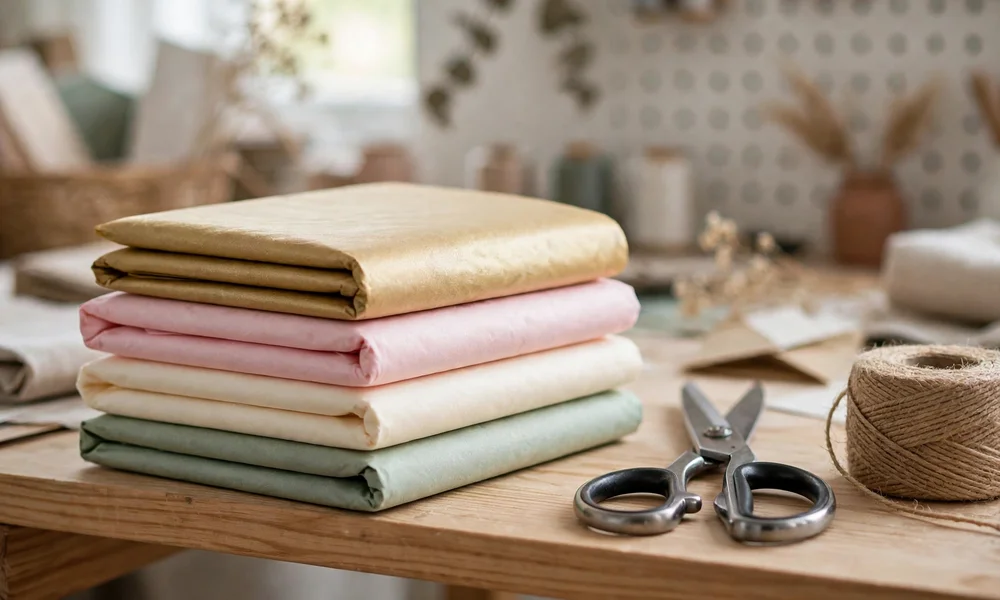
Plain coloured tissue is the workhorse. It comes in packs of twenty or fifty sheets in a single colour, dyed all the way through, and it is the tissue most people should buy first. White is the essential, since it suits every occasion, and one accent colour, such as gold, sage green, or dusty pink, covers birthdays, weddings, and Christmas between them.
Printed tissue carries a pattern, from polka dots and stars to florals and seasonal prints. It looks festive and can carry a whole theme on its own. The print should be sharp and not rub off on hands or gift. Printed tissue is usually a little stiffer than plain, so it holds a flare well, but it tears more easily if you pull it.
Metallic and foil tissue has a thin metallic finish, usually gold, silver, or copper, that catches the light when the bag is opened. Use it sparingly: one metallic sheet with two plain sheets gives a flash of shine without looking gaudy. It creases permanently and shows fingerprints, so save it for milestones, weddings, and Christmas.
Recycled tissue is made from post-consumer paper and has a slightly softer, more matte feel. Its colours are less bright and the range smaller, but plain recycled tissue in white or kraft is widely recyclable with other paper. Foil and glitter tissue usually is not recyclable, because the coating cannot be separated.

Weight and Thickness: The Number That Matters
Tissue paper weight is measured in grams per square metre, and it decides almost everything about how the paper behaves. Very light tissue under 15 grams per square metre feels lovely, but it tears at the slightest pull, goes limp when handled, and will not hold a flare. It is cheap, but you need more sheets for the same effect and every sheet risks tearing.
Tissue around 17 to 22 grams per square metre is the sweet spot. It is light enough to scrunch softly and flare into a generous shape, yet strong enough to survive being pulled out of a bag and handled by the recipient without splitting. Above 22 grams, tissue feels more like thin wrapping paper: stronger, good for lining boxes, but it loses the soft, airy quality that makes tissue look like tissue. When you shop, the test is simple: take a sheet by one corner and lift it. Good tissue drapes and falls in soft folds. Poor tissue either hangs stiffly or tears under its own weight.
How to Use Tissue Paper So Gifts Look Finished
Stuffing a gift bag is the most common job, and technique matters more than the tissue. Start with one or two sheets scrunched loosely in the bottom: they cushion and lift the gift. Place it in the centre and pack scrunched tissue around it so it cannot slide about. The gift should sit with its top a little below the rim, not poking out and not buried. Finish with tissue on top: take two or three sheets, hold them by the centre, and let the corners flare out like a fan, arranging them so they stand evenly. The tissue should look generous and hide the gift.
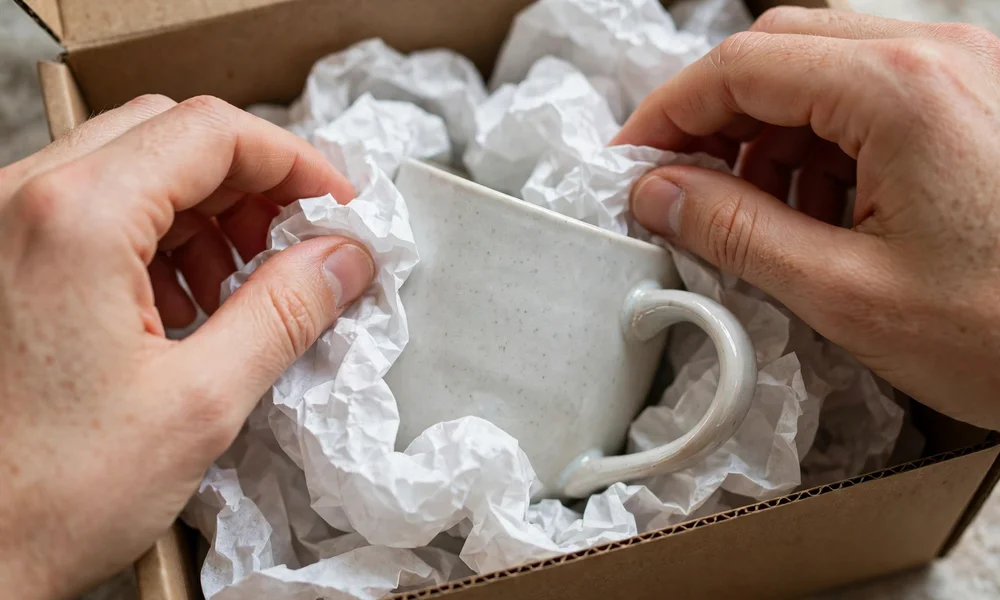
Cushioning a fragile gift is the second job. Wrap the item in a sheet of tissue first, folding the paper around it loosely, so it acts as a soft layer between gift and box. Add a second sheet if the item is very delicate, and fill the gaps with scrunched tissue so nothing can move. A ceramic mug, a bottle, or a framed photograph arrives intact because the tissue absorbed the knocks.
The Best Tissue Papers Compared in 2026
| Type | Best for | Weight | Strength | Weakness |
|---|---|---|---|---|
| Plain coloured | Everyday gifts, bags | 17-22 gsm | Good, flexible | Plain without dressing |
| Printed | Birthdays, themed gifts | 18-22 gsm | Good, holds a flare | Tears if pulled hard |
| Metallic foil | Milestone celebrations | 18-24 gsm | Fair, creases easily | Shows every fingerprint |
| Recycled | Eco occasions, everyday | 17-20 gsm | Good | Duller colours |
| Acid-free | Jewellery, keepsakes | 17-20 gsm | Good, gentle on gifts | Costs more per sheet |
What to Look For When You Buy
Choose the sheet size first. Standard sheets are around 50 by 75 centimetres, suiting most gift bags and medium boxes. Larger sheets suit big bags and presents and can be cut down, while small sheets are a false economy for anything bigger than a jewellery box.
Check the colour carefully. Good tissue is dyed through, so the colour is the same on both sides and stays true at the folds. Cheap tissue is printed on the surface, so the colour fades where it creases and the underside is pale. Hold a sheet up to the light: even colour means good dyeing; patchiness means it will look uneven in the bag. A pack of twenty sounds generous, but one gift bag can take three or four sheets, so a pack lasts about five or six gifts. Buying in packs of fifty is usually much cheaper per sheet, and tissue stores well if you keep it flat and dry.
Finally, check whether the tissue is recyclable and whether that matters to you. Most plain and printed tissue is recyclable with other paper, but foil, glitter, and metallic tissue usually is not, because the coating cannot be separated. Tape does not belong on tissue: a small sticker or a twist of ribbon holds a fold, while tape tears the sheet when removed. Our guide to masking tape that tears clean and sticks right covers tape for the wrapping itself, where it belongs.
Common Mistakes That Spoil the Finish
The most common mistake is using too little tissue. One lonely sheet in a big bag looks sparse and lets the recipient see straight in, which defeats the whole purpose. Be generous: two sheets at the bottom, one around the gift, and two flared on top. Tissue is cheap; skimping makes a generous gift look mean. The second mistake is scrunching too tightly. Tissue that has been balled up into a hard lump looks careless and will not flare properly. Scrunch loosely, letting the paper keep its air and softness, and the flare will look full and natural.
The third mistake is mixing too many colours: three or four bright colours in one bag compete with each other and the gift. One colour, or one colour plus white, or one plus a metallic accent, always looks smarter. The fourth mistake is storing tissue badly. Sheets folded for months develop hard creases, and damp storage makes tissue limp and blotchy. Store tissue flat, in a drawer or a large envelope, away from damp. And never use tissue that has already been used: once a sheet has been scrunched and handled, it loses its crispness and looks tired,
Your Tissue Paper Checklist
- Pick tissue of 17 to 22 gsm: soft enough to flare, strong enough not to tear.
- Check the colour runs all the way through the sheet, with no pale underside.
- Cushion the bag’s bottom with one or two loosely scrunched sheets.
- Pack tissue around the gift so it cannot slide, top just below the rim.
- Flare two or three sheets on top, corners standing evenly, hiding the gift completely.
- Keep white plus one accent colour in stock, with a few metallic sheets for special occasions.
Frequently Asked Questions
How many sheets of tissue paper do I need per gift bag?
Three to five sheets for a medium bag: one or two scrunched in the bottom to cushion and lift the gift, and two or three flared on top. A small bag takes two or three, a large bag five or six. Better one sheet too many than one too few.
Can tissue paper be recycled?
Most plain, printed, and recycled tissue can be recycled with other paper, once you remove tape, stickers, or ribbon. Foil, glitter, and metallic tissue usually cannot, because the coating cannot be separated. Check your local rules if unsure.
What is the difference between tissue paper and wrapping paper?
Wrapping paper is a thicker sheet or roll you cut, fold, and tape around a gift to cover it. Tissue is much thinner and softer, used inside gift bags, around fragile items, and as a decorative layer over a wrapped present. They do different jobs and work best together.
Can I reuse tissue paper?
You can smooth out a lightly used sheet, but reused tissue looks tired: it loses crispness, keeps its creases, and flares poorly. Fresh sheets are worth it for any gift you want to look finished; save reused sheets for packing and storage.
What colour tissue paper should I buy first?
White first: it suits every occasion and every other colour. Then one accent colour you like, such as gold, sage green, or dusty pink. That pair covers birthdays, weddings, Christmas, and thank-you gifts; add metallic gold or silver later for milestones.
Does tissue paper protect fragile gifts?
Yes, used properly. Wrap the item loosely in a sheet or two and fill the gaps in the box with scrunched tissue so nothing can move. Tissue absorbs small knocks well, though it is no substitute for bubble wrap for very fragile items or long-distance posting.
The Bottom Line
The best tissue paper flares softly, resists tearing, and is coloured all the way through. Keep white and one accent colour in stock, use it generously, and the present will look finished before it is ever opened.


