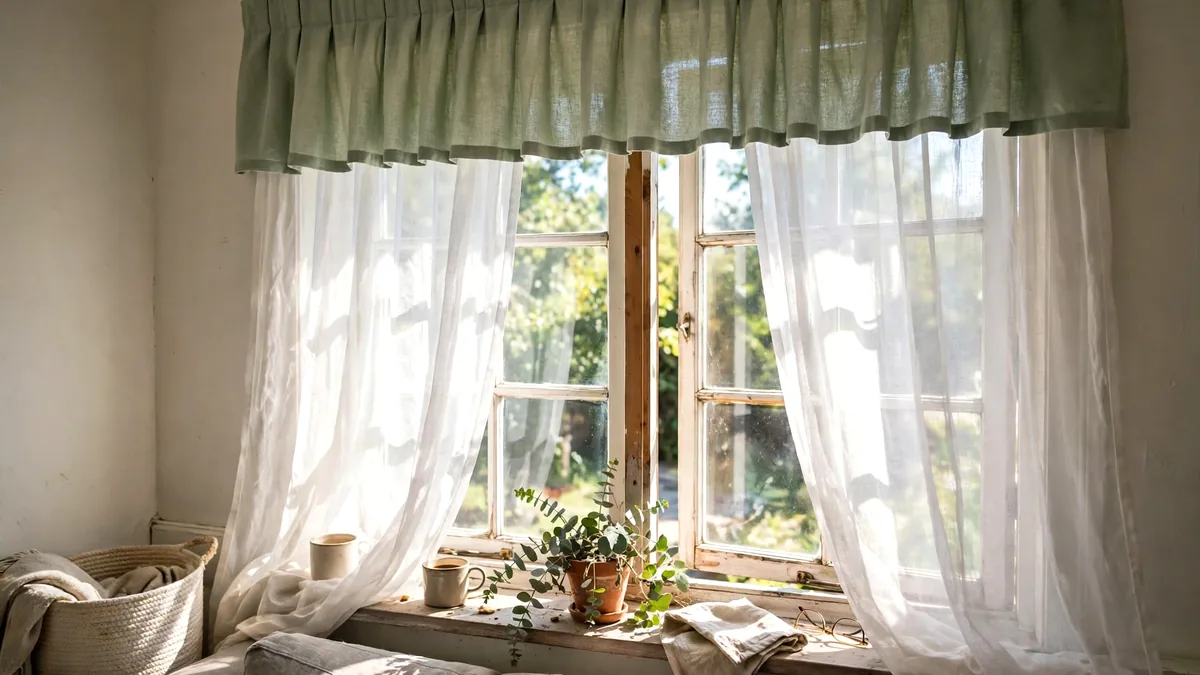
Valances are the cheapest way to make a window look finished, and the best ones do it for the price of a single curtain panel. A valance is a short piece of fabric that hangs across the top of a window, covering the rod, the hardware and the bare gap above the glass, while leaving the rest of the window open to the light. It adds colour, pattern and softness without the cost or the fuss of full-length curtains. A bare window can look sharp, but it can also look unfinished, and a valance is the smallest change that fixes it.
This guide explains how to choose valances for your windows, rooms and budget: the main styles, the fabrics that hold their shape, how to measure and hang one, and the mistakes that make a valance look cheap.
Key Takeaways
- A valance dresses only the top of the window, adding finish and colour without blocking light or costing as much as full curtains.
- Match the style to the room: tailored pleats for living rooms, soft swags for bedrooms, washable scallops for kitchens.
- Measure the rod, not the window: a valance needs one and a half to two times the rod width to gather properly.
- Hang it high and wide, so the window looks taller and the valance hides the rod.
- Choose washable fabric for kitchens and bathrooms, and lined fabric where the sun hits the window for hours a day.
What a Valance Actually Is
A valance is a short decorative treatment that covers the top 25 to 45 centimetres of a window. It hangs from the same rod as ordinary curtains, or from its own slim rod, and it can be used on its own, over sheers, or over full-length curtains. Used alone, it softens a window while leaving the glass clear. Used with curtains, it hides the rod, the rings and the gathered tops of the panels, so the whole window looks like one deliberate design.
It is not a pelmet, and it is not a curtain. A pelmet is a rigid box, usually wood or board covered in fabric, fixed above the window; a valance is soft fabric that can be taken down and washed. A curtain covers the whole window and controls light and privacy; a valance covers only the top and controls almost nothing except the look. If you want light and privacy, buy curtains, and our guide to curtains that make any room feel finished covers full-length panels in detail. If you want finish, colour and softness for very little money, buy a valance.
The Main Valance Styles Compared
Almost every valance falls into one of four styles, and the style decides the mood of the room more than the fabric does.
| Style | Look | Best room | Fabric | Watch out for |
|---|---|---|---|---|
| Tailored / box pleat | Crisp, straight, structured | Living room, dining room | Linen, cotton, twill | Shows creases if badly pressed |
| Swag | Soft, draped, romantic | Bedroom, formal living room | Velvet, silk, soft cotton | Needs exact draping to look right |
| Scalloped | Curved hem, friendly, classic | Kitchen, bathroom, nursery | Cotton, polyester, gingham | Can look dated in plain colours |
| Balloon | Puffed, gathered, traditional | Bedroom, country cottage | Chintz, floral cotton | Uses a lot of fabric, heavy to wash |
Tailored and Box Pleat: The Safest Choice
A tailored valance hangs straight down in crisp, even pleats, usually 30 to 40 centimetres deep, and it suits almost any room that is not trying to be romantic. It is the easiest style to hang well, because the pleats are sewn in, and it does not collect dust the way a draped style does. Linen and cotton blends hold pleats best; very soft fabrics slump and lose the structure. If you are buying your first valance, start here.
Swag: Soft Drapes for Formal Rooms
A swag valance is fabric draped in soft curves across the top of the window, often with tails hanging down at the sides. It is the most romantic style and the hardest to get right: the drapes need to be even and the tails need to match. Swags suit bedrooms and formal living rooms, especially in velvet or soft cotton, and they look wrong in kitchens and bathrooms, where the drapes collect steam and cooking smells. Buy a swag only if you are willing to adjust it by hand after hanging.
Scalloped: The Kitchen Classic
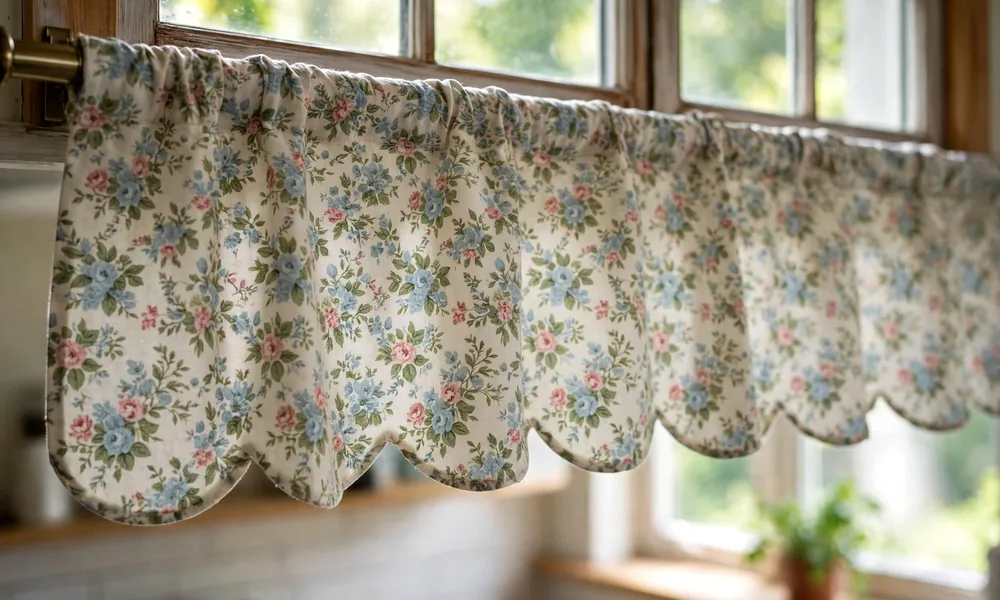
A scalloped valance has a curved hem that dips and rises across the window, and it is the classic choice for kitchens, bathrooms and nurseries. It looks friendly rather than formal, lets in more light than a straight valance because the curves rise between the dips, and is usually made in washable cotton or polyester. The risk is looking dated: a scalloped valance in a plain colour with no pattern can look like it came with the house. Pick a print, a gingham or a stripe, and keep the drop short at 25 to 30 centimetres.
Balloon: Full and Traditional
A balloon valance is gathered into soft puffs, like a curtain pulled up by cords, and it is the fullest, most traditional style. It suits country bedrooms and cottage living rooms, especially in floral cotton. It also uses the most fabric and is the hardest to wash, because the gathers trap dust and the puffs need reshaping after every wash. Choose it only for a room where you want the window to be a feature.

Choosing a Valance by Room
Every room asks something different from a valance. Living rooms need one that looks good in the evening, so a tailored or swag style in a colour that matches the sofa or the rug is the safest choice. Kitchens need washable fabric above all else, because the valance sits above steam, cooking smells and splashes; a short scalloped valance in cotton or polyester is the practical pick.
Bedrooms suit softer styles, and a swag or balloon valance matching the bedding makes the room feel dressed. Bathrooms need moisture-resistant fabric and a short drop, so the valance never touches a wet window. Small windows need a shallow valance of no more than 25 centimetres; large windows can take 40 to 45 centimetres without looking heavy.
Fabric and Colour: What Holds Its Shape
Fabric decides whether a valance keeps its shape or slumps within weeks. Linen and cotton blends are the most versatile: they hold pleats, drape well, and wash without losing body. Polyester is the easiest to care for and the best choice for kitchens and rentals, because it resists creasing and dries quickly, though it can look flat in a formal room. Velvet gives the richest look and the best drape for swags, but it is heavy, shows dust, and usually needs dry cleaning. Sheer fabrics make a soft valance, but they do nothing to hide hardware, which defeats half the purpose.
Colour is simpler than fabric. A valance in a colour taken from the room, the sofa, a rug or a cushion, always looks deliberate. One that matches the wall colour exactly disappears; one in a strong accent colour becomes the feature of the window. Dark colours hide the lining and look smarter from the street; pale colours show dust and fading sooner. If the window gets hours of direct sun, choose a lined valance or a fade-resistant fabric.
Measuring and Hanging So It Looks Deliberate
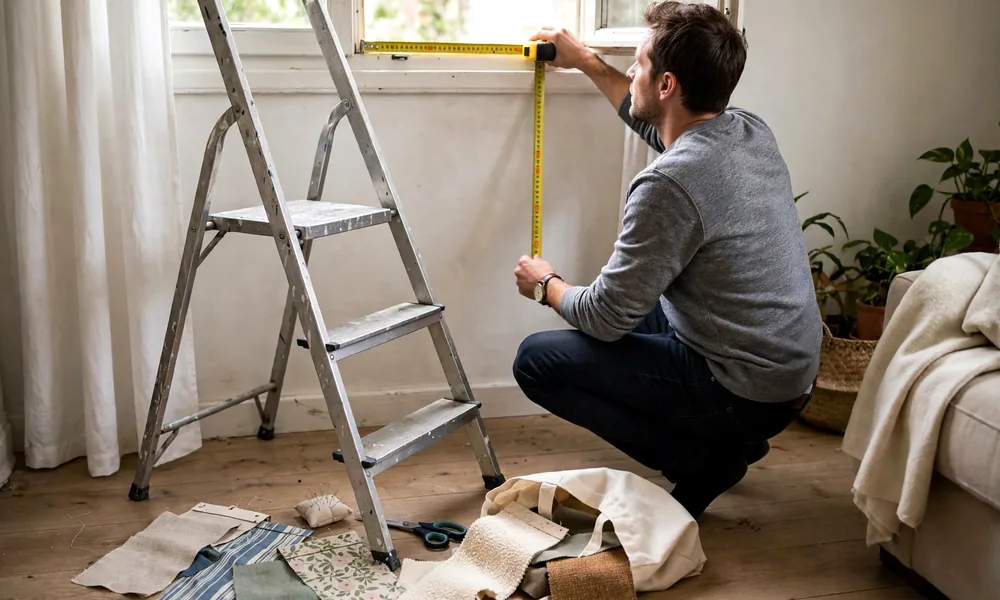
Measure the rod, not the window. A valance needs one and a half to two times the rod width in fabric to gather properly; one cut to the exact width of the rod hangs flat. Measure the rod from end to end, including any finials, then multiply by 1.5 for a tailored style and by 2 for a gathered or balloon style. For the drop, measure from the top of the rod to the hem, and add 5 centimetres for the rod pocket.
Hang the rod high and wide: 10 to 15 centimetres above the frame and 15 to 20 centimetres past each side, so the window looks taller and the valance has room to gather. If you are pairing a valance with full curtains, hang it on its own slim rod in front of the curtain rod, and use curtain tiebacks that hold curtains neatly to keep the panels gathered to the sides, so the two read as one window treatment. Press or steam the valance before you hang it, then step back across the room to check it.
Valances, Light and Privacy
A valance on its own gives almost no privacy and blocks almost no light. What it does do is close the gap at the top of the window, which is exactly where light leaks in around other treatments. If you have blackout curtains, a valance over the top closes the triangle of light that escapes above the rod, and our guide to blackout curtains that actually block the light explains why that gap matters. Paired with sheers, a valance adds privacy at the top of the window while leaving the lower glass clear.
For a bedroom that must stay dark, treat the valance as the finishing piece, not the solution: the blackout curtains or blind do the work, and the valance hides the hardware and closes the gap. For a living room that needs light, the valance is the whole treatment: it finishes the window without taking any light away.
Before You Buy: The Checklist
- Style matched to the room: tailored for living rooms, swag for bedrooms, scalloped for kitchens.
- Fabric width one and a half to two times the rod width, so it gathers instead of hanging flat.
- Drop of 25 to 30 centimetres for small windows, up to 45 centimetres for large ones.
- Washable fabric for kitchens and bathrooms; lined fabric for windows in direct sun.
- Rod hung 10 to 15 centimetres above the frame and 15 to 20 centimetres past each side.
- Colour taken from the room, not the wall, so the valance looks deliberate.
Frequently Asked Questions
Can I use a valance on its own, without curtains?
Yes, and most valances are used that way. A valance alone softens the top of the window and hides the rod while leaving the glass clear, which suits any window where you want light and a finished look without full curtains.
How wide should a valance be?
One and a half to two times the width of the rod. A tailored valance needs about 1.5 times the rod width; a gathered or balloon valance needs about twice, or it will hang flat and look underdressed.
Do valances block light?
Almost none. A valance covers only the top of the window. It does close the gap above a curtain rod, which helps blackout curtains work better, but it is not a light-blocking treatment on its own.
How do I wash a valance?
Most cotton and polyester valances machine-wash on a gentle cycle; velvet and silk usually need dry cleaning. Reshape balloon and swag valances while they are still damp.
Can a valance make a small window look bigger?
Yes, if it is hung high and wide. Mount the rod 10 to 15 centimetres above the frame and extend it past each side. A deep valance on a small window has the opposite effect, so keep the drop shallow.
What is the difference between a valance and a pelmet?
A valance is soft fabric that hangs, gathers and can be taken down and washed. A pelmet is a rigid box, usually wood or board covered in fabric, fixed above the window. A valance is cheaper and easier to change; a pelmet is stiffer and more formal.
The Bottom Line
The best valance is the one that matches the room, the window and the care you are willing to give it. For most homes, that is a tailored valance in a washable linen or cotton blend, hung high and wide. It costs less than a single curtain panel. Choose the style for the room, measure the rod, and buy washable fabric for kitchens and bathrooms.


