
Curtains that make any room feel finished in 2026 do one thing above all else: they turn a bare window into a deliberate part of the room. A window without curtains can look sharp and modern, but it can also look unfinished, especially in a living room or dining room where softness matters. The right curtains add warmth, control the light, soften sound, and give the whole space a sense of proportion. The wrong ones make a room feel smaller, darker, or oddly off-balance, even when everything else in it is right.
Choosing well is less about following a trend and more about matching the fabric, length, and hanging height to the room in front of you. A linen panel that looks effortless in a bright living room can look thin and lost in a large dining room, while a heavy velvet curtain that feels luxurious in a formal space can overwhelm a small kitchen.
Key Takeaways
- Linen and cotton are the most versatile curtain fabrics for living rooms and dining rooms, offering softness, texture, and gentle light control.
- Hang curtains 10 to 15 centimetres above the window frame and extend the rod 15 to 20 centimetres past each side so windows look taller and wider.
- Choose a total curtain width at least twice the width of the window so the panels gather properly when closed.
- Sheer curtains soften harsh daylight without blocking it, while lined or blackout curtains give real privacy and insulation.
- Match the curtain to the room: washable fabrics for kitchens, moisture-resistant styles for bathrooms, and fuller panels for living rooms.
Why Curtains Change a Room So Much
A room is mostly walls, floor, and furniture, and a window is often the largest visual break in it. Curtains frame that break, and the frame changes how the whole wall reads. Tall curtains that start near the ceiling and fall to the floor draw the eye upward, making the ceiling feel higher and the room feel larger.
Curtain Fabrics Compared
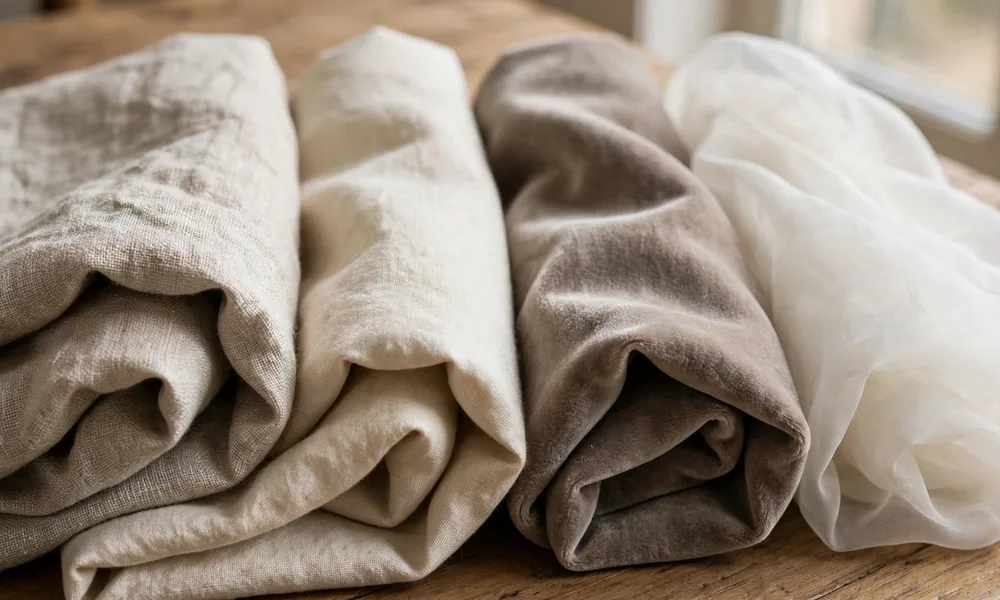
| Fabric | Look and Drape | Light Control | Best Room | Care |
|---|---|---|---|---|
| Linen | Relaxed, textured, soft folds | Moderate, filters light | Living room, dining room | Dry clean or gentle wash |
| Cotton | Crisp, clean, versatile | Moderate to good | Any room | Machine washable |
| Velvet | Rich, heavy, luxurious | Strong, blocks most light | Living room, formal dining | Dry clean |
| Sheer voile | Light, airy, translucent | Softens light only | Kitchen, living room | Machine washable |
| Polyester | Smooth, consistent, holds shape | Good with lining | Kitchen, bathroom, rental | Machine washable |
| Blackout | Heavy, structured, lined | Blocks up to 99 percent | Media room, nursery | Wipe or gentle wash |
Linen is the most popular curtain fabric of 2026 for good reason. Its slightly uneven texture looks natural and expensive, and it softens with age rather than wearing out. Pure linen wrinkles, which is part of its charm in a relaxed home, but a linen blend with a little cotton or polyester holds its shape better and creases less.
Velvet sits at the other end of the scale: heavy, dramatic, and warm. It suits large rooms with high ceilings, where its weight looks intentional rather than overwhelming, and it is at its best in deep colours such as forest green, navy, or rust.
Choosing Curtains by Room
Every room asks something different from its curtains, and the best choice for one room is often wrong for another. Start with how the room is used, when it is used, and what the window faces, then choose the fabric and length to match.
Living Rooms
The living room is where curtains do their most visible work. This is the room guests see first, and it is usually the room with the largest windows, so the curtains set the tone for the whole space. Full-length panels in linen or cotton, hung high and wide, are the safest choice, and they suit almost every style from modern to traditional. A rug underfoot completes the same softening job that curtains start on the walls, and our guide to the best area rugs of 2026 covers how to size one for the room.
Dining Rooms and Kitchens
Dining rooms need curtains that look good in the evening, when the room is lit by lamps and candles rather than daylight. Heavier fabrics such as velvet or lined cotton suit the mood, and a deeper colour can make the room feel warm and intimate. Floor-length panels frame the table and make the room feel finished, while sill-length curtains can look practical but plain. Kitchens are the hardest-working room for curtains: the fabric needs to cope with steam, cooking smells, splashes, and frequent washing, so washable cotton or polyester is the right call.
Bathrooms and Hallways
Bathrooms need privacy above all, and moisture resistance comes a close second. A short, washable curtain in polyester or a moisture-resistant blend is the practical answer, and a voile layer can add privacy without blocking the light that small bathrooms need. Hallways rarely have large windows, but where they do, a light curtain can soften a dark corridor and make it feel less like a passage and more like a room. Keep hallway curtains simple and light-coloured, so they bounce what little light there is rather than absorbing it.
How to Measure and Hang Curtains
Measuring is the step most people rush, and it is the step that decides whether the finished result looks professional or improvised. Measure the window width first, then decide how far the rod should extend past it. A rod that extends 15 to 20 centimetres beyond each side of the frame lets the curtains stack clear of the glass when open, so the window looks wider and more light comes in.

Hang the rod high. The most common curtain mistake is mounting the rod just above the window frame, which makes the window look short and the ceiling feel low. Mounting it 10 to 15 centimetres above the frame, or closer to the ceiling in rooms with tall walls, makes the whole wall feel taller.
Light Control and Privacy Across the Day
A curtain is a light-control tool as much as a decoration, and the best setup is often two layers rather than one. A sheer layer handles the daytime, softening glare and giving privacy from the street while keeping the room bright. A heavier layer handles the evening, closing for privacy, warmth, and darkness. This layered approach costs more than a single curtain, but it solves the most common complaint about curtains: that a single panel is either too heavy during the day or too thin at night.
Direction matters too. A south-facing window gets strong sun for most of the day, so a light-coloured curtain that reflects heat and resists fading is the better choice, and a lining protects both the fabric and the furniture from sun damage. If you want to compare how curtains and blinds handle the same problem in the room where privacy matters most, our guide to curtains vs blinds for bedrooms breaks down light, warmth, noise, and cost head to head.

Colour, Pattern, and Care
Colour is where personal taste matters most, but a few guidelines keep the choice from going wrong. Neutral colours such as warm white, oatmeal, soft grey, and stone are the safest choice, because they work with any furniture and any wall colour, and they keep the room bright. A bold colour or pattern can be striking, but it commits the room to that colour, so it works best where the rest of the room is quiet and the curtain is the one statement piece.
Curtains last longer than most people expect when they are cared for, and the care is simple. Vacuum them lightly with an upholstery attachment every month or two to keep dust from settling into the weave, and wash or dry-clean them according to the label at least once a year.
Common Mistakes When Buying Curtains
The first mistake is buying panels that are too narrow. A curtain that barely covers the window when closed looks thin and unfinished, and it will not gather properly. The second mistake is hanging the rod too low and too narrow, which shrinks the window instead of enlarging it. The third mistake is choosing the fabric for the shop rather than the room: a heavy velvet that looked luxurious under showroom lights can make a small living room feel dark and cramped, while a sheer that looked airy in the shop can leave a street-facing room with no privacy at all.
Curtains Buying Checklist
- Measure the window width and add 30 to 40 centimetres for the rod extension, then measure the drop from the rod to the floor.
- Choose a total curtain width at least twice the window width, and two and a half times for heavy fabrics.
- Match the fabric to the room: washable cotton or polyester for kitchens and bathrooms, linen or cotton for living and dining rooms.
- Decide on light control first: sheer for daytime softening, lined for privacy and insulation, or both layered together.
- Hang the rod 10 to 15 centimetres above the frame, and make sure it is strong enough for the fabric weight.
- Check the colour and pattern against the room in daylight, and keep the curtains plain if the room already has a pattern.
Frequently Asked Questions
How long should curtains be?
For living rooms and dining rooms, curtains should reach the floor, either just touching it or pooling very slightly. For kitchens and bathrooms, a sill-length or cafe-length curtain is more practical, because it stays clear of worktops, water, and cooking.
How wide should curtains be?
The total width of the curtain panels should be at least twice the width of the window, so they gather properly when closed. For heavy fabrics such as velvet, two and a half times the window width gives a fuller, more luxurious look.
Should curtains be lighter or darker than the walls?
Either can work, but lighter curtains keep a room bright and make it feel larger, while darker curtains add warmth and drama. A safe rule is to choose a curtain a shade or two lighter or darker than the wall, rather than an exact match, which can look flat.
Do curtains help with insulation?
Yes, especially lined or heavy curtains. A lined curtain over a window cuts draughts and slows heat loss, and it can make a noticeable difference in older homes with single glazing or draughty frames.
Can you put curtains in a kitchen or bathroom?
Yes, with the right fabric. Choose a washable cotton or polyester curtain, keep it short so it stays clear of worktops and water, and wash it regularly to prevent mildew.
Are sheer curtains enough for privacy?
Sheer curtains give good privacy during the day, when the room is darker than the outside, but almost none at night once the lights are on. For a street-facing room, layer a sheer with a heavier curtain that closes in the evening.
The Bottom Line
Curtains that make any room feel finished in 2026 are not the most expensive curtains or the most fashionable ones. They are the ones that fit the room: the right fabric for how the room is used, the right length to make the wall feel taller, and the right light control for the times of day the room is lived in. Bedrooms have their own demands around sleep and darkness, and our guide to the best curtains for bedrooms in 2026 covers those in detail. For every other room, a well-chosen curtain is the simplest way to make the whole space feel considered, warm, and complete. Start with the room you use most, and let the curtains you choose there set the standard for the rest of the house.


