
What the Worst Stadium Announcers of 2026 Get Wrong Every Matchday
The worst stadium announcers of 2026 are not the ones who stumble over a single surname or misread one score. The worst stadium announcers are the ones whose faults repeat at every match: the voice that shouts every routine announcement as if it were a winning goal, the mumbler nobody past row five can understand, the joker who turns every pause into a punchline, and the announcer who talks over the crowd at the exact moment the crowd wants to sing. This guide ranks the worst types of stadium announcer in 2026 by pattern, not by person, so you can recognise the habits that spoil a good matchday before the teams even walk out.
Key takeaways
- The worst stadium announcer is a habit, not a single slip: the same fault appears at every home match.
- A stadium announcer works for the people in the stands, not for the people listening at home, and the two jobs need different voices.
- Volume is not clarity: the loudest announcer in the ground is often the hardest one to understand.
- Silence is part of the job: the best announcers let the crowd, the players and the noise of the game do the talking.
- An announcer who decides the mood before kick-off will fight the crowd all afternoon instead of working with it.
How the worst stadium announcers of 2026 were judged
Every type below was scored on five measures. Clarity comes first: can every stand hear the words, the names and the scores, or does the announcement dissolve into echo and noise? Timing is second, judged on whether the voice fits the moment or talks over the goals, the songs and the applause that matter. Tone is third, because a stadium voice sets the mood for thousands of people. Restraint is fourth: does the announcer speak when there is something to say, or fill every quiet second with noise? Fairness is fifth: does every player and every team get the same treatment, or does one side get the cheers and the other get the mumble?
Two notes before the list. First, no individual announcer is named as the worst anywhere in this article, because the same bad patterns appear in many grounds, and what matters is learning to recognise them. Second, a stadium announcer is not a commentator. A commentator describes the game for people watching at home, while an announcer speaks to the people already in the ground. Readers who follow the voices around sport will find the same pattern-first approach in our guide to the worst commentators of 2026, where a repeated weakness matters far more than one bad broadcast.

Comparison table: the worst stadium announcers 2026
| Rank | Announcer type | Worst habit | Who suffers most |
|---|---|---|---|
| 1 | The shouter | Every word at full volume | Every fan in the ground |
| 2 | The mumbler | Names and scores nobody can hear | Fans in the far stands |
| 3 | The never-stops joker | A joke in every pause | Anyone who came for the game |
| 4 | The crowd-talker-over | Talks through songs and applause | The atmosphere itself |
| 5 | The wrong-names announcer | Players misnamed every week | Trust in every announcement |
| 6 | The advert-reader | Sponsors before the score | Fans waiting for the result |
| 7 | The home-favourite announcer | One team cheered, one ignored | Away fans and neutrals |
The worst stadium announcers of 2026
1. The shouter: every word at full volume
The shouter is the worst type of all, because the damage never pauses. Every announcement arrives at the same deafening level, whether it is a team sheet, a safety message or a half-time draw, so nothing sounds important any more. The crowd stops listening within ten minutes, because a voice that is always at full volume gives the ear nowhere to rest, and the people nearest the speakers spend the whole match wincing instead of watching. A good stadium voice has gears: loud for the big moment, calm for the routine message, and quiet when the crowd is doing the work. The shouter has one gear, and it is stuck at the top,
2. The mumbler: names and scores nobody can hear
The mumbler is the opposite failure, and it is just as costly. The words are there, the microphone is on, and nobody past the first few rows can make out a single one of them. Team news becomes a low rumble, the scorer of the goal becomes a guess, and the half-time score is something you have to ask the person next to you about. The mumbler often speaks too fast as well, running the words together so that a surname with three syllables becomes one soft blur. The problem is rarely the equipment. A mumbler who slows down, opens the mouth and puts the consonants back into the words can usually be heard in the same ground with the same speakers,
3. The never-stops joker: a joke in every pause
The never-stops joker treats the public address system as a stage, and the match as the warm-up act. Every break in play brings a gag, every substitution brings a pun, and every quiet moment is filled with a voice trying to be the funniest person in a ground full of people who did not come for a comedy show. The worst part is the timing. A joke that arrives while a player is down injured, or while the crowd is holding a minute of applause, does not just fall flat, it offends, and the announcer who cannot read the room will keep going anyway. A stadium announcer can be warm and even funny, but the humour has to serve the matchday, not the announcer,
4. The crowd-talker-over: talks through songs and applause
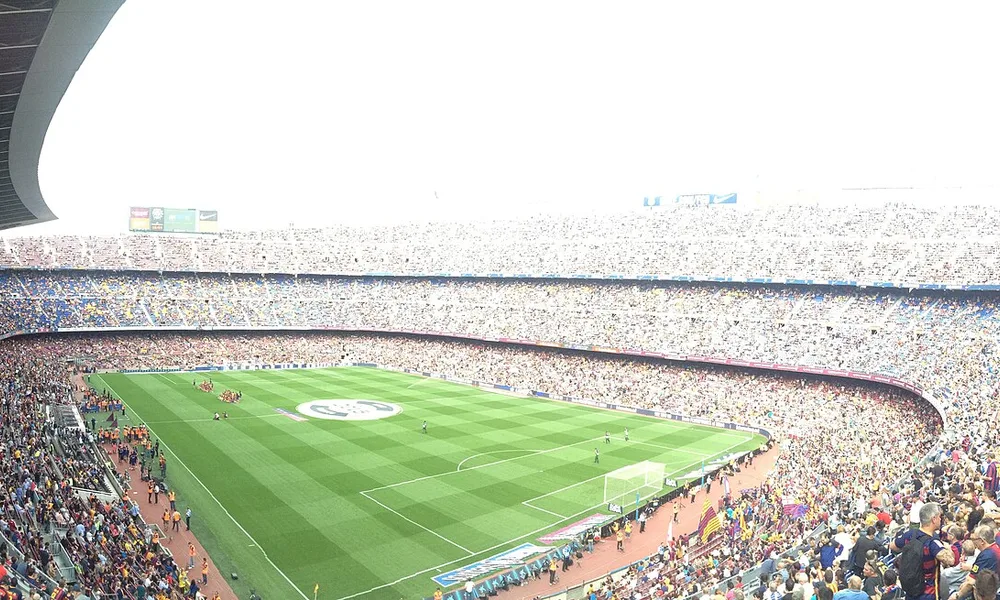
The crowd-talker-over is the announcer who cannot bear to let the crowd have a moment to itself. The fans start a song, and the voice comes straight over the top of it with a message that could easily have waited. The crowd applauds a player, and the announcer talks through the applause to read out a competition winner. A good announcer knows when to hold the message for ten seconds and let the moment breathe. The bad one follows the running order and kills the song, and over a season the crowd learns the lesson and stops singing.
5. The wrong-names announcer: players misnamed every week
The wrong-names announcer turns the team sheet into a weekly quiz, and the crowd never signed up to play. A new signing is given the wrong first name, a substitute is announced as the player who has just gone off, and a scorer is credited to the wrong shirt, and the corrections, if they come at all, arrive two minutes later when nobody is listening. Getting a name wrong once is a slip, and every crowd forgives it. Getting names wrong every week is a habit, and it tells the crowd that the announcer has not done the preparation. The damage goes beyond embarrassment, because fans start to doubt every announcement: if the scorer is wrong, perhaps the score is wrong too, and perhaps the safety message was wrong as well.
6. The advert-reader: sponsors before the score
The advert-reader treats the matchday as a radio slot with a game happening in the background. The half-time score, which thousands of people are waiting to hear, is buried behind three sponsor messages, a competition plug and a reminder about the club shop, and by the time the score finally arrives, half the crowd has stopped listening. Nobody objects to a sponsor being thanked, and most fans understand that the money keeps the club running, but there is an order to these things, and the advert-reader gets it backwards every time. The game comes first, the information comes second, and the commercial messages come last, in a short block that the crowd can tune out if it wants to.
7. The home-favourite announcer: one team cheered, one ignored
The home-favourite announcer is the voice that forgets there are two teams on the pitch. The home side’s goals are announced with a roar that shakes the speakers, while the away side’s goals are mumbled in a flat voice, as if the announcer were hoping nobody would notice. Home players are introduced with nicknames and praise, away players with a bored list of surnames, and the away fans, who have travelled further than anyone else in the ground, are treated as an afterthought. The announcer is supposed to be the neutral voice of the ground, giving both teams the same clarity and the same respect, and the home-favourite type abandons that job entirely.

What to do when the announcer is ruining your matchday
You cannot fix a bad stadium announcer from your seat, but you can limit the damage. Sit as far from the nearest speaker as your ticket allows, and choose a seat in the middle of a stand rather than directly underneath the sound system, where the echo is at its worst. If the announcer is genuinely impossible to understand, say so to the club in a short, polite message after the match, naming the problem rather than the person. The same pattern-first thinking helps in the stands too, and our guide to the worst fans of 2026 shows how one repeated habit can spoil a matchday for a whole row, while our guide to the worst referees of 2026 covers the other voice of authority that can make a game hard to enjoy.
Checklist: surviving the worst stadium announcers
- Pick a seat away from the nearest speaker, in the middle of a stand rather than underneath the sound system.
- Use the big screen and the scoreboard for the score and the scorers instead of trusting a voice you cannot hear.
- Bring ear protection for children if the announcer is known for shouting every announcement.
- Ignore the jokes and the adverts, and save your attention for the team news, the score and the safety messages.
- Note the exact problem after the match, and tell the club politely: volume, clarity, timing or bias.
- Arrive early enough to hear the team news once, so a mumbled announcement does not leave you guessing all game.
Frequently asked questions
What is the difference between a stadium announcer and a commentator?
A stadium announcer speaks to the crowd already in the ground, while a commentator describes the game for people watching at home.
Why are some stadium announcers so loud?
Many grounds have old sound systems that echo badly, and announcers turn the volume up to fight the echo, which only makes the words harder to understand.
Can fans complain about a bad stadium announcer?
Yes, when the complaint is specific. Say what the problem is, such as the volume or the mumbling, rather than naming the person.
Should a stadium announcer be funny?
A little warmth is fine. The problem starts when the jokes fill every pause, because the crowd came for the game, not for a comedy show.
Why do announcers read so many adverts during a match?
Sponsors pay for the announcements, so a short message at half-time is normal. The problem is when adverts are spread through the whole match and buried in front of the score.
Is a biased announcer normal at home matches?
A home announcer will always sound warmer about the home team. The line is crossed when the away team is ignored or misnamed.
Bottom line
The worst stadium announcers of 2026 share one fault: they forget who the voice is for. The shouter, the mumbler, the joker, the crowd-talker-over, the wrong-names announcer, the advert-reader and the home favourite all put their own habits ahead of the crowd, and the crowd pays for it with missed scores, ruined songs and a matchday that feels louder and emptier at the same time.


