There is a special kind of hunger that only a train station can create. You have forty minutes before departure, your stomach is growling, and every option looks like it was made yesterday and reheated with regret. The Worst Train Station Food 2026 is not one dish. It is a whole ecosystem of stale sandwiches, soggy burgers, weak coffee, and overpriced snacks that thrive on tired travellers with no time to look elsewhere.
Train stations are some of the busiest food courts in the world, yet they serve some of the poorest meals you will ever pay for. The same burger that would be sent back in a restaurant sells thousands of times a day at a station, because the next train leaves in twenty minutes and the nearest decent restaurant is a ten-minute walk away.
This guide names the worst offenders of 2026, explains why station food keeps disappointing, and shows you how to eat better without missing your train.
Key takeaways
- Pre-packaged station sandwiches are the worst value: stale bread, wilted fillings, premium prices.
- Station burgers, pizza slices, and hot dogs are usually reheated, not cooked fresh, which is why they taste flat and soggy.
- Coffee and pastries at stations cost far more than they should, and the quality rarely matches the price.
- Vending machines are the most expensive way to eat at a station: a last resort, not a meal plan.
- Eat before you arrive, pack snacks, or choose the busiest stall to avoid the worst of it.

Why Train Station Food Is So Often Terrible
Bad station food is not an accident. Vendors pay enormous rents for small spaces, serve customers who will probably never return, and must prepare food that can sit for hours. Every pressure pushes quality down and prices up.
The Captive Audience Problem
A high-street restaurant must earn repeat customers. A station kiosk does not: most customers pass through once, in a hurry, and never return to complain. When a vendor knows you will not return, there is little reason to spend more on fresh ingredients or careful cooking.
Once you have passed through the ticket barriers, your choices shrink to whatever is inside the station. Prices rise the moment your alternatives disappear, and the food rarely rises with them. This is one of the worst train travel mistakes regular passengers make: assuming that food inside the station will be as good as food outside it, when the economics point in the opposite direction.
Speed Over Quality
Station food is designed around one question: how fast can it be handed over? A meal that takes twelve minutes to cook is a problem when the average customer has nine minutes before boarding. So vendors choose food that can be assembled in seconds, reheated in a microwave, or pulled from a chiller and sold as it is.
That speed comes at a cost you can taste: bread goes stale under heat lamps, burgers steam in their wrappers, pizza dries out on trays, and coffee turns bitter in urns. The ingredients are not necessarily bad, but the system strips away everything that made them good.
The Worst Train Station Food in 2026
We judged the worst station food of 2026 on freshness, flavour, value for money, and how likely it is to leave you regretting the purchase before your train arrives. These six offenders failed on all four.
1. The Stale Pre-Packaged Sandwich
The pre-packaged triangle sandwich is the undisputed champion of bad station food. It sits in a refrigerated cabinet for hours, sometimes since early morning, and by the time you buy it the bread is dry at the edges and damp where it touches the filling, the lettuce is wilted, and the flavour is mostly cold bread and disappointment.
What makes it worse is the price. A sandwich that would cost half as much in a supermarket is sold at a premium because it is the quickest thing to grab before a train. If the sandwich has no date label, or the cabinet looks half empty and picked over, walk past it.

2. The Soggy Station Burger
The station burger looks fine in the photograph above the counter. The reality is a lukewarm patty, a bun steamed soft in its wrapper, and limp fries that lost their crunch minutes ago. Most station burgers are cooked in batches, held under heat lamps, and assembled on order, which is why the cheese is half melted, the salad is warm, and the whole thing falls apart.
The drink rarely saves it either: station soft drinks are often flat, and the ice melts fast in a warm concourse. Travellers who eat badly on trains often eat badly on boats too, and the worst cruise ship food follows the same pattern of mass catering, long holding times, and customers who cannot easily go elsewhere.
3. Overpriced Weak Coffee and Dry Pastries
Station coffee is one of the great small disappointments of travel. It costs more than a coffee from a good independent cafe, yet it is often weaker, more bitter, and served in a cup that burns your hand. Station bars serve hundreds of cups an hour, so beans are ground in bulk, milk is steamed in a rush, and the drink is built for speed rather than taste.
The pastries next to the till are no better. Croissants and muffins that have sat in a display case since the morning rush go dry and tough by mid-afternoon, yet keep the same price all day. A dry pastry and a weak coffee can easily cost as much as a proper breakfast outside the station. If you need caffeine, a small black coffee from the busiest stall is the safest choice, because high turnover means fresher brews.

4. Lukewarm Pizza Slices
Pizza by the slice should be simple, but station pizza shows how heat lamps ruin good food. Slices sit on heated trays for hours, leaving a base tough underneath and soggy on top, with rubbery cheese and dried-out toppings, then get reheated on order, adding a burnt edge without restoring freshness.
5. Vending Machine Dinners
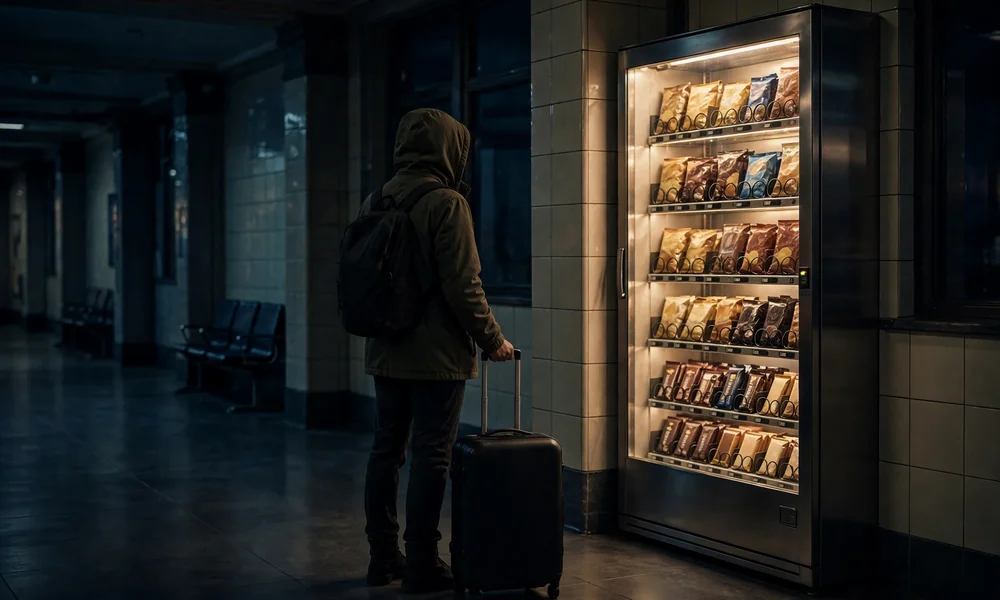
When every food stall is closed and the only thing glowing in the corridor is a vending machine, it is tempting to call crisps and chocolate a meal. It is not. Vending machine food is the most expensive way to eat at a station, gram for gram, and the least satisfying. A handful of packets can cost as much as a hot meal, and you will still be hungry.
The machines stock whatever survives longest at room temperature: salt, sugar, and preservatives rather than anything fresh or filling. Late-night travellers are worst affected, as the machines are often the only option after the last kiosk shuts. A packet of biscuits at midnight is understandable, but you are paying restaurant prices for food never meant to be dinner.
6. The Mystery Hot Dog
The station hot dog has been rolling on heated rollers for longer than anyone wants to admit. The sausage looks shiny and unnatural, the bun is stale or steamed soft, and the onions and sauces hide the fact that the main event has no flavour. It is cheap and fast, but most likely to leave you feeling worse after eating it than before.
Hot dogs are the ultimate holding-time food: they can sit for hours without looking spoiled, which is why vendors love them and travellers should be wary. A hot dog from a busy street vendor outside the station, cooked in front of you, is a different meal entirely.
Train Station Food vs Street Food: A Comparison
The gap between station food and the food a short walk away is often enormous.
| Factor | Train Station Food | Street Food Nearby |
|---|---|---|
| Freshness | Often held for hours under lamps | Usually cooked to order |
| Price | High, with a captive-audience markup | Lower, with real competition |
| Flavour | Flat and reheated | Brighter and fresher |
| Choice | Narrow, mostly chains | Wide, including local dishes |
| Speed | Very fast | Slower, usually under ten minutes |
| Value for money | Poor | Good |
The only category where station food wins is speed, and even that advantage shrinks when queues are long. If you have fifteen minutes before departure, walking outside the station is almost always the better choice.
How to Spot Bad Station Food Before You Pay
You cannot taste food before you buy it, but you can read the warning signs.
- Check the turnover. Eat at the busiest stall. High turnover means fresher food and shorter holding times.
- Look at the holding trays. If pizza slices, burgers, or pastries look dry or tired, they have been waiting too long.
- Read the date labels. Pre-packaged sandwiches should show a clear use-by date. No label means no purchase.
- Watch how food is cooked. Food cooked in front of you beats food pulled from a warmer.
- Smell the coffee. Stale coffee smells sharp and bitter; fresh coffee smells rich and warm.
- Compare the price. If a sandwich costs twice what it would outside, you are paying for location, not quality.
Smarter Ways to Eat When You Travel by Train
The best way to beat bad station food is to avoid needing it. Eat a proper meal before you leave home, or pack a sandwich, fruit, and a bottle of water in your bag. Food you bring yourself costs less and tastes better.
If you must buy at the station, pick the stall with the longest queue: a queue means food is selling and being replaced. Choose food cooked to order, even if it takes a few minutes longer, and avoid anything under a heat lamp. A noodle bowl from a busy stall beats a reheated burger every time.
Planning helps too. Sleeper trains often have dining cars or better food on board, so check what your train offers before relying on the station. Our guide to train vs sleeper train in Europe explains how food, comfort, and space compare on overnight routes.
Frequently Asked Questions
What is the worst food to buy at a train station?
The pre-packaged sandwich: stale bread, wilted fillings, premium price. Soggy burgers and reheated pizza slices are close behind.
Why is train station food so expensive?
Station vendors pay very high rents for small spaces and serve customers who have few alternatives once inside. Those costs are passed on to travellers, which is why a sandwich or coffee costs far more at a station than outside it.
Is train station food safe to eat?
Station food from licensed vendors is generally safe, covered by the same hygiene rules. The risk is quality, not safety: food held too long tastes stale, but it is unlikely to make you ill.
What should I eat at a train station if I am in a hurry?
Choose the busiest stall and order food cooked to order, such as a noodle bowl or a fresh sandwich. Avoid pre-packaged sandwiches, reheated pizza, and anything under a heat lamp.
Are vending machines a good option at train stations?
Vending machines are useful for a quick snack but a poor choice for a meal: the food is expensive, high in salt and sugar, and not filling. Save them for emergencies and late-night journeys when nothing else is open.
How can I avoid bad food when travelling by train in 2026?
Eat before you travel, pack snacks and water, and research food options in advance. When you must buy at the station, follow this guide’s checklist and choose busy stalls with food cooked to order.
The Bottom Line
The Worst Train Station Food 2026 is not a mystery. It is the stale sandwich, the soggy burger, the weak coffee, the tired pizza slice, the vending machine dinner, and the mystery hot dog, all sold at premium prices to rushed travellers. They survive because stations are built for speed and captive customers, not good cooking. Eat before you travel, pack your own food, or choose the busiest stall, and you will arrive hungry for your destination instead of regretting lunch.