Every year, millions of travellers lose money to the worst travel scams of 2026, and the tricks keep getting sharper. What used to be a simple sleight of hand has become a polished operation: fake rental listings, cloned booking sites, rigged taxi meters, and card skimmers on ATMs. A single scam can drain a holiday budget in one afternoon.
The worst travel scams of 2026 share one trait: they strike when a traveller is tired, distracted, or in a hurry. Arriving in a new city after a long flight, juggling luggage and a dead phone battery, most people accept help from the first friendly face they meet. Scammers position themselves where that vulnerability peaks: at airport exits, train stations, hotel lobbies, and the first ATM a visitor finds.
This guide breaks down the scams travellers actually encounter in 2026, how each one works, what it costs, and how to stop it.
Key takeaways
- The worst travel scams of 2026 target tired, distracted travellers at airports and ATMs.
- Unlicensed taxis, fake rental listings, and card skimming cause the largest single losses.
- Never pay for a rental, tour, or transport booking outside the platform where you found it.
- Use ATMs inside banks, cover the keypad, and set a low daily withdrawal limit.
- Official-looking messages, QR codes, and free Wi-Fi are now common phishing tools.
The Unlicensed Taxi Trap
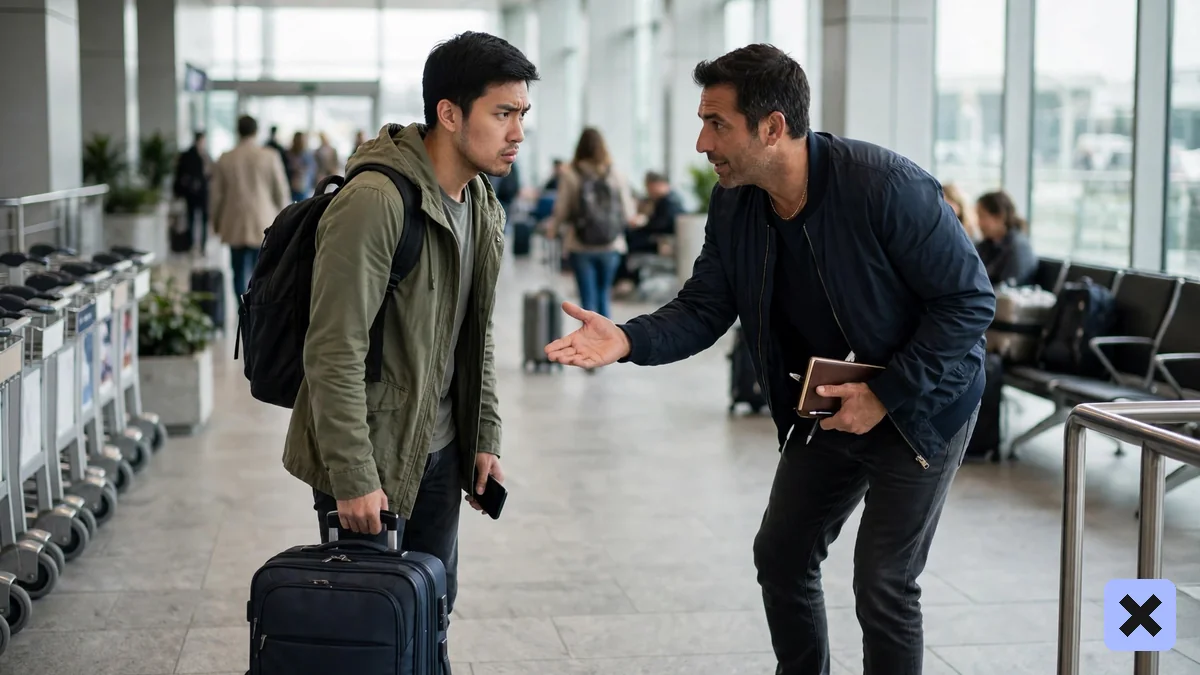
The taxi scam is the oldest trick in the travel book, and it is still the most common. A driver approaches you inside the arrivals hall, offers a fixed price to your hotel, and leads you to an unmarked car. The price quoted at the kerb is rarely the price you pay at the end, and the meter, if one exists at all, runs far above the licensed rate.
Book your ride through the official app before you land, or walk to the clearly marked official taxi rank and take the next car in line. If someone approaches you inside the terminal offering a ride, the answer is always no: a licensed driver waits in the queue, while a scammer hunts in the hall. Confirm the fare or the meter before the doors close.
Airport arrivals are also where the worst airport experiences tend to begin. If your flight was delayed or your luggage went missing, the temptation to accept the first offer of help is even stronger, which is exactly why touts target the most exhausted arrivals.

Fake Holiday Rental Listings
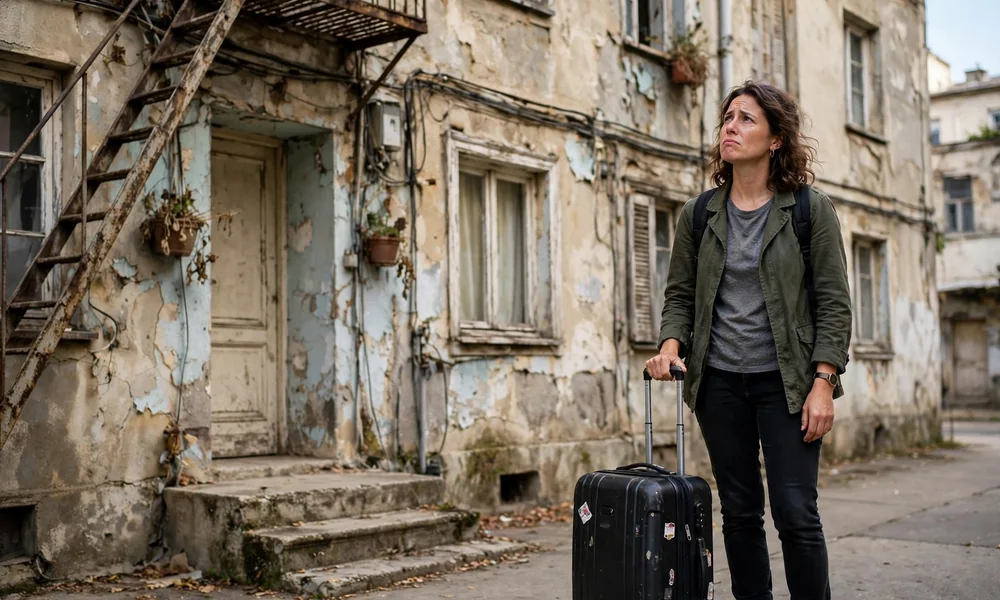
The fake rental listing is the most expensive of the worst travel scams of 2026. A beautiful apartment appears on a well-known platform at a price just below the going rate, with stunning photos and glowing reviews. Then the host asks you to move the conversation to a messaging app and pay by bank transfer or gift card to secure a discount. The apartment does not exist, or it belongs to someone else entirely, and the money is gone the moment it clears.
The photos are usually stolen from real estate listings, and the reviews are fabricated. In some cases the scammer copies a genuine listing, lowers the price by a third, and collects deposits from dozens of travellers before the real host notices. Victims arrive to find a stranger’s front door or an empty lot.
Three hard rules protect you. First, never pay outside the booking platform, because its payment protection only covers payments made through it. Second, reverse image search the listing photos; if the same images appear under a different address or city, walk away. Third, be suspicious of any listing dramatically cheaper than comparable properties nearby. A real host will never ask for a wire transfer.
ATM Skimming and Card Cloning
Card skimming remains one of the most damaging travel scams because the victim often discovers it days after the crime. A thin device over the card slot reads the magnetic stripe, while a tiny camera or a fake keypad records the PIN. The scammer clones the card and empties the account before the traveller notices the first unauthorised charge.
In 2026, the devices have become harder to spot, and the locations bolder: skimmers have turned up on ATMs in tourist squares and even inside hotel lobbies. The shoulder-surfer variation is simpler: someone watches your PIN, then steals the card through a distraction or a staged bump in a crowd.
Use ATMs inside bank branches during opening hours, where cameras and staff make tampering far riskier. Wiggle the card reader before inserting your card; a loose or bulky reader is a warning sign. Cover the keypad every time you enter a PIN. Set a low daily withdrawal limit before you travel, and enable instant transaction notifications so an unauthorised charge reaches your phone within seconds. If an ATM behaves oddly, call your bank rather than accepting help from a stranger nearby.

The Helpful Stranger and Distraction Theft
Distraction theft is a team sport. One person spills a drink on your jacket or asks you to take their photo. While your attention is on the spill or the camera, a second person lifts your wallet, your phone, or your bag. The whole encounter lasts less than a minute, and the victim often does not realise anything is missing until the thieves are gone.
The 2026 versions are more theatrical. A fake petition collector blocks your path while an accomplice works your pockets. A child thrusts a map into your hands while a partner reaches into your bag. A friendly stranger warns you about pickpockets, then pats your pocket to show you where your wallet is.
Staying safe is about habits, not heroics. Keep your wallet in a front pocket or a money belt, never in a back pocket or an open tote. Wear your backpack on your front in crowded places, and keep a hand on your bag strap. If someone spills something on you, step away and deal with it yourself. If a stranger insists on engaging you in a busy street, a firm no and steady walking is a complete answer.
Fake Wi-Fi, Phishing Messages, and Booking Fraud
The digital scams of 2026 are the fastest-growing category. A free Wi-Fi network named after your hotel invites you to log in, then captures the passwords and card details you type. A text message claiming your flight was cancelled leads to a near-perfect copy of the airline’s website, where you are asked to re-enter your card details. A QR code on a restaurant table or a parking meter takes you to a payment page that steals your credentials.
These scams work because they arrive at moments of genuine urgency. A message about a cancelled flight feels real when you are standing in the departure hall. The fake sites are polished, and the web addresses differ from the real ones by a single letter.
The rules are simple. Never log into banking or email on public Wi-Fi without a VPN, and prefer mobile data for anything involving money. Never click a link in a message about a booking or a flight; open the airline or hotel app yourself and check there. Inspect a QR code’s destination before typing anything into it. The worst flight booking mistakes of 2026 often start with a link that should never have been clicked.
Overpriced Tours, Timeshares, and the Friendship Bracelet
Not every travel scam is a crime; some are legal businesses built on pressure and deception. The free tour that ends at a shop where you are expected to buy. The timeshare presentation that promises a free dinner and keeps you in a sales room for four hours. The street vendor who ties a friendship bracelet around your wrist and then demands payment, while friends gather to make refusal feel impossible.
The defence is a single sentence, repeated as often as needed: no, thank you. Do not accept anything placed in your hands or on your wrist. Do not attend a presentation that offers a free gift in exchange for your time, because the gift is never free. And never sign anything on holiday that you have not read in full. A genuine opportunity will still be there tomorrow.
How the Worst Travel Scams Compare
The pattern is clear: the largest losses involve a payment made in advance, away from any protection. A taxi overcharge is annoying; a fake rental paid by wire transfer is a ruined holiday.
| Scam | Typical loss | Where it happens | Best defence |
|---|---|---|---|
| Unlicensed taxi | $50 to $300 | Airport arrivals, stations | Official taxi rank or app |
| Fake rental listing | $500 to $3,000 | Booking platforms, messaging apps | Pay only on the platform |
| ATM skimming | $200 to $2,000 | Tourist ATMs, hotel lobbies | Bank ATMs, cover the keypad |
| Distraction theft | $100 to $1,000 | Crowded streets, markets | Front pockets, money belt |
| Fake Wi-Fi and phishing | $100 to $2,500 | Hotels, airports, QR codes | Mobile data, VPN, use the app |
| Overpriced tours and timeshares | $50 to $500 | Tourist areas, resorts | Refuse firmly, never sign |
Before You Travel: A Six-Point Anti-Scam Checklist
Most travel scams can be stopped before you leave home. Run through this checklist before each trip.
- Set banking protections: enable instant transaction alerts, set a low daily withdrawal limit, and tell your bank your travel dates.
- Book through official channels only: use the airline, hotel, or platform’s own app or website, never a link from a message.
- Plan your airport exit: decide in advance whether you will use a ride-hailing app, the official taxi rank, or public transport.
- Pack valuables properly: a money belt for cards and cash, a front-worn bag for crowds, and a photocopy of your passport kept separately.
- Download what you need offline: maps, booking confirmations, and the hotel’s address.
- Agree on a family rule: nobody pays outside an official app or platform, and nobody hands a card, phone, or bag to a stranger.
A short check-in can also reveal a lot about a hotel, and the worst hotel check-in experiences of 2026 share a warning sign: a front desk that cannot answer a simple question, or pressures you to pay an unexpected fee in cash.
Frequently Asked Questions
What is the most common travel scam in 2026?
The unlicensed taxi, because it targets every arriving traveller and requires no technology. Fake rental listings cause the largest losses, but the taxi tout is the scam most travellers will actually meet.
How can I tell if a holiday rental listing is fake?
Check whether the photos appear anywhere else online, whether the host insists on payment outside the platform, and whether the price is far below comparable listings.
Is it safe to use an ATM abroad?
Yes, if you choose carefully. Use ATMs inside bank branches, wiggle the card reader first, cover the keypad, and use instant alerts.
What should I do if I realise I have been scammed?
Contact your bank immediately to freeze the card and dispute the charges, then report the scam to the local police and the platform. Keep every receipt and screenshot as evidence.
Can travel insurance cover scam losses?
Most standard policies do not cover money lost to scams, although some premium policies cover theft of cash or cards up to a limit.
Are free Wi-Fi networks at hotels and airports safe?
Not always. Scammers set up networks imitating the hotel or airport, and anyone who connects can have their traffic intercepted. Use mobile data or a VPN, and never enter card details on public Wi-Fi.
The Bottom Line
The worst travel scams of 2026 are not clever because they are new; they are clever because they are timed perfectly, arriving when a traveller is tired, rushed, or unsure. The taxi tout, the rental host who needs a wire transfer today, and the message about a cancelled flight all work the same way: they create urgency, then offer a shortcut.
Your defence is equally simple. Book through official channels, pay only inside protected platforms, keep your cards and your PIN private, and say no to anyone who approaches you with an offer you did not ask for. Do those four things, and the worst travel scams of 2026 will pass you by.


