
The Worst Window Cleaners of 2026
The worst window cleaners of 2026 do not leave your home dirty in an obvious way. They leave it worse in the ways you only notice when the sun comes out: a film of soap across every pane, white water spots that were not there before, the upstairs windows untouched, and frames so filthy that the first rain drags the dirt straight back over the glass. Window cleaning is a specialist trade, not general housework: working at height, handling glass without scratching it, and knowing how water, soap and sunlight behave on a pane. This guide ranks the worst types by the patterns that repeat across visits, so you can spot trouble before you pay for glass that looks worse than it did.
Key takeaways
- A bad window cleaner is recognised by the glass the day after: streaks, spots and dirty frames show up in sunlight.
- Check that the cleaner can actually reach every window, including the top floor, before you agree a price for the whole house.
- Frames, sills and seals are part of the job: glass cleaned over filthy frames will be dirty again after the first rain.
- Never let anyone use abrasive pads or a pressure washer on glass, and ask about insurance before anyone climbs a ladder at your home.
- Get the full price in writing, including frames and the conservatory, and agree what happens if the glass is still streaked.
How the worst window cleaners of 2026 were chosen
Every type below was scored on five measures. Finish comes first: is the glass clear in sunlight the next day, or streaked and filmed? Reach is second: does every window get cleaned, including the top floor and the awkward ones over a conservatory? Care is third: how the cleaner treats frames, sills and seals, and whether the wrong tool ever comes out. Safety is fourth: a cleaner working at height without insurance or sound ladders puts your home and themselves at risk. Value is fifth: the real cost once extras, re-cleans and damage are counted, not the headline price.
Two notes before the list. First, this guide is about specialist window cleaners: the people hired to clean glass, inside and out. It is not about regular domestic cleaning, which is a different job, covered in our guide to the worst house cleaners of 2026. Second, no single person or firm is named as the worst, because the same bad patterns appear in many places. Readers who judge other home services the same way will find the same logic in our guides to the worst cleaners of 2026 and the worst plumbers of 2026.
Comparison table: the worst window cleaners of 2026
| Rank | Cleaner type | Worst habit | Who gets hurt most |
|---|---|---|---|
| 1 | The streak-leavers | Soap film and water spots on every pane | Homes with large, sunny windows |
| 2 | The top-floor skippers | Upstairs glass left dirty, charged in full | Two- and three-storey homes |
| 3 | The frame-skippers | Glass only; filthy frames untouched | Anyone whose glass dirties after rain |
| 4 | The glass-scratchers | Abrasive pads and pressure washers on glass | Owners of coated or new panes |
| 5 | The safety-cowboys | Wobbly ladders, no insurance, no plan | Homeowners if someone falls |
| 6 | The ghost cleaners | The regular round quietly stops | Households paying by standing order |
| 7 | The add-on stackers | Frames and conservatory all charged extra | Anyone booked on a headline price |
The worst window cleaners of 2026
1. The streak-leavers: glass that looks worse in the sun
The worst window cleaners of 2026 are the streak-leavers, whose glass looks clean in the shade and dreadful in the sun. The cause is usually simple: too much soap, tap water left to dry, or cleaning in direct sun so the solution dries before the squeegee reaches it. The result is a milky film, white spots where hard water has dried, and curved smears that catch the light where you sit. The test costs nothing: look at the glass the morning after, from inside, with the sun on it. If every pane is filmed, the cleaner is moving dirt around and letting it dry.
2. The top-floor skippers: half the house, full price
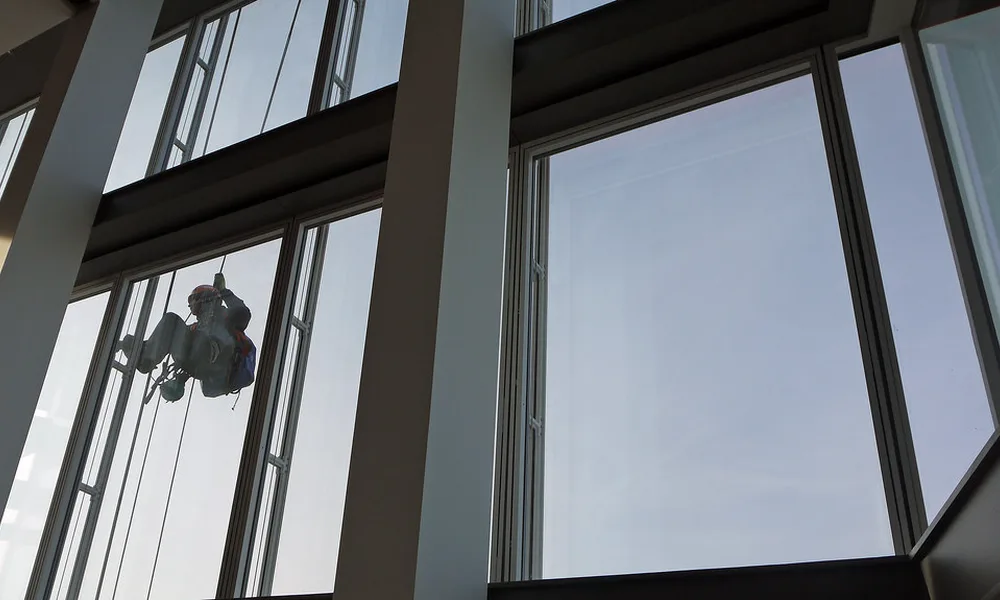
The top-floor skippers take the money for the whole house and clean the half they can reach from the ground. The ladders are too short, the water-fed pole is missing or broken, or the cleaner simply does not like heights, so the upstairs windows and the glass over the conservatory are left exactly as they were. It is easy to miss, because nobody inspects the top floor. Before you book, ask how the top windows will be reached and what happens to the price if they cannot be. A cleaner with the right pole or ladder will answer in one sentence; a skipper will change the subject.
3. The frame-skippers: clean glass, filthy frames
The frame-skippers clean the glass and nothing else. The frames stay green with algae, the sills hold a black line of grime, and the drainage slots are blocked with dead leaves. It looks fine for a day, and then it rains. Water runs down the dirty frame, picks up the grime, and dries in streaks across the clean pane, so within a week the glass is worse than before. Ask before booking whether frames and sills are included, and check one frame after the first visit: wipe a finger along the top. If it comes away black, the frames were never cleaned, and the next rain will undo the glass.

4. The glass-scratchers: the wrong tool on the wrong pane
The glass-scratchers do permanent damage in a single visit. They attack stuck-on dirt with an abrasive pad, scrape paint off with a bare blade, or turn a pressure washer on a window and blast water past the seals. Modern glass is often coated, tinted or double-glazed, and all three are easy to ruin: a coating scratches, a tint bubbles, a seal fails and the unit mists up from the inside. None of it can be cleaned away; the pane has to be replaced. Before anyone starts, ask what they will use on stubborn marks, and stop the job if a scouring pad or a pressure lance comes out.
5. The safety-cowboys: ladders, heights and no cover
The safety-cowboys treat working at height as a matter of luck. The ladder is too short and leans at the wrong angle, it stands on soft ground or a slippery patio, nobody foots it, and there is no insurance. Window cleaning is one of the few household jobs where a mistake means a fall from the first floor, and the homeowner can be drawn in if the cleaner is hurt on their property. A sound cleaner will show you the ladder set-up, use a water-fed pole where a ladder is unsafe, and carry insurance without being asked twice. If the set-up looks wrong, say so before they climb.
6. The ghost cleaners: the round that quietly stops
The ghost cleaners are the ones you never have to sack, because they disappear. The round runs well for a few months, then a visit is missed, then another, then the cleaner stops answering messages while the standing order keeps going out. A bad clean can be fixed in a day; a vanished round leaves you starting over with a stranger. Protect yourself in two ways: pay per visit rather than by standing order until the round has run reliably for six months, and keep a note of each visit date. If two visits are missed without a call, cancel the payment first and find a replacement second.
7. The add-on stackers: the price that doubles at the door
The add-on stackers quote a price that sounds too good to argue with, and then the extras begin. The frames are extra, the sills are extra, the conservatory roof is extra, and the upstairs windows cost more because of the ladder. The defence is a written quote that lists exactly what is included: inside and outside, frames and sills, conservatory, and every floor. If a cleaner will only quote by phone and will not put the list in writing, the low price is not a bargain; it is the hook. Treat a quote far below every other one as a warning, not a win.
What to avoid when booking a window cleaner
The most common regret is not a bad cleaner but a vague booking: no written price, no agreed list of windows, no plan for the top floor, and no promise about what happens if the glass streaks. Avoid it by checking four things before anyone climbs a ladder: the full written price with frames included, how the top windows will be reached, what the cleaner uses on the glass, and whether insurance is in place. Ask for a small test first, such as the front windows only, and judge the glass in sunlight the next morning before you commit to a regular round.
Checklist: booking a window cleaner
- Get the full price in writing, including frames, sills and every floor, before the first visit.
- Ask how the top-floor windows will be reached, and what happens if they cannot be cleaned.
- Check the glass in sunlight the morning after, from inside, before you book a regular round.
- Ask what the cleaner uses on stubborn marks, and stop the job if abrasive pads or a pressure washer appear.
- Confirm insurance is in place and watch the ladder set-up before anyone climbs.
- Pay per visit for the first six months, and note every visit date so a missed round shows up fast.
Frequently asked questions
How often should a window cleaner visit?
Every four to eight weeks suits most homes. Coastal homes, homes near busy roads and homes with large glass need the shorter interval, because salt and traffic film build up fast.
Why are my windows streaked after a professional clean?
Too much soap, hard tap water left to dry, or cleaning in direct sun. A good cleaner uses little soap, pure water where the supply is hard, and avoids the sunny side at midday.
Should frames and sills be included in the price?
Yes, and get it in writing. Dirty frames wash grime back over clean glass at the first rain, so glass-only cleaning is undone in a week.
Is it safe to let a cleaner use a ladder at my home?
It can be, if the ladder is sound, set at the right angle, footed or secured, and the cleaner is insured. If the set-up looks wrong, ask for a water-fed pole instead.
What should a window cleaner never use on glass?
Abrasive scouring pads, bare metal blades on coated glass, and pressure washers. All three can scratch coatings, damage seals and mist up double-glazed units for good.
How do I know if the top-floor windows were actually cleaned?
Walk around the house after the visit and look up. If the ground floor sparkles and the first floor is still grey, the top windows were skipped.
Bottom line
The worst window cleaners of 2026 are not the ones who make one mistake. They are the ones whose patterns repeat: streaked glass, skipped top floors, dirty frames, the wrong tools, unsafe ladders, vanished rounds and prices that double at the door. Check the glass in sunlight the next day, get the full price in writing, and ask about reach, tools and insurance before anyone climbs.


