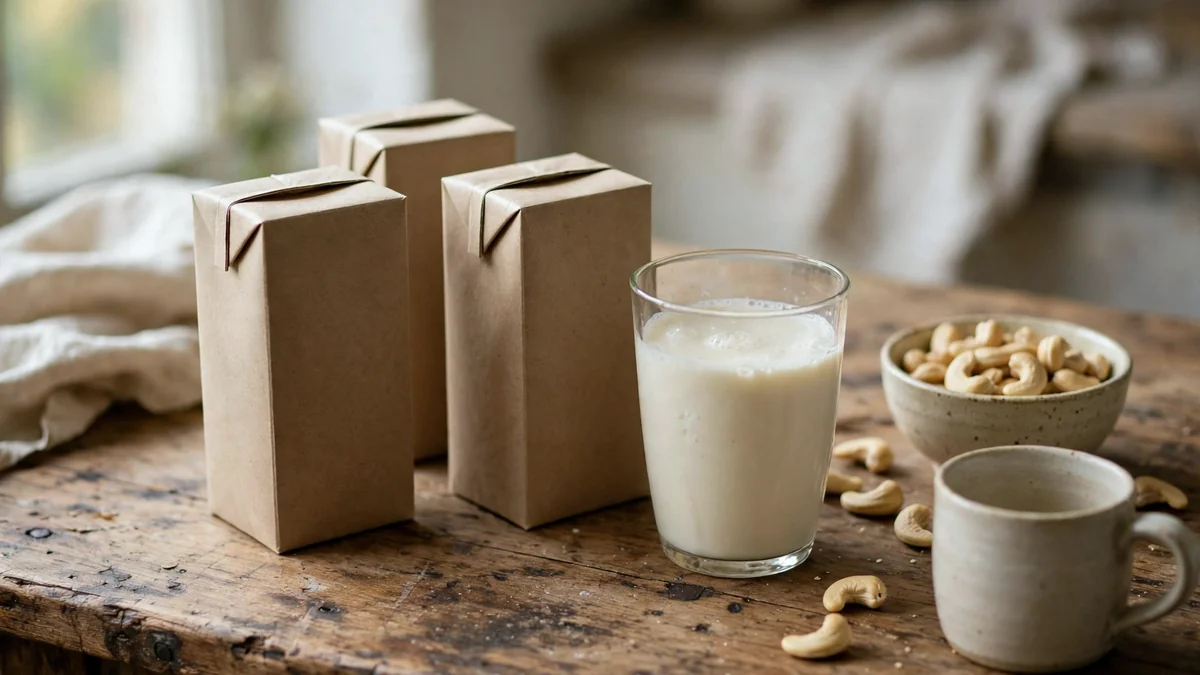
Cashew milk is the quietest success story on the plant milk shelf, and its quietness is exactly the point. It is made by soaking raw cashews, blending them with water, and straining out the solids, which leaves a pale, silky milk with almost no flavour of its own to argue with. Where almond milk tastes of almonds and oat milk tastes of oats, a good cashew milk tastes of almost nothing at all: a faint, buttery sweetness, a soft creaminess, and a clean finish that lets the coffee, the cereal, or the smoothie do the talking. That neutrality is why so many households keep a carton in the fridge even when they buy other milks too. It is the milk that disappears into the recipe, and that is a compliment. When it is made well, it pours thick and smooth, froths gently for coffee, and turns a bowl of porridge into something richer without changing its character. When it is made badly, the same carton gives you a thin, grey liquid that tastes of cardboard, splits in hot tea, and leaves a chalky film on the tongue.
The gap between the best cashew milks of 2026 and the worst is wide, and it usually shows up in four places: the creaminess, the flavour, the sweetness, and the way it behaves in hot drinks. A great cashew milk feels rich and smooth in the mouth, tastes gently nutty without any bitterness, and stays together in coffee and porridge. A bad one is so thin it might as well be water, or so sweet it turns every bowl of cereal into dessert, or so full of thickeners that it coats the mouth like glue. This comparison puts them head to head the way you would actually use them: poured over breakfast cereal, stirred into porridge, blended into a smoothie, and drunk cold from a glass. We look at flavour, body, sweetness, how they hold up in tea and coffee, and whether a carton earns its place in the fridge or only its place on the shelf.
Key Takeaways
- A good cashew milk is creamy and mild, with a soft buttery flavour, no bitterness, and no chalky aftertaste.
- Check the label for cashew content and added sugar: the best cartons list real cashew first and keep sweetening light.
- Cashew milk is naturally low in calories and gentle on the stomach, which makes it a forgiving everyday milk.
- The worst cashew milks are thin and grey, overly sweet, or so thick with gums that they coat the mouth.
- The same honest approach sits behind our comparison of the best and worst almond milks of 2026, because almond is the nut milk cashew milk is most often compared with.
How We Judged the Cashew Milks
We judged every cashew milk on five things that matter at the table rather than on the carton. First, flavour: whether the milk tastes gently buttery and fresh, with a clean, mild finish, or of cardboard, bitterness, and additives. Second, body: whether it feels creamy and satisfying in the mouth, with a little weight and richness, or like flavoured water that vanishes before you swallow. Third, sweetness: whether the sugar is light enough to work in porridge and baking, or so heavy that the milk only suits a glass on its own. Fourth, behaviour in hot drinks: whether it blends into tea, coffee, and porridge without splitting or turning grey, or curdles the moment it meets heat. Fifth, the label itself: how much cashew is actually in the carton, what has been added to sweeten or thicken it, and whether the maker is honest about what is inside. We tested every carton cold, over cereal, in porridge, and in a smoothie, because a milk that is fine on its own can still fail badly in a hot bowl.

The Best Cashew Milks of 2026
What sets the top cartons apart is how little they need to hide behind. The ingredient list is short: cashews, water, and perhaps a little sunflower oil for body and a pinch of salt. There is no long parade of sweeteners, flavourings, and thickeners, because a well-made cashew milk does not need them. The best unsweetened cartons are the most versatile of all, working in smoothies, porridge, and baking without quietly sweetening everything they touch, while the best lightly sweetened cartons are the friendliest for drinking cold. Both kinds keep well, pour cleanly to the last drop, and never leave a chalky film on the tongue. A good carton also stays stable in the fridge once opened, with no sour note developing before the week is out. The best cashew milks are the ones whose labels read like a recipe, not like a health-food brochure.
Reading the Carton: What the Label Really Tells You
The front of the carton tells you what the maker wants you to believe; the back tells you the truth. Start with the cashew content: a good carton gives around three percent cashew or more, and anything under two percent is a warning sign that the carton is mostly water. Next, look at the sugar: unsweetened should mean no added sugar at all, and a sweetened carton should stay modest if it is going to work in porridge and baking as well as in a glass. Then check the fat: cashew milk is naturally richer and creamier than the grain milks, and a carton that claims to be cashew milk while listing almost no fat has been watered down.
The additives list matters too. A little calcium is a welcome addition, since cashew milk is naturally low in calcium, but a long list of vitamins, gums, and flavourings is usually there to cover a weak base. Watch for the words original and classic, which often mean sweetened, and for claims about creaminess that are not backed by numbers — the fat content on the back is the only honest guide. The best cartons are honest about all of this, with clear percentages and no vague claims. If the label hides the cashew content, buries the sugar, or leans on words like natural and superfood instead of numbers, put the carton back. Cashew milk is naturally free of soy and gluten, so if allergy safety matters to you, the carton should say so plainly rather than hiding behind a health claim.
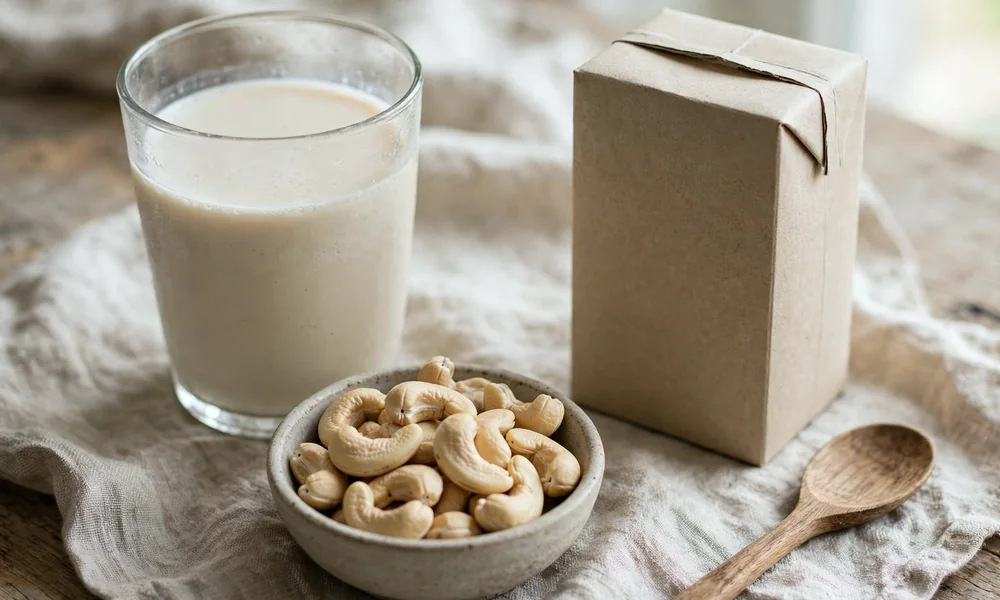
The Worst Cashew Milks of 2026
The worst cashew milks fail in ways that are hard to forgive, because the nut is generous by nature and the method is simple. The most common failure is thinness: a carton that is mostly water, with barely enough cashew in it to colour the glass, let alone flavour it. It pours like tap water, tastes of nothing much, and turns a bowl of cereal into a watery disappointment. The second failure is sweetness, a sugary carton that turns every smoothie and bowl of porridge into dessert whether you wanted it or not. The third is chalkiness, a powdery, gritty note from poorly milled nuts that no amount of shaking will fix. The fourth is splitting in hot drinks, which shows up in front of guests and ruins the coffee.
Cashew Milk in Smoothies, Over Cereal, and in Porridge
In a smoothie, cashew milk is the milk with the least to prove and the most to offer. A good carton blends smoothly into the blender, adds body and a mild creaminess, and lets the fruit shine without a competing flavour. A bad one turns watery the moment it meets berries, and the thinness is unmistakable: a pale, diluted drink that no amount of banana will rescue. The trick is to use a good unsweetened carton and let the fruit do the sweetening, because a sweetened cashew milk will quietly sweeten every smoothie it touches. Cashew milk is also one of the gentlest plant milks on the stomach, which is why households that take smoothies seriously usually keep a good carton in the fridge.
Over cereal, cashew milk is at its most forgiving. Its creaminess softens muesli and granola without making them soggy, and its mild flavour suits oats, nuts, and dried fruit better than any strongly flavoured milk. In porridge, it enriches the oats and adds a gentle richness that suits honey and banana. In baking, it works well in muffins and pancakes, though its flavour is mild enough to suit plain cakes too, which is more than most nut milks can claim. In coffee, it froths gently and blends without splitting, which is why so many coffee drinkers reach for it first. Used with a little care, it is one of the most useful milks in the kitchen.
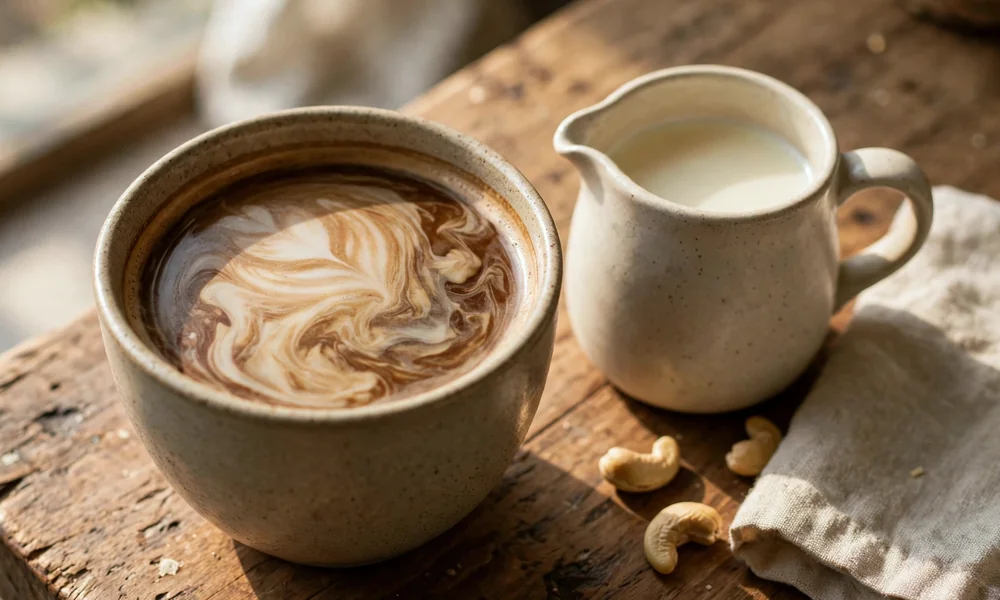
How to Choose a Cashew Milk by How You Use It
The best cashew milk for a smoothie drinker is not always the best for a coffee drinker, so start with how you actually use it. If smoothies and drinking cold are the main jobs, choose an unsweetened carton with a high cashew percentage, and test it in your usual smoothie before you commit to a second carton. If cereal and porridge are the main jobs, a lightly sweetened carton is fine, and the creaminess matters more than the flavour. If you bake with it, pick unsweetened every time, because a sweetened carton will quietly sweeten every muffin and pancake it touches. A household that uses cashew milk for everything should keep one kind only, since cashew milk is mild enough for coffee, cereal, and cooking to justify a single carton.
Think about the rest of the household too. Cashew milk is not suitable as a main drink for young children, however good the carton is, because it is low in protein compared with dairy, and it is worth remembering that it is far creamier than the grain milks — a point our comparison of the best and worst oat milks of 2026 makes clear, since oat is the creamy grain milk and cashew is the mild nut milk. Buy the smaller carton first if you are trying a new one, keep it cold once opened, use it within a few days, and trust your own mouth over the claims on the front. The best cashew milk is the one that tastes good in your smoothie, over your cereal, and in your glass, and the worst is the one that only looks good on the shelf.
The Verdict
The best cashew milks of 2026 are the quiet, honest ones: real cashew, real creaminess, a short label, and a flavour that tastes mild and fresh. They pour smoothly, they behave in coffee and over cereal, and they make breakfast taste better without shouting about it. The worst are thin, chalky, or drowned in sugar, and they fail exactly where it matters most, in the blender and in the glass. Between the two sits a wide middle of perfectly drinkable cartons that do the job without ever delighting anyone. Pick by how you use it, read the label before you buy, and keep a carton you trust in the fridge. The same care that goes into choosing a good breakfast makes the milk that goes into it worth pouring, as our comparison of the best and worst cashew butters of 2026 shows, because the same nut rewards the same honesty whether it is poured or spread.