Cashew butter looks like the gentlest thing in the pantry, and that is exactly why the jar you pick matters so much. It is, at its best, just cashews ground until they turn into a spread, with a pinch of salt if the maker is feeling generous. When those few ingredients are handled well, the result is a pale, silky butter that tastes mild, sweet, and almost buttery, spreads like soft frosting, and turns a plain slice of toast into something creamy and comforting. When they are handled badly, the same jar gives you a stiff, chalky paste that tastes of nothing, or a jar of oil floating on top of a grainy brick, or a spread so sweet and oily that it belongs in a cake tin rather than on your breakfast.
The gap between the best cashew butters of 2026 and the worst is wide, and it usually shows up in four places: the cashew content, the texture, the sweetness, and the way the jar behaves over time. A great cashew butter tastes of cashews first, not of sugar or palm oil, and it stays smooth and spreadable from the first spoonful to the last. A bad one is dry enough to stick to the roof of your mouth, or so runny it slides off the toast, or so full of added oil and sweetener that the cashews themselves are an afterthought. This comparison puts them head to head the way you would actually use them: spread on toast in the morning, stirred into porridge, whisked into a sauce, and eaten by the spoonful straight from the jar. We look at flavour, texture, sweetness, what is actually in the jar, and whether it earns its place in the cupboard or only its place on the shelf.
Key Takeaways
- A good cashew butter tastes of fresh cashews first, mild and naturally sweet, with a clean, creamy finish and no stale aftertaste.
- Check the label: the best jars list cashews as the first and usually only ingredient, with salt as the only acceptable addition.
- Smooth cashew butter is the safest all-rounder for spreading, sauces, and baking, while crunchy suits toast and eating by the spoonful.
- The worst cashew butters are dry and grainy, separate into oil and paste, or are so sweet and oily that the cashews disappear.
- The same honest approach sits behind our comparison of the best and worst almond butters of 2026, because cashew butter is judged by many of the same rules as its closest cousin.
How We Judged the Cashew Butters
We judged every cashew butter on five things that matter at the breakfast table rather than on the jar. First, flavour: whether the butter tastes gently of real cashews, with a fresh, mild, buttery finish, or of sugar, stale oil, and additives. Second, texture: whether it spreads smoothly and evenly, with a silky, almost whipped feel, or whether it is stiff, dry, grainy, or so runny it will not stay on the bread. Third, sweetness: whether the sweetness is balanced and honest, coming from the cashews themselves, or so heavy that it turns toast into a dessert and porridge into a pudding. Fourth, behaviour in the jar: whether it stays mixed and spreadable, or separates into a pool of oil on top of a hard, dry base that needs a wrestling match to stir. Fifth, the label itself: how much cashew is actually in the jar, what has been added to sweeten or stabilise it, and whether the price matches what is inside.
The Best Cashew Butters of 2026
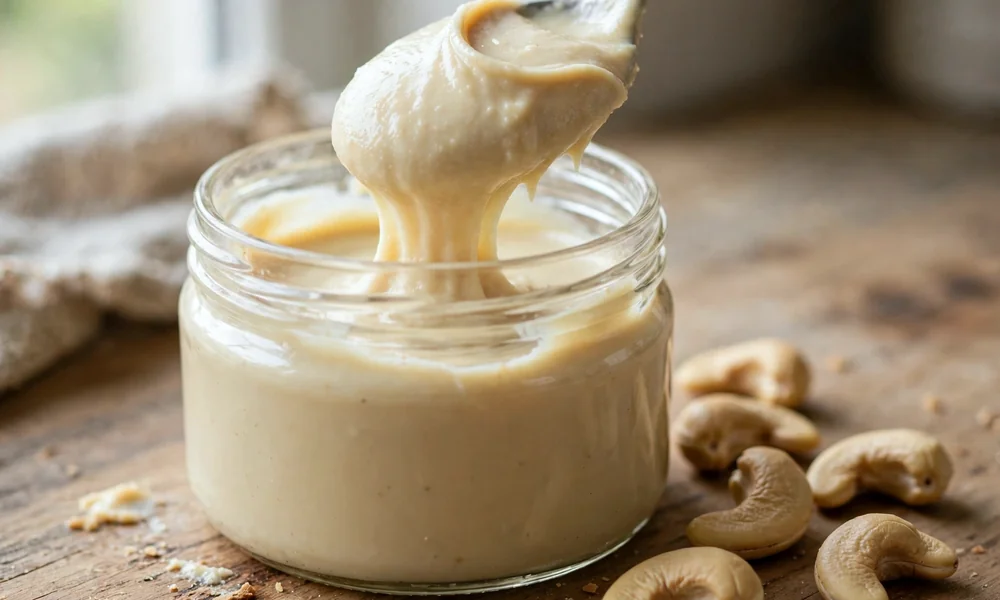
The best cashew butters start with more cashews and less noise. A good jar lists cashews near the top of the ingredients, because cashews are the whole point, and uses a short list of additions, ideally none at all beyond a pinch of salt. The best smooth versions are the quiet heroes of the shelf. They spoon with a pale, even colour, they do not separate in the jar, and they spread across toast in one easy pass, because their makers have ground the nuts long enough for the natural oils to do the work instead of adding palm oil to fake a creamy texture. They are mild enough to eat by the spoonful, yet they still taste like something real, which is more than most jars manage.
The Best Cashew Butter Styles at a Glance
| Cashew butter style | Cashew content | Sweetness | Best for |
|---|---|---|---|
| Smooth, unsweetened | Nearly all cashews | None added | Toast, sauces, everyday spreading |
| Crunchy, unsweetened | Nearly all cashews | None added | Toast, eating by the spoonful |
| Roasted cashew butter | Nearly all cashews | None added | Deep flavour, baking, porridge |
| Sweetened cashew butter | Lower | Light to medium | A sweet spread, children, desserts |
| Chocolate cashew butter | Lowest | High | A cold treat, baking, a dessert spread |
Reading the Jar: What the Label Really Tells You
The label is the most honest part of a cashew butter jar, and it is worth reading before you buy. Most good cashew butters contain ninety per cent cashews or more, and the rest is a pinch of salt, so a jar that lists cashews first and stops there is already a step ahead. Look at what else is in there: a short list of cashews and salt is normal, but a long list of palm oil, cane sugar, honey, and emulsifiers means the cashews are doing less of the work than the jar suggests. Palm oil is the usual giveaway, added to stop the butter separating, and while it keeps the jar looking tidy, it dulls the flavour and leaves a waxy coating on the tongue that pure cashew butter never does.
Sugar is the other thing to watch, because cashew butter is often sweetened to hide a thin, bland base. A spoonful of honey or maple syrup is not a crime, but a jar that lists sugar second is a sweet spread wearing a cashew butter label, and it will taste like one. Check the sugar per spoonful rather than per hundred grams, because the number that matters is the one you actually eat. The same care applies to the nuts themselves, and our guide to the best and worst peanut butters of 2026 shows how the same label rules sort a good spread from a bad one, because a butter made from stale or poor cashews can never taste better than the nuts that went into it.
The Worst Cashew Butters of 2026
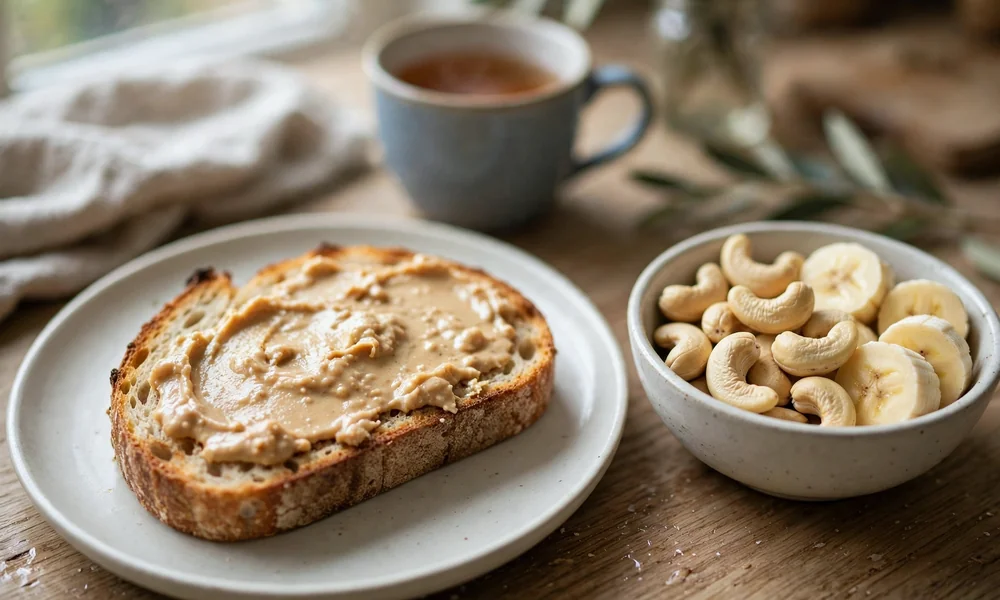
Separation is where the worst jars really give themselves away. Some arrive with a thick pool of oil on top and a hard, dry brick underneath, and stirring them is a job that takes ten minutes and a strong wrist, only for the jar to separate again within days. Others are the opposite problem, so runny that they pour like a sauce and will not stay on toast at all, usually because the maker added cheap oil to thin a poor grind. Then there are the sweetened jars that taste of sugar first and cashews second, if at all, with a flavour closer to a cake filling than to a nut butter. A good cashew butter is sweet enough to be a pleasure and honest enough to taste of its ingredients; a bad one is either a chore to spread or a spoonful of sugar with a cashew rumour in it.

Best vs Worst Head to Head
Put the two side by side and the differences are plain. The best cashew butter smells warm and mild when you open the jar; the worst smells of little, or of stale oil that has been sitting too long. The best cashew butter tastes of more than one thing, moving from sweet to buttery to gently salty as you eat it; the worst tastes of one flat note, usually sugar or grit, and gets worse with every spoonful. The best cashew butter spreads cleanly and leaves you wanting another slice; the worst tears the bread, slides off it, or leaves a dry, grainy feeling and a jar you are glad to see the back of.
How to Choose a Cashew Butter Without Regret
The single most useful thing you can do is to read the label before you buy, and to buy the jar with the shortest list. Cashews first, salt if you like it, and nothing else is the gold standard, and any jar that meets it is already ahead of most of the shelf. While you read, check the sugar per spoonful, because a jar that hides its sweetness behind a per-hundred-gram figure is usually hiding quite a lot of it. Then pick your texture and stick with it: smooth if you bake, spread, and stir into sauces, crunchy if you eat it on toast and by the spoonful, roasted if you want the deepest flavour, and sweetened only if you are buying a treat rather than a staple.
Once the jar is home, stir it properly the first time and then store it upside down, which keeps the oil mixed through the butter instead of pooling on top. A good jar needs one proper stir and then behaves itself; a bad jar will separate again no matter what you do, and that is the jar telling you not to buy it again. Taste it on its own before you judge it on toast, because a butter that tastes flat by the spoonful will taste flat everywhere else too. And if you are still deciding between cashew butters, our guide to the best cashew butter of 2026 covers the single-jar winners in detail, while the comparison above will help you choose between the spreads themselves.
The Verdict
The verdict is clear: buy a smooth or crunchy cashew butter made from nearly all cashews, with salt as the only addition, and eat it on toast, in porridge, in sauces, or by the spoonful. Choose roasted when you want the deepest flavour, and crunchy when you want a little texture with your breakfast. Do not buy cashew butter that lists palm oil or sugar near the top of the label, a jar that separates into oil and brick within days, or a spread so sweet that the cashews are an afterthought. Buy a short label, stir it once, and let the cashews do the talking, because those three things are what you actually taste.
Who Each Is For
The best cashew butter is for anyone who spreads it slowly and wants the flavour to be worth the pause: the morning toast that starts the day properly, the porridge that should be a pleasure rather than a chore, and the spoonful straight from the jar that costs little and tastes like care. The worst cashew butter, if it suits anyone at all, suits only a pantry in a hurry, someone who wants the idea of cashew butter and does not mind what it tastes like, and even then a good jar costs little more and gives a great deal more. Buy a short label, stir it once, and enjoy the difference every time you lift the spoon.