
Peanut butter is one of those foods nearly every household buys without thinking, yet the difference between a great jar and a dreadful one is enormous. One jar tastes of real roasted peanuts, spreads like silk, and turns a plain slice of toast into something worth sitting down for. Another tastes mostly of sugar and cheap oil, tears the bread, and leaves an odd, waxy film on the roof of your mouth. The best and the worst peanut butter in 2026 are not separated by price alone. They are separated by what is actually in the jar, how the peanuts were roasted, and whether the maker respected the ingredient or tried to disguise it.
This head-to-head comparison puts the two sides against each other. On one side, the jars that list peanuts first, taste deeply of the nut, and behave well in sandwiches, baking, and cooking. On the other, the jars that hide behind long ingredient lists, added sugar, and hydrogenated oils. By the end, you will know exactly which jar belongs in your cupboard and which one should stay on the shelf.
Key Takeaways
- The best peanut butter lists peanuts first and ideally contains just peanuts and salt, with no hydrogenated oils, no added sugar, and no palm oil.
- Creamy spreads best on soft bread, crunchy adds texture to sandwiches and baking, and neither style is healthier than the other by default.
- Natural peanut butter needs a good stir when first opened, then keeps well in the fridge or in a cool cupboard.
- A standard serving is two tablespoons, roughly 190 calories and 7 to 8 grams of protein, so measure it, because it is easy to spread twice that.
- Powdered peanut butter is useful for smoothies and baking, but it is not a replacement for the real thing on toast.
What Makes a Great Peanut Butter
A great peanut butter starts with the peanuts themselves. The best jars use roasted peanuts ground slowly enough to release their own oils, which is why a two-ingredient jar can taste richer than a jar with a dozen additives. Roasting depth matters: a light roast tastes mild and sweet, while a darker roast brings out a deeper, almost smoky flavour that stands up well in cooking.
The ingredient list is the fastest test in the shop. Turn the jar around before you buy it. Peanuts and salt is the gold standard. Peanuts, salt, and a little palm oil is acceptable if you prefer a no-stir jar, though many shoppers now avoid palm oil on environmental grounds. What you do not want to see is hydrogenated vegetable oil, which keeps the jar unnaturally smooth but adds the kind of fat nobody needs, or sugar listed second or third, which means the jar is really a sweet spread wearing a peanut costume. A good jar should taste of peanuts first, salt second, and nothing else at all.
The Best Side: Jars That Earn Their Place
Two-Ingredient Natural Peanut Butter
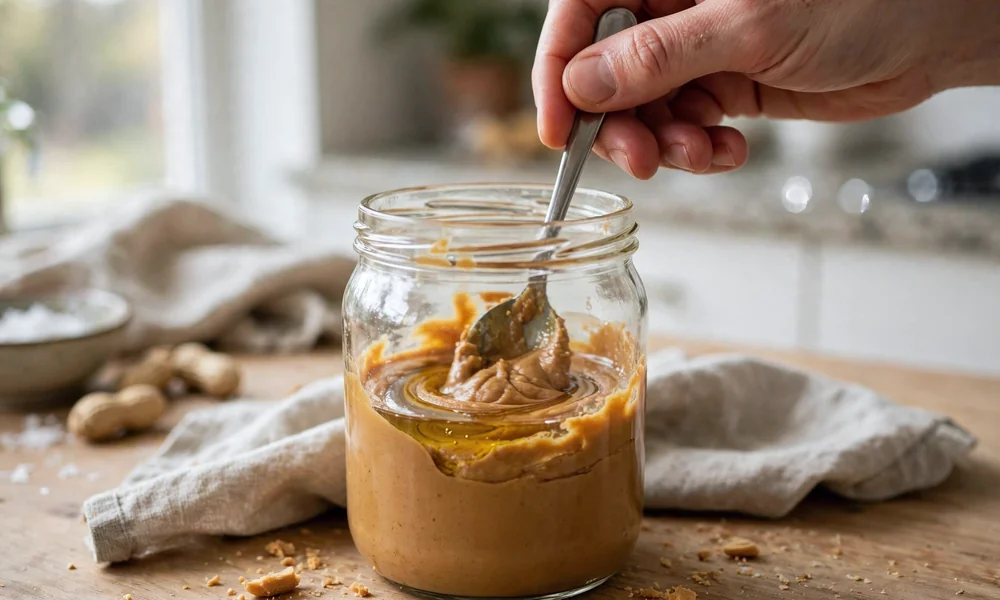
The best peanut butter in 2026 is the simplest kind: peanuts and salt, ground until the peanuts release their own oil. These jars taste unmistakably of roasted peanuts, with a warmth and depth that sweetened spreads cannot copy. They spread cleanly once stirred, hold their shape in a sandwich without sliding out, and melt beautifully into noodles, satay sauce, and porridge. The only chore is the first stir, when the oil sitting on top needs folding back in, and after that the jar behaves itself for weeks. If you only buy one kind, buy this one, because it is the most versatile jar in the cupboard and the one that tastes most like the food it claims to be.
Crunchy Peanut Butter Done Properly
A good crunchy peanut butter is not just a creamy jar with a handful of bits thrown in. The best crunchy jars grind most of the peanuts smooth and fold in pieces that are big enough to bite into but small enough to spread without tearing the bread. The texture should be generous, not gritty, and the pieces should taste roasted, not raw. Crunchy is the better choice for sandwiches, where the texture stops the filling feeling flat, and for baking, where the pieces survive the oven and give cookies and brownies a proper bite. It is also the jar that children tend to ask for by name, because the crunch makes an ordinary sandwich feel like a treat.
Old-Fashioned Creamy Peanut Butter
Not every great jar is a natural one, and the best old-fashioned creamy peanut butters deserve their place too. These are the smooth, no-stir jars that spread straight from the cupboard, and the good ones earn their smoothness from well-ground peanuts rather than from a spoonful of hydrogenated oil. They are the most forgiving jars for school lunchboxes, because they never separate, never need stirring, and spread evenly on the softest bread without tearing it. Look for a short ingredient list, a real roasted flavour, and a texture that feels like silk rather than paste. A jar like that is the everyday workhorse of the cupboard, and there is no shame in loving it.

The Worst Side: Jars to Leave on the Shelf
Sweetened Spreads That Barely Taste of Peanuts
The worst jars on the shelf are the ones where sugar does most of the talking. Some list sugar as the second ingredient, and a few add honey, molasses, or corn syrup on top, until the spread tastes more like frosting than food. These jars are often marketed at children with bright labels and cartoon characters, which makes the sugar load harder to spot. They spread easily and taste sweet on the first bite, but the sweetness drowns out the roasted peanut flavour entirely, and the jar leaves you hungry again within the hour. If the label reads like a recipe for cake, put it back and choose a jar that tastes of peanuts instead.
Hydrogenated Oil and the Waxy Mouthfeel
The second group to avoid is the jars held together with hydrogenated vegetable oil. The oil keeps the jar perfectly smooth and stops it separating, which looks convenient, but it coats the mouth with a waxy film and dulls the flavour of the peanuts underneath. These jars often feel greasy rather than rich, and they linger on the palate long after the sandwich is gone. They also tend to be the cheapest jars on the shelf for a reason: the oil is doing the work that good peanuts should be doing. A jar that never separates is not always a good jar. Sometimes it is just a jar that has been engineered to never taste of anything at all.
Stale, Dusty, and Flavoured-to-Death Jars
The last group is the jars that fail on freshness or on flavouring. Stale peanut butter tastes flat, dusty, and faintly bitter, and no amount of salt can bring it back. It often comes from jars that have sat in warm warehouses or on sunny shelves, so check the date and buy from a shop that turns its stock over quickly. Then there are the flavoured jars, loaded with chocolate, marshmallow, or cookie pieces, that sound fun and taste like a sugar rush followed by regret. A little flavouring can work, but when the additions outweigh the peanuts, the jar stops being peanut butter and becomes a dessert topping with a misleading name.

The Verdict
The best side wins this comparison by a wide margin, and it is not a close call. A jar of peanuts and salt beats every sweetened, hydrogenated, or over-flavoured rival on flavour, on versatility, and on honesty about what it is. The best jars taste of roasted peanuts, spread well, cook well, and keep well, while the worst jars taste of sugar and oil and leave you wondering why you bought them. The price gap is smaller than most shoppers expect, too. A good natural jar costs a little more per jar, but a little less per serving, because a thinner spread of a stronger-tasting butter goes further than a thick smear of a weak one.
That said, the worst side is not entirely without a point. A no-stir creamy jar has real value in a busy household, and a sweetened jar has its place as an occasional treat rather than an everyday staple. Buy the best kind on purpose, read the label every time, and the jar in your cupboard will be one you actually look forward to opening. The best peanut butter in 2026 is the jar you finish, enjoy, and buy again without hesitating.
Who Each Side Is For
The best side is for anyone who eats peanut butter more than once a week, which is most of us. It suits home cooks who use it in sauces and baking, parents packing lunchboxes, and anyone who wants a snack that actually satisfies rather than just tasting sweet. A natural or well-made crunchy jar is also the right choice for people watching their sugar, because it delivers flavour without the added sweetness, and for anyone who likes food that tastes like itself. If you spread it on toast, stir it into porridge, or cook with it, the best side repays the small extra cost every single day.
The worst side, if it can be said to be for anyone, is for the rare occasion when convenience matters more than flavour: a holiday cottage with no fridge, a camping trip, or a jar for a child who will only eat the sweetened kind. Even then, a small jar is enough, and a good almond butter is often a better sweet alternative, because it brings its own rich flavour without the sugar load. For everyday eating, the best side wins on taste, on value, and on the simple pleasure of food that tastes like what it says on the jar, in the same way a good jam should taste of fruit rather than sugar.
How to Choose and Care for Yours
Choosing well takes ten seconds in the shop. Turn the jar around and read the ingredients before you read the front of the label, because the front is advertising and the back is the truth. Peanuts first, salt second, and as little else as possible is the rule. Check the texture through the glass if you can, and check the date, because fresh peanut butter tastes noticeably better than a jar that has waited a year on a warm shelf. Buy the size you will finish in a month or two, because an open jar slowly loses its roasted edge, and a smaller fresh jar beats a large stale one every time.
Caring for it is just as simple. Stir a natural jar well when you first open it, then store it upside down in the fridge if you like it firm, or in a cool cupboard if you prefer it soft and spreadable. Always use a clean, dry knife, because crumbs and water are what make a jar go off early. Keep the lid tight and the jar away from heat, and it will stay good for weeks after opening. A jar looked after this way is a small daily pleasure, and it is worth the ten seconds it took to choose it well, much like the careful choice behind the best peanut butter jars that top the yearly rankings.


