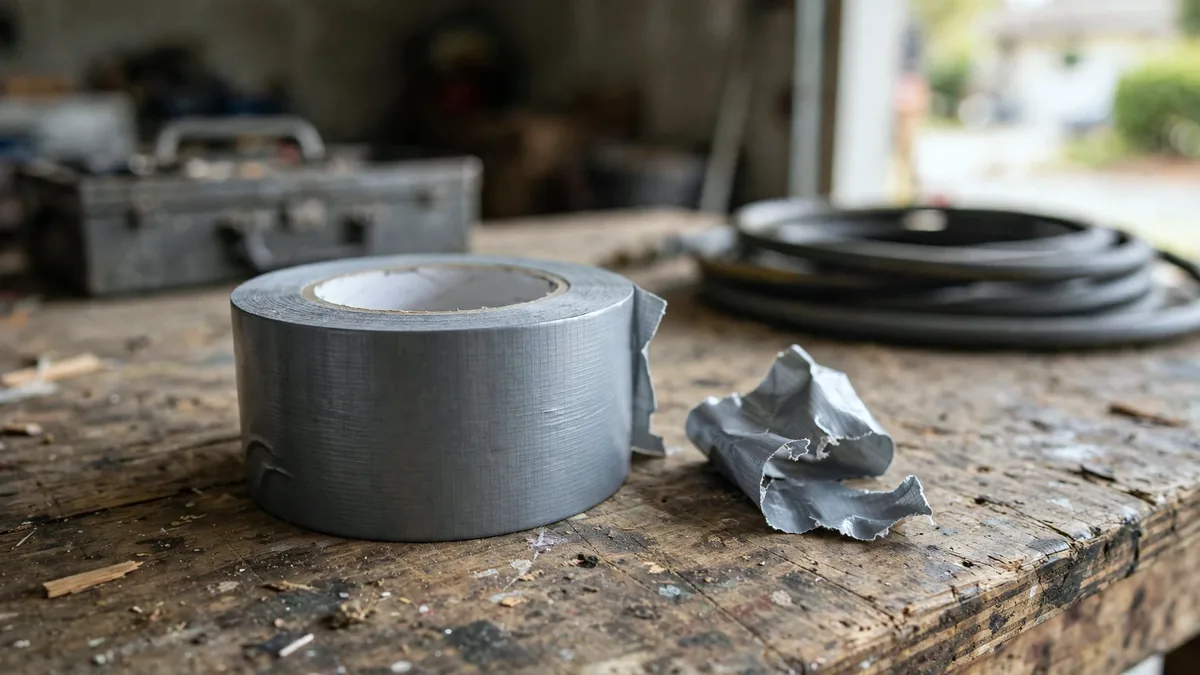
The right duct tape fixes almost anything in 2026 because it is three tools in one: a strong fabric backing that resists tearing, a thick adhesive that grips dusty, damp and uneven surfaces, and a waterproof coating that shrugs off rain. A good duct tape holds a split hose, seals a box, patches a tent and binds a broken handle, all with a strip torn off by hand.
Choosing the best duct tape is about matching the tape to the job: a quick indoor fix, a heavy load and an outdoor repair in the rain all need different backing and adhesive. This guide explains how duct tape works, compares the types that matter, and helps you pick a tape that holds when it counts.
Key Takeaways
- Backing strength decides the load: a thick woven backing carries weight and resists tearing, while a thin one splits under strain.
- Adhesive quality decides the hold: good duct tape grips dusty and damp surfaces where cheap tape peels away.
- Silver all-purpose tape suits most indoor fixes; heavy-duty and all-weather tapes are needed for load and outdoor work.
- Duct tape is a repair, not a permanent fix, on anything structural, electrical or under pressure.
- Tear the tape by hand across the weave and press it down firmly, because a loose edge is where every failure starts.
How Duct Tape Actually Works
Duct tape works because of its layered construction. The top layer is a waterproof plastic coating that keeps rain and moisture out. Underneath is a woven fabric mesh that gives the tape its strength and lets it tear cleanly in a straight line across the roll while resisting tearing along its length. The bottom layer is a thick rubber-based adhesive that stays tacky on surfaces other tapes cannot grip, including dusty wood, rough plastic and damp metal.
The fix goes wrong when any part of that construction is weak. A thin backing with a loose weave splits when the repair is pulled tight, so a taped handle breaks again at the first tug. A cheap adhesive looks sticky in the shop but lets go in heat, so a tape patch on a car or a sunny window peels off by afternoon.
Duct tape is a general-purpose fixer, not a specialist adhesive. When a break needs a hard, gap-filling bond, a two-part adhesive is the better tool, and our guide to epoxy that holds where glue fails covers that. When the job is sealing a gap against draughts rather than holding a load, a purpose-made seal is better, and our guide to weather stripping that seals drafty windows covers that. Width matters too: a standard 48-millimetre roll suits most repairs, while a narrow roll is easier to handle on small items and a wide roll covers broad tears faster.

The Main Types of Duct Tape
Silver All-Purpose Duct Tape
Silver all-purpose duct tape is the classic roll and the right starting point for most households. Its medium-weight woven backing handles everyday fixes, from sealing boxes to patching a torn bin bag, and its rubber adhesive grips most surfaces without fuss. It is not strong enough for heavy repairs or outdoor use.
Heavy-Duty and Extra-Strength Tape
Heavy-duty duct tape uses a thicker backing with a denser weave and a stickier adhesive, so it carries real weight and holds under tension. It is the tape for binding a broken tool handle, strapping a load, or patching a tarpaulin that has to survive a storm.
All-Weather and Outdoor Tape
All-weather duct tape is built for sun, rain and cold. Its adhesive stays tacky from freezing mornings to hot afternoons, and its waterproof coating keeps the backing dry, so a patch on a tent, a gutter or a garden hose holds through weather that peels ordinary tape in hours.
Coloured and Black Duct Tape
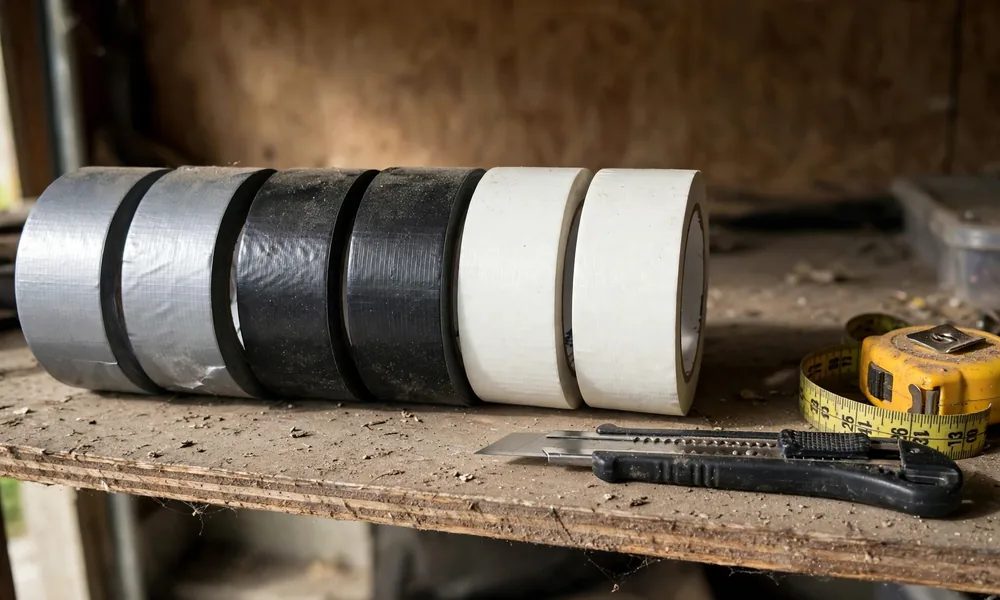
Coloured duct tape is the same construction in a different finish, and the colour is more than decoration. Black tape blends into dark surfaces and looks tidier on cables and equipment, white tape suits light trim and temporary repairs in a finished room, and bright colours mark hazards and label gear.
Double-Sided and Specialty Duct Tape
Double-sided duct tape has adhesive on both faces and is used for holding carpets, mounting lightweight items and sticking materials together without a visible strip. Gaffer tape is duct tape’s quieter cousin: it holds as well but removes cleanly without residue, which is why it is used on stages and film sets. Gaffer tape costs far more, but on a surface that must stay clean, it is the right choice.
The Best Duct Tape of 2026
We judged every tape on holding strength, adhesion to dusty and damp surfaces, tear quality, weather resistance and residue,
Best Overall: Gorilla Tape
Gorilla Tape is the best duct tape for most people in 2026. Its double-thick adhesive grips surfaces that defeat ordinary tape, including rough wood and dusty plastic, and its reinforced backing carries loads that split standard tape. We used it to bind a cracked tool handle and patch a torn tarpaulin, and both repairs held for weeks.
Best Heavy-Duty: T-Rex Tape
T-Rex Tape is the best heavy-duty duct tape we tested. Its extra-thick woven backing and high-tack adhesive hold under tension that peels other tapes away, and it stayed stuck to a loaded strap and a patched tent through a wet weekend.
Best All-Rounder: 3M Duct Tape
3M Duct Tape is the best all-rounder: strong enough for most household fixes, easy to tear by hand, and consistent from roll to roll. Its adhesive grips well on clean surfaces and reasonably well on dusty ones, and its backing tears in a straight line without fraying.
Best Outdoor: Gorilla All Weather Outdoor Waterproof Tape
Gorilla All Weather Outdoor Waterproof Tape is the best duct tape for outdoor work. Its adhesive holds from freezing cold to summer heat, its waterproof coating keeps the backing dry in rain, and a patch on a garden hose and a tent seam both survived a week of wet weather without lifting.
Best Budget: Duck Max Strength Duct Tape
Duck Max Strength proves a budget tape can hold too. Its thick backing and strong adhesive handle most household repairs, from sealing boxes to patching fabric, at a noticeably lower price than the premium brands.
Duct Tape Compared
| Tape | Type | Strength | Weatherproof | Best for |
|---|---|---|---|---|
| Gorilla Tape | Heavy-duty | Very high | Fair | Most repairs |
| T-Rex Tape | Extra-strength | Highest | Fair | Heavy loads |
| 3M Duct Tape | All-purpose | Medium-high | No | Everyday fixes |
| Gorilla All Weather | Outdoor | High | Yes | Outdoor repairs |
| Duck Max Strength | All-purpose | Medium-high | No | Budget jobs |
| Standard silver tape | All-purpose | Medium | No | Light indoor fixes |
What Duct Tape Should Never Fix
Duct tape fixes almost anything, but almost is doing a lot of work. It should never be used on anything electrical beyond a temporary wrap on a low-voltage cable, and never on a mains cable, because the adhesive softens with heat and the tape can slip and expose live wire. It should never be used on a pressurised pipe or a hot exhaust, because pressure and heat defeat it.
The worst duct tape mistakes share the same faults. The first is using a cheap thin tape for a heavy job: it splits under load and the repair fails at the worst moment. The second is taping over a dirty or wet surface without cleaning it first, because even the best adhesive grips dust instead of the surface.
Small precise bonds are a different job entirely, and a strip of duct tape is the wrong tool for them. A broken ceramic, a loose fitting or a cracked phone screen needs a fast-setting adhesive that cures hard, and our guide to super glue that bonds in seconds covers that.
How to Use Duct Tape So It Holds
Preparation decides whether the repair holds. Clean the surface first: wipe away dust, grease and loose material, and dry it if you can, because even the best adhesive grips dirt instead of the surface. On a hose or a pipe, dry the area around the split and wrap the tape a few centimetres past the damage on both sides, so the load spreads over sound material rather than sitting on the weak spot.
Application is about tension and overlap. Tear the tape by hand across the weave, which gives a straight edge, or cut it cleanly with a sharp knife. Lay it on without stretching it, because stretched tape shrinks back and lifts at the ends, then press it down firmly, working from the centre outwards so no air is trapped underneath.
Removal is where duct tape earns its bad reputation, because a good adhesive leaves residue. Peel slowly at a low angle, and warm the tape with a hairdryer first if it has baked on in the sun, because heat softens the adhesive and lets it release.

Buying Checklist
- Match the tape to the job: silver for light indoor fixes, heavy-duty for load, all-weather for outdoors.
- Check the backing: a dense woven mesh means strength, a loose weave means it will split.
- Clean and dry the surface before you tape, because adhesive grips dust, not the repair.
- Wrap past the damage on both sides and use two or three overlapping layers for load.
- Never use duct tape on mains electrics, pressurised pipes or hot exhausts.
- Buy one spare roll, because the roll you need is always the one that ran out.
Frequently Asked Questions
Why does my duct tape keep peeling off?
It is usually the surface, the heat or the tape. Dust, grease and moisture all stop the adhesive gripping, heat softens cheap adhesive, and a thin tape cannot hold a load. Clean and dry the surface, use a heavy-duty tape for anything under strain, and switch to an all-weather tape outdoors. Press the tape down firmly from the centre outwards so no air is trapped underneath, and give the adhesive a few minutes to grab before you load the repair.
Is duct tape waterproof?
Ordinary duct tape is water-resistant, not waterproof: its plastic coating sheds a splash, but water eventually soaks the backing and softens the adhesive. All-weather and outdoor tapes are properly waterproof, with a thicker coating and an adhesive that holds when wet.
How do I remove duct tape residue?
Peel the tape slowly at a low angle, warming it with a hairdryer first if it has baked on. Any sticky residue left behind comes off with a little white spirit on a cloth, or with a dedicated adhesive remover.
Can duct tape fix a leaking pipe?
Only as a temporary emergency measure, and only on a low-pressure pipe such as a garden hose or a drain. Wrap it tightly in several overlapping layers, past the leak on both sides, and replace the pipe as soon as you can.
What is the difference between duct tape and gaffer tape?
They share the same woven backing, but gaffer tape uses a different adhesive that removes cleanly without residue, which is why it is used on stages and film sets. Duct tape grips harder and costs far less, but leaves a sticky mess behind.
How long does duct tape last outdoors?
Standard silver tape lasts hours to days outside before sun and rain peel it away. All-weather tape lasts weeks to months, depending on the surface and the exposure.
The Bottom Line
The right duct tape is the one matched to the job: Gorilla Tape for most repairs, T-Rex Tape for heavy loads, 3M Duct Tape for everyday fixes, Gorilla All Weather for anything outdoors, and Duck Max Strength when the budget matters. Do that, and a single roll really does fix almost anything.


