Painter’s tape for crisp lines in 2026 is the cheapest insurance a paint job can buy. A good tape seals tight against the surface, stops paint creeping underneath, and peels away cleanly to leave a razor-straight edge that looks as though it was cut in by a professional. A bad tape does the opposite: it lets paint bleed under the edge, tears into shreds when you pull it, or rips paint off the wall on the way out.
Choosing the best painter’s tape is about matching the tape to the surface and the paint: fresh plaster, delicate wallpaper, glossy trim and rough exterior render all need different adhesion. This guide explains how painter’s tape works, compares the types that matter, and helps you pick a tape that leaves every line crisp.
Key Takeaways
- Adhesion decides the line: too weak and paint bleeds under the edge, too strong and it pulls paint off when you peel it.
- Blue multi-surface tape suits most walls and trim; green delicate-surface tape is the safe choice on fresh paint and wallpaper.
- Paint-grade tape is not the same as general masking tape: it seals better, removes cleaner, and costs more for a reason.
- Press the edge down firmly with a putty knife before you paint, because a loose edge is where bleed starts.
- Remove the tape while the last coat is still slightly tacky, pulling slowly at 45 degrees, for the cleanest line.
How Painter’s Tape Creates a Crisp Line
Painter’s tape works by forming a sealed barrier along the edge you want to protect. The adhesive grips the surface just enough to hold the tape flat, while the tape’s edge sits tight against the wall or trim so wet paint cannot creep underneath. When the seal is good, the paint stops dead at the tape’s edge, and peeling the tape away reveals a line as straight as the tape itself.
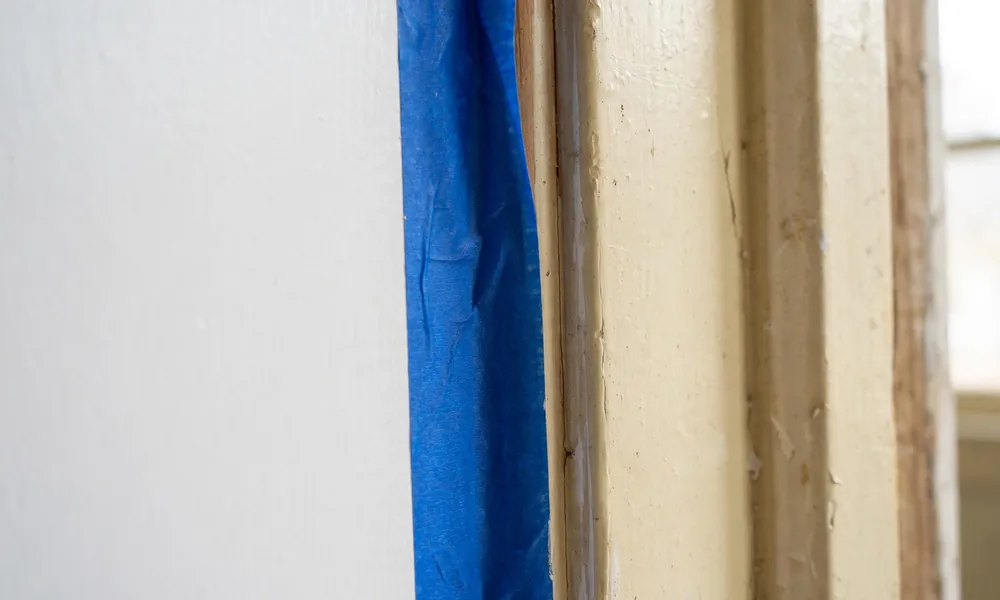
The line goes wrong when that seal breaks down. A tape that does not stick properly lifts at the edge, and paint wicks underneath, leaving a ragged, feathered border. A tape left on too long bonds too firmly, so it tears in strips or pulls flakes of paint off with it.
The tape is only one part of the job. The paint still has to go on well, and our guide to paint rollers that leave a smooth finish covers the tool that puts paint on the wall. The brush still has to cut in cleanly where the tape ends, and our guide to paint brushes for clean edges covers that.
Painter’s Tape vs General Masking Tape: The Real Difference
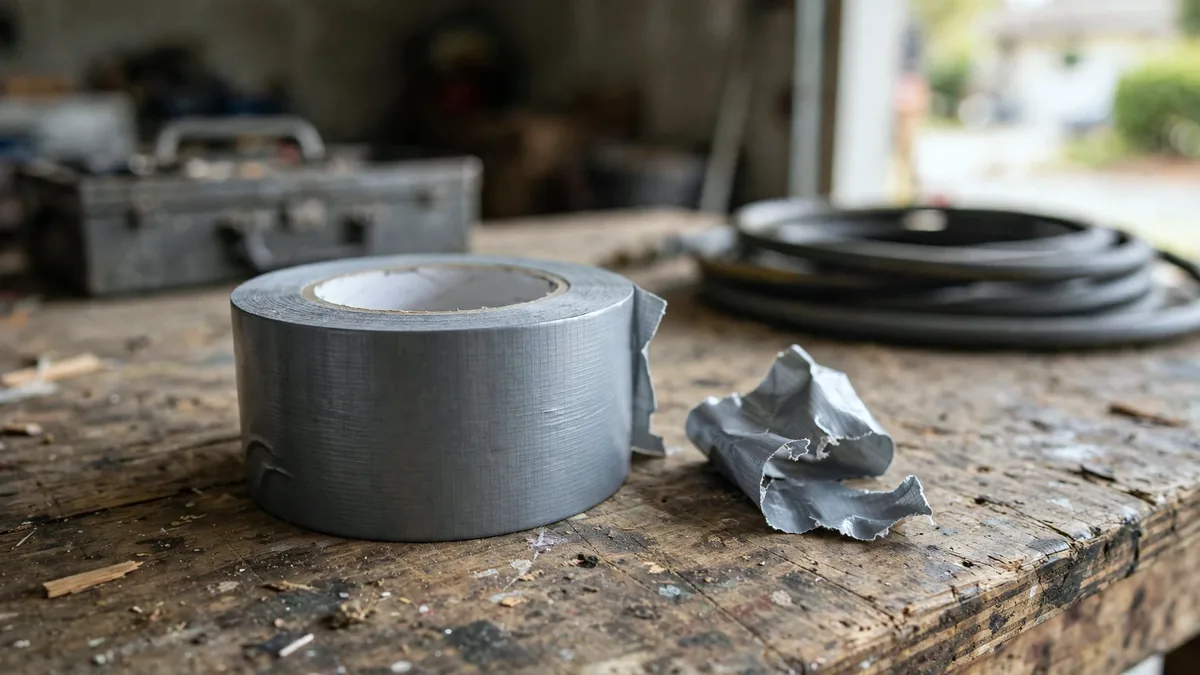
Painter’s tape and general masking tape look like siblings: both are paper-backed tapes with a pressure-sensitive adhesive, both come in rolls, and both are used to mask off surfaces. But they are made for different jobs, and swapping one for the other is the most common tape mistake in home decorating.
General masking tape is the older, cheaper cousin. It was made for holding things in place, bundling and light workshop masking. Its adhesive is stronger and less refined, its backing is rougher, and it is designed to be removed within hours, not days.
Painter’s tape is paint-grade tape, engineered for one job: a clean paint edge. Its adhesive is tuned to a precise strength, strong enough to seal but gentle enough to remove cleanly for days or weeks. Its backing is smoother, so the edge sits flatter, and many paint-grade tapes are treated so paint cannot soak through and stain the surface underneath. That is why it costs more, and why the extra cost is worth it on any surface you care about.
The distinction matters most on delicate surfaces. General masking tape on fresh paint, wallpaper or newly varnished trim is a gamble: it may hold, or it may take the finish with it. Paint-grade delicate-surface tape is made for exactly those surfaces, with a lighter adhesive that releases without lifting what is underneath.
The Main Types of Painter’s Tape
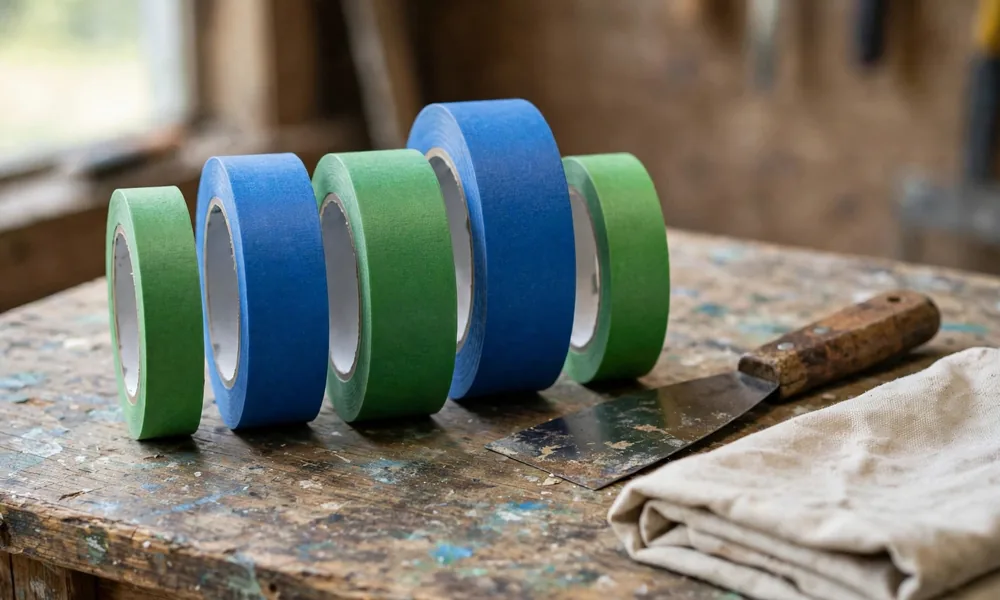
Blue Multi-Surface Tape
Blue multi-surface tape is the workhorse of the range and the right starting point for most rooms. Its medium-tack adhesive sticks well to painted walls, wood trim, glass and metal, and it removes cleanly for up to two weeks indoors. Its weakness is delicate surfaces, where even its medium tack can lift fresh paint or wallpaper.
Green Delicate-Surface Tape
Green delicate-surface tape uses a lighter adhesive made for surfaces that cannot take a strong pull: fresh paint less than a month old, wallpaper, newly finished wood and faux finishes. It seals well enough for a clean line but releases with far less force, so the surface underneath stays intact.
Yellow Exterior and UV-Resistant Tape
Yellow exterior tape is built for sun and weather. Its adhesive resists ultraviolet light and temperature swings, so it stays stuck on outdoor trim, render and brick for weeks without baking on, and it removes cleanly even after days in direct sun.
Wide and Narrow Widths
Width matters as much as type. A narrow 24-millimetre tape is best for window frames and detail work, where a wide tape would be hard to place accurately. A standard 36-millimetre roll suits skirting boards and most edges. A wide 48-millimetre roll covers broad trim and protects a larger area from splatter.
The Best Painter’s Tape of 2026
We judged every tape on edge seal, bleed resistance, clean removal, residue and value,
Best Overall: ScotchBlue Original Multi-Surface 2090
The ScotchBlue Original Multi-Surface 2090 is the best painter’s tape for most people in 2026. Its medium-tack adhesive seals firmly to painted walls and trim, resists bleed even with a loaded roller, and peels away cleanly for up to fourteen days without leaving residue.
Best for Sharp Lines: FrogTape Multi-Surface
FrogTape Multi-Surface is the best tape when the line itself is the priority. Its PaintBlock technology reacts with the water in latex paint to form a gel barrier along the tape’s edge, sealing the tiny gaps that cause bleed. On smooth plaster and gloss trim it produced the sharpest lines we tested.
Best Delicate Surface: ScotchBlue Delicate Surface 2080
The ScotchBlue Delicate Surface 2080 is the best tape for fresh paint and wallpaper. Its low-tack adhesive grips just enough to seal, then releases with a gentle pull that leaves the finish untouched, even on paint less than a month old.
Best Exterior: FrogTape Exterior
FrogTape Exterior is the best tape for outdoor work. Its UV-resistant adhesive holds on render, brick and exterior trim through sun and rain, and it removes cleanly after weeks outside without baking on or shredding.
Best Budget: Duck Clean Release Painter’s Tape
Duck Clean Release proves a budget tape can leave a clean line too. Its medium-tack adhesive seals well on painted walls and trim, removes cleanly for up to fourteen days, and the roll is noticeably cheaper than the premium brands.
Painter’s Tape Compared
| Tape | Type | Adhesion | Clean removal | Best for |
|---|---|---|---|---|
| ScotchBlue Original 2090 | Multi-surface | Medium | 14 days | Most rooms |
| FrogTape Multi-Surface | Multi-surface | Medium | 21 days | Sharpest lines |
| ScotchBlue Delicate 2080 | Delicate surface | Low | 60 days | Fresh paint, wallpaper |
| FrogTape Exterior | Exterior | Medium-high | 21 days outdoors | Outdoor trim |
| Duck Clean Release | Multi-surface | Medium | 14 days | Budget jobs |
| General masking tape | General purpose | High | Hours only | Workshop masking |
What to Avoid
The worst painter’s tape mistakes share the same faults. The first is using general masking tape on a painted wall: it bonds too strongly, leaves residue, and can pull paint off on removal. The second is buying the cheapest unbranded roll, which often has an uneven adhesive coat, so one stretch seals and the next lifts, leaving bleed in patches.
Cheap multi-packs are the worst offenders. They often mix widths and adhesion levels in one box, use a backing that tears across the roll, and arrive with edges already wavy from poor storage. A tape is a small purchase, but it decides whether your paint line looks professional or amateur. Buy a known maker and the right type for the surface. The paint itself matters just as much as the tape, and our guide to why the right interior paint changes a room covers choosing the paint that goes on top.
How to Apply and Remove Painter’s Tape
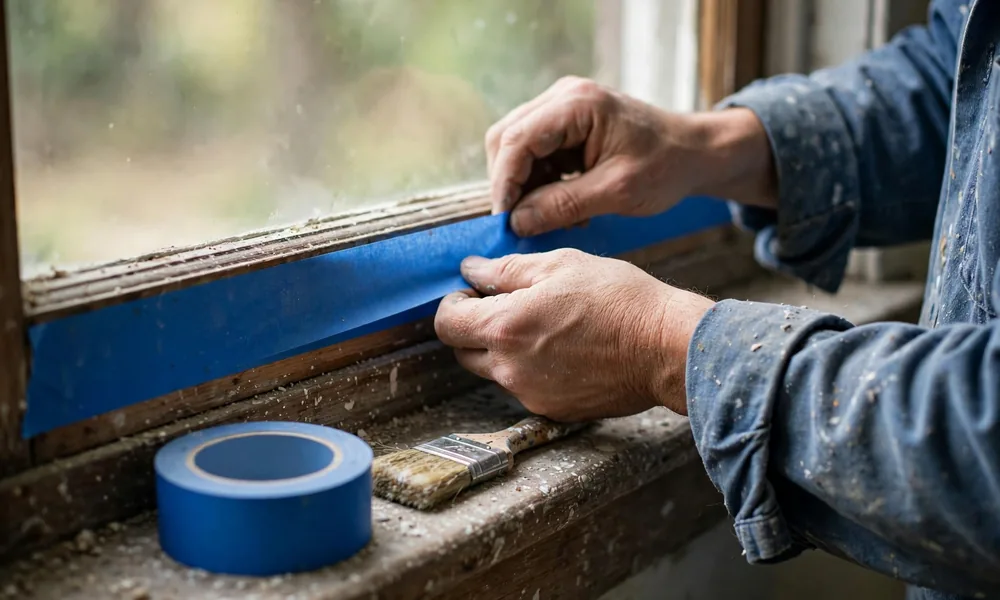
Application starts with the surface. Clean it first: dust, grease and loose paint all stop the adhesive sealing, so wipe the edge with a dry cloth and let it dry fully before you tape.
Sealing the edge is the step most people skip. Run a putty knife, an old credit card or your fingernail firmly along the tape’s edge, pressing it flat against the surface. This closes the tiny gaps where paint bleeds, and it is the single biggest difference between a crisp line and a ragged one.
Removal is where the line is made or broken. Pull the tape while the last coat is still slightly tacky, not fully dry, because dry paint can crack along the tape edge and peel away with it. Pull slowly and steadily at 45 degrees, away from the painted surface.
Buying Checklist
- Match the tape type to the surface: blue for most walls, green for delicate surfaces, yellow for outdoors.
- Check the clean-removal time and plan to peel the tape well inside it.
- Buy the width that fits the edge: narrow for detail, wide for broad trim.
- Press the edge down firmly with a putty knife before you paint.
- Never use general masking tape on a finished painted surface.
- Buy one spare roll, because running out mid-room means a visible join.
Frequently Asked Questions
How long can I leave painter’s tape on?
It depends on the tape. Most blue multi-surface tapes remove cleanly for up to fourteen days indoors, delicate-surface tapes for up to sixty days, and exterior tapes for up to three weeks outdoors.
Why does paint bleed under my tape?
Bleed happens when the tape’s edge is not sealed flat against the surface. Dust, damp, a textured surface or a stretched tape all leave tiny gaps, and wet paint wicks into them.
Can I use painter’s tape on fresh paint?
Yes, but only with a delicate-surface tape, and only once the paint has cured. Most paints need at least 24 hours before taping, and some need a full month to cure completely.
What is the difference between painter’s tape and masking tape?
Painter’s tape is paint-grade tape engineered for clean paint edges: a tuned adhesive, a smooth backing that sits flat, and clean removal for days or weeks. General masking tape is made for holding, bundling and short-term workshop masking, with a stronger adhesive that can leave residue and pull paint off.
Should I remove tape while the paint is wet or dry?
Remove it while the last coat is still slightly tacky. Wet paint can run under the tape as you pull, and fully dry paint can crack along the edge and peel away with the tape.
Can I reuse painter’s tape?
No. Once peeled off, the adhesive is coated with dust and paint, and the backing has stretched, so it will not seal a second time. Reused tape lifts at the edge and bleeds.
The Bottom Line
The best painter’s tape is the one matched to your surface: ScotchBlue Original 2090 for most rooms, FrogTape Multi-Surface for the sharpest lines, ScotchBlue Delicate Surface 2080 for fresh paint and wallpaper, and FrogTape Exterior for anything facing the weather. Do that, and every line comes out crisp.