Homemade muffins beat the bakery box in 2026 for a simple reason: a muffin is at its best in the first few hours after baking, and no box on a supermarket shelf can fake that. A warm muffin has a crisp, sugared top, a soft crumb that pulls apart in tender pieces, and fruit that is still juicy. The boxed kind can look the part, but it is usually baked days earlier, wrapped in plastic, and sweetened until the flavour of the bake itself disappears.
This guide covers what makes a muffin different from a cupcake, how to get the tall domed tops bakery muffins are famous for, how to keep the crumb moist for days, which flavours work best, and how to store and freeze a batch so nothing goes to waste. Nothing here needs special equipment, just a pan, a bowl, and a little patience with the batter.
Key Takeaways
- Mix muffin batter gently: ten to twelve strokes is enough, and a few lumps are a good sign.
- Start the oven hot, at around 220 degrees, then drop the heat after five minutes to lift the tops into tall domes.
- Oil and yoghurt keep muffins moist far longer than butter alone, so use them even when a recipe calls for butter.
- Fill each cup almost to the top and rest the batter for twenty minutes before baking.
- Freeze muffins on the day you bake them and they will taste nearly fresh for a month; a bakery box never recovers once it goes stale.
What Makes a Muffin a Muffin
A muffin is a quick bread, not a small cake, and that decides how you mix, how you bake, and what to expect when you bite into one. The batter is stirred together quickly, baked in a cup, and meant to be eaten the same day, ideally still warm. Its crumb is open and tender, its top domed and slightly crisp, and it is sweet enough to enjoy without frosting.
Muffins vs Cupcakes
The difference between a muffin and a cupcake is method, not size. A cupcake starts with butter and sugar creamed together until light, then eggs beaten in one at a time, then flour folded in gently, giving a fine, even crumb and a flat top made for frosting. A muffin starts with wet ingredients in one bowl and dry in another, combined with a few strokes of a spoon, giving a coarser, more rustic crumb and a domed top. Cupcakes are decorated; muffins are not. If your muffin batter looks smooth and glossy like cake batter, you have mixed it too much, and the muffins will come out tough and tunneled inside.
The other difference is sweetness. A cupcake is a celebration food, sweet through and through, with frosting on top. A muffin is an everyday bake, only moderately sweet, letting the fruit, spice, or chocolate do the talking. That is why a blueberry muffin works for breakfast and a cupcake does not, as our guide to the best and worst breakfasts of 2026 shows.
How to Get Tall Domed Tops
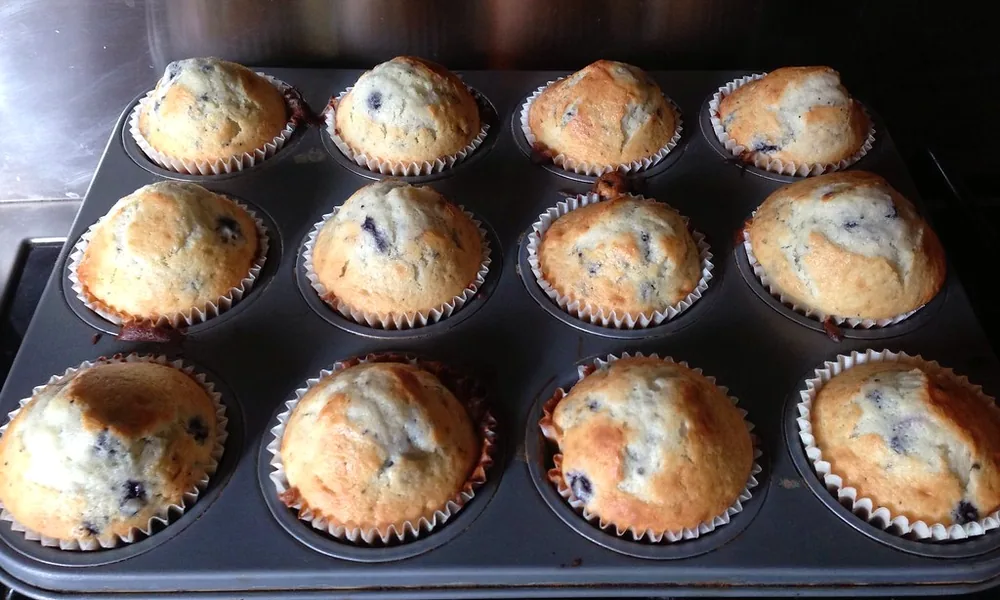
The domed top is the signature of a good muffin, and it comes from heat, not from any secret ingredient. When cold batter hits a very hot oven, the raising agents react fast and the outside sets quickly, forcing the middle upward into a dome. Start the oven hotter than the baking temperature, then turn it down once the rise is underway.
Heat the oven to 220 degrees and bake for the first five minutes at that temperature. Then, without opening the door, drop the heat to 180 degrees and bake for another fifteen to eighteen minutes, until the tops are golden and a skewer comes out clean. Opening the door early lets the heat escape and can collapse the rise. The muffins are done when they spring back lightly when pressed.
Two more details help. Fill each cup nearly to the top; a half-filled cup makes a flat muffin, however good the batter. Rest the batter for fifteen to twenty minutes before spooning it into the pan, so the flour hydrates and the batter thickens. A good pan helps too, and our guide to muffin pans that bake evenly without sticking explains which materials brown most reliably.
Keeping the Crumb Moist
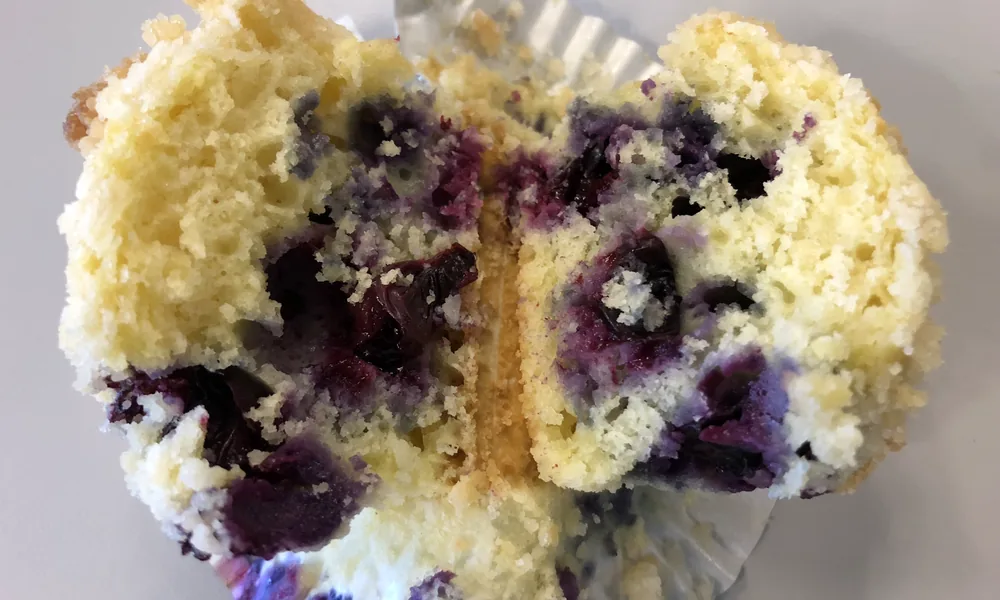
A dry muffin is the most common home-baking disappointment, and it almost always comes from overmixing, overbaking, or the wrong fat. Overmixing develops gluten, which makes a tough, dry crumb with long tunnels through it. The fix feels wrong the first time: stir until the flour just disappears, then stop, even if the batter still has lumps. Those lumps bake out, and the crumb stays tender.
Overbaking is the second culprit. Muffins go from perfect to dry in about three minutes, so set a timer and check early. A skewer should come out with a few moist crumbs clinging to it, not bone dry, and the tops should be golden rather than dark brown. Muffins keep cooking in the hot pan after they leave the oven, so take them out promptly and move them to a rack after five minutes.
The third cause is fat. Butter gives wonderful flavour, but it firms up as it cools, which is why a butter muffin can feel dry the next day even when it was perfect warm. Oil stays liquid at room temperature, so muffins made with oil stay softer for longer. The best compromise is half melted butter for flavour and half neutral oil for moisture, plus a spoonful of yoghurt or sour cream. The yoghurt adds moisture and a gentle tang, and it is the easiest upgrade to any muffin recipe you already use.

Flavours That Work Best
Blueberry is the classic for a reason. The berries hold their shape, burst just enough to streak the crumb purple, and balance the sweetness with a sharp edge. Toss them in a spoonful of flour before folding them in, which stops them sinking, and use fresh berries when you can; frozen ones work too, added straight from the freezer so they do not bleed colour through the batter.
Banana muffins are the best use for overripe bananas, and they stay moist longer than almost any other flavour because the fruit itself is wet and sweet. Mash the bananas well, add chopped walnuts or a teaspoon of cinnamon, and the result tastes better on day two than day one. For chocolate muffins, use cocoa powder and dark chocolate chunks rather than milk chocolate, which is too sweet and disappears into the crumb, with a pinch of salt to make the chocolate taste more like itself.
Savoury muffins deserve a place in the rotation too. Cheddar and chive, feta and sun-dried tomato, or courgette and parmesan all bake beautifully in the same batter with the sugar left out and a little extra salt. They make a fine lunchbox addition and a good partner for soup. Our guide to baking with almond flour shows how nut flours can add tenderness to bakes like these, though they need a little extra egg to hold together.
Homemade Muffins vs the Bakery Box
The comparison is not close once you know what to look for. A homemade muffin is judged warm from the oven, a boxed one days later, and that gap in freshness decides almost everything. The table below sets out the differences honestly, because the box does have one real advantage: it is there when you have no time at all.
| What matters | Homemade muffins | Bakery box muffins |
|---|---|---|
| Freshness | Eaten warm, hours after baking | Baked days earlier, often frozen first |
| Top and crust | Crisp, domed, lightly sugared | Soft and damp from packaging |
| Crumb | Tender, open, moist | Often dense or oddly springy |
| Sweetness | Yours to control | Usually very sweet |
| Flavour | Real fruit, butter, spice | Flavourings and preservatives |
| Cost per muffin | Low, especially in a batch | High for what is inside |
| Effort | About 30 minutes start to finish | None |
Storing and Freezing Muffins
Fresh muffins keep best at room temperature in a container lined with a paper towel, which absorbs the steam that would otherwise make the tops soggy. They stay good for two days this way. Do not refrigerate them: the cold firms the crumb and dries them out faster than the counter. If a muffin has gone slightly stale, ten seconds in the microwave or five minutes in a warm oven brings it most of the way back.
Freezing is where home baking beats the bakery box completely. Cool the muffins fully, wrap each one in cling film, and put them in a freezer bag with the air pressed out. They keep for up to three months, and a frozen muffin defrosts in about an hour on the counter or thirty seconds in the microwave. Bake a double batch on a Sunday, freeze half, and you have better muffins than any box for the rest of the month.
Muffin Baking Checklist
- Weigh the flour instead of scooping it: a heavy hand is the fastest route to dry muffins.
- Mix wet and dry separately, then combine with no more than twelve strokes of a spoon.
- Rest the batter for fifteen to twenty minutes while the oven heats.
- Fill each cup nearly to the top and bake hot first, then lower the heat.
- Check for doneness two minutes before the recipe says, and take the muffins out promptly.
- Cool on a rack for five minutes in the pan, then out of the pan, and freeze any you will not eat in two days.
Frequently Asked Questions
Why did my muffins come out flat?
Flat muffins usually mean the oven was not hot enough at the start, the cups were underfilled, or the raising agent was old. Test baking powder by dropping half a teaspoon in hot water: it should fizz vigorously. Fill the cups nearly full, start at 220 degrees, and do not open the door early.
Why are my muffins tough with tunnels inside?
Tunnels are the classic sign of overmixing. Once the flour meets the wet ingredients, gluten starts forming, and every extra stir makes the crumb tougher. Stir only until the flour disappears, leave the lumps alone, and fold fruit in with two gentle turns at the end.
Can I use frozen blueberries?
Yes, and they often bake more evenly than fresh ones because they hold their shape. Add them frozen, straight from the bag; thawing first will bleed purple through the batter. Toss them in a little flour first, and add two minutes to the baking time.
How do I stop muffins sticking to the pan?
Paper cases are the simplest answer, and they also keep the muffins moist. Without cases, grease the cups well and dust them lightly with flour. Even the best non-stick pan sticks if the muffins cool in it too long, so turn them out after five minutes.
Can I make the batter the night before?
You can, and an overnight rest often improves the rise, because the flour hydrates fully. Keep the batter covered, let it sit at room temperature for twenty minutes before baking, and stir it as little as possible. Do not add the fruit until the morning, or it will sink and bleed.
Are muffins healthy?
That depends on the recipe. A muffin made with whole fruit, modest sugar, oil, and yoghurt is a reasonable breakfast, while a giant bakery muffin loaded with sugar and icing is a cake in disguise. Home baking wins because you control the sugar, the fat, and the portion size.
The Bottom Line
Homemade muffins beat the bakery box because freshness is the whole game, and freshness is the one thing a box cannot deliver. Mix gently, bake hot, use oil and yoghurt for moisture, and freeze what you cannot eat in two days. Do that, and the muffins from your own oven will be taller, softer, and better flavoured than anything in a plastic box, for less money and about half an hour.