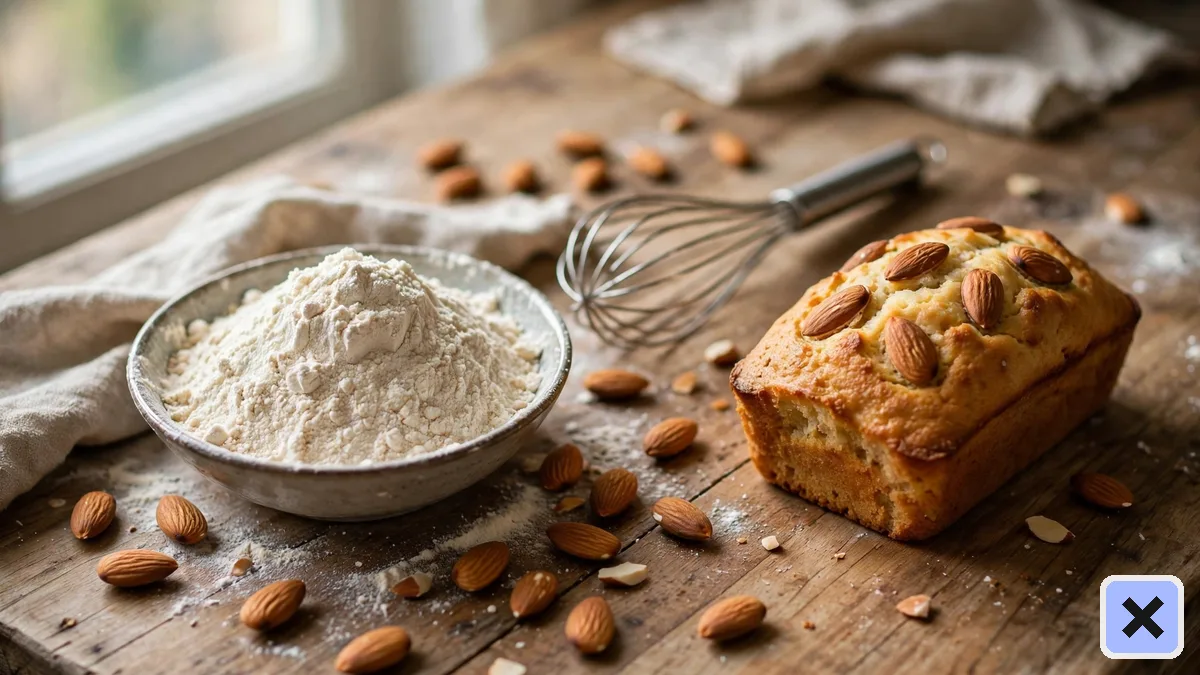
Almond flour has moved from a niche health-food shelf to the centre of everyday home baking. Made from nothing but finely ground blanched almonds, it bakes into cakes, cookies and breads that are moist, tender and faintly nutty. It is naturally gluten-free, low in carbohydrate and high in protein, which makes it a favourite for anyone baking without gluten or watching their blood sugar.
The difference starts with what almond flour actually is. Good almond flour is made from almonds that have been blanched, with their brown skins removed, then ground to a fine, even powder. That fine grind matters more than the brand name on the bag: a coarse grind bakes into gritty, heavy cakes, while a superfine grind gives a crumb so delicate that most people cannot tell it is gluten-free. The best almond flour in 2026 has a consistent superfine texture, a pale cream colour and a fresh, sweet almond smell.
Key Takeaways
- Almond flour is finely ground blanched almonds, not the same as almond meal, which is coarser and made with the skins on.
- Superfine grind is the single most important quality marker; it decides whether your bakes are tender or gritty.
- Almond flour cannot replace wheat flour one-for-one, because it has no gluten and far more fat and moisture.
- About 100 grams of almond flour carries roughly 21 grams of protein and only about 9 grams of net carbohydrate.
- Store almond flour in the fridge or freezer, sealed airtight, because its natural oils turn rancid faster than wheat flour.
What Almond Flour Is, and What It Is Not
Almond flour is made by grinding blanched almonds into a fine powder. Blanched means the skins have been removed, usually by a brief dip in boiling water, leaving a pale, mild-tasting flour. The almonds are then dried and milled, and the best producers sieve the result so the particles are uniform. A uniform grind lets the flour absorb liquid evenly and bake into a smooth crumb.
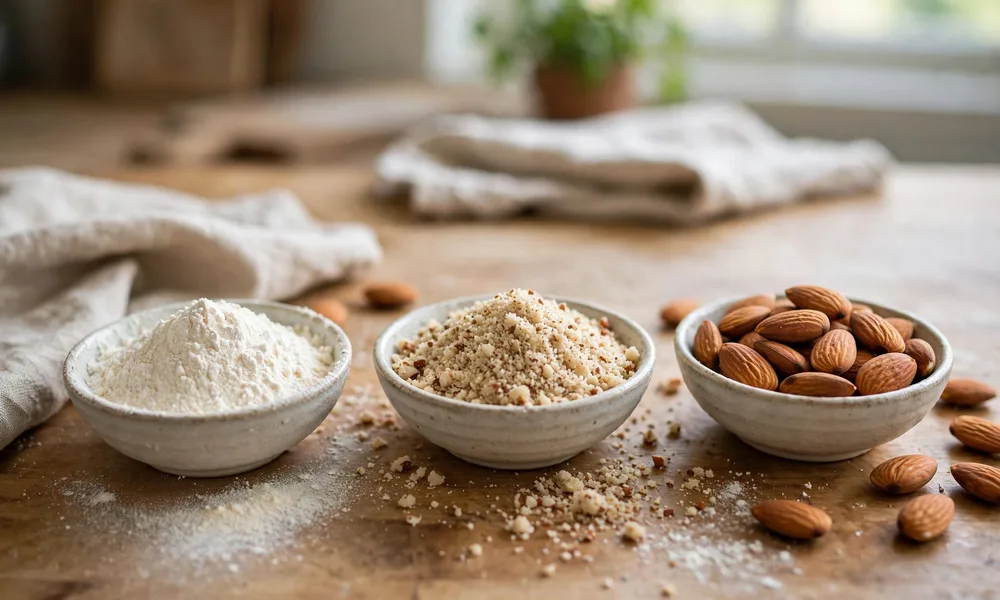
Almond meal is the close cousin that causes most of the confusion. It is made from whole almonds with the skins left on, ground more coarsely, and the result is darker, speckled and heavier. It works well in rustic cakes and crumbles, but it will not give you the fine crumb of a good almond flour cake.
Almond Flour vs Wheat Flour: The Numbers
The nutritional gap between almond flour and wheat flour is large. A 100-gram serving of almond flour contains about 21 grams of protein, 50 grams of fat, 10 grams of fibre and around 9 grams of net carbohydrate, with about 600 calories. The same weight of plain wheat flour has about 10 grams of protein, 1 gram of fat, 3 grams of fibre and roughly 72 grams of net carbohydrate, with about 360 calories.
Those numbers cut both ways. The protein and fat make almond flour bakes filling and satisfying, and the low carbohydrate load suits low-carb and keto baking. But the extra fat and the absence of gluten mean almond flour behaves very differently in the bowl: gluten is the elastic network that traps air and gives wheat bakes their rise and chew, and almond flour has none of it.
| Flour (per 100g) | Protein | Net Carbs | Fat | Best For |
|---|---|---|---|---|
| Almond flour | 21g | 9g | 50g | Cakes, cookies, crusts |
| Wheat flour, plain | 10g | 72g | 1g | Breads, pastry, general baking |
| Almond meal | 21g | 9g | 50g | Crumbles, rustic cakes |
| Coconut flour | 19g | 21g | 14g | Low-carb baking, absorbs a lot of liquid |
| Oat flour | 13g | 60g | 7g | Muffins, pancakes, soft bakes |
| Rice flour | 6g | 78g | 1g | Gluten-free blends, crisp coatings |
How to Choose the Best Almond Flour in 2026
Start with the grind. The bag should say superfine or finely ground, and the flour inside should feel soft and powdery between your fingers, not gritty. It should be a uniform pale cream, with no dark specks of skin and no clumps.
Next, check the ingredient list. It should say one thing: almonds, or blanched almonds. Any flour that lists added starch, rice flour or anti-caking agents is a blend, and it will not bake like pure almond flour. The nutrition label is a useful cross-check: pure almond flour has about 21 grams of protein and 50 grams of fat per 100 grams.
Freshness is the third test, and it is the one most people skip. Almond flour goes stale faster than wheat flour because of its high oil content, so buy bags with a best-before date at least six months away. Once you open a bag, smell it: fresh almond flour smells sweet and faintly marzipan-like, while stale flour smells flat or oily.
Baking With Almond Flour: The Rules That Matter
The first rule is that almond flour is not a direct substitute for wheat flour. Replacing more than a quarter of the flour in a wheat recipe changes the structure too much, and a full swap usually produces a dense, greasy bake that does not rise. Recipes written for almond flour are built around its strengths: extra eggs, baking powder and lower oven temperatures.

Temperature matters because almonds brown quickly. Most almond flour recipes bake at 160 to 175 degrees Celsius, a little lower than wheat recipes, and the bakes are done when the edges are golden and the centre springs back lightly. If the top is browning too fast, a loose sheet of foil over the tin for the last ten minutes solves it.
The Ratio That Works
For a simple conversion, one cup of wheat flour can be replaced by one cup of almond flour plus one extra egg, with the liquid reduced by a tablespoon or two, because almond flour absorbs less water than wheat flour. That rough ratio works for muffins, quick breads and some cookies, but it is a starting point, not a guarantee. Our guide to the best bread makers of 2026 is a useful companion if you bake your own loaves and want to know which machines handle nut flours well.
Eggs do the structural work that gluten would have done. Most almond flour cakes use three or four eggs, and separating them, whipping the whites and folding them in, gives a lighter crumb that no amount of baking powder can match on its own.
What Almond Flour Bakes Best
Almond flour shines in bakes where moisture and tenderness are the goal. French macarons, the classic showcase, are made almost entirely from almond flour and egg white, and they depend on its fine grind for their smooth shells. Financiers, the small brown-butter cakes from France, use almond flour for their moist, nutty crumb, and it also makes excellent shortcrust for tarts.
Cookies are the easiest place to start. Almond flour cookies spread less than wheat cookies, stay soft in the middle, and keep well for days because the fat in the flour slows staling. Where almond flour struggles is in anything that needs stretch and chew: yeasted breads, pizza dough and bagels all rely on gluten.
Almond Flour for Special Diets
Almond flour is naturally gluten-free, which makes it a staple for coeliac baking, but check the label: flour milled in a facility that also processes wheat can carry traces of gluten, so coeliac bakers should choose bags certified gluten-free. It is also naturally low in carbohydrate, with about 9 grams of net carbs per 100 grams, which is why it dominates keto baking.
The one hard limit is nut allergy. Almond flour is not safe for anyone with a tree nut allergy, and it should not be used in shared kitchens or school bakes where that allergy is a risk. Almond butter is the closest pantry relative, and our guide to the best almond butter of 2026 covers how to choose a jar with the same care you would bring to the flour.
Storing Almond Flour So It Stays Fresh
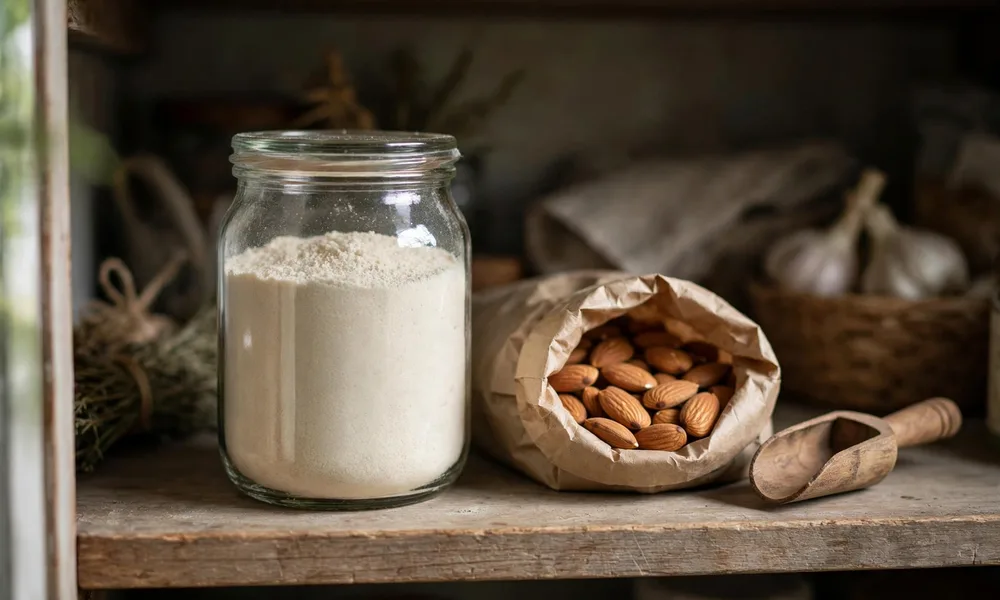
Almond flour has three enemies: heat, light and air. The best storage is an airtight jar or sealed bag in the fridge, where it keeps for about six months, or the freezer, where it keeps for up to a year. The pantry is the worst option, especially in a warm kitchen, where a bag can turn rancid in six to eight weeks.
Buying in bulk only makes sense if you bake with almond flour every week, because the last third of a big sack is often stale by the time you reach it. Flaxseed is another pantry staple that rewards the same cool, airtight treatment, and our guide to the best flaxseed of 2026 explains how to buy and store it well.
Common Mistakes When Baking With Almond Flour
The first mistake is using almond meal when the recipe calls for almond flour. The coarser, darker meal makes a heavier bake with a speckled crumb, and no amount of extra mixing fixes it. The second mistake is packing the flour into the measuring cup the way you would with wheat flour: almond flour should be spooned lightly into the cup and levelled off, because packing adds as much as a third more flour.
The third mistake is baking too hot. Almond flour browns fast, and an oven set for wheat baking will burn the outside of an almond cake before the inside is set. Lower the temperature by about 10 degrees and check five minutes earlier than the recipe says. The fourth mistake is expecting a wheat texture: an almond flour cake will never be as light and springy as a wheat sponge, and its virtue is different, a moist, dense, tender crumb.
Almond Flour Buying Checklist
- Choose superfine blanched almond flour, pale cream in colour, with no dark specks or clumps.
- Check the ingredient list says almonds only, and the label shows about 21g protein and 50g fat per 100g.
- Buy a bag with a best-before date at least six months away, and smell it when you open it.
- Measure by spooning lightly into the cup, never packing it down.
- Bake 10 degrees cooler than a wheat recipe, and check five minutes early.
- Store it airtight in the fridge or freezer, and bring it to room temperature before baking.
Frequently Asked Questions
Can almond flour replace wheat flour one-for-one?
Not reliably. Almond flour has no gluten and far more fat, so a direct swap usually gives a dense, greasy bake that does not rise. Use recipes written for almond flour, or replace no more than a quarter of the wheat flour.
What is the difference between almond flour and almond meal?
Almond flour is made from blanched almonds with the skins removed, ground superfine. Almond meal is made from whole almonds with the skins on, ground more coarsely, giving a darker, denser bake.
Is almond flour gluten-free?
Yes, almonds contain no gluten, but flour milled in a shared facility can carry traces. Coeliac bakers should choose almond flour certified gluten-free on the label.
How long does almond flour last?
Unopened, about a year in a cool cupboard. Once opened, about six months in the fridge or up to a year in the freezer, sealed airtight. In a warm pantry it can turn rancid in six to eight weeks.
Why did my almond flour cake sink in the middle?
Usually too much liquid, too little egg, or underbaking. Reduce liquid slightly, use the eggs the recipe calls for, and bake until the centre springs back when pressed lightly.
Can you make almond flour at home?
Yes, by pulsing blanched almonds in a food processor in short bursts, but stop before it turns to butter. Home-ground flour is coarser than commercial superfine flour, so it suits rustic bakes better.
The Bottom Line
The best almond flour in 2026 is a superfine, blanched, single-ingredient flour that smells fresh and sweet when you open the bag. Bake with it in recipes written for it, at a slightly lower temperature, with enough eggs to give it structure, and store it airtight in the fridge or freezer.