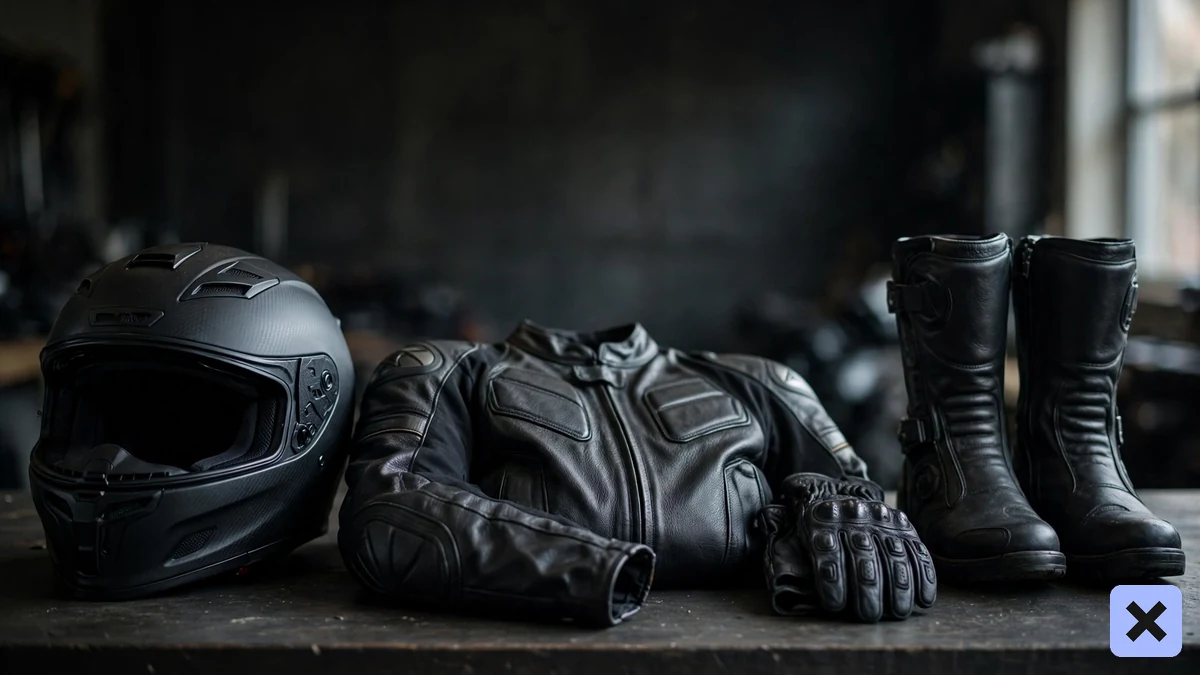
Motorcycle gear is the only thing standing between a rider and the road, yet some of the worst motorcycle gear on the market fails exactly when it matters most. A helmet that cracks on a minor drop, a jacket whose armour shifts away from the elbow in a slide, gloves that tear at the palm on first contact with asphalt — these are the everyday reality for riders who trusted a bargain label.
The worst motorcycle gear fails in predictable ways. It uses thin materials that look tough in a product photo but shred in seconds on real tarmac. It skips the certifications that cost money to earn. It fits badly, because the manufacturer never tested it on a moving rider.
This guide looks at the gear that lets riders down, why it fails, and how to spot the warning signs before you spend your money. When a crash happens, there is no second chance to choose better equipment.
Key takeaways
- The worst motorcycle gear fails at the seams, the armour pockets, and the materials — not at the brand logo.
- Uncertified helmets and jackets without recognised safety standards are the biggest risk on the road.
- Cheap gloves and boots wear out fastest, yet hands and feet hit the ground first.
- A poor fit makes even good gear useless, because armour that moves in a crash protects nothing.
- Price alone does not prove quality — some expensive gear is style-first, and some mid-priced gear is genuinely protective.
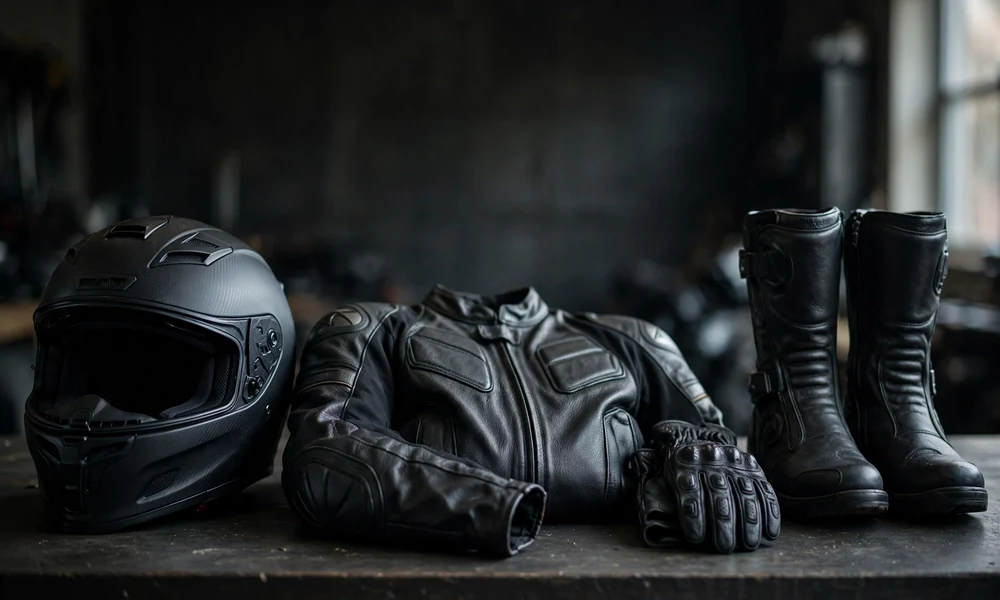
Why Motorcycle Gear Fails When It Matters
Gear fails first at the material. Genuine protective gear uses thick leather, high-denier textile, or aramid fibres that resist tearing and abrasion. The worst gear uses thin fashion leather or lightweight polyester that looks similar on a hanger but disintegrates under friction.
It fails second at the construction. Strong gear has double or triple stitching at the seams, reinforced panels at the shoulders, elbows, hips, and knees, and armour pockets that hold protectors firmly in place. Weak gear has single stitching that bursts on impact and zips that fail under stress.
It fails third at certification, or the lack of it. Helmets and jackets can be sold in many markets without meeting a recognised safety standard. A helmet without proper certification may have a shell that is too brittle, a visor that shatters, or a strap that comes undone.
The Gap Between Marketing and Protection
Marketing is where the worst motorcycle gear hides. Product pages talk about aggressive styling and race-inspired design, while the safety specifications are vague or missing. Real protective gear tells you its standard, its material weight, and its armour level. A pretender tells you how it looks and how it makes you feel.
Helmets That Fail the One Job They Have
A helmet has one job: protect the head in a crash. Yet some of the worst helmets fail at it in ways that are hard to believe until you see the test results. The most common failure is a shell that is too weak to spread impact force, so the inner liner compresses unevenly and leaves parts of the skull unprotected.
The second failure is the retention system. A helmet that comes off in a crash is worse than useless. The third failure is the visor: a visor that shatters sends sharp fragments towards the eyes, and one that pops out leaves the face exposed.
How to Spot a Bad Helmet Before You Buy
Start with the certification label. In Europe, look for ECE 22.06. In the United States, look for DOT and preferably Snell as well. If a helmet has no recognised certification, do not buy it. Try it on: it should fit snugly, with no pressure points and no room to twist.
Jackets and Trousers That Shred on Contact
Jackets and trousers are where most riders spend their money. A protective jacket needs to resist abrasion for several seconds of sliding, hold its armour in place, and stay together at the seams. The worst jackets fail all three tests.
Trousers are even worse, because many riders wear ordinary jeans and call them riding gear. Standard denim offers almost no abrasion resistance and tears in a fraction of a second on asphalt. Riding jeans with aramid lining are a real improvement, but only if the lining covers the impact zones and the seams are reinforced.
What Genuine Riding Gear Is Made Of
Real riding gear is built from materials with proven abrasion resistance: thick cowhide or kangaroo leather, high-denier Cordura or similar textiles, and aramid fibres. A jacket should feel substantial, with reinforced panels and double stitching you can see and feel. For textile gear, look for a stated denier rating and CE Level 2 armour where possible.
| Gear type | Common failure | What to check instead |
|---|---|---|
| Helmet | Weak shell, visor shatters, strap fails | ECE 22.06 or DOT/Snell label, snug fit |
| Jacket | Thin material shreds, seams burst | Thick leather or textile, CE Level 2 armour |
| Trousers | Ordinary denim tears in under a second | Full aramid lining, reinforced knees |
| Gloves | Palm tears, knuckle guard cracks | Leather palm, hard knuckle protection |
| Boots | Soles peel off, ankle support missing | Reinforced ankle, stiff sole, secure closure |
Gloves and Boots: The Gear Riders Forget First
Gloves and boots are the most neglected parts of a riding kit, and that is a mistake, because hands and feet are almost always the first things to hit the ground. When a rider goes down, instinct takes over, and the hands reach out to break the fall. Gloves that tear at the palm leave the skin to take the full force of the slide.
The worst gloves fail in three ways: the palm material is too thin, the knuckle protection is decorative plastic that cracks on impact, and the seams split under stress. A good glove has a leather palm, a solid knuckle guard, and a wrist closure that keeps it on the hand. The worst boots are ordinary fashion boots with a motorcycle label and no ankle reinforcement.
Fit Problems That Turn Good Gear Useless
Even good gear fails when it does not fit. A jacket that is too large lets the armour slide away from the elbows and shoulders in a crash, and a helmet that is too loose can rotate on impact. The worst gear is made to a generic pattern with no regard for real body shapes, and women riders face this most, as much of it is designed for a male body and relabelled.
The Buying Traps That Catch New Riders
New riders are the easiest targets for the worst motorcycle gear, because they do not yet know what good gear feels like. A full kit offered for a suspiciously low price is almost always a sign that every item in it is compromised. A brand that has only existed for a few months and has no independent reviews is a gamble.
The second trap is the replica: a copy of a well-known product, made with cheaper materials and sold under a similar name. The third trap is the bundle — a helmet, jacket, gloves, and boots together for one low price. A bundle is only as strong as its weakest item, and in most cheap bundles every item is weak.
This is the same mistake that shows up in other vehicle purchases. The hype around a machine can hide the reality of owning it, which is why riders who research the real experience do better than riders who buy on excitement alone. The reality of sports car ownership follows the same pattern: what looks thrilling in a showroom can be very different on the road.
How to Choose Gear That Actually Protects You
Choosing good gear is not complicated, but it does require patience. Start with the helmet, because head injuries are the most serious risk. Buy a certified helmet that fits snugly, from a brand with a track record. Then move to the jacket and trousers, looking for abrasion-resistant materials, certified armour, and strong construction.
Your Pre-Ride Gear Checklist
- Helmet certified, snug fit, visor clear, strap fastened.
- Jacket and trousers closed, armour over the joints, no loose seams.
- Gloves with leather palms and knuckle protection, wrists fastened.
- Boots with ankle support, secure closures, soles in good condition.
- All zips, buckles, and fasteners checked before every ride.
- Any gear that has been in a crash replaced, even if damage looks minor.
When to Replace Gear You Already Own
Gear does not last forever, and the worst mistake a rider can make is to keep using equipment that has already failed, even if the failure is not obvious. A helmet that has been dropped hard or involved in a crash should be replaced, because the liner may be compressed even if the shell looks fine. Helmets also have a recommended lifespan of around five years, as the materials degrade over time. The parallel with buying a used vehicle is direct: the common car buying mistakes that leave drivers with a bad vehicle are the same kind of error as buying bad riding gear without checking it first.
Frequently Asked Questions
What is the worst motorcycle gear to buy?
Uncertified gear made from thin materials with fake or missing armour. Helmets without ECE or DOT certification, jackets made from fashion leather, gloves with thin palms, and boots with no ankle support are the most common examples.
How can I tell if a motorcycle jacket is protective?
Check the material, the stitching, and the armour. A protective jacket uses thick leather or high-denier textile, has double stitching at the seams, and contains certified armour at the shoulders and elbows that stays in place.
Are expensive motorcycle helmets always safer?
No. Some expensive helmets are priced for style, brand, or features like built-in communication systems, while some mid-priced helmets meet the same safety standards. What matters is the certification, the fit, and the construction — not the price tag.
Do I need to replace my helmet after dropping it?
It depends on the drop. A small drop onto a soft surface is unlikely to damage a helmet, but a hard drop onto concrete, or any impact in a crash, can compress the liner even if the shell looks undamaged. When in doubt, replace it.
Can I wear ordinary jeans on a motorcycle?
Ordinary jeans offer almost no protection in a crash. Standard denim tears in a fraction of a second on asphalt. Riding jeans with a full aramid lining are a real improvement, but only if the lining covers the impact zones and the seams are reinforced.
How often should motorcycle gear be replaced?
Helmets should generally be replaced every five years, or immediately after a crash or a hard drop. Other gear should be replaced when it shows wear, such as thin material, loose seams, or failing zips. Gear that has been in a crash should always be replaced.
Planning matters for riders just as much as it does for travellers. A long ride needs the same kind of preparation as a long trip, and attention to the details that go wrong most often. The worst road trip mistakes that ruin a journey are usually the avoidable ones, and the same is true on a motorcycle: the gear you skip and the bargain you trust are the things that fail when it matters most.
The Bottom Line
The worst motorcycle gear fails when it matters because it was never built to succeed. It uses thin materials, weak seams, fake armour, and no certification, hidden behind bold marketing and low prices. The riders who get hurt are the ones who bought gear that looked protective and was not.
The fix is straightforward. Buy certified gear, check the materials and the construction, make sure it fits, and replace it when it wears out. Spend the most on the helmet, then the jacket, then the gloves and boots. Your gear is the only protection you have between you and the road, and when it matters, it has to work.


