
The worst mattresses for back pain share one trait: they let your spine fall out of line for seven or eight hours a night. Many feel wonderfully soft when you first lie down, and only reveal themselves weeks later, when morning stiffness and a dull lower-back ache become routine.
Back pain rarely comes from a single night. It builds up from small, repeated failures of support: hips sinking too deep, shoulders at the wrong angle, a middle that sags while the edges hold firm. The muscles around the spine work overtime to hold you neutral, and wake up tired and sore. When pain is worst in the morning and eases once you are moving, the bed is the first suspect worth investigating.
This guide covers the mattress types and buying mistakes most likely to make back pain worse, the warning signs your current bed is part of the problem, and what to look for instead.
Key takeaways
- The worst are usually too soft, too saggy, or too old, not too firm.
- A showroom cloud often lets the hips sink and the lower back arch overnight.
- Morning pain that eases within an hour of getting up is one of the clearest signs the bed is involved.
- Side, back, and stomach sleepers need different firmness; there is no single right level for everyone.
- A proper trial and a clear return policy matter more than a brand name or price.
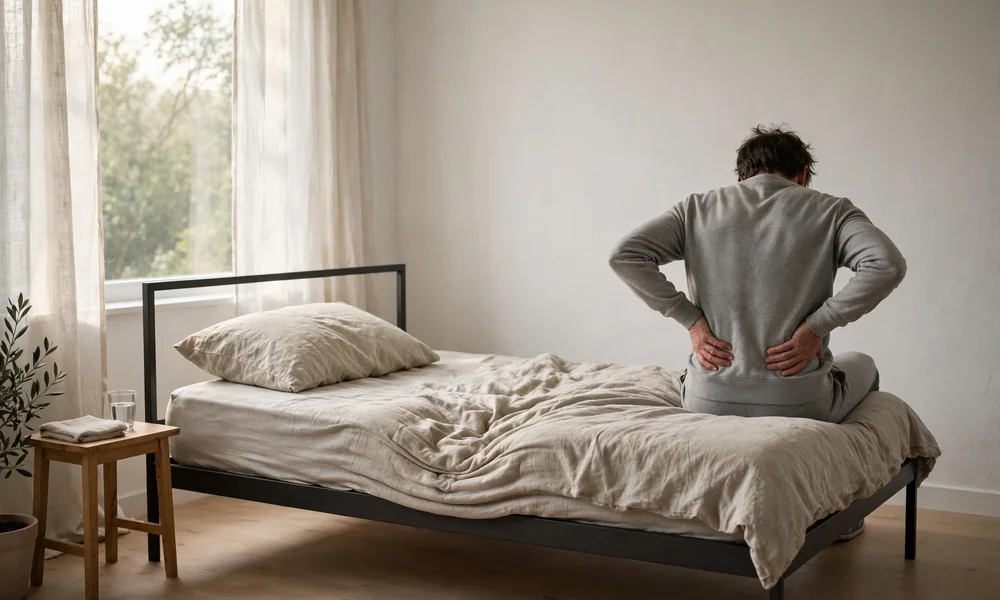
Why the Wrong Mattress Hurts Your Back
A healthy spine has a natural S-shaped curve, and a good mattress supports it without forcing it flat or letting it collapse. When a mattress fails, the spine spends the night bent or twisted: discs take uneven pressure, joints compress on one side, and the muscles that stabilise the lower back stay partly switched on instead of resting. The damage is gradual, which is why bad mattresses are easy to live with for months before the pattern becomes obvious.
A quiet, well-designed bedroom can make sleep easier, but no amount of calm decor compensates for a mattress that lets your hips sink below your shoulders. Comfort and support are different things, and the worst mattresses for back pain are usually excellent at the first and terrible at the second.
Too Soft Is the Most Common Trap
Softness sells: in a showroom, a plush mattress feels like a reward. But a mattress you sink deeply into cannot hold your heaviest parts level. Your hips drop lowest, and your lower back arches to compensate, creating a hammock shape for back sleepers and a sideways twist for side sleepers. Either way, you wake up stiff.
Too Firm Is Not the Fix
The usual reaction to a soft mattress that hurts is to buy the firmest one available, which creates a different problem. A very firm mattress does not contour to the body, so the shoulders and hips take the full pressure while the waist gets no support, and side sleepers wake with numb arms and aching hips. Firmness is a spectrum: the right level keeps the spine neutral for your weight and position, cushioning pressure points while resisting sinking.
The Worst Types of Mattresses for Back Pain
Some designs fail bad backs more often than others. If a mattress you own matches one of these and your back hurts most mornings, the connection is worth taking seriously.
Sagging Pillow-Top Mattresses
Pillow-top mattresses add a thick, soft layer stitched on top of the main mattress, and they are some of the worst offenders over time. The pillow top compresses first, often within a year or two, and because it is sewn on, you cannot flip or replace it. The result is a permanent dip where your hips rest, while the edges stay higher. Test it with a long ruler laid across the mattress: a gap over an inch in the middle means it is working against your back.
Ultra-Plush Memory Foam
Memory foam can be excellent for back pain when dense, well-layered, and paired with a supportive base. The worst versions are the ultra-plush ones: low-density foam that feels like sinking into warm sand. It softens further as it warms from body heat, so a mattress that feels supportive at bedtime can feel like a hole by three in the morning, and the lower back stays arched because the foam never pushes back. Hot sleepers with back pain should avoid soft memory foam.
Cheap Thin Innerspring Mattresses
Budget innerspring mattresses are built around thin coils and minimal padding. The coils are often connected rather than individually pocketed, so pressure on one part of the bed transfers across the whole surface, and heavier sleepers compress them quickly until you can feel the springs through the fabric. Many hotel rooms that look good but sleep badly hide exactly this kind of tired, thin mattress under crisp white sheets.
Old Mattresses Past Their Best
Every mattress has a lifespan, and most lose meaningful support long before they look worn out. At eight to ten years old, a mattress has usually lost much of its original firmness and shape, even if the cover still looks clean: foam breaks down, coils weaken, and the materials that once held your spine level stay permanently compressed where you sleep most. If your back feels better away from home and worse after a week back in your own bed, it has passed its best, and no topper can fix a failed core.
Warning Signs Your Mattress Is the Problem
Mattress-related pain has a particular rhythm: worst on waking, better as you move during the day, back after a night in the same bed. Pain that stays constant all day, shoots down a leg, or follows a specific injury has a different story. Physical signs are just as telling: visible sagging or lumps, rolling toward your partner without meaning to, or sleeping better on the sofa than in your bed. That is your body voting against the surface it is lying on.
| Mattress type | Main problem | Who it hurts most |
|---|---|---|
| Sagging pillow-top | Permanent dip under the hips | Back and heavier sleepers |
| Ultra-plush memory foam | No pushback, sinks deeper as it warms | Back and hot sleepers |
| Cheap thin innerspring | Weak coils, little zoned support | Heavier sleepers, couples |
| Very firm, no contour | Pressure on shoulders and hips | Side and lighter sleepers |
| Old mattress, over 8 years | Materials worn out, support gone | Anyone with a sensitive back |
If several warning signs sound familiar, test the theory before spending money: sleep in a different bed for a few nights and note how your back feels each morning. A clear improvement away from your mattress is strong evidence, and cheaper than a new bed bought on guesswork.
What Actually Helps a Bad Back
The opposite of a bad mattress is not a mysterious or wildly expensive one. Mattresses that help bad backs share a few practical qualities, and the most important is consistent support: the spine should stay level all night, not just in the first five minutes. Medium-firm is most often linked with less morning pain, but it means different things at different body weights. Only your own body can judge, which is why trial periods matter more than firmness labels.
Firmness That Fits Your Sleep Position
Side sleepers need enough give at the shoulders and hips to keep the spine straight. Back sleepers need support under the lower back, with the hips held level rather than sinking. Stomach sleepers need the firmest surface, because a soft mattress lets the stomach sink and arches the lower back sharply. Most people change position during the night, so aim for a mattress that works for your main position and tolerates the others. Stomach sleepers who wake with back pain should try a firmer mattress and a thinner pillow.
Zoned Support and Edge Support
Zoned support means the mattress is firmer under the hips and lower back and softer under the shoulders, matching how the body is built. Pocketed coils with zoned construction, or layered foam with a firmer middle third, both do this well. Edge support matters too: weak edges make you sleep in a narrow strip in the middle for fear of rolling off, while strong edges let you use the whole bed and change position freely.
How to Test a Mattress Before You Commit
A ten-minute lie in a showroom tells you almost nothing about how a mattress will treat your back at four in the morning. Test properly: lie in your normal sleep position for at least ten minutes, bring your own pillow if you can, and check whether your lower back feels supported or hollow. The same thinking behind booking mistakes that leave you stuck with a bad bed for a whole trip applies at home too, because a mattress is a bigger commitment than a hotel room and much harder to return.
The real test is the trial period. A trial of at least ninety nights with a genuinely free return gives you time to find out whether your morning pain improves. Log it for the first month: rate your back each morning out of ten and note how long the stiffness lasts. If there is no improvement after a few weeks, send it back.
Checklist: Before You Buy
- Lie in your normal position for ten minutes, not thirty seconds.
- Check for sagging with a straight edge: no deep middle dip.
- Confirm a ninety-night trial with a free, no-hassle return.
- Ask the foam density and coil count; be wary if the seller cannot answer.
- Match firmness to your weight and sleep position, not the label.
- Measure frame and room first, so delivery and returns are easy.
Frequently Asked Questions
Can a mattress really cause back pain?
Yes. A mattress that lets the spine fall out of line night after night causes morning stiffness and can worsen existing back problems. The pattern is pain worst on waking, easing within an hour of getting up.
Is a firm mattress always better for a bad back?
No. Very firm mattresses can create pressure points at the shoulders and hips, especially for side sleepers, and leave the lower back unsupported. Most people with back pain do best on a medium-firm mattress matched to their weight and sleep position.
How do I know if my mattress is too soft?
Look for a visible dip where you sleep, hips sinking below the rest of your body, and morning pain that improves once you are up. Rolling toward the middle or your partner without trying means it is almost certainly too soft.
Can a mattress topper fix a bad mattress?
A topper can soften a mattress that is too firm, but it cannot fix one that sags or has lost core support. Adding soft layers on a sagging mattress usually makes the dip deeper. If the core has failed, a replacement is the honest fix.
How long should a mattress last?
Most good mattresses provide reliable support for seven to ten years, depending on materials and use. Cheaper models wear out sooner. If yours is over eight years old and your back hurts most mornings, age is a likely factor.
Should I replace my mattress or see a doctor first?
If pain follows the mattress pattern, worse in the morning and better during the day, try a different sleep surface for a few nights first. If pain is severe, constant, shoots down a leg, or follows an injury, get medical advice promptly instead of shopping.
The Bottom Line
The worst mattresses for back pain feel generous and fail quietly: the sagging pillow top, the ultra-plush foam that never pushes back, the thin innerspring, and the old favourite that lost its support years ago. None looks like a bad purchase on day one, which is exactly why they cause so much trouble. Judge a mattress by how your back feels after a month on it, not the first five minutes, and choose one that keeps your spine level and your mornings free of stiffness.


