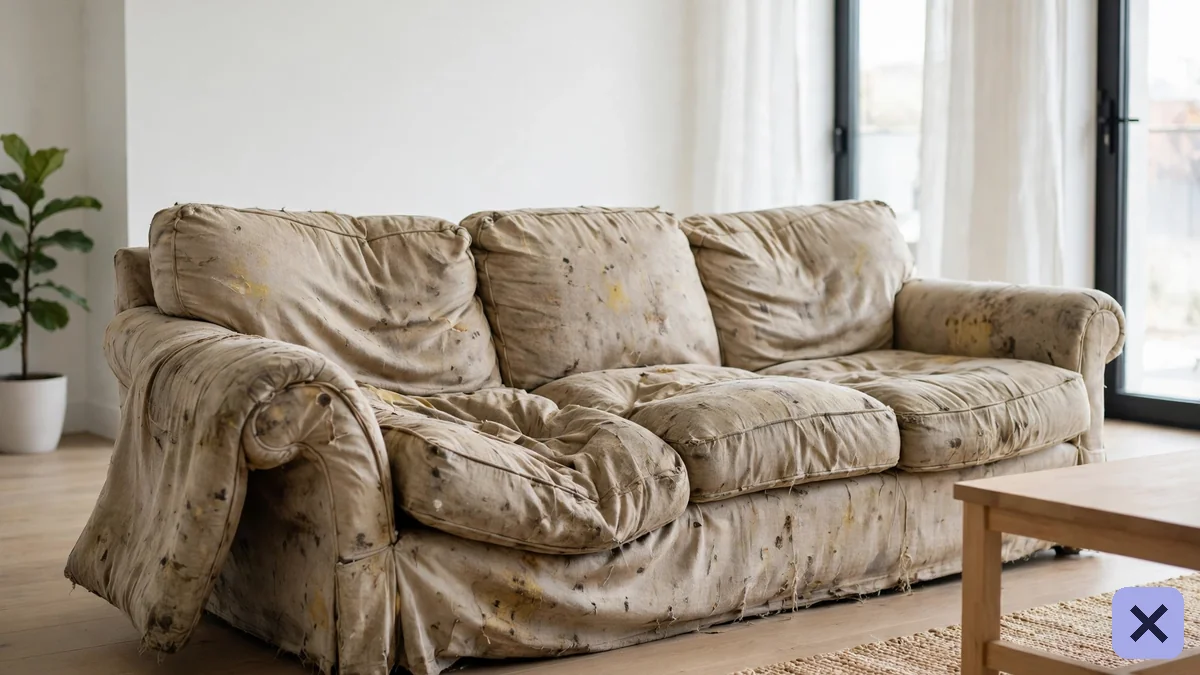
A sofa is the hardest-working piece of furniture in most homes, and the worst sofas for comfort and durability look inviting in the showroom, then turn against you within a year. The cushions sag, the frame creaks, and the seat you once loved becomes the place you avoid.
Bad sofas fail as a system: a weak frame lets the seat dip, cheap foam loses its shape, thin fabric wears through at the arms, and cushions that cannot be flipped or replaced turn a small problem into a permanent one.
The good news is that most of these failures are visible before you buy. This guide names the sofa types most likely to disappoint and shows you how to test any sofa in ten minutes.
Key takeaways
- The frame decides durability: kiln-dried hardwood with corner blocks lasts, while stapled particleboard loosens and creaks within a year or two.
- Foam density matters more than softness: foam around 1.8 pounds per cubic foot or higher holds its shape, while low-density foam flattens fast.
- Sagging seats, wobbling arms and squeaking joints are warnings a ten-minute sit test finds before buying.
- Thin fabric, bonded leather and fixed cushions turn small wear into expensive, unfixable damage.
- A sofa loaded with recliners, cup holders and USB ports has more parts to break, and repairs often cost more than the sofa is worth.
Why So Many Sofas Fail So Fast
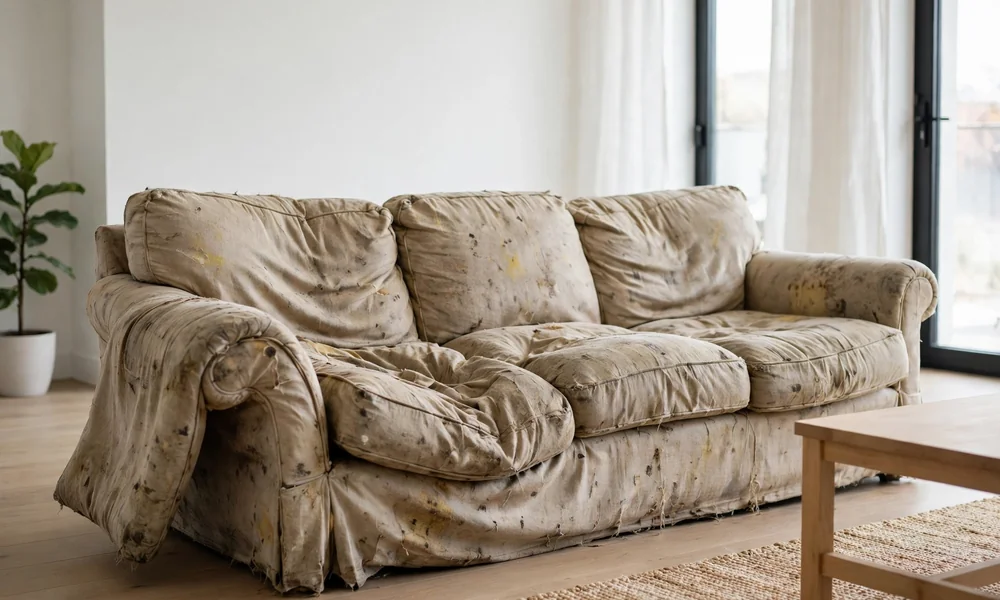
Sofas fail fast because the parts that matter most are hidden under fabric, so manufacturers under pressure to cut prices cut exactly there. Within a year, joints loosen, foam compresses, and the seat develops a hollow in the favourite spot.
The frame is where comfort dies
Comfort starts with a frame that does not move. When a frame flexes, the seat dips unevenly, the cushions slide toward the middle, and your posture follows them. Over months the joints loosen, the dip deepens, and the sofa feels tired even when the cushions are fine.
The best frames are kiln-dried hardwood, joined with dowels, screws and corner blocks, and glued as well as fastened. Corner blocks stop the frame racking sideways when people flop down. Frames built from particleboard or soft pine, held together with staples alone, have none of this insurance, and they are the frames most likely to wobble, squeak and crack.
Foam that gives up in a year
Foam is the second hidden failure. Even cheap foam feels springy for the first few months, but between month six and month eighteen low-density foam loses its ability to bounce back. You sit down and the cushion stays down, leaving a permanent dent shaped like its most frequent occupant.
Density, measured in pounds per cubic foot, is the number that matters. High-resilience foam at 1.8 pounds per cubic foot or above keeps its shape for years of daily use, while foam below 1.5 pounds is a short-term proposition, however thick the cushion looks. When a salesperson cannot or will not state the foam density, treat that silence as an answer.
The Worst Sofas for Comfort
Some sofas are uncomfortable for almost everyone, in predictable ways. The worst are designed to impress in a thirty-second showroom sit, not to support a body for an evening.
Ultra-soft sink-in sofas
Deep, pillow-soft sofas look like the height of relaxation, and for the first five minutes they are. With no firm layer underneath, your hips sink below your knees, your lower back rounds, and standing up becomes a small project. Long films end with stiff backs, and older guests suffer most, because the sofa offers nothing to push against.
They also age badly: soft fillings compress unevenly, so the favourite seat becomes a crater. A good sofa lets you sink slightly and then stop, held by a firm core. If you keep sinking until you feel the frame, your back will pay for it.
Recliners loaded with gimmicks
A recliner can be a fine thing, but sofas stuffed with mechanisms, cup holders, consoles, USB chargers and power headrests trade comfort for features. Every mechanism adds weight and a new way to break. The seats are divided into narrow sections, so the middle seat is often a hard strip over the console, and the backrests are thick and upright to house the motors.
When a motor dies, the sofa becomes a very expensive ordinary seat with a footrest stuck halfway out. The same logic applies beyond sofas, as explored in this look at feature overload and the upgrade trap. Buy the best seat you can afford, and let the extras be extras.
The Worst Sofas for Durability
Durability is about how a sofa handles real life: children jumping on it, pets claiming the corner, guests spilling drinks, and the daily grind of sitting and shifting. The worst sofas for durability are not necessarily the cheapest ones, but their materials cannot absorb that life.
Watch for disposability by design: if the cushions cannot be removed, the covers cannot be cleaned and the frame cannot be re-glued, the sofa has a single lifespan and no second act. Good furniture is repairable; bad furniture is a countdown.
Stapled particleboard frames
Particleboard is wood chips glued together, and it has one fatal weakness: it does not hold fasteners. Screws and staples pull out under repeated stress, and once they do, the joint cannot be fixed by driving the same fastener back in. The hole is stripped, the board is crumbled, and the joint is finished.
The warning signs are weight and sound: a particleboard frame is oddly light and gives a hollow knock when tapped. Lift a front corner: if the opposite leg stays down while the frame twists, the joints are already flexing. Ask directly what the frame is made from; a maker proud of hardwood will say so.
Thin fabric and bonded leather
Thin fabric shows wear first. Rub counts tell the story: fabric below 15,000 double rubs suits only light use, while a family sofa needs 25,000 or more. Thin, loosely woven fabric pills within weeks, snags on pet claws, and wears shiny at the arms and seat edges.
Bonded leather is worse: leather scraps ground up, glued onto fabric backing and coated to look real. For a year or two it looks convincing, then the coating peels in sheets that cannot be patched invisibly. If the price seems too low for real leather, it is not real leather.
| Sofa type | Comfort after a year | Durability | Main risk |
|---|---|---|---|
| Ultra-soft sink-in | Poor; hips sink, back aches | Weak; foam craters unevenly | No firm core under soft fill |
| Gimmick recliner | Mixed; narrow, divided seats | Weak; motors and cables fail | Too many moving parts |
| Particleboard frame | Fair at first, then wobbly | Poor; fasteners pull out | Joints cannot be repaired |
| Bonded leather | Fair; sticky and cold | Poor; coating peels in sheets | Not real leather |
How to Spot a Bad Sofa Before You Buy
The best time to discover a bad sofa is before it enters your home. All you need is your hands, your ears and ten unhurried minutes. Sit the way you actually sit at home: curled up with a book, stretched out for a film, perched on the edge.
The sit test that actually works
Sit in the middle of a three-seat sofa, then slide to each end. The seat should feel even across its width, with no dip in the middle and no hard ridge over the frame rails. Bounce gently: it should rebound evenly, not sink and stay down. Sit on the edge: the front rail should feel solid, not flexing or creaking.
Next, test the arms: press down hard and lean your full weight on each one. A good arm stays rigid; a weak one flexes or creaks. Lift one front corner five centimetres off the floor: the whole sofa should rise as one rigid piece. Finally, unzip a cushion cover if possible: dense, even foam is a good sign, lumpy filling is not.
Questions to ask the seller
Four questions separate honest makers from the rest. First, what is the frame made from? You want kiln-dried hardwood, dowelled and screwed with corner blocks. Second, what is the foam density? You want a number, ideally 1.8 pounds per cubic foot or higher.
Third, what is the fabric rub count, and are replacement covers and cushions available to order? Fourth, what exactly does the warranty cover, and for how long? A one-year warranty on everything is a confession. The same instinct applies to design that looks better than it lives, as this account of hotel design traps that look good and work badly shows how often style wins over function when nobody checks the details.
What to Buy Instead
The alternative is not the most expensive sofa; it is the best-built one within your budget. Start with the frame: kiln-dried hardwood, corner-blocked, dowelled and screwed. Then the suspension: sinuous or eight-way hand-tied springs, evenly tensioned. Then the cushions: high-resilience foam of 1.8 pounds per cubic foot or higher, always over a firm core.
Think about how the sofa will be used, not how it photographs. A home that works is one where everyday things are easy and built to last, as this reflection on the quiet luxury of a home that works puts it.
Finally, buy from a maker who will still be there when something goes wrong. A company that sells replacement cushions, covers and legs is selling furniture, not a one-time transaction. Check reviews more than a year old: a sofa praised after three years has proved something a showroom never can.
Checklist: Before You Buy Any Sofa
- Confirm the frame is kiln-dried hardwood with corner blocks, not particleboard held by staples alone.
- Ask for the seat foam density in writing and look for 1.8 pounds per cubic foot or higher.
- Sit for ten minutes in every position you use at home, and check for even support.
- Lift a front corner and press the arms hard; the sofa should stay rigid and silent, with no twist or creak.
- Check the fabric rub count is 25,000 or higher, and confirm covers and cushions are replaceable.
- Read the warranty and returns policy first, and make sure sagging, cushions and mechanisms are covered.
Frequently Asked Questions
How long should a good sofa last?
A well-built sofa with a hardwood frame and high-density foam should stay comfortable for seven to ten years. A cheap sofa with a particleboard frame and low-density foam often feels worn within one to two years.
What is the biggest sign of a bad sofa?
Uneven support is the clearest warning. If the middle seat dips, the arms flex, or the cushions stay dented, the sofa is already failing. A ten-minute sit test reveals all of it.
Is a soft sofa or a firm sofa better for comfort?
Neither extreme is best. A good sofa combines a firm core with a softer top layer, so you sink slightly and then stop. Ultra-soft sofas strain your back; ultra-firm ones create pressure points.
Does a high price guarantee a good sofa?
No. Expensive sofas can hide cheap frames and low-density foam behind designer fabric and a famous name. Always check the frame material, the foam density and the fabric rub count before deciding.
Should I avoid bonded leather completely?
For a main sofa, yes. Bonded leather looks convincing at first but peels in sheets within a couple of years, and the damage cannot be repaired invisibly. A high-rub-count fabric is a far better choice.
Can a sagging sofa be fixed?
Sometimes. If the cushions are removable, replacing the foam inserts can restore comfort cheaply. If the frame or springs have failed, repairs often cost more than the sofa is worth.
The Bottom Line
The worst sofas fail the same way: weak frames, thin foam, fragile fabric and cushions you cannot replace. None of this is visible in a photograph, but all of it is discoverable in ten minutes. Buy the frame first, the foam second and the fabric third.