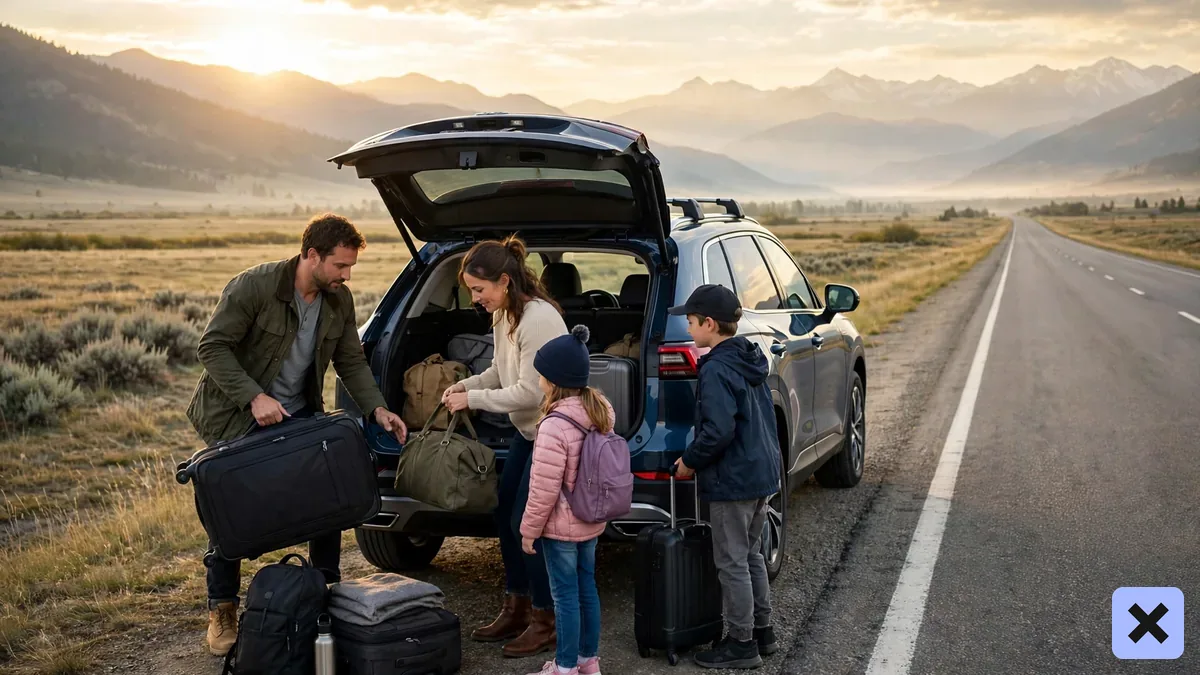
Every family vacation starts with the same argument: should we drive or should we fly? The road trip vs flying family vacation debate has no single right answer, because the best choice depends on distance, your children’s ages, luggage, and how much holiday the journey takes.
Driving gives your family freedom. You leave when you want, pack what you want, and stop where you want. Flying gives your family speed. A two-day drive can shrink to a couple of hours in the air. Both sound wonderful until you add four plane tickets, a hire car, or a ten-hour drive with a restless five-year-old.
This guide compares the two options honestly, using the real costs families face: money, time, comfort, flexibility, luggage, and how your children will cope.
Key takeaways
- Driving is usually cheaper for a family of four on trips under five or six hours, because one fuel bill beats four plane tickets.
- Flying wins clearly on trips over eight hours of driving, where saved time beats the extra ticket cost.
- The true cost of flying includes airport parking, baggage fees, transfers, and a hire car, not just the fares.
- The true cost of driving includes fuel, tolls, food, overnight stops, and wear on the car.
- Children under five usually cope better with the freedom of a car, while older children often prefer the speed of a flight.

The Short Answer: It Depends on Distance
Distance is the biggest factor, and it sets a simple rule of thumb. If the drive is under five hours, driving almost always wins. Door-to-door time is similar once you count getting to the airport early, checking in, and travelling from the arrival airport to your hotel. The car is also far cheaper: you pay for fuel once, not a seat for everyone.
Between five and eight hours of driving, the choice becomes genuinely close. A flight saves three or four hours door to door here, but four tickets, baggage charges, and a hire car can easily double or triple the cost of driving. Families short on time often fly at this distance; families with a bigger activities budget often drive and spend the savings on the holiday.
Past eight hours of driving, flying usually wins. A full day behind the wheel, or an overnight hotel stop, eats into the holiday and leaves everyone tired. A two-hour flight replaces all of that with a single morning of travel. The exception is the family that loves the journey itself and can take it slowly.
Road Trip vs Flying: Head-to-Head Comparison
The whole comparison at a glance.
| Factor | Road Trip | Flying |
|---|---|---|
| Cost for four | Low on short trips; one fuel bill | High; four tickets plus baggage |
| Door-to-door time | Slow; the drive is the whole journey | Fast over long distances, but airport time adds hours |
| Flexibility | Excellent; leave when you like | Limited; fixed times |
| Luggage | Generous; pack the boot full | Strict; weight limits and fees |
| Comfort for children | Room to move, snacks, stops on demand | Cramped seats, much shorter journey |
| Car at destination | Your own car is already there | Hire car needed, adding cost |
| Stress points | Traffic, tired drivers, restless passengers | Delays, queues, lost luggage |
| Best for | Trips under six hours, flexible holidays | Long distances and short breaks |
The True Cost of Driving
Driving looks cheap at first glance, and for most families it is, but the real bill is bigger than a tank of fuel. Start with fuel, tolls on motorways and bridges, and parking at your destination. A 600-mile round trip in an average family car can use 20 to 25 gallons of fuel, and tolls on popular routes can add a surprising amount. Then add food: a family buying lunch and snacks on the road twice a day spends far more than the same family eating at home.
Longer drives bring extra costs that many families forget. A drive over eight hours often means an overnight hotel stop each way, costing as much as a budget flight for one person. Wear on the car counts too: tyres, servicing, and depreciation rise with mileage. Then there is the cost nobody spreadsheets: time. Ten hours there and back is twenty hours of holiday spent on the road. Planning helps, and avoiding common road trip mistakes like leaving late or skipping breaks can turn a stressful drive into an enjoyable part of the holiday.

Fuel, Tolls and Food on the Road
Fuel is the biggest single driving cost, and it is easy to estimate before you go. Check the distance, your car’s real fuel economy, and fuel prices along your route. Tolls vary widely, so compare a toll road with a free alternative and ask whether the time saved is worth the fee. Food creeps up unnoticed, so pack a cool bag with sandwiches, fruit, and drinks for the first day.
The True Cost of Flying
Flying looks simple when you see a low fare advertised, but the headline price is rarely the final price. A family of four needs four tickets, and school holiday dates are the most expensive of the year. Budget airlines charge extra for seat selection, and sitting together often means paying for it. Checked baggage is another add-on, and two large suitcases can cost more in fees than one ticket. Add airport parking or a taxi, and the bill grows.
Arrival brings a second round of costs. Unless your hotel is next to the airport, you need a transfer, taxi, or hire car. A week’s hire car with insurance and a child seat can cost as much as the flights on some routes. Time is the other side of it. A two-hour flight sounds quick, but you must arrive two hours early, queue for check-in and security, and wait again for baggage at the other end. If you enjoy weighing up different ways to travel, comparing trains and planes is useful, because rail can sometimes beat both driving and flying on medium-distance routes.
The Ticket Is Only the Start
When comparing flight prices, build the full picture first. Add baggage, seat selection, parking, and transfers to the fare, then compare that total with the full cost of driving. Book early for the best fares, travel midweek if you can, and stay flexible about departure times. Early flights are often cheaper, but they mean a very early start with children.
Comfort, Flexibility and the Kids Factor
Comfort is where driving and flying differ most, and children feel the difference keenly. In a car, your family has space: children can stretch, eat when hungry, and stop when they need a break. You control the temperature, music, and timetable. A car seat fits as it does at home, favourite toys are within reach, and a forgotten comforter is a quick stop away, not a disaster at 35,000 feet.
Flying is the opposite: cramped, scheduled, and out of your control. Seats are narrow and a restless toddler has nowhere to go. But the discomfort is short: a two-hour flight with a fidgeting child beats a ten-hour drive with the same child. Older children often love flying, and the excitement of the airport, take-off, and window view can carry them through the journey. Flexibility matters too, and here the car wins by a wide margin. A road trip lets you change plans on a whim; a flight locks you into fixed dates. The same applies when choosing the holiday itself: weighing up cruise holidays and resort stays shows how a trip’s style shapes the travel that suits it.

Stops, Snacks and Sanity
The best road trip rule is simple: stop every two hours, even if nobody asks. A ten-minute break at a playground or viewpoint resets everyone’s mood better than pushing on for another hour. Keep a snack box per child and a surprise bag for the halfway point. On a flight, open a small bag of new activities one at a time, and save snacks for take-off and landing.
Which One Wins for Your Family?
There is no universal winner. Ask which option suits this trip, these children, this budget, and this time.
When Driving Wins
Driving wins when the journey is under six hours, when your family is large and ticket costs multiply, when you need lots of luggage or bulky gear, and when you want freedom to explore on arrival. It also wins when the journey is part of the holiday. With children under five, the car’s freedom to stop, snack, and stretch usually beats the speed of flying.
When Flying Wins
Flying wins when the drive is over eight hours, when your holiday is short and every day counts, when the destination is overseas, and when flights, transfers, and a hire car still fit your budget. It also wins when your children are old enough to enjoy the flight and young enough to travel light. A relaxed family arriving fresh enjoys the holiday far more than an exhausted family that saved money on the journey.
Family Vacation Travel Checklist
Use this checklist before you set off.
- Compare the full door-to-door cost of both options: fuel or fares, tolls or baggage, parking, transfers, and a hire car.
- Check the real door-to-door time, not just driving or flight time, and add an hour for children, queues, and stops.
- Pack a journey bag with snacks, water, wipes, entertainment, chargers, and a change of clothes per child.
- Book seats together in advance, whether car seating positions or adjacent plane seats.
- Plan stops or airport timing in advance, with extra time so a delay never becomes a panic.
- Download films, games, and maps offline, and carry a paper backup of bookings, addresses, and emergency contacts.
Frequently Asked Questions
Is it cheaper to drive or fly for a family vacation?
Driving is usually cheaper for a family of four under five or six hours: one fuel bill beats four plane tickets. Flying can still win on long routes with budget fares, so compare the full cost of both options before you decide.
How long a drive is too long for children?
Four to five hours of driving a day is comfortable with regular breaks; six to eight hours is doable but tiring. Beyond eight hours, split the drive with an overnight stop or consider flying instead.
What is the best age for a child’s first flight?
There is no single best age. Babies fly well because they sleep for much of the journey. Toddlers are often the hardest to fly with, because they want to move and cannot be reasoned with. Children aged five and over usually enjoy flying, especially with a window seat, snacks, and something new to play with.
Can I take a car seat on a plane?
Yes, most airlines allow a car seat as checked luggage, or on board if you bought a seat for your child and the seat is aircraft-approved. Check your airline’s rules first, because size and weight limits vary.
Should we hire a car if we fly?
Hire a car to explore beyond your hotel, visit beaches and towns, or travel with lots of luggage. Skip it if you stay in one place with everything nearby and transfers included. Compare the full hire cost with local taxis and tours.
How do I keep children happy on a long drive?
Stop every two hours, keep snacks and drinks within reach, and rotate activities so something new is always coming. Audiobooks, music, car games, and a surprise bag opened halfway all help. Above all, stay calm: children take their cue from the adults.
The bottom line: for most families, drive when the trip is under six hours and the journey can be part of the fun; fly when the distance is long, the holiday is short, and your time is worth more than the extra cost. Compare the full door-to-door price and time of both options, think honestly about your children’s ages and patience, and choose the journey that leaves your family happy, not exhausted.