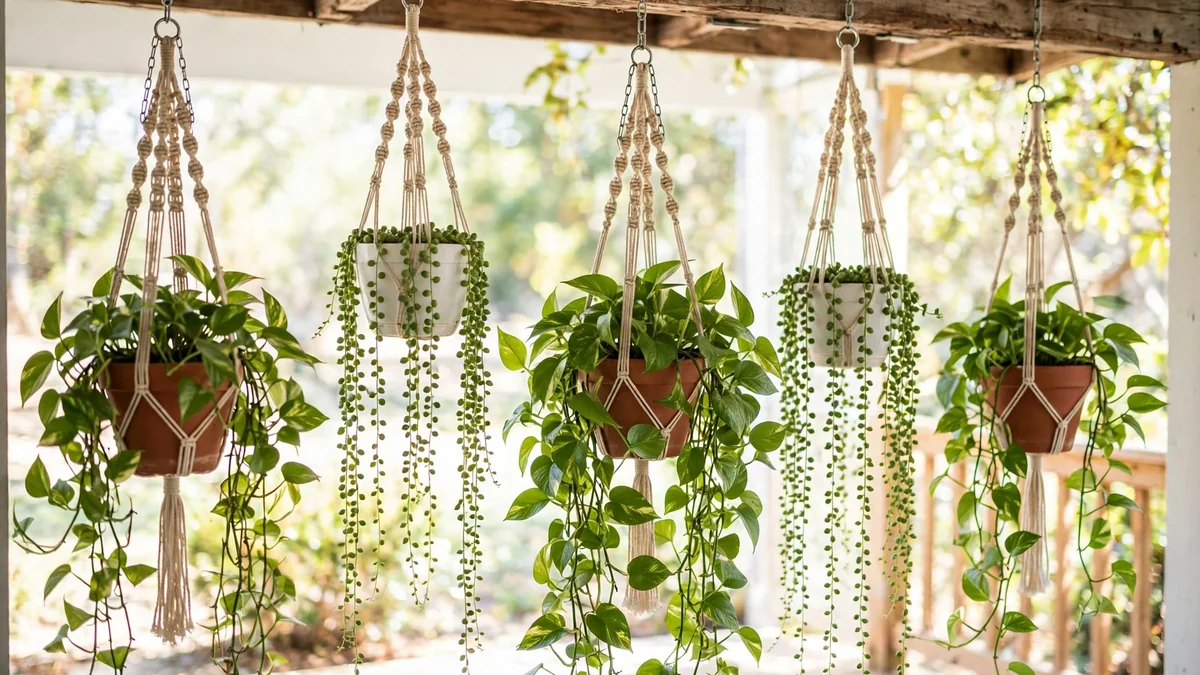
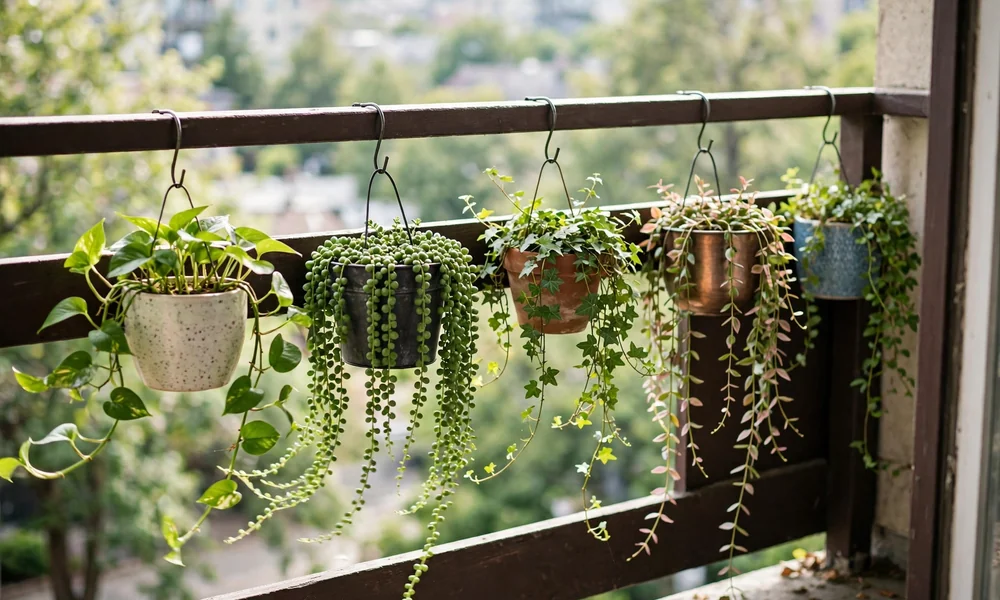
The best hanging planters for trailing plants in 2026 are the ones that hold a heavy, wet pot safely overhead, let water drain without dripping on the floor, and show off long vines instead of hiding them. The right hanging planter holds the pot steady and lets the vines spill over the rim, turning a bare corner into the best-looking spot in the room.
Choosing hanging planters is not about finding the prettiest basket in the shop. It is about matching the planter to the plant, the ceiling, and the way you actually water. A pothos that grows two metres in a year needs a different hanger from a slow string of pearls, and a plasterboard ceiling needs a different fixing from a solid beam. This guide compares the strongest options and explains what actually matters when you are buying.
Key Takeaways
- Macrame hangers are the best hanging planters overall in 2026, because they cradle almost any pot and suit trailing plants at very little cost.
- Check the weight limit first: a watered ceramic pot can weigh three times more than the same pot dry.
- Drainage comes before looks, because a hanging planter with nowhere for water to go will rot the roots and drip below.
- Hang trailing plants where the vines can fall freely, with at least a metre of clear drop below the pot.
- Water less often than you think, and let the planter drip in the sink before you hang it back up.
Hanging Planters for Trailing Plants in 2026 at a Glance
| Best for | Planter type | Weight limit | Standout strength |
|---|---|---|---|
| Best overall | Macrame cotton hanger | 5 to 8 kg | Fits almost any pot and shows off vines |
| Best for heavy pots | Metal chain hanger | 10 to 15 kg | Strong, simple, and never stretches |
| Best for small rooms | Ceramic hanging pot | 3 to 5 kg | Beautiful on its own, no extra hanger needed |
| Best for busy owners | Self-watering hanging planter | 5 to 7 kg | Reservoir keeps soil moist for weeks |
| Best on a budget | Simple rope hanger | 3 to 5 kg | Cheap, easy to fit, and easy to replace |
What a Hanging Planter Has to Do Well
A hanging planter has a harder job than a pot on a shelf. It must hold weight in the air, survive being lifted down and put back every time you water, and keep the plant healthy while the soil dries faster than it would at ground level, because air moves around a hanging pot on every side. Strength comes first: a pothos in a 20-centimetre ceramic pot can weigh five kilograms after watering. The hanger, the hook, and the ceiling fixing must all carry that weight with room to spare, so buy a hanger rated for at least double what you expect.
Drainage comes second, and it matters more overhead than on a table, where a pot can simply sit in a saucer. The best hanging planters either have a built-in reservoir that catches excess water, or they hold a nursery pot inside a decorative outer pot that you lift out to water. If your planter has no drainage at all, water very sparingly, because roots sitting in water rot just as fast overhead as anywhere else. Our guide to the best plant pots of 2026 covers drainage and pot sizes in detail, and the same rules apply once the pot is in the air.
Macrame Hangers: The Best Hanging Planters Overall
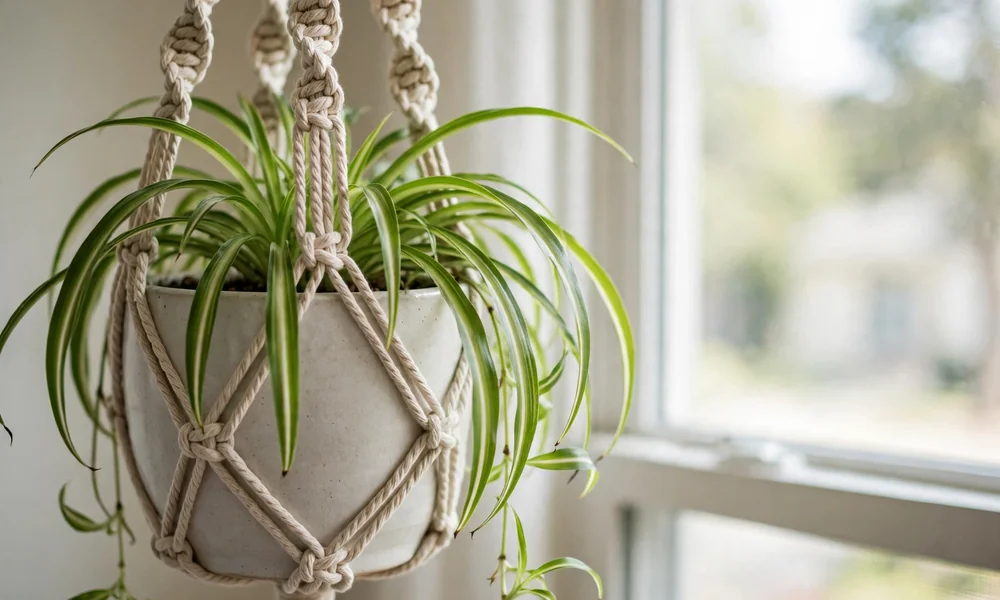
Macrame hangers are the best hanging planters for trailing plants in 2026 because they solve the most common problem: the pot you already own does not fit the hanger you want to buy. A macrame hanger is a net of knotted cotton cord that cradles the pot from below, so it fits round, square, ceramic, and plastic nursery pots with equal ease. Swap the plant and the whole display changes in a minute. It suits pothos, philodendron, spider plants, and string of hearts, and the open weave lets air reach the soil so it dries evenly. What to watch out for is stretching: cotton cord stretches when wet and under load, so a hanger that hangs perfectly in the shop can sit five centimetres lower after a month of watering. Buy one rated well above your pot’s weight, and replace it if the cords fray or the wooden ring cracks.
Metal Chain Hangers: The Best for Heavy Pots
Metal chain hangers are the best hanging planters for heavy pots, because a steel chain does not stretch, sag, or rot, and it carries weight that would defeat cotton or rope. A large trailing monstera, a mature philodendron in a ceramic pot, or a full hanging basket of ivy can weigh ten kilograms or more when watered, and that is the load that bends a cheap hook and snaps a thin cord. Chain hangers suit kitchens and porches, where steam, sun, and rain would age cotton quickly, and powder-coated steel resists rust for years. Check the links before you buy, because a chain is only as strong as its weakest link. Replace any thin hook with a proper carabiner, and fix the ceiling hook into a joist or a solid beam, not just plasterboard.
Ceramic Hanging Pots: The Best for Small Rooms
Ceramic hanging pots are the best hanging planters for small rooms, because they need no separate hanger at all: the pot itself hangs from three cords or a single chain attached to its rim, and the whole thing takes up no more space than the plant. A small ceramic pot with a trailing string of pearls or a baby spider plant turns a bare wall or a window corner into a feature without a shelf, a stand, or a square centimetre of floor. Glazed ceramic holds moisture longer than terracotta, which helps in a warm room where a hanging pot dries fast, and the glaze gives you colour. The catch is weight: ceramic is heavy, and a pot that falls will shatter, so keep ceramic hangers over surfaces that are easy to clean. Always check for a drainage hole, and if a pot you love has none, use it as an outer cover with a nursery pot inside.
Self-Watering Hanging Planters: The Best for Busy Owners
Self-watering hanging planters are the best hanging planters for busy people and frequent travellers, because they solve the one problem every hanging plant has: the soil dries out faster in the air than it does on a shelf. A self-watering planter has a water reservoir at the bottom and a wick that lets the soil draw up moisture as it needs it, so the plant waters itself for one to three weeks depending on the size of the pot and the thirst of the plant. Fill the reservoir and check the water level once a week. Empty and rinse it every month or two, because stale water breeds algae.
How to Hang a Planter Safely
Hanging a planter safely is a small job that deserves real care, because the only thing worse than a plant falling is a plant falling on someone. Start with the ceiling, not the planter. A solid wooden beam or a ceiling joist will hold far more than any hanger you buy, while plasterboard on its own will hold almost nothing. Find the joist with a stud finder, and fix a proper ceiling hook or an eye bolt into it. If you cannot find a joist, use a heavy-duty plasterboard fixing rated for the weight, or a wall bracket or freestanding stand instead. Our guide to the best plant stands of 2026 covers stands that lift trailing plants without a hole in the ceiling, the safer choice in a rented home.
Hang the planter so the top of the pot sits at or just above eye level, with at least a metre of clear drop below it. A planter hung too high is impossible to water without a ladder, and one hung too low becomes a hazard for foreheads. Keep it away from radiators and exterior doors: hot, dry air crisps leaf tips within days, and cold draughts shock tropical plants. A spot near a bright window but out of direct midday sun suits most trailing plants.
Watering Hanging Plants Without the Mess
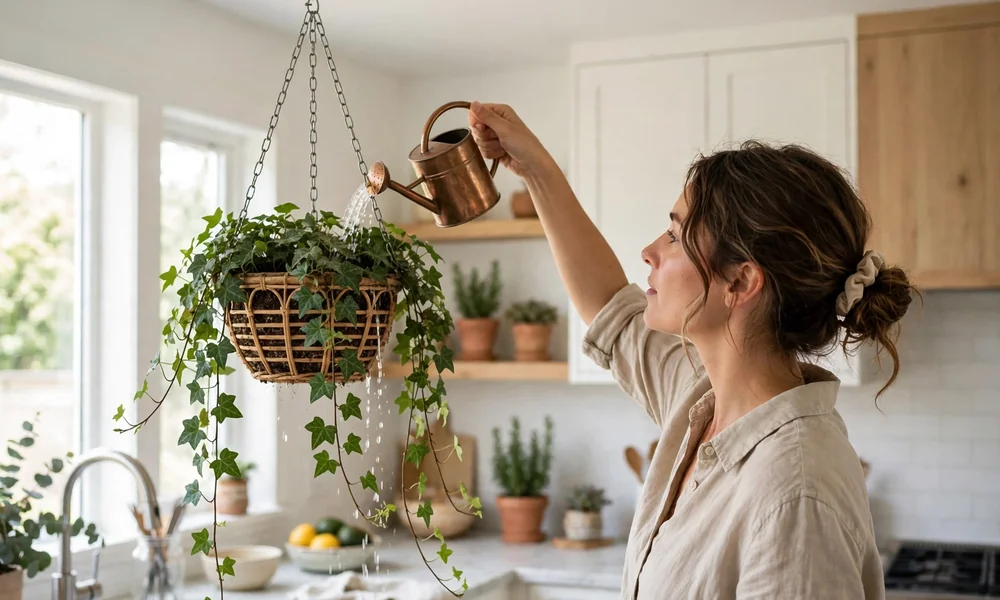
Watering is where most hanging planters fail, and the fix is simple: take the planter down to water it. Lift it off its hook, set it in the sink or the bath, water slowly until water runs from the drainage holes, and let it drip for ten minutes before you hang it back up. That one habit prevents almost every drip and stain, and lets you check the plant at eye level for yellow leaves and pests. How often you water depends on the plant, the pot, and the room, not on a schedule. If the top three centimetres of soil are dry, water; if they are damp, wait. In winter, most trailing plants need half as much water as in summer. Feed lightly while the plant is growing: a weak liquid feed once a month from spring to early autumn is enough.
Checklist: Before You Hang a Trailing Plant
- Weigh the watered pot, then buy a hanger and a hook rated for at least double that weight.
- Fix the hook into a joist or a solid beam, never into bare plasterboard.
- Check for drainage, and plan where the water goes: a reservoir, an inner pot, or the sink.
- Leave at least a metre of clear drop below the pot so the vines can trail freely.
- Put the planter near bright, indirect light and away from radiators and draughts.
- Water in the sink, let it drip for ten minutes, and only then hang it back up.
Frequently Asked Questions
How much weight can a hanging planter hold?
A cotton macrame hanger usually holds 5 to 8 kilograms, a metal chain hanger 10 to 15 kilograms, and a ceiling hook fixed into a joist far more. Always weigh the pot after watering, because wet soil is far heavier than dry soil.
Do hanging planters need drainage holes?
Yes. Without drainage, water collects at the bottom and rots the roots. If your favourite pot has no hole, use it as an outer cover with a nursery pot inside.
What is the easiest trailing plant for a hanging planter?
Pothos is the easiest trailing plant for most homes. It grows in low light, tolerates missed waterings, and trails quickly. Spider plants are a close second and are the safest choice around pets and children.
How often should I water a hanging plant?
Check the soil, not the calendar. Push your finger three centimetres in: if it is dry, water; if it is damp, wait.
Can I hang a planter from a plasterboard ceiling?
Only with a heavy-duty plasterboard fixing rated for the weight, and only for light pots. A standard hook will pull out. The safe choice is a joist, a wall bracket, or a tall plant stand.
Why are my trailing plant’s vines bare at the top?
Bare vines usually mean too little light or a plant that needs pruning. Move it closer to a bright window and cut the longest vines back by a third in spring.
The Bottom Line
The best hanging planters for trailing plants in 2026 are strong, well-drained, and honest about the weight they carry. Start with a macrame hanger for most plants, a metal chain hanger for heavy pots, and a self-watering planter for the plant you water least reliably. Fix the hook into something solid, water in the sink, and give the vines room to fall. For larger outdoor containers, our guide to the best planters of 2026 covers size, drainage, and material. Do that, and a trailing plant will turn an empty corner into the greenest, calmest spot in your home, one vine at a time.