The worst fashion trends that never worked all share the same story: a bold idea, a loud launch, and a quiet disappearance. They looked exciting on a runway or in a celebrity photo, but the moment ordinary people tried to wear them to work or dinner, the problems showed up fast. A trend can survive being unusual. It cannot survive being uncomfortable or impractical.
This guide looks at the fashion trends that failed hardest, not because they were ugly, but because they ignored how real people live, move, sit, and dress. From jeans that refused to stay up to bags too small for a phone, these are the ideas the fashion world pushed and the public rejected.
None of these trends failed overnight. Most had a season or two of hype, fuelled by runway photos and fast-fashion copies. Then the returns piled up, the resale pages filled with barely worn pieces, and the trend vanished.
Key takeaways
- The worst fashion trends failed because they were uncomfortable, impractical, or impossible to style with normal clothes.
- Extreme fits like ultra-low-rise jeans and giant shoulder pads fought the human body instead of flattering it.
- Gimmick pieces such as clear plastic clothing and micro bags looked fun in photos and failed in real life.
- Trends pushed by hype alone, without comfort or versatility, usually disappear within a single season.
- Classic, well-fitting pieces outlast every trend, so invest in fit and quality before chasing novelty.
Why Some Trends Fail Before They Even Start
A fashion trend needs more than attention to survive. It needs to work on different bodies, in different weather, and in the ordinary moments of a day. The trends that fail fastest are designed for a photograph rather than a person. They look striking in a single image and fall apart the moment someone has to sit down, walk upstairs, or carry a bag.
Comfort is the first test, and it is the one most failed trends skip. If trousers dig in when you sit, if shoes make every step a negotiation, or if a jacket restricts your arms, you will stop wearing it.
The second test is versatility. A good piece works with at least three things you already own. A failed trend usually works with nothing: it demands a specific shoe, a specific top, and a specific occasion, and the moment one element is missing, the whole outfit collapses.
Fit Disasters: Trends That Fought the Human Body
The most memorable fashion failures are the ones that got the fit wrong. Fit is the foundation of style, and when a trend ignores it, no marketing can save the result. These trends asked wearers to reshape their bodies and comfort to suit the clothes, instead of the other way around.
Ultra-Low-Rise Jeans
Ultra-low-rise jeans sat so low on the hips that sitting down became a public event. They needed constant adjustment and underwear chosen specifically to be seen. For most people they were uncomfortable within minutes. Mid-rise and high-rise cuts returned because they work better: they stay in place and let you move.
Shoulder Pads the Size of Small Aircraft
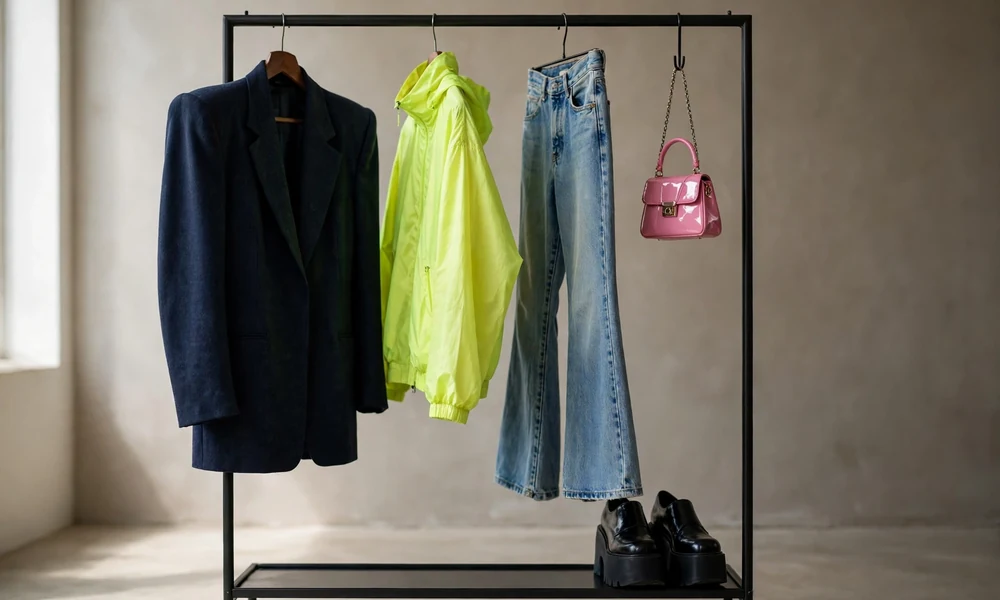
Moderate shoulder structure can sharpen a jacket beautifully. The failed version took it to an extreme, with pads so wide they changed the wearer’s silhouette into a triangle. Jackets became heavy, coats would not fit over them, and the look overwhelmed everyone except the tallest frames.
Micro Bags That Hold Nothing
The micro bag was sold as a joke that became a trend: a handbag so small it could barely hold a single key. It looked charming in a photo and useless everywhere else. A bag that cannot carry a phone, a card, and a key fails at its basic job. Wearers ended up carrying a second, normal bag alongside it, which defeated the entire point.
Trends That Were Impossible to Actually Wear
Some trends failed not because of fit but because they ignored daily life: rain, heat, sitting, walking, and eating. A garment that only works indoors, in perfect weather, on a flat surface, is not a garment. It is a costume, and costumes have a short shelf life outside the theatre.
Clear Plastic Clothing
Clear plastic jackets, trousers, and shoes promised a futuristic look and delivered a greenhouse. Plastic does not breathe, so the wearer sweated within minutes. It fogged up, stuck to the skin, and creased in ways that looked cheap. Rain made it slippery, sun made it hot, and every scratch showed.
Extreme Platform Shoes
Platforms have a long and respectable history, but the extreme versions of recent years pushed height to a point where walking became a skill. Soles several inches thick turned every kerb into a hazard. Ankles twisted, feet ached, and the shoes were too heavy for a full day. A modest platform adds height without drama; the extreme version added risk without reward.
Neon Everything
A flash of neon can lift an outfit. A full neon outfit, from jacket to trousers to shoes, is a different matter. Head-to-toe neon is hard to wear, hard to match, and impossible to ignore, which means it works for about one outing before it feels like a uniform.
Jeans With More Holes Than Denim
Distressed denim has its place, but the extreme version left so little fabric that the jeans barely qualified as clothing. Knees, thighs, and entire panels were missing, which made the jeans cold, fragile, and impossible to wear anywhere that required looking put together. The holes also grew with every wash.
Gimmicks That Aged in Weeks
The fastest failures are the gimmicks: trends built on a joke, a logo, or a single viral moment. They arrive with enormous noise and leave with barely a trace, because there was never a real idea underneath. A gimmick can sell out a first run and still be a failure, because nobody comes back for a second one.
Logomania is the classic example. A small logo can signal quality; a garment covered in logos from collar to hem signals something else entirely. The look depended entirely on the brand name doing the work, and the moment the logo fell out of favour, the garment had nothing left. Novelty prints followed the same path: slogan tops and meme prints were funny for a week, then embarrassing. Gimmicks treat the wearer as an advertisement rather than someone expressing their own taste. The same pattern shows up beyond clothing, and the worst tech trends that aged badly prove that hype without usefulness fails in every industry.
The Worst Offenders at a Glance
The table below sums up the biggest failures, why they failed, and what works better instead. Every failed trend sacrificed comfort, versatility, or longevity for a moment of attention.
| Trend | Why it failed | What works instead |
|---|---|---|
| Ultra-low-rise jeans | Uncomfortable, constantly slipping, flattering almost nobody | Mid-rise or high-rise jeans in a straight or relaxed cut |
| Giant shoulder pads | Overwhelmed the frame, dated instantly, heavy to wear | A softly structured blazer with a natural shoulder |
| Micro bags | Too small to hold a phone, cards, or keys | A compact crossbody that fits daily essentials |
| Clear plastic clothing | Hot, sticky, fogged up, and easily scratched | A lightweight waterproof jacket in a breathable fabric |
| Extreme platform shoes | Heavy, unstable, and painful over a full day | A modest platform or a well-made block heel |
| Head-to-toe neon | Impossible to match, overwhelming, dated fast | One neon accent against neutral colours |
| Heavily ripped jeans | Cold, fragile, and unsuitable for most occasions | Clean dark denim with at most a subtle distressed detail |
| Logomania | The brand did all the work, so the piece aged with the logo | Well-made pieces with no visible branding |
How to Spot a Doomed Trend Early
The good news is that failed trends follow a predictable pattern. Start with the sitting test: sit down, cross your legs, and reach for something on a high shelf. If the garment fights you in the fitting room, it will fight you every day. Then try the three-outfit test: can you style the piece three different ways with clothes you already own?
It also helps to look at who is promoting the trend and why. When a trend is pushed mainly through sponsored posts and runway spectacle, with little sign of ordinary people wearing it in ordinary places, be cautious. Real trends spread because they solve a problem or feel good to wear. The culture of hype around fashion is why unwearable ideas get loud launches.
Checklist: Before You Buy Into a Trend
- Can you sit, walk, and climb stairs comfortably in it for a full day?
- Does it work with at least three items you already own?
- Would you still wear it if the brand logo or slogan were removed?
- Can you picture yourself wearing it two years from now without cringing?
- Is it comfortable in real weather, not just in a photograph?
- Does it flatter your body, or does it ask your body to change for it?
What to Wear Instead
The alternative to chasing failed trends is not to stop having fun with fashion. It is to spend the money on pieces that earn their place. A well-fitting blazer, dark straight-leg jeans, a quality white shirt, a simple leather bag, and comfortable shoes you can walk in all day will outlast any season.
Fit deserves the biggest share of your attention and budget. A modestly priced garment that fits perfectly looks better than an expensive one that does not. Neutral foundations with one or two accent colours give you far more outfits than a wardrobe full of clashing statement pieces. The same rule applies at home, where home design trends that date fast show how quickly a bold choice can turn into a regret when it ignores how people actually live in a space.
Frequently Asked Questions
What is the worst fashion trend of all time?
Ultra-low-rise jeans are a strong candidate, because they were uncomfortable, impractical, and flattering to almost nobody. Clear plastic clothing and micro bags are close behind: plastic clothes were unbearable to wear, and micro bags could not carry daily essentials.
Why do bad fashion trends become popular at all?
Bad trends become popular because they photograph well, generate headlines, and get pushed by celebrities, influencers, and fast-fashion brands at the same time. The hype creates urgency, and by the time most people discover the practical problems, the trend has already sold through.
Do failed fashion trends ever come back?
Yes, often in a softer form. Low-rise jeans returned with a slightly higher rise, shoulder pads came back smaller, and platforms returned at a walkable height.
How can I tell if a trend will last?
Ask whether it is comfortable, versatile, and flattering on more than one body type. Trends that pass all three tests have a chance of lasting. Trends that fail even one of them, especially comfort, usually disappear within a season or two.
Is it wrong to wear a trend that other people call the worst?
No. Personal taste matters, and if you genuinely love a piece and feel good wearing it, that is what counts. The point of knowing which trends failed is to avoid spending money on pieces you will regret, not to judge what other people enjoy wearing.
What should I do with clothes from a failed trend that I already own?
Keep anything you still enjoy wearing and feel good in. Try restyling first: a neon jacket can become an accent piece, and ripped jeans can retire to casual weekends. Donate or resell pieces you never wear, and remember the lesson before buying into the next hyped trend.
The Bottom Line
The worst fashion trends that never worked failed for the same reasons: they were uncomfortable, impractical, or built on hype instead of usefulness. Ultra-low-rise jeans, giant shoulder pads, micro bags, clear plastic, extreme platforms, head-to-toe neon, heavily ripped denim, and logomania all looked exciting for a moment and fell apart in real life. Choose fit over novelty and comfort over spectacle.