The best home office chairs in 2026 do far more than look good beside a desk. They support your lower back through long working days, keep your shoulders relaxed, and let you shift position without thinking about it. A good chair quietly disappears into your working day, while a poor one makes itself known within the first hour.
That difference matters more than ever, because so many of us now work from home for most of the week. The dining chair that was fine for an occasional afternoon quickly becomes a source of stiffness and tired shoulders when it has to carry you through eight hours a day. Choosing well is about matching the chair to your body, your desk and the way you actually work.
This guide compares the best home office chairs of 2026 across the things that genuinely affect comfort: lumbar support, seat depth, armrest adjustment, materials and build quality.
Key takeaways
- Adjustable lumbar support is the single most important feature in the best home office chairs of 2026.
- Seat depth matters as much as seat height, especially if you are taller or shorter than average.
- Mesh backs keep you cool during long sessions, while padded seats suit people who prefer a softer sit.
- Four-way adjustable armrests prevent shoulder strain far better than fixed arms.
- Try the chair at your real desk height before deciding, and give it a full working week to settle in.
At a Glance: The Top Picks
The table below summarises the seven chairs that stood out in 2026.
| Chair | Best For | Back Support | Seat | Price Range |
|---|---|---|---|---|
| ErgoMesh Pro | Best overall | Dynamic lumbar | Mesh, depth adjustable | Mid to high |
| BackRelief Elite | Back pain | Height-adjustable lumbar | Contoured foam | High |
| Atlas Executive | Premium comfort | Built-in lumbar curve | Thick padded leather | Premium |
| Compact Sit Slim | Small spaces | Flexible mesh back | Slim padded seat | Mid |
| ValueRest 200 | Budget buyers | Fixed lumbar pad | Fabric, firm foam | Low |
| Heritage Leather Chair | Classic offices | Gentle lumbar curve | Deep leather seat | High |
| LongDay Task Chair | Very long hours | Full-length back | Waterfall foam seat | Mid to high |
What Makes a Great Home Office Chair in 2026
A great chair is a system, not a single feature. The backrest, seat, armrests and base all work together, and a weakness in any one of them can undo the strengths of the rest. Start with fit: your feet should rest flat on the floor and your knees should sit at roughly a right angle.
Lumbar Support That Actually Works
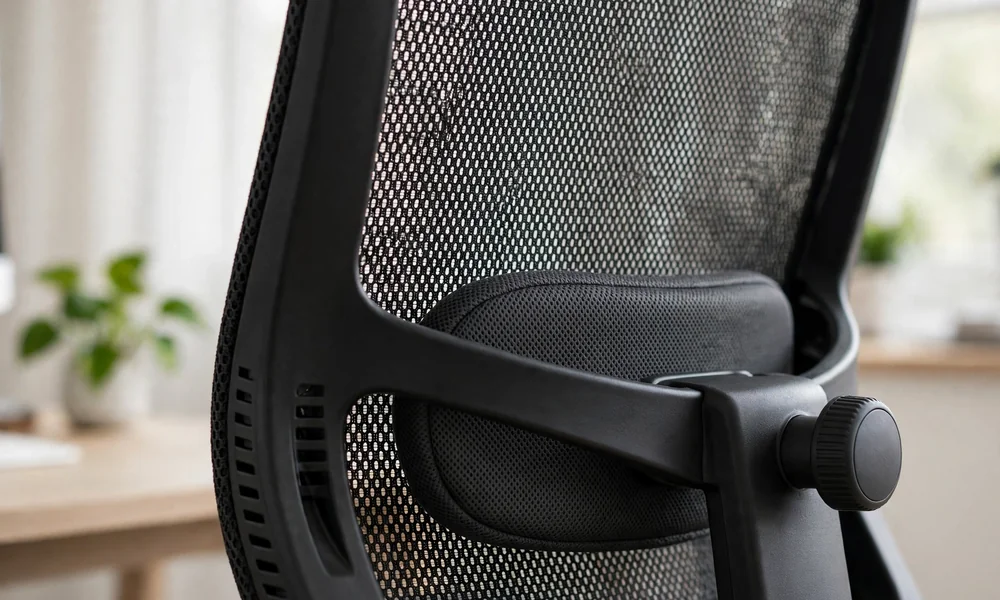
Lumbar support is the curve or pad that fills the natural hollow of your lower back. Without it, your spine rounds forward, your core muscles tire, and discomfort builds through the afternoon. The best chairs let you move the lumbar support up and down, and change how firmly it presses against your back. The contrast is stark when you compare them with the worst home office chairs for comfort, where flat backs and token padding leave your lower back entirely unsupported.
Seat Depth and Seat Height
Seat depth is the distance from the front edge of the seat to the backrest, and it is one of the most overlooked measurements in chair buying. If the seat is too deep, the front edge presses into the backs of your knees. If it is too shallow, your thighs lose support. Look for a seat slider that lets you move the seat forward and back.
Armrests, Tilt and Movement
Armrests should support your forearms without pushing your shoulders up towards your ears. Four-way adjustable armrests, which move up and down, forward and back, in and out, and pivot slightly, let you position them exactly where your arms naturally fall. Tilt matters too. A chair that lets you recline slightly, with a tension control that matches your weight, encourages small movements through the day.
Materials: Mesh, Fabric or Leather
Mesh is the most popular choice in 2026, and for good reason. It breathes, so you stay cool during long sessions, and it flexes gently to follow the shape of your back. Fabric seats feel warmer and softer, and they suit cooler rooms and people who dislike the firm feel of mesh. Leather looks superb and wipes clean easily, yet it can feel warm in summer and needs conditioning to stay supple. For most home workers, a mesh back with a padded fabric seat is the most practical combination. Cheaper mesh can sag over time, so check the warranty on the backrest as well as the frame before you buy, and look for a mesh that feels taut and evenly tensioned when you press it.
The Best Home Office Chairs 2026: Our Picks
Each chair below earned its place for a clear reason. Prices vary by retailer, so treat the ranges in the table as a guide.
1. ErgoMesh Pro: Best Overall
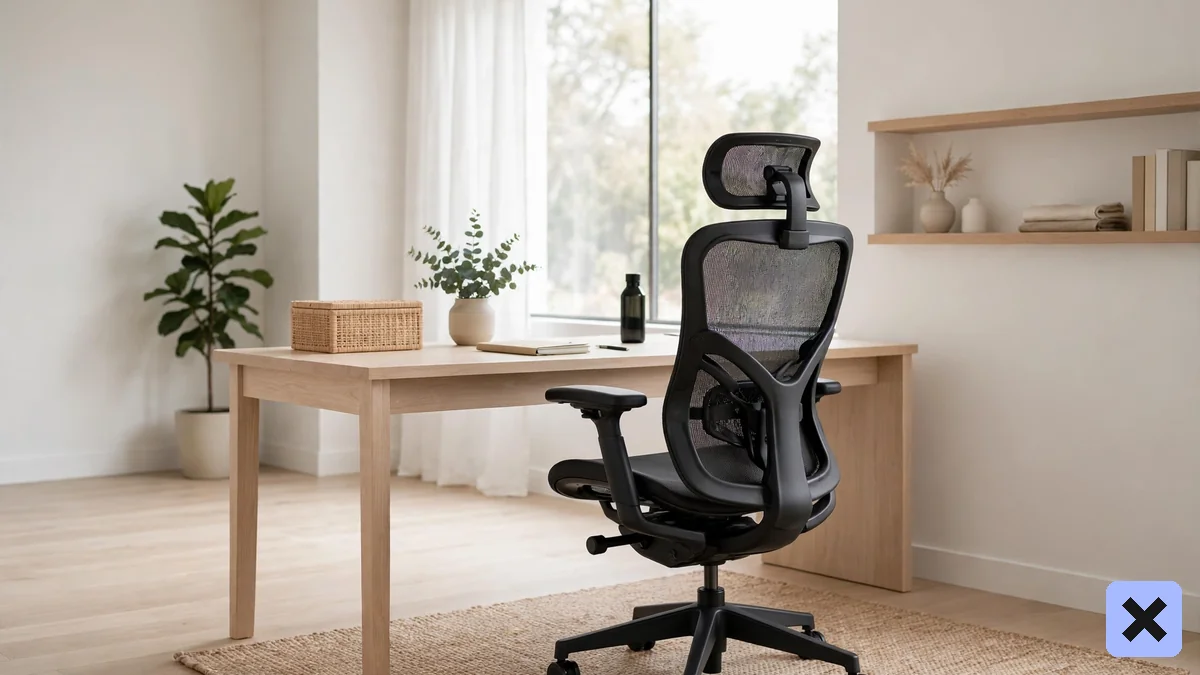
The ErgoMesh Pro is the chair we would recommend to most people. Its dynamic lumbar support moves with you as you lean, the seat depth adjusts across a generous range, and the four-way armrests are easy to set without tools. The mesh back stays cool through long afternoons, and the seat foam is firm enough to support you without feeling hard.
2. BackRelief Elite: Best for Back Pain
The BackRelief Elite is built around its height-adjustable lumbar system, which can be fine-tuned in small steps until it sits exactly in the hollow of your lower back. The contoured foam seat distributes weight evenly, and the backrest has a gentle S-curve that encourages a neutral spine.
3. Atlas Executive: Best Premium Pick
The Atlas Executive is the chair for a home office that doubles as a meeting room. Thick padded leather, a solid aluminium base and a quiet, smooth recline give it a sense of occasion that mesh chairs cannot match. The built-in lumbar curve is subtle but effective, and the seat is deep enough for taller users.
4. Compact Sit Slim: Best for Small Spaces
Small rooms punish bulky chairs. The Compact Sit Slim has a narrower seat, a slimmer backrest and a smaller footprint, yet it keeps the essentials: adjustable height, a flexible mesh back and armrests that fold back when you need to tuck the chair under a desk. It is the most practical pick for a spare bedroom or a shared living space.
5. ValueRest 200: Best Budget Chair
The ValueRest 200 proves that a tight budget does not have to mean a bad chair. Its fixed lumbar pad sits at a sensible height for most average-height users, the fabric seat is firm and supportive, and the height and tilt adjustments work smoothly. The armrests adjust for height only, which is the main compromise.
6. Heritage Leather Chair: Best Classic Office Chair
The Heritage Leather Chair is for people who want their home office to feel like a study rather than a tech start-up. Rich leather, brass-coloured fittings and a deep, generous seat give it a timeless look, and the gentle lumbar curve supports the lower back without feeling clinical.
7. LongDay Task Chair: Best for Very Long Hours
Some working days stretch well beyond eight hours, and the LongDay Task Chair is designed for exactly that. Its full-length backrest supports the shoulders as well as the lower back, the waterfall seat edge reduces pressure behind the knees, and the synchro-tilt mechanism keeps your feet on the floor as you recline.

How to Set Up Your Chair Properly
Even the best chair feels wrong if it is set up badly. Start by adjusting the seat height so your feet rest flat on the floor and your thighs are roughly level. Then slide the seat depth until you have a small gap behind your knees. Next, set the lumbar support to the hollow of your lower back, and adjust the armrests so your shoulders stay relaxed. The wider lesson applies to the whole room: home office setups that hurt focus usually fail on the basics, with poor lighting, a screen at the wrong height and a chair that was never adjusted at all. Stand up, stretch and walk around for a few minutes every hour.
Give yourself a proper trial. Sit in the chair for full working days, not just a few minutes, and adjust one setting at a time until the position feels natural. Note any stiffness in your neck, shoulders or lower back at the end of each day, because small niggles in the first week usually point to a setting that still needs changing rather than a chair that is wrong for you.
Mistakes to Avoid When Buying
The most common mistake is buying on looks alone. A chair can photograph beautifully and still be miserable to sit in for more than an hour. Always check the adjustment ranges, the lumbar system and the seat dimensions before you fall for the finish. Another mistake is choosing a chair that is too big for your desk, or ignoring the weight limit and the quality of the castors. A chair that is rated below your weight will wear out faster, and cheap castors can mark wooden floors and make the chair hard to move. Measure your desk height, the space under it and the width of the area where the chair will live. A home that is comfortable to live in is also a home that is comfortable to work in, and the quiet luxury of a home that works comes from getting these small, practical details right rather than chasing a single showpiece.
Buying Checklist
- Check the lumbar support moves up and down and changes firmness.
- Measure seat depth and height against your body and desk.
- Choose four-way adjustable armrests if you type for long periods.
- Pick mesh for coolness, fabric for warmth, leather for a classic look.
- Confirm the weight limit, warranty length and returns policy.
- Test the chair at your real desk for a full working week before deciding.
Frequently Asked Questions
How much should I spend on a home office chair?
Most people will be happy spending in the mid range, where adjustable lumbar support, seat depth adjustment and four-way armrests become standard.
Is a mesh back better than a padded back?
Mesh stays cooler and flexes with your back, which suits long sessions in warm rooms. A padded back feels softer and warmer, which suits cooler rooms and people who prefer a more cushioned sit.
Do I really need adjustable armrests?
If you type for several hours a day, yes. Armrests set at the wrong height push your shoulders up and create tension in your neck.
How long should a good office chair last?
A well-built chair should last at least five to eight years of daily use, and premium chairs often last longer.
Can an office chair help with back pain?
A good chair can reduce the strain that makes back pain worse, especially when it supports your lower back and lets you sit with a neutral spine. It is not a medical treatment, though, and persistent pain is worth discussing with a doctor.
What is the best chair for a small home office?
Look for a compact chair with a slim backrest, a smaller seat and armrests that fold away, such as the Compact Sit Slim in this guide.
The Bottom Line
The best home office chair in 2026 is the one that fits your body, suits your desk and supports you comfortably through a full working day. For most people that is the ErgoMesh Pro, with its adjustable lumbar support, flexible mesh back and sensible price. If back pain is your main concern, choose the BackRelief Elite. If space is tight, choose the Compact Sit Slim, and if your budget is tight, the ValueRest 200 will serve you well.