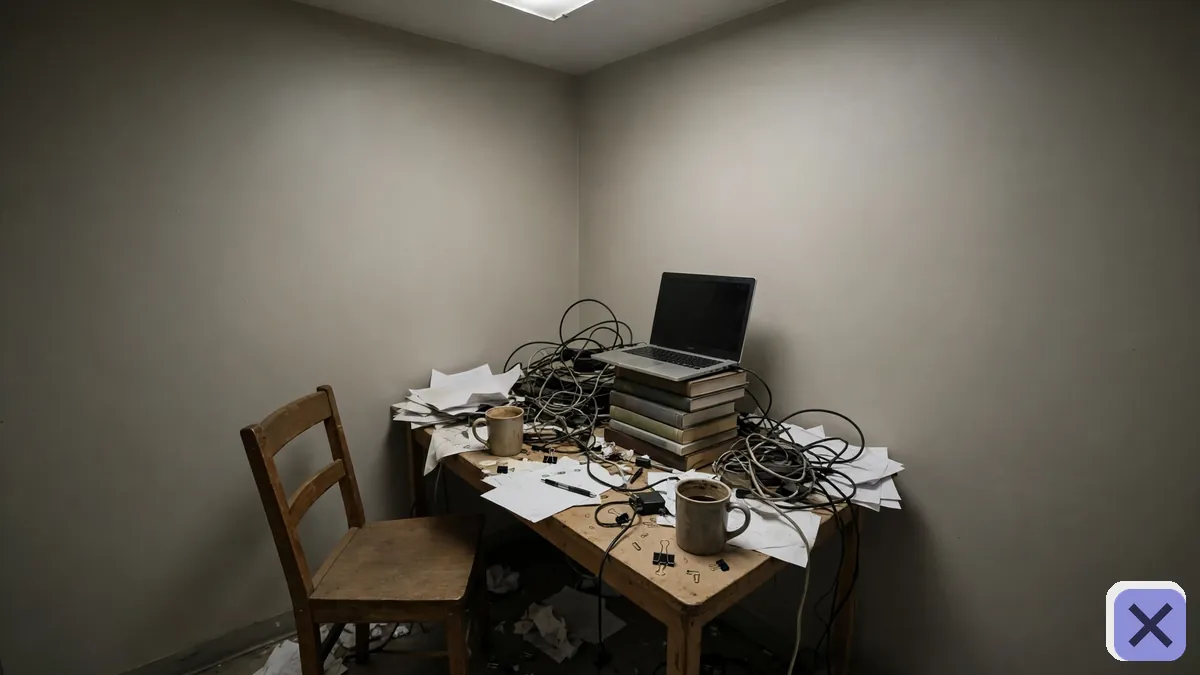
The worst home office setups for focus do not fail because of one big mistake. They fail because small ones pile up until concentrating feels like hard work. A dark corner, a painful chair, a screen at the wrong height, cables everywhere, and constant interruption all work against deep work.
That matters now that the office is often the living room, the spare bedroom, or a corner of the kitchen. The setup has to do the work that walls and doors used to do: signal when work starts, protect your attention, and support your body for hours. The worst home office setups for focus do the opposite. They blur work and rest, tire your eyes and back, and make every small distraction louder.
This guide covers the ten setups that cause the most trouble, why each one hurts focus, and what to change first. None needs a full renovation. Most need a better position, better light, a better chair, or less clutter in the wrong place.
Key takeaways
- Focus fails first at the desk: position, light, and seating shape attention more than motivation does.
- The worst setups share four flaws: poor light, an uncomfortable chair, visual clutter, and constant interruption.
- A desk facing a blank wall, a screen at the wrong height, and a shared noisy space are among the hardest to work in.
- Small fixes help fast: move the desk, raise the screen, clear the surface, and give every cable a home.
- Judge a setup by a full workday, not a photograph: if it drains you by mid-afternoon, it is failing.

Why a Bad Setup Hurts Focus So Much
A good workspace does two quiet jobs: it removes friction, so starting work feels easy, and it removes distraction, so staying with work feels possible. A bad setup reverses both, and starting work becomes the hardest part of the day.
Your Brain Reads the Room Before You Do
Attention is shaped by surroundings. A tidy, well-lit desk tells your brain this is a place for work. A desk covered in laundry and bills tells it this is a place for everything else. The worst setups mix those signals until the room has no clear purpose, and your attention follows the mess.
Discomfort Steals Attention in Small Doses
Pain does not need to be dramatic to damage focus. A chair with no back support creates a steady background ache. You adjust, fidget, stand up, and sit down again. Each adjustment is a tiny interruption, and together they break the long stretches of concentration that difficult work needs.
Light and Noise Set the Ceiling
Dim light tires your eyes and makes you sleepy, while harsh overhead light creates glare and headaches. Constant background noise forces your brain to filter sound all day, using energy you cannot spend on work. Control light and sound first, because everything else works better once those two are settled.
The 10 Worst Home Office Setups for Focus
Each setup below is common, easy to fall into, and fixable. If you recognise your desk in more than one, start with the fix that costs the least and helps the most.
1. The Desk Facing a Blank Wall
A desk pushed against a bare wall gives you nothing to look at except plaster, and it traps you in a small visual box. Your eyes have nowhere to rest, the light is usually behind you, and the room feels smaller than it is. Turn the desk to face the room, or place it near a window.
2. The Kitchen Table Office
The kitchen table never belongs to work alone. Meals, homework, and conversation all pass through the same surface, so you pack up and unpack every day while everyone who walks in has a reason to talk. If it is your only option, claim one end, keep your work in a single box, and set clear hours when the table is an office.
3. The Dark Corner Desk
A desk in the darkest corner, far from any window, is a recipe for afternoon fatigue. Your eyes strain, your posture collapses as you lean towards the screen, and the day feels longer. Move the desk close to a window, and add a bright desk lamp if you cannot.
4. The Dining Chair Office
A hard dining chair, a stool, or a sofa may be fine for an hour, but it is a poor chair for a working day. Without lumbar support or adjustable height, your back and shoulders carry the strain. A proper office chair is the best investment for focus, and it does not need to be expensive.
5. The Screen at the Wrong Height
A laptop flat on a desk forces you to look down all day, straining your neck and shoulders and narrowing your field of vision. Raise the screen so the top sits near eye level, use a separate keyboard and mouse, and keep the screen about an arm’s length away. Your neck will stop complaining, and your posture will stop pulling attention from the work.
6. The Cable Nest
Tangled chargers and cables draped across the desk make the space feel chaotic, and they turn every small change into a knot to untangle. Route cables behind the desk, use one power strip with short leads, label the chargers you use, and store the rest. A clear desk removes visual noise that competes with your work.
7. The Shared Noisy Room
Working in a room that doubles as a living room or playroom means your focus depends on everyone else’s schedule. Conversations and footsteps break concentration at random, and random interruptions are the hardest to recover from. Use noise-cancelling headphones, a room divider, and agreed quiet hours to create a boundary.
8. The Sofa or Bed Office
Working from the sofa or bed feels comfortable for ten minutes, and then the problems begin. Your posture collapses, the screen angle is wrong, and your brain starts to associate rest spaces with work. That cuts both ways: work feels sleepy, and sleep starts to feel like work. Keep the bed and sofa for rest, even if the desk is small.
9. The Overloaded Tech Desk
More screens, gadgets, and notifications do not mean more focus. A desk crowded with a second monitor you rarely use, a tablet, and a phone buzzing beside the keyboard is built for distraction. Strip it back to what the work needs, silence notifications during focus blocks, and remember that smart home devices that cause more problems than they solve belong outside the workspace, not on it.
10. The Showroom Desk
Some home offices look perfect in a photograph and fail completely in use: a glass desk with nowhere to rest your arms, a designer chair chosen for looks, and shelves full of ornaments instead of storage. This is the same trap as hotel rooms that look beautiful but fail at real living — style without function.
What the Worst Setups Have in Common
The worst setups are rarely the cheapest or the smallest. They are the ones where the room works against the person using it. The table below compares the four flaws that appear again and again.
| Flaw | What it looks like | What it costs you | First fix |
|---|---|---|---|
| Poor light | Dark corner, glare, no window | Eye strain and afternoon fatigue | Move near a window, add a desk lamp |
| Bad seating | Dining chair, sofa, no back support | Back pain and constant fidgeting | Adjustable chair with lumbar support |
| Visual clutter | Cables, papers, gadgets everywhere | Distraction and slow starts | Clear the desk, give everything a home |
| No boundary | Shared room, noise, interruptions | Broken concentration, lost time | Headphones, hours, and a clear signal |
Fix the worst flaw first. If your chair hurts, fix the chair. If your room is dark, fix the light. If interruptions are the problem, fix the boundary. Work through the list in order of pain, not cost.
How to Fix a Bad Home Office Without Starting Over
You do not need a new room or desk to fix most of these problems. Watch yourself work for a day and note where focus breaks: your back, your eyes, the noise, or the mess. Move the desk before you buy anything new, because position is free and it changes light, view, and noise all at once.
Next, clear the desk completely and put back only what you use every day: a laptop or monitor, a keyboard, a mouse, a lamp, a notebook, and a glass of water. A clear surface makes starting work easier, and starting is the hardest part of a focused day. A home that supports the way you actually live is worth more than any single purchase, and the quiet luxury of a home that works is felt in small details like a chair at the right height and a desk in the right light.
Finally, protect the setup once it works. Keep the cables tidy, keep the chair adjusted, and keep the boundary with the rest of the household. Ten minutes of tidying at the end of the day saves thirty minutes of friction the next morning.
Home Office Focus Checklist
Every box you cannot tick is a focus leak worth fixing.
- Your screen top sits near eye level and about an arm’s length away.
- Your chair supports your lower back and lets your feet rest flat on the floor.
- You have natural light or a bright, even desk lamp with no glare on the screen.
- Your desk surface is clear except for the tools you use every day.
- Cables are routed out of sight and every charger has a fixed place.
- People in your home know when you are working and when you are free.
Frequently Asked Questions
What is the worst home office setup for focus?
A desk in a dark, noisy, shared space with an uncomfortable chair and a screen at the wrong height. It combines poor light, bad seating, clutter, and constant interruption, so focus fails on several fronts at once.
Does facing a wall really hurt focus?
Yes, for most people. Facing a blank wall narrows your view and makes the space feel cramped. Facing the room or a window gives your eyes somewhere to rest. If you must face a wall, add a picture or a plant.
Is working from the kitchen table really that bad?
It can work for short sessions, but it is poor for a full working day. The table is shared, the space is noisy, and you must pack everything away each evening. If it is your only option, claim a fixed spot and agree on quiet hours.
How much light does a home office need?
As much natural light as you can get, plus a desk lamp for dull days and evenings. The lamp should light the desk evenly without shining into your eyes or reflecting on the screen. Avoid working in a dim room lit only by the screen.
Do I need an expensive chair to focus well?
No, but you need a chair that fits you. It should support your lower back, adjust so your feet rest flat, and let you sit upright without effort. Many mid-priced chairs do this well. A dining chair or sofa cannot, however comfortable it feels at first.
What is the quickest fix for a bad home office?
Move the desk and clear it. Position changes light, view, and noise for free, and a clear surface removes visual distraction at once. Raise the screen to eye level next, then fix the chair.
The Bottom Line
The worst home office setups for focus are not failures of discipline. They are rooms that make focus harder than it needs to be. Fix the position, the light, and the chair first, clear the desk, and protect the boundary around your working hours. The same work, in the same room, will feel noticeably easier.