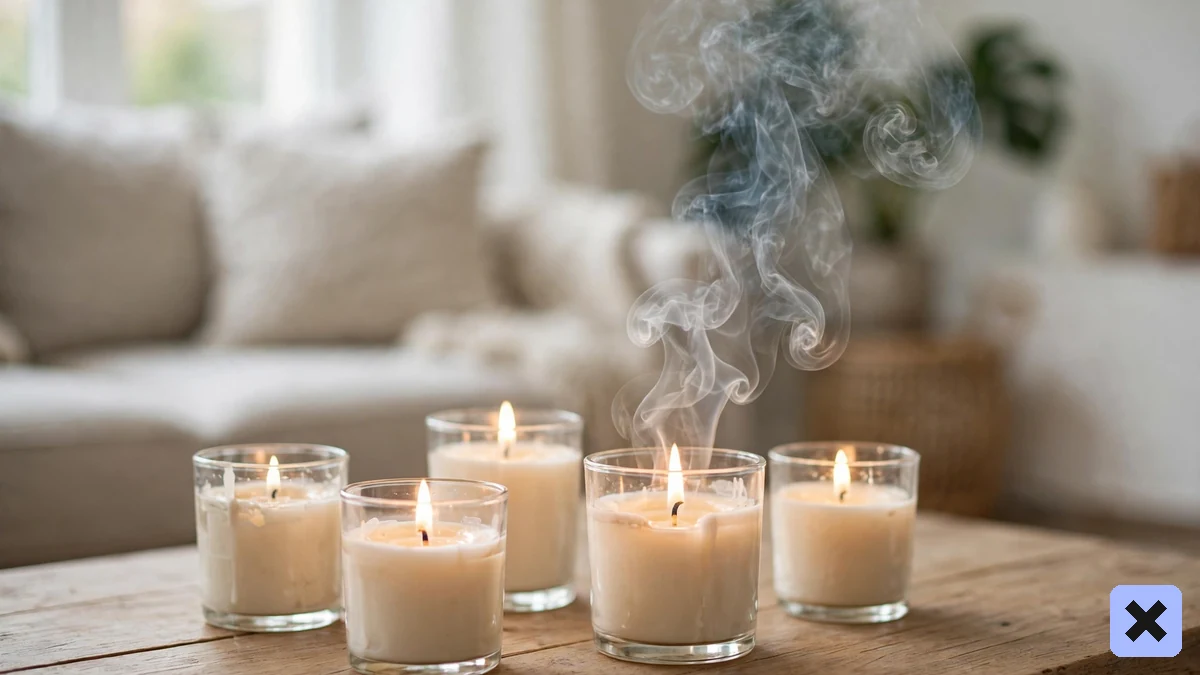
The worst candle scents for your home are the ones that take over the room before you have even sat down. A candle should make a living room feel warm and welcoming, not fill it with a heavy cloud that gives you a headache, makes the air feel stale, or leaves a strange smell on cushions and curtains long after the flame is out.
Many of the worst offenders look harmless on the shelf. The label promises fresh linen, warm vanilla, or a cosy winter spice, but the scent inside the jar is far stronger, sweeter, or more artificial than the name suggests. In a small room, with the windows closed, that difference matters.
Choosing well is not about avoiding candles altogether. It is about knowing which scent families tend to overwhelm a home, which ones clash with cooking and everyday living, and how to test a candle before you commit to burning it for hours.
Key takeaways
- Heavy floral, fake food, and strong musk scents are the most common reasons a candle feels overwhelming at home.
- Synthetic fresh, linen, and ocean scents often smell more like cleaning spray than a clean home.
- Sweet and spicy scents linger on soft furnishings, so a bad choice can outlast the burn by hours.
- Room size, ventilation, and burn time matter as much as the scent itself.
- A short cold sniff and a one-hour test burn will tell you more than any label.
Why Some Candle Scents Go Wrong at Home
A candle scent is not just a smell. It fills the air, settles on fabric, and changes how a room feels. The worst candle scents for your home usually fail for one of three reasons: they are too strong, they are too sweet, or they smell artificial. Many bad candles combine all three.
Strength is the first problem. Candle makers often design scents to be noticed quickly in a shop, where dozens of jars compete for attention. At home, that same strength has nowhere to go. In a bedroom or a small living room, a powerful scent can feel like walking into a perfume counter, irritate eyes and throats, and make it hard to relax or sleep.
Room Size, Airflow, and Burn Time Matter
A scent that works in a large, open-plan living area can be unbearable in a small bedroom or a bathroom with no window. The same candle will smell stronger when the door is closed, the heating is on, and the air is still. Burning a strong candle for four hours is also very different from lighting it for thirty minutes before guests arrive.
That is why testing matters more than trusting a label. A candle that smells soft when you lift the lid in a shop can become intense once the wax pool warms. Look for candles described as light, subtle, or balanced rather than intense or bold, and give every new candle a short trial first. A thoughtful approach to scent is part of creating a calm and quiet home, where light, sound, and smell work together instead of competing.
The Worst Candle Scents for Your Home
The scents below are the ones most likely to disappoint at home. They are not bad in every form, and a lighter version of some of them can work, but in a standard scented candle they are the usual suspects. If a candle on your shelf matches one of these descriptions, burn it for a short time first, in a large room, with a window open.
1. Overpowering Floral Scents
Heavy jasmine, gardenia, tuberose, and lily candles are among the worst candle scents for your home when they are made too strong. Real flowers are delicate, but floral candles are often built around a single sharp note that fills the room in minutes. The scent can feel powdery, soapy, and almost medicinal, and it tends to linger on bedding, towels, and clothes.
2. Fake Food and Dessert Scents
Cupcake, birthday cake, caramel popcorn, and chocolate fudge candles sound fun, but they are some of the worst candle scents for your home for everyday use. They rarely smell like real food. Instead, they smell like sweet flavouring: sugary, sticky, and slightly chemical. After an hour, that sweetness can feel sickly, especially in a warm room.
3. Heavy Musk and Patchouli
Musk and patchouli are warm, earthy scents that many people love in small amounts, but in a candle they can quickly become too much. A strong musk candle can smell dusty and old-fashioned, while a heavy patchouli candle can smell oily and overpowering. Both scents cling to soft furnishings, so the smell can remain long after the candle is blown out.
4. Synthetic Fresh, Linen, and Ocean Scents
Fresh linen, clean cotton, ocean breeze, and sea salt sound like safe choices, but many of them are among the worst candle scents for your home because they smell synthetic rather than fresh. Instead of a clean room, they can smell like laundry detergent, air freshener, or cleaning spray. The sharp, chemical edge is often more noticeable once the candle has been burning for a while.
5. Strong Spice and Cinnamon Scents
Cinnamon, clove, nutmeg, and pumpkin spice candles are popular in autumn and winter, but they are easy to get wrong. A strong spice candle can smell less like a warm kitchen and more like a potpourri sachet left in a drawer for a year. The scent is sharp, dry, and dusty, and it can irritate the nose and throat when burned for a long time.
6. Smoky, Campfire, and Tobacco Scents
Smoky candles are meant to feel rustic and warm, but many of them smell more like a bonfire that has just been put out. A strong campfire, tobacco leaf, or smoked wood candle can leave a stale, ashy smell that is hard to clear. In a home without a fireplace, that smell can feel out of place, as if something is burning when it should not be.
How the Wrong Scent Changes a Room
A bad candle does more than smell unpleasant. It changes how a room feels to use. A living room that should be a place to read, talk, and relax can start to feel like a shop display. A bedroom that should help you wind down can keep you awake because the scent is too strong to ignore. Guests may notice the smell before they notice anything else about your home. See our guide to the worst lighting mistakes in a room.
What to Burn Instead
The best candle scents for your home are usually the simplest ones. A light citrus scent, such as bergamot, grapefruit, or soft lemon, can make a room feel bright without being sweet or heavy. A gentle herbal scent, such as rosemary, sage, or light eucalyptus, can feel clean without smelling like a cleaning product. A soft woody scent, such as cedar or sandalwood, can add warmth without the heaviness of musk or patchouli.
At a Glance: Worst Scents and Better Alternatives
Use this table as a quick check before you buy. If a candle matches the left-hand column, look for the alternative on the right instead.
| Worst scent | Why it fails at home | Better alternative |
|---|---|---|
| Heavy jasmine or gardenia | Sharp, powdery, and hard to clear from fabric | Light rose with green notes |
| Cupcake or caramel | Overly sweet, sticky, and sickly after an hour | Soft vanilla with cedar |
| Strong musk or patchouli | Oily and lingering on curtains and sofas | Light sandalwood |
| Synthetic linen or ocean | Smells like detergent or air freshener | Fresh air and a light herbal candle |
| Heavy cinnamon or clove | Sharp, dry, and overpowering in small rooms | Orange with a light spice note |
| Smoky campfire or tobacco | Stale, ashy, and hard to pair with other smells | Clean cedar or soft pine |
How to Test a Candle Before You Commit
You do not need to be a scent expert to avoid a bad candle. A simple test will tell you most of what you need to know. Buy one candle at a time, test it properly, and only then decide whether it deserves a place in your home.
Your Candle Checklist
- Smell the unlit candle first: if it is strong with the lid off, it will be stronger when lit.
- Burn it for one hour in a large room with a window slightly open.
- Leave the room for ten minutes, then walk back in and notice the scent afresh.
- Check whether the scent has settled on cushions, curtains, or bedding.
- Notice how you feel after an hour: any headache, stuffiness, or irritation is a warning sign.
- If it passes the test, use it for short burns first before making it your everyday candle.
If a candle fails any of these checks, do not try to rescue it by burning it in a bigger room or for a shorter time. A scent that is too strong, too sweet, or too artificial will still be too strong, too sweet, or too artificial. Give it away, use it outdoors, or recycle the jar, and choose a lighter option instead. The same careful approach applies to other home choices, where a trend that looks good in a shop can date quickly at home, as our guide to the worst home design trends that date fast shows.
Frequently Asked Questions
What is the worst candle scent for a small room?
Heavy floral, strong musk, and sweet dessert scents are the worst for a small room because they have nowhere to spread and can quickly feel overpowering. In a small space, choose a light citrus, herbal, or soft woody candle, and burn it for a short time only.
Why does my candle smell stronger at home than in the shop?
Shops are large, ventilated spaces where many scents mix together, so a single candle smells softer there. At home, the same candle fills a smaller, enclosed room, and the scent builds up as the wax pool warms. Closed windows and heating make the effect stronger.
Can a candle scent give you a headache?
Yes, a strong or synthetic scent can trigger headaches, eye irritation, and nausea in some people, especially when burned for a long time in a small room. If a candle gives you a headache, blow it out, ventilate the room, and avoid that scent in future.
Are sweet candles bad for the bedroom?
Sweet dessert candles are a poor choice for the bedroom because the scent lingers on bedding and can feel heavy and sickly at night. A very light, calm scent burned for an hour before bed is a better option.
How long should I burn a candle to test it?
Burn a new candle for about one hour, then leave the room and return to judge the scent with fresh senses. An hour is long enough for the scent to develop fully without committing to a whole evening of a scent you may not like.
What candle scent is safest for guests?
A light, neutral scent is safest for guests, such as a soft citrus, a gentle herbal, or a light woody candle. Avoid heavy florals, strong spice, and sweet food scents, which are the most likely to bother someone with a sensitive nose.
The Bottom Line
The worst candle scents for your home are the ones that overwhelm the room instead of improving it: heavy florals, fake food and dessert scents, strong musk and patchouli, synthetic linen and ocean scents, heavy spice, and smoky campfire notes. They are too strong, too sweet, or too artificial for everyday living, and they linger on fabric long after the flame is out. Choose a light citrus, herbal, or soft woody candle instead, test every new candle for an hour before you commit, and let fresh air do the work that a fake fresh scent cannot. A good candle should make your home feel calm and welcoming, not like a perfume shop, and the simplest scent is usually the best one.