
Train travel has a reputation for being the calm, civilised way to get around: you glide past traffic, watch the countryside roll by, and arrive in the centre of town without the queues and security checks of flying. That reputation is deserved, but only when the journey goes to plan. The worst train travel mistakes turn a relaxing trip into a stressful scramble, and most are made long before the train leaves the platform.
The trouble with train travel mistakes is that they compound. A ticket bought for the wrong day means a missed departure, a missed connection and a lost day of sightseeing. A bag too heavy for the overhead rack becomes a problem at every stop, and a seat facing the wrong way on a six-hour journey becomes six hours of misery no scenery can fix.
This guide covers the errors travellers make again and again on trains, from booking and boarding to luggage, seats, food and overnight journeys.
Key takeaways
- Check whether your ticket is tied to a specific train, date and time before you travel.
- Arrive with enough time to find your platform, especially at large or unfamiliar stations.
- Pack luggage you can lift, carry and store yourself; help is rarely available on board.
- Choose your seat deliberately: direction of travel, luggage space and journey length all matter.
- Keep food, water, chargers and tickets within easy reach, not buried at the bottom of a bag.
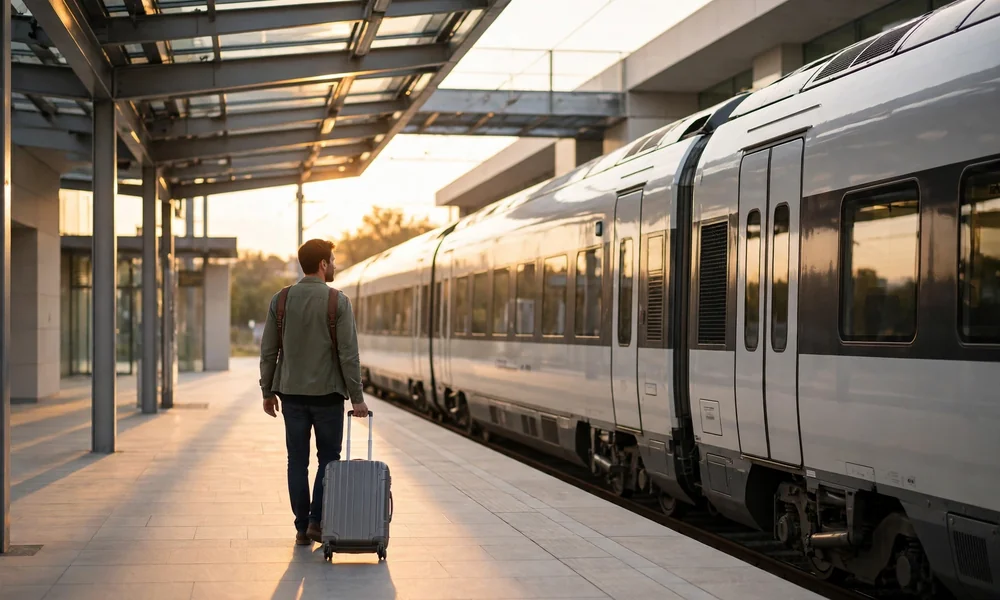
Booking the Wrong Ticket
Most train travel mistakes begin at booking, and the most expensive is a ticket that does not do what you think it does. Advance, flexible, off-peak and rail-pass fares all carry different rules, and the cheapest option usually has the strictest conditions.
Buying a Ticket for a Specific Train
Advance fares are often far cheaper, but usually valid only on the exact train booked. If your flight lands late or you misread the time, that bargain ticket becomes worthless and you must buy a new one at full price. If there is any real chance of delay, the flexible fare is usually cheaper in the end.
Check the date as well as the time. Booking a Friday ticket for a Thursday departure is a common error, especially weeks ahead or across time zones. Confirm the day of the week, not just the date, and check whether times are local to the departure station.
Ignoring Seat Reservations
On many routes a ticket and a seat reservation are two different things. In some countries a reservation is included automatically; in others it costs extra or is optional. Travellers who assume their ticket guarantees a seat can end up standing in the corridor for hours on a busy Friday service. If reservations are available, take one, especially for long journeys and holiday weekends.
Arriving at the Station Unprepared
Stations are not all alike. A rural halt has one platform and a shelter; a major city terminus can have dozens of platforms across several levels, with confusing signage and boards that change at the last minute.
Arrive earlier than you think you need to at unfamiliar stations. Thirty minutes is a sensible minimum for a large station, more if you must collect tickets or carry heavy luggage. Boards often show the platform only ten minutes before departure.
Know which entrance to use: the wrong one can add a ten-minute walk through crowded concourses. Check a station map in advance and note the ticket office, lifts and platform. If you need step-free access, confirm the lifts are working before you travel.
Boarding Blunders
Boarding a train is not like boarding a plane. There is no single queue or gate announcement, and often only a few minutes between arrival and departure. Hesitation at the door costs time you do not have.
One common mistake is standing in the wrong part of the platform. First class, the buffet car and the quiet coach sit in specific places, and your reserved coach may be a long walk away. Many stations show coach positions on platform displays: use them.
Another error is blocking the doorway while you work out where to go. Step inside, move down the aisle, and let others board behind you. Have your ticket ready before the train arrives, not buried in your bag, and know your coach and seat number. The same planning habit that prevents the worst road trip mistakes applies here: a journey goes wrong most often when the plan only exists in your head.
Luggage Mistakes That Slow You Down
Luggage is where train travel differs most from flying. There is no check-in desk and no baggage handler: whatever you bring, you carry, lift and store yourself, often in a hurry in a crowded aisle.
Bringing Bags You Cannot Lift
The biggest luggage mistake is overpacking. Overhead racks are smaller than you expect, and end-of-carriage space fills fast. A bag you can barely drag across a station floor becomes a serious obstacle when you must lift it overhead or haul it up steps. Pack one bag you can lift with one hand; if you cannot lift it, it is too heavy.
Soft bags are often easier than hard cases because they squeeze into odd-shaped racks and under seats. Make sure yours has a handle you can grab quickly. Wheels help on platforms but are useless on stairs, so be ready to carry the bag for short stretches.
Storing Luggage in the Wrong Place
Do not leave your bag in the doorway or blocking the aisle. End-of-carriage racks are the right place for large cases, but they fill early, so board promptly. Keep valuables, medication, tickets and chargers in a small day bag that stays with you. The worst luggage choices for frequent travellers almost always involve bags that are too big, too heavy or impossible to keep close, and the same problems are worse on a train, where your bag may be several rows away.
| Mistake | What goes wrong | Simple fix |
|---|---|---|
| Advance ticket, wrong train | Ticket invalid; full-price rebooking | Buy flexible fares |
| Arriving five minutes early | Missed train | Arrive 30 minutes early |
| Bag too heavy to lift | Blocked aisles | Pack one liftable bag |
| No seat reservation | Standing for hours | Reserve a seat |
| Phone battery dead | No ticket or map | Carry a power bank |
Seat and Comfort Errors
Where you sit shapes the whole journey, yet many travellers accept whatever seat they are given. On a twenty-minute hop it hardly matters; on a five-hour service it matters enormously.
Sitting Facing Backwards
Some people feel unwell travelling backwards, and even those who do not usually enjoy it less. When booking, check whether you can choose your seat direction. Window seats suit scenery lovers; aisle seats suit anyone who gets up often. Seats near the doors mean noise and draughts at every stop, while the middle of the carriage is quieter.
A south-facing window on a summer afternoon can turn a seat into an oven, so choose the shaded side when you can.
Ignoring the Quiet Coach Rules
Quiet coaches exist for a reason, and sitting in one while taking calls or playing videos aloud annoys an entire carriage. If you need to talk or travel with small children, choose a standard coach. If you want peace, book the quiet coach deliberately, but remember the rule applies to you too when your phone rings.
Food, Money and Missed Connections
Trains are not restaurants, and assuming food will be available on board is a gamble. Some services have a buffet car, some have nothing at all, and catering can run out or close early. The same applies to drinking water, especially on long rural routes.
Bring your own food and water for any journey over two hours, and more than you think you need. A two-hour journey can become four with no warning and no catering. Pack food that is easy to eat at a seat, does not smell strongly and does not make a mess.
Money mistakes are common too. Some trains are cashless, some rural stations take no cards, and some cross-border routes need local currency. Carry a card and a little local cash. Keep your phone charged, since tickets, maps and connections increasingly live on a screen; a dead battery can leave you without a ticket or directions, which is why a charged power bank belongs in every day bag. The disruption of a missed connection feels familiar to anyone who has suffered through the worst airport experiences, and the fix is the same: leave generous buffers between legs of the journey, and know your backup options before you need them.
Overnight Train Mistakes
Overnight trains promise a clever trick: sleep while you travel and wake up at your destination. Done well, they save a hotel night; done badly, they deliver a sleepless night and a ruined next day.
The most common overnight mistake is choosing the cheapest berth without understanding it. A seat is not a bed, and eight hours in a reclining seat leaves most people exhausted. To arrive rested, book a proper couchette or sleeper berth, and check whether bedding is included, the compartment is shared or private, and the berth is upper, middle or lower.
Pack as if staying in a basic hotel: earplugs, an eye mask, a small pillow and something warm, since overnight carriages can be cold. Keep toiletries and water in a small bag at your berth, not in a case at the end of the carriage. Secure your belongings, know the arrival time, and set an alarm well before it.
Checklist: Before Every Train Journey
- Confirm the date, time and departure station, and whether your ticket is tied to a specific train.
- Reserve a seat on long or busy routes, and note your coach and seat number.
- Pack one bag you can lift yourself, with valuables in a small bag that stays with you.
- Arrive at least 30 minutes early at large or unfamiliar stations.
- Charge your phone, pack a power bank, and bring food and water for long journeys.
- Know your connection plan and the backup train.
Frequently Asked Questions
What is the most common train travel mistake?
Buying a ticket tied to a specific train and then missing it. Advance fares are cheap because they are inflexible, so choose a flexible fare whenever your plans might change.
How early should I arrive at the station?
Thirty minutes is a good minimum for a large or unfamiliar station; fifteen is usually enough for a small one you know. Add time for heavy luggage, step-free access or ticket collection.
Do I need a seat reservation on a train?
It depends on the route. On many long-distance and high-speed services a reservation is included or strongly recommended; on local services it is often unnecessary.
Can I bring food and drink on a train?
Yes, in almost all cases. Bringing your own food and water is one of the smartest things a train traveller can do, especially where on-board catering is limited.
What should I do if I miss my train?
Speak to station staff or use the operator’s app straight away. A flexible ticket usually lets you take the next service; an advance fare will probably mean buying a new ticket.
Are overnight trains worth it?
They are worth it when you book a proper berth and prepare with earplugs, an eye mask and a small overnight bag. A night spent upright in a seat is rarely worth the saving.
The Bottom Line
The worst train travel mistakes are rarely dramatic: the wrong ticket, the late arrival, the bag that is too heavy, the seat nobody thought about. Each is easy to make and easy to avoid, and the difference between a stressful journey and a smooth one is a few minutes of preparation. Book deliberately, arrive early, pack light, choose your seat, and carry what you need within reach. Do that, and the train becomes what it should be: the most relaxing way to travel.


