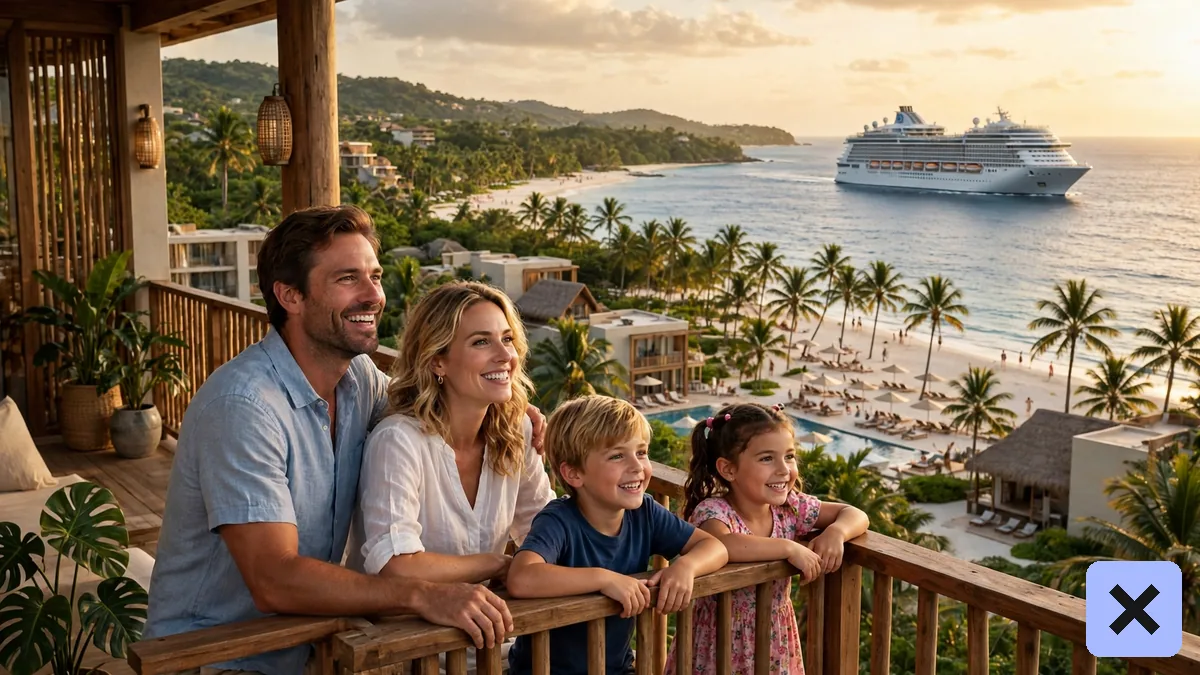
Cruise vs Resort for Family Holidays divides parents before almost any other travel decision. Both promise sunshine, cooked meals, and days when the children are too busy to ask for a screen, yet they deliver it in completely different ways.
A family holiday is a week of shared rooms, meals, and very different energy levels. A cruise packs the destination, hotel, restaurants, and entertainment into one moving ship. A resort keeps you in one place and lets you set your own pace.
This guide compares the two on what families actually feel: cost, space, food, sleep, activities, and freedom, so you can tell which fits your children, your budget, and your idea of a restful break.
Key takeaways
- A cruise suits families who want variety without planning: the ship moves, meals are included, and entertainment changes daily.
- A resort suits families who want space, a slower pace, and control over their timetable, with a beach or pool close by.
- Cruises often look cheaper per day but add up through drinks, excursions, and gratuities, while resort costs depend on the board basis.
- Children under five and teenagers have the most different experiences, so their ages should shape the decision more than the photographs.
- Neither option is better in general. The best choice matches how your family actually spends a day on holiday.
How the Two Holidays Actually Work
A cruise is a floating resort that travels. You unpack once, and the ship carries you from port to port, with a new view each morning and dinner and a show each evening. It appeals to families who like seeing several places without repacking.
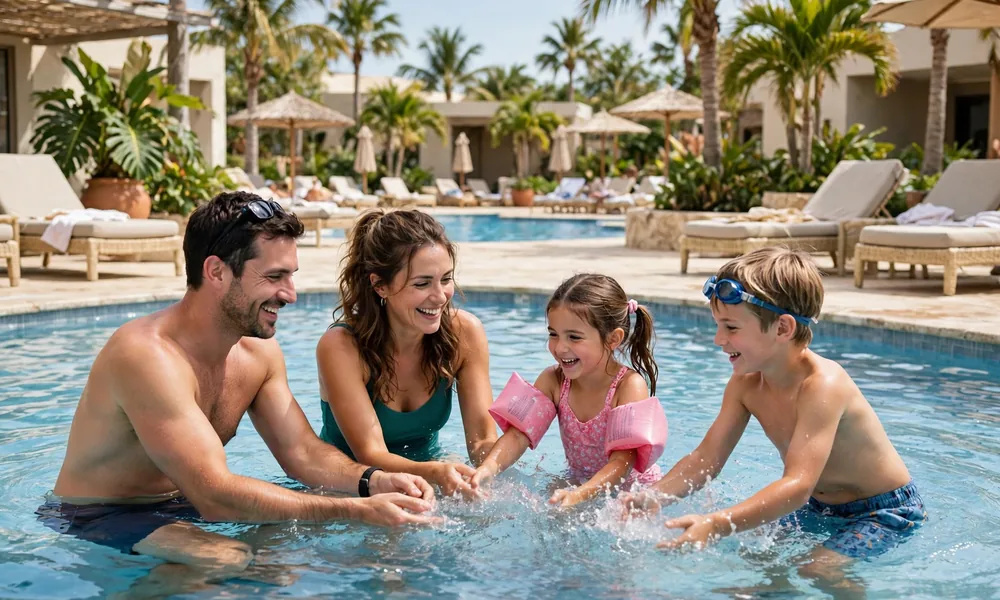
A resort is the opposite idea. You arrive, settle in, and stay put, with the beach, pool, and restaurants within a short walk. Families who like long lazy mornings and eating when hungry tend to love this rhythm. If you are still weighing where your family sleeps best, our guide comparing Airbnb and hotels for family trips breaks down the space and cost trade-offs.
The Daily Rhythm on a Cruise
Life on a cruise runs to a timetable, even a relaxed one, with port times, show times, and dining seatings. This suits families who like organised days. The trade-off is that the timetable never disappears: you must be back before the ship sails, and popular excursions sell out.
The Daily Rhythm at a Resort
A resort day has almost no fixed points. Breakfast may run for three hours, the pool is open all day, and the beach is a two-minute walk. The trade-off is that a resort can feel repetitive by day four or five, especially for older children, so knowing whether your family loves routine or craves novelty matters most.
The Head-to-Head Comparison
| Factor | Cruise | Resort |
|---|---|---|
| Destinations | Several ports | One place |
| Unpacking | Once for the trip | Once, on arrival |
| Daily structure | Set mealtimes and port times | Own schedule |
| Meals | Mostly included | Depends on board basis |
| Space | Cabins are compact | Rooms and suites are usually larger |
| Kids clubs | Age-grouped clubs | Varies by resort |
| Evening entertainment | Theatre, live music | Shows, local nightlife |
| Extra costs | Drinks, excursions, gratuities | Activities, spa, transfers |
| Seasickness risk | Possible in rough seas | None |
| Best for | Variety and organisation | Space and a slow pace |
Cost: What Families Really Pay
A cruise fare often looks generous. One price can cover the cabin, most meals, entertainment, and travel between destinations, and for a family of four that bundled price can be hard to beat, especially where children travel at a reduced fare.
The real cost sits in the extras. Drinks packages, speciality restaurants, excursions, wifi, and gratuities all add up, and ship-organised excursions are usually the priciest. Two excursions plus a drinks package can easily add several hundred pounds.
Resort costs are more transparent but harder to compare. A room-only rate looks cheap until you add food and drinks for four every day, while an all-inclusive rate looks expensive until you realise it covers almost everything. Price the whole week, including food, drinks, transfers, and activities, rather than the first number you see.
Food, Sleep and Daily Comfort
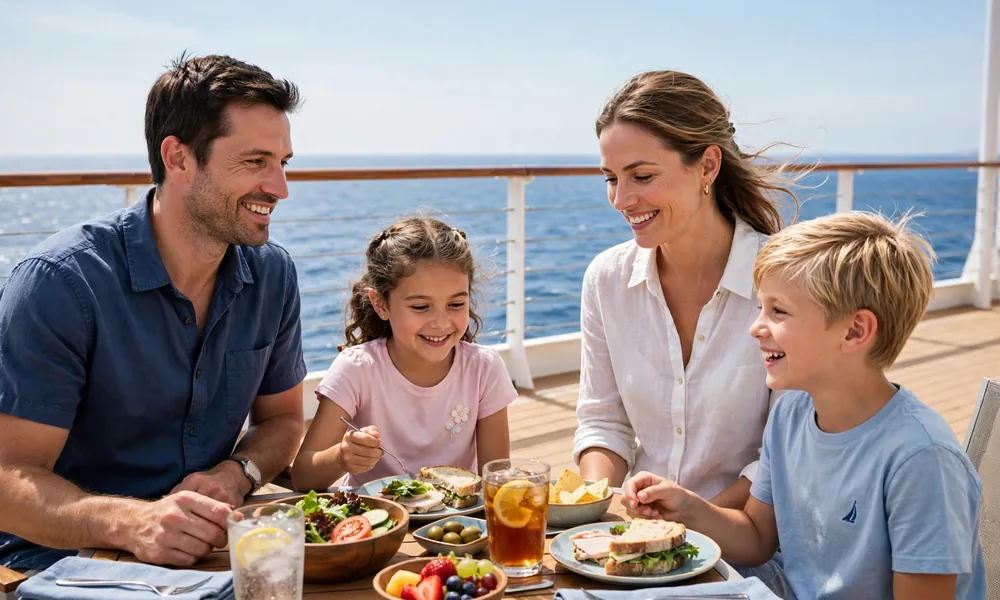
Food is one of the biggest differences. A large cruise ship can have ten or more places to eat, from a casual buffet to a formal dining room and speciality restaurants. Children can eat pizza at noon and try something new at dinner, while parents enjoy a quiet meal as the children play nearby.
A resort usually has fewer restaurants, often two or three, plus a buffet. The food can be excellent, especially where local cooking is the focus, but the choice is narrower. A resort does let you walk to a local restaurant whenever you like, which a ship at sea cannot offer.
Sleep is where the resort usually pulls ahead. Resort rooms are bigger, with space for a cot or travel bed, and many offer family suites or connecting rooms, while cruise cabins are cleverly designed but small. Choosing the wrong cabin is one of the easiest ways to spoil a cruise, as our guide to the worst cruise ship cabins shows, so cabin choice deserves as much thought as the itinerary.
Eating and Sleeping With Young Children
Young children eat early, messily, and unpredictably. Cruises handle this with early buffets, high chairs, and flexible dining, though the main dining room can be a long meal for a tired toddler. Resorts offer room service and early sittings with no dress code. For naps, the resort wins: the room is larger, with a garden or terrace for a parent to sit while the children sleep.
Activities and Entertainment for Every Age
Large cruise ships are built for entertainment. Waterslides, climbing walls, theatres, cinemas, arcades, and age-grouped kids clubs fill the days. Teenagers, often the hardest to please, usually find a ship easier than a resort, with other teenagers, evening events, and freedom to roam safely.
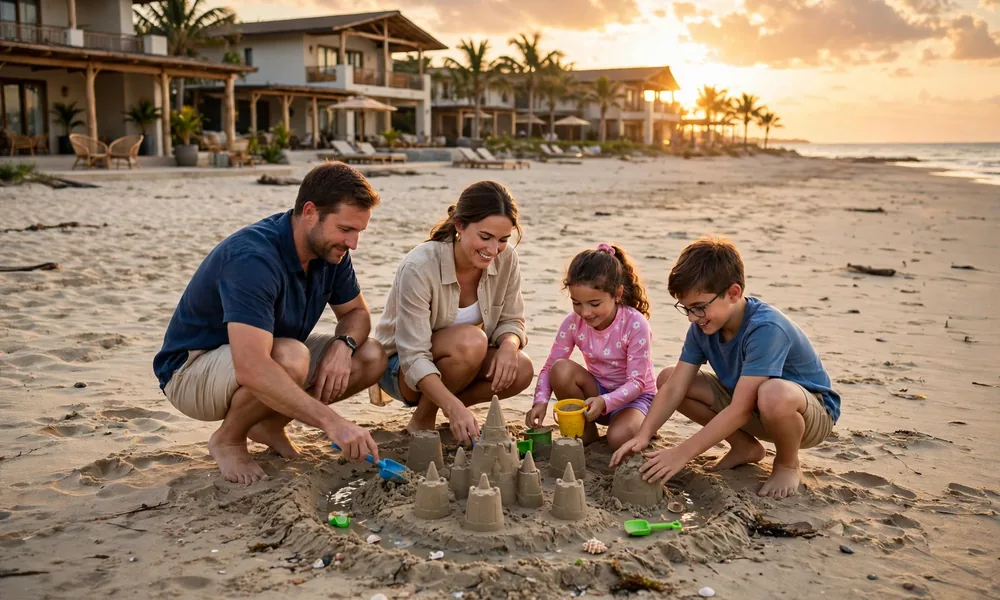
Resorts offer a different kind of activity: the beach, the pool, the sea, and the local area. Children build sandcastles, learn to swim, or join a kids club for a few hours. The activities are simpler and more physical, which suits younger children well, though a resort depends more on the weather, so a rainy week can drag.
Age should drive this decision. Toddlers need a safe pool, a beach, and a short walk to the room, which both options provide. Children aged five to ten often love the structure of a cruise kids club. Teenagers usually prefer the freedom of a large ship, though a resort near a town with sports and other teenagers can also work.
Kids Clubs and Evenings Compared
Cruise kids clubs are usually free, well staffed, and split into narrow age groups, running long hours, including some evenings. Resort kids clubs vary far more, so check hours, ages, and charges before booking on the strength of one. Evenings differ too: a cruise offers a show or live music nightly, while a resort evening means a drink on the terrace or a beach walk.
Space, Freedom and Downtime
Space is the resort’s strongest card. A family room, suite, or villa gives everyone room to spread out, with somewhere to store the suitcases and somewhere for the parents to sit in the evening, plus a garden, beach, or pool area where children can run.
A cruise ship is a shared space. Corridors are narrow, lifts are busy at mealtimes, and the pool deck can feel crowded on a sea day. The ship compensates with variety, a different lounge, deck, or view, but there is no private garden and no quiet beach to escape to.
Freedom works the other way round. A cruise gives you freedom from planning: meals, entertainment, and travel are arranged. A resort gives you freedom of movement: leave whenever you like and change plans without checking a timetable. Crowded beaches can undo the whole point of a resort break, and the worst beach holidays for crowds show how quickly a popular shoreline fills up in peak season, so a quieter resort or a trip outside school holidays can make a real difference.
Safety, Health and Practical Worries
Both options are generally safe when chosen well. Cruise ships have medical centres, trained staff, and clear safety procedures, with strict sign-in rules at kids clubs. The main risks are sunburn, slips by the pool, and seasickness. If your child has never been on a boat, a short ferry trip first is a sensible test.
Resorts have their own questions: pool safety, beach currents, and road safety outside the resort. One with a lifeguard, a fenced pool, and a safe beach is worth choosing over a cheaper option without them. Practically, a cruise needs passports for every port and an on-time arrival, while a resort usually needs only a flight and a transfer, and packing is simpler because you can buy anything you forgot.
Which Family Should Choose Which?
Choose a cruise if your family likes variety, enjoys being looked after, and wants to see several places without moving. It works best for children aged five and over, teenagers who want independence, and parents who want an organised week. It also suits a first big family holiday, because so much is included.
Choose a resort if your family likes space, a slow pace, and the freedom to set your own day. It works best for babies and toddlers, children happiest in a pool or on a beach, and parents who want a proper rest rather than a packed itinerary.
Checklist: Before You Book
- Price the whole week, including meals, drinks, excursions, and gratuities, not just the headline fare.
- Check the room or cabin size, and look at photographs of the exact room type, not the show suite.
- Confirm kids club ages, hours, and charges, and whether evening sessions are included.
- Read the cancellation terms and insurance cover, especially for cruises, where missing the ship is serious.
- Check passport validity for every port on a cruise itinerary, and whether visas are needed.
- Pack for the weather and dress code, leaving space for what the children will bring home.
Frequently Asked Questions
Is a cruise or a resort cheaper for a family of four?
It depends on what is included. A cruise fare covers the cabin, most meals, and entertainment. A resort can be cheaper room-only, or dearer if you eat out for every meal. Price the whole week.
What age is best for a first family cruise?
Five and over is usually easiest, because children can join the kids clubs and cope with the timetable. Younger children can cruise happily too, but expect more cabin time.
Do children get bored at a resort?
Younger children rarely do with a good pool and a beach. Older children can get bored if the resort is isolated, so choose one near a town, with sports and other young people around.
Can you leave a cruise ship at every port?
Yes, but you must return before the published departure time. Some ports need a shuttle or excursion to reach the sights; others let you walk into town. Check port details first.
Is an all-inclusive resort better than a cruise?
An all-inclusive resort removes bill worry, much like a cruise, and gives you more space. A cruise adds several destinations and wider evening entertainment. Families wanting one place and a slow pace usually prefer it.
How do I handle seasickness on a cruise?
Choose a larger ship, a cabin low down and near the middle, and a calm route in settled weather. Pack remedies after speaking to a pharmacist, eat lightly, and stay on deck in fresh air.
The Bottom Line
A cruise wins when your family wants variety, organisation, and entertainment without planning it. A resort wins when your family wants space, a slow pace, and the freedom to shape each day as it comes. Match the holiday to how your children behave on a trip, and choose the one that gives your family the best restful week together.