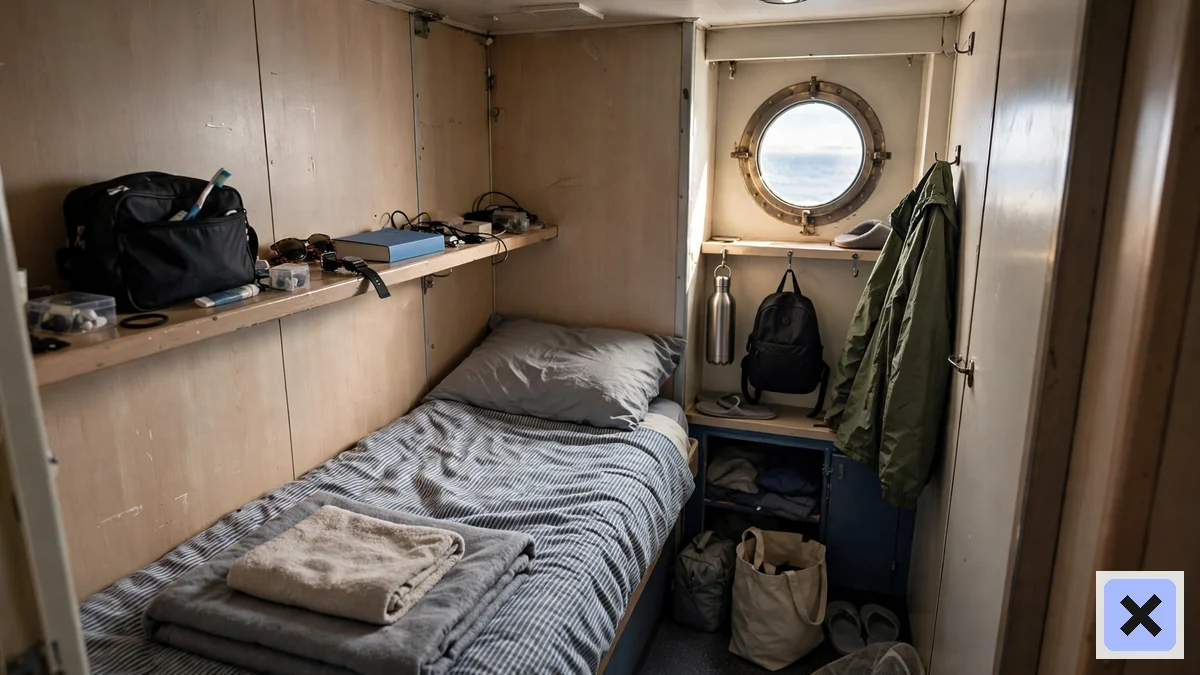
Choosing the wrong cabin can turn a dream cruise into a week of bad sleep, constant noise, and cramped frustration. The worst cruise ship cabins are not always the cheapest ones on the deck plan. A cabin that looks fine on paper can sit under a nightclub, beside a service corridor, or so far forward that every wave feels like a jolt.
The worst cruise ship cabins to avoid share a few clear warning signs: poor location, too little light, weak sound insulation, awkward layout, and a view that is blocked, tiny, or missing altogether. Once you know what to look for, most of these problems are easy to avoid, often without paying much more. A cabin one deck higher or a few doors along the corridor can make a real difference.
This guide explains the cabin types that cause the most complaints, why they disappoint, and how to choose better. It covers inside cabins with no natural light, cabins under noisy public areas, forward cabins that feel every movement of the sea, cabins near lifts and crew areas, obstructed-view balconies, connecting cabins, and cabins with strange layouts.
Key takeaways
- The worst cruise ship cabins are usually badly located, not simply small.
- Inside cabins feel darker and smaller than their size suggests, especially on longer cruises.
- Cabins under bars, pools, theatres, and kitchens are the most common source of noise complaints.
- Forward cabins move more in rough seas, while low cabins near the bow can feel every wave.
- Always check what is above, below, and beside a cabin on the deck plan before booking.
Why Some Cruise Cabins Disappoint
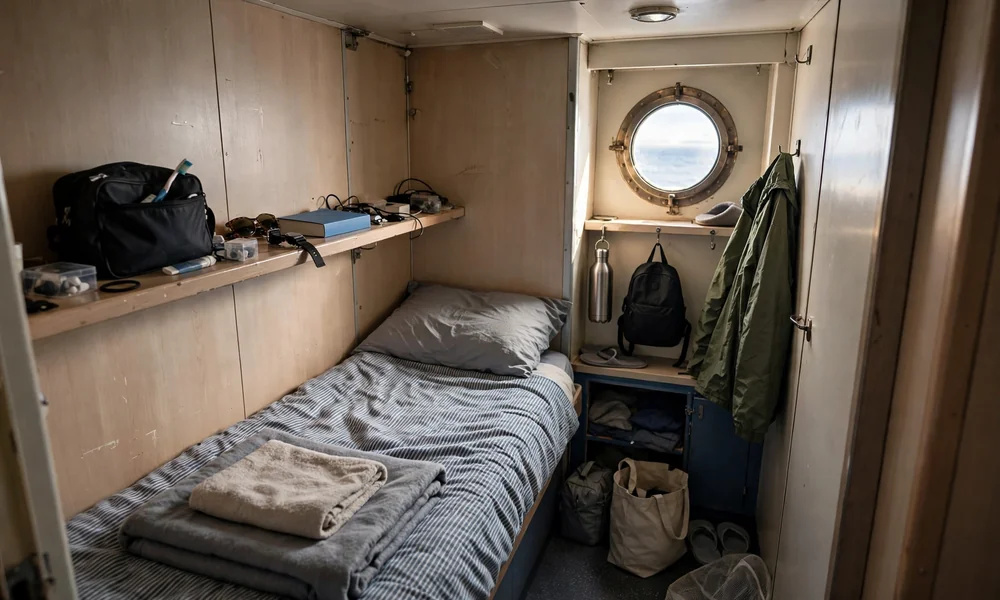
A cruise cabin is a bedroom, a bathroom, a wardrobe, and a place to rest between ports, all in a very small space. When the layout works, even a modest cabin feels comfortable. When it does not, the problems add up quickly: a bed that is hard to walk around, a wardrobe with no room for two suitcases, or a window that faces a lifeboat.
Location matters more than most first-time cruisers expect. Ships are floating hotels with restaurants, theatres, pools, and crew work areas stacked above and below the cabins. Sound travels through thin walls, and vibration from engines can reach cabins near the front, back, and lower decks. A cabin that is quiet by day can become noisy at night when a bar below it opens.
Expectations also play a part. Many travellers book the lowest-priced cabin without checking what that price really buys. An inside cabin can suit someone who spends little time in the room, but it can feel oppressive for a light sleeper or anyone who needs daylight to rest. The same gap between promise and reality appears in travel hype that promises more than the room delivers, where the photo shows a spacious suite while the entry-level cabin is far smaller.
The Worst Cruise Ship Cabins to Avoid
Not every cabin on this list is bad for every traveller. A noisy cabin may suit someone who stays out late, and a small inside cabin may suit a solo traveller who only sleeps there. The cabins below, however, generate the most complaints, the most requests to move, and the most regret after booking.
Inside Cabins on Long Cruises
Inside cabins have no window and no natural light. On a short cruise, many people barely notice, because they sleep, shower, and leave. On a cruise of seven nights or more, the lack of daylight can make the cabin feel smaller each day, and waking up in darkness can make the room feel like a box rather than a retreat.
Cabins Directly Under Bars, Theatres, and Pools
Cabins under entertainment areas are the most common source of noise complaints at sea. A cabin below a nightclub, a theatre, a casino, or a pool deck can hear music, applause, chairs scraping, and footsteps late into the night. The noise is not always loud, but it is persistent, and it often continues after midnight.
Forward Cabins in Rough Seas
Cabins at the very front of the ship move more than cabins in the middle. When the ship meets waves head-on, the bow rises and falls, and forward cabins feel that motion first. Light sleepers and anyone prone to seasickness notice it most at night, when the ship is moving between ports and the sea is rougher.
Cabins Near Lifts, Stairs, and Crew Areas
Cabins beside lift lobbies, stairwells, and crew doors are convenient, but they are rarely quiet. Lift bells, doors opening and closing, trolleys, and voices in the corridor can continue through the night. Crew service areas are worse, because staff use them at all hours to move linen, food, and supplies.
Obstructed-View Balcony Cabins
An obstructed-view balcony cabin sounds like a bargain, but the obstruction can be severe. Some balconies face a lifeboat, a tender, a steel structure, or a walkway used by other passengers. In the worst cases, you can barely see the sea, and the balcony feels overlooked rather than private.
Connecting Cabins Without a Travelling Party
Connecting cabins have a door between two rooms, which is useful for families travelling together. For anyone else, that door can be a problem. Sound passes through it more easily than through a solid wall, so you may hear your neighbours clearly, including conversations, televisions, and children playing.
Cabins With Awkward Layouts
Some cabins look fine on a diagram but work badly in practice. Beds may be pushed against a wall, leaving only one side to get in and out. Wardrobes may open into the bed, and bathroom doors may block the sink when they open. These problems are more common near the front or back of the ship, where the hull curves and the room shape changes.
Cabin Features That Make a Bad Cabin Worse
A poor location is bad enough, but certain features can make it worse. Thin walls, weak air conditioning, a noisy bathroom fan, and a bed that cannot be moved can all add to the discomfort. Small details, such as too few power sockets or a shower with low water pressure, become more irritating when the cabin is already small or noisy.
Storage is another common problem. Many cabins have wardrobes designed for short cruises, with limited hanging space and few drawers. Light and ventilation matter too: a small porthole can feel dark even by day, while a window that does not open can feel stuffy. These are the same design shortcuts found in hotel design traps that look good in photos but fail in daily use, where style is chosen over comfort and practical layout.
How to Read a Deck Plan Before You Book
A deck plan is the most useful tool for choosing a good cabin, but only if you read it properly. Start by finding your cabin, then check the decks directly above and below it. Note every public area, service area, lift, and staircase nearby, then check the cabins on either side for connecting doors, crew doors, and corridor junctions.
Midship cabins on middle decks are usually the safest choice. They move least, they are close to the main dining rooms and lounges, and they are less likely to sit under a noisy public area. Higher decks have better views but can feel more motion, while lower decks are steadier but may sit closer to engines. Use the table below as a quick guide, and always check the specific deck plan for your ship.
| Cabin position | Main advantage | Main drawback | Best for |
|---|---|---|---|
| Midship, middle deck | Least motion, central location | Higher price than low decks | Light sleepers and first-time cruisers |
| Forward, any deck | Quiet corridors, sea views | Most motion in rough seas | Good sailors who like the bow |
| Aft, any deck | Large balconies, wake views | Vibration and engine noise | Balcony lovers who sleep well |
| Low deck, inside | Lowest price, steady ride | No daylight, small space | Budget travellers, short cruises |
| High deck, balcony | Best views, fresh air | More motion, wind on balcony | View lovers on calm routes |
When a Cheap Cabin Is Still Worth It
A cheap cabin is not always a bad choice. If you plan to spend most of your time on deck, in port, or in the ship’s lounges and restaurants, the cabin is mainly a place to sleep and shower. In that case, an inside cabin can be good value, leaving more money for excursions and dining.
Cabin Checklist Before You Book
Use this checklist before you pay for any cruise cabin. It takes only a few minutes, and it catches most of the problems described above. If you cannot answer a question from the deck plan or the cruise line, ask before you book, not after you board.
- Check what is above, below, and beside the cabin on the deck plan.
- Confirm whether the cabin has a window, a porthole, a balcony, or no outside view at all.
- Check for connecting doors, crew doors, lift lobbies, and service areas nearby.
- Look up photos and reviews for the exact cabin number, not just the category.
- Ask about noise, motion, and vibration if the cabin is forward, aft, or low down.
- Confirm the bed layout, storage, and balcony size before you finalise the booking.
Frequently Asked Questions
What is the worst cabin on a cruise ship?
There is no single worst cabin, because the worst choice depends on the traveller. In general, the cabins that cause the most complaints are inside cabins on long cruises, cabins under bars and theatres, and forward cabins in rough seas.
Are inside cabins really that bad?
Inside cabins are not bad for everyone. They are dark, small, and have no view, but they are also the cheapest cabins and they are steady and quiet when well located. They suit short cruises, budget travellers, and people who spend little time in the room.
Is a balcony cabin always better than an inside cabin?
A balcony cabin is usually more comfortable, because it offers daylight, fresh air, and private outdoor space. It is not always better value, however, especially if the balcony is obstructed, very small, or exposed to wind. A well-located inside cabin can beat a badly located balcony cabin.
How can I tell if a cabin will be noisy?
Check the deck plan for the decks above and below your cabin. If either deck has a bar, nightclub, theatre, casino, pool, buffet, or kitchen directly above or below, expect noise. Cabins near lift lobbies and crew doors are also more likely to be noisy, and reviews for the exact cabin number often mention it.
Are cabins at the front of the ship worse than cabins in the middle?
Forward cabins move more than midship cabins, especially in rough seas, and they can have angled walls and smaller balconies. Midship cabins are steadier and usually have more regular layouts. Forward cabins are not always bad, but they are a risky choice for anyone prone to seasickness.
Can I change my cabin after booking?
It depends on the cruise line, the fare, and availability. Some fares allow a free cabin change before final payment, while others charge a fee or do not allow changes at all. If you are unhappy after boarding, ask at reception as soon as possible, because the best alternative cabins are taken quickly.
The Bottom Line
The worst cruise ship cabins to avoid are the ones with poor locations, no natural light, awkward layouts, or views that are blocked. Check the deck plan, look up the exact cabin, and choose a midship cabin away from noise and service areas when you can. A little research before you book is the simplest way to make sure your cabin supports the cruise, rather than spoiling it. For a change of pace after the voyage, a quiet break in the hills can be a good contrast to life at sea, as shown in mountain escapes that offer space, quiet, and fresh air.