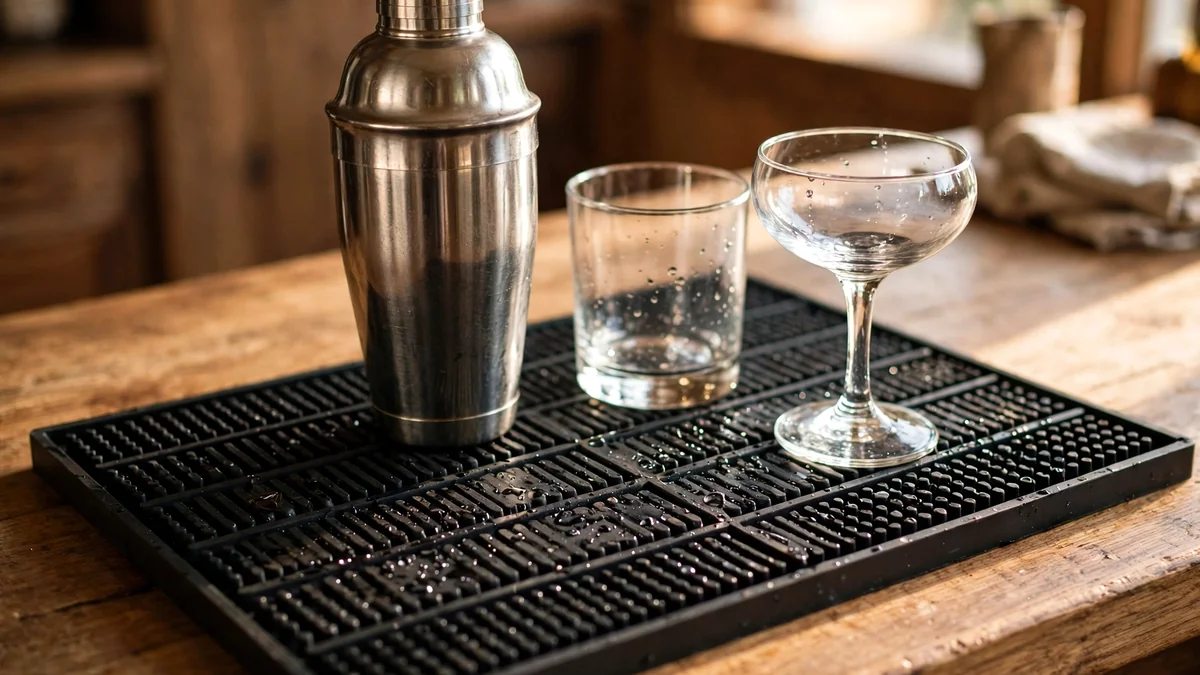
Stirred, Not Shaken: The Best Mixing Glasses of 2026
A mixing glass is the quiet tool behind every great stirred drink. It is the heavy glass vessel in which a Martini, a Negroni or a Manhattan is stirred over ice until it turns cold, clear and silky. It gives spirit and ice room to move together, slowly and smoothly, until the dilution is exactly right. The best mixing glasses of 2026 do that job without fuss: they are heavy enough to stay put, wide enough to stir freely, and shaped to pour cleanly. This guide explains how to choose one, from the classic Japanese tall glass to the heavy cut-crystal beaker, and what to look for before you buy.
Most home bars get this purchase wrong in one of two ways. They buy a glass that is too light, so it slides across the counter with every stir, or they buy one that is too small, so the ice has nowhere to go and the drink comes out cloudy. Both are easy to avoid. A good mixing glass costs little, lasts for years, and changes stirred drinks completely. Here is how to pick the right one.
Key Takeaways
- A mixing glass is for stirred, spirit-only drinks; shaken drinks with citrus or egg belong in a shaker, not a mixing glass.
- Weight is the first test: a heavy base keeps the glass still, while thin glassware slides and chips.
- Buy 500 to 750 millilitres, enough for two drinks over plenty of ice, with room for the spoon to move.
- A pouring spout matters more than looks, because a clean pour keeps ice and chips out of the finished drink.
- Thick, seamless glass chills fast and survives the dishwasher; cut crystal looks beautiful but needs hand washing.
Mixing Glasses at a Glance
The table compares the four mixing glass styles most home bars buy, with the honest strengths of each rather than the sales pitch.
| Style | Best for | Capacity | Weight | Care |
|---|---|---|---|---|
| Classic beaker | Everyday stirred drinks | 500 to 750 ml | Medium | Dishwasher safe |
| Japanese tall glass | Long, smooth stirring | 500 to 700 ml | Light to medium | Hand wash advised |
| Cut-crystal glass | Display and special drinks | 500 to 750 ml | Heavy | Hand wash only |
| Heavy-bottomed short glass | Small batches, tight spaces | 400 to 500 ml | Very heavy | Dishwasher safe |

What a Mixing Glass Actually Is
A mixing glass is a thick-walled glass vessel, usually holding 500 to 750 millilitres, with a small pouring spout and a heavy base. You fill it two-thirds full of ice, add the spirits and bitters, and stir with a long spoon for about thirty seconds. The ice chills and dilutes the drink at the same time, and because nothing is shaken, the result stays crystal clear. The glass itself does three jobs: it holds the cold, it gives the spoon room to spin, and it pours cleanly into the serving glass.
It is not the same tool as a shaker, and the difference is the drink, not the fashion. Stirring suits spirit-only drinks such as Martinis, Negronis and Manhattans, where clarity and silkiness matter. Shaking suits drinks with citrus, cream or egg, where the drink needs aerating and blending. Our guide to the best cocktail shakers for home covers the shaken side in detail. The two tools are partners, not rivals.
The Classic Beaker: The Safest Buy
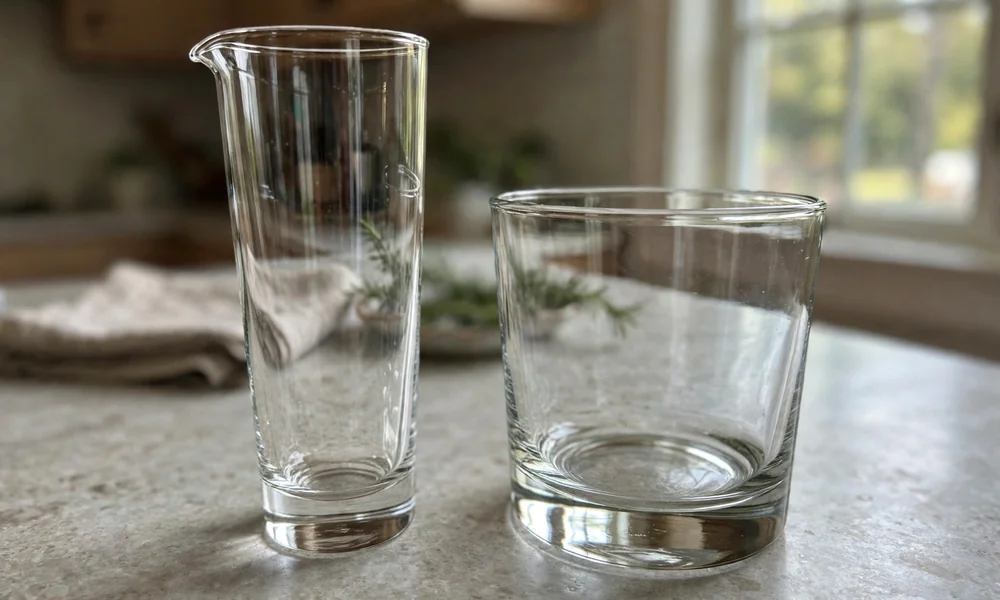
The classic beaker is the workhorse: a straight-sided, thick-walled glass with a spout, usually in plain or lightly patterned glass. It is the easiest mixing glass to buy well, because the design is simple and the quality is easy to judge. Pick it up: it should feel heavy for its size, sit flat without rocking, and have a spout that pours in a clean stream rather than dribbling down the side. For a first mixing glass, the classic beaker is the right choice, and for most homes it is the only one they will ever need.
The Japanese Tall Glass: The Smooth Stirrer
The Japanese tall glass is slimmer and taller than a beaker, with a long, straight body that gives the spoon a clean, uninterrupted circle. It is the choice of bars that stir all night, because the tall shape keeps the spoon moving smoothly and the drink chilling evenly. The trade-off is stability: a tall, narrow glass is easier to knock over, and it suits a steady hand and a clear counter more than a crowded party. If you stir often and value the feel of the stir itself, the Japanese glass is worth trying; if you stir once a week, the beaker is the better buy.
Cut Crystal and Heavy Short Glasses
Cut-crystal mixing glasses are the beautiful ones: thick glass with a diamond or star pattern cut into the outside, catching the light on the bar. They are heavy, they feel wonderful in the hand, and they make a stirred drink look like an occasion. A heavy-bottomed short glass is the opposite idea: a squat, very stable vessel for small batches and tight counters, holding 400 to 500 millilitres. It cannot stir a round for four, but it will never tip over, and it is the best choice for a small bar or a crowded shelf.
Stirred vs Shaken: Why the Glass Matters
The reason a mixing glass exists at all is dilution done gently. When you stir, the ice melts slowly into the drink, adding roughly a quarter of its volume in water over thirty seconds, and that water is what softens the spirit and opens up its flavour. Shake the same drink and the ice chips, the water comes faster, and air gets beaten in, which is exactly what a citrus drink needs and exactly what a Martini does not.
The spoon is part of the system, and it is worth pairing the glass with the right one. A long, twisted bar spoon reaches the bottom of any mixing glass while your hand stays above the rim, and its spiral lets it spin smoothly between your fingers. Our guide to the best bar spoons explains the lengths, the weighted ends and the stirring technique in detail. Buy the glass and the spoon together, and make sure the spoon is long enough for the glass you choose.
Size, Weight and the Spout: The Three Tests
Size is the first test in the shop. A 500 to 750 millilitre glass stirs two drinks comfortably over a full load of ice, with room for the spoon to move in a wide circle. Anything smaller forces you to stir one drink at a time and to use less ice, which means faster dilution and a warmer drink. Anything larger is heavy, awkward to pour, and hard to store.
Weight is the second test, and it is the one most people skip. A mixing glass should weigh enough that it stays planted while you stir with one hand and hold it steady with the other. Thin, light glassware slides, tips and chips, and a glass that moves while you stir makes a mess of the dilution. The third test is the spout. Pour water through it in the shop if you can: a good spout gives a clean, narrow stream that you can aim into a chilled glass, while a bad one dribbles down the outside and onto the counter.
Glass Quality, Care and What to Avoid
Glass quality shows in the rim and the base. Run a finger around the rim: it should be smooth and even, with no sharp edge or wobble. Look through the base: it should be clear, without bubbles or ripples that catch the light unevenly. Seamless glass, made in one piece, is stronger than glass with a visible seam, and it chills more evenly.
Care is simple but not optional. Rinse the glass with cold water straight after use, before the drink dries and leaves a film, and wash it properly at the end of the evening. Dishwasher-safe beakers can go in the top rack, but keep cut crystal out of the machine entirely and wash it by hand with warm water and a soft cloth. A mixing glass that is looked after will last for years; one that is left dirty overnight will cloud, stain and chip.

Serving the Drink You Stirred
A stirred drink is only as good as the glass it lands in. Pour the drink through a strainer into a chilled serving glass, and the difference shows at once: clear, cold and silky, with no ice chips and no cloudiness. A Martini belongs in a chilled Martini glass, and our guide to martini glasses explains which shapes hold the cold best and which ones spill at the first sip. A Negroni suits a rocks glass over one large cube, and a Manhattan suits a coupe. Chill the serving glass in the freezer for ten minutes while you stir, and the drink will stay cold long enough to enjoy rather than warming in your hand.
Mixing Glass Checklist
- Choose stirred drinks first: Martinis, Negronis and Manhattans belong in a mixing glass, not a shaker.
- Buy 500 to 750 millilitres, enough for two drinks over plenty of ice.
- Pick a heavy glass with a flat base that stays planted while you stir.
- Test the spout: it should pour a clean, narrow stream without dribbling.
- Check the rim and base for smoothness, clarity and a seamless finish.
- Match the spoon to the glass, and keep cut crystal out of the dishwasher.
Frequently Asked Questions
Can I use a normal glass instead of a mixing glass?
You can, but a normal glass is usually too light and too small, so it slides while you stir and holds too little ice. A proper mixing glass is heavier, wider and has a spout, and the difference shows in a clearer, colder drink.
Do I need a strainer with a mixing glass?
Yes, a small strainer keeps ice chips out of the finished drink. A Hawthorne strainer fits most mixing glasses, and a fine mesh strainer catches the smallest chips for a perfectly clear pour.
How long should I stir a drink?
About thirty seconds of smooth, steady stirring, which chills the drink and adds roughly a quarter of its volume in water. Stir longer for a softer drink and shorter for a stronger one.
What is the difference between a mixing glass and a shaker tin?
A mixing glass is glass, for stirring spirit-only drinks gently. A shaker tin is metal, for shaking drinks with citrus, cream or egg, where aeration and fast chilling are the point. They do different jobs.
Is cut crystal worth the extra money?
For looks and weight, yes, and a cut-crystal glass feels wonderful in the hand. For everyday stirring, no: a plain heavy beaker stirs just as well, costs less and survives the dishwasher.
How do I stop my mixing glass from clouding?
Rinse it straight after use, wash cut crystal by hand, and dry it upside down. Clouding comes from drinks drying on the glass and from dishwashers
The Bottom Line
The best mixing glass is heavy, wide enough to stir freely, and shaped to pour cleanly. A classic beaker covers almost every home bar, a Japanese tall glass suits those who stir often, and cut crystal suits those who want the ritual as well as the drink. Pair it with a proper bar spoon, and your Martinis will come out clear, cold and silky.