The best martini glasses in 2026 keep a drink icy cold from the first sip to the last. A martini is a small, cold, precise drink, and it depends on its glass more than almost any other cocktail. The wide bowl lets the aroma rise, the long stem keeps your warm hand away from the drink, and the fine rim delivers it cleanly. Put the same martini in a thick tumbler and you will taste a different drink, because the glass has changed the temperature, the aroma, and the feel of every sip.
Martini glasses earn their place through shape alone. The classic V-shaped bowl is not decoration: it spreads the drink out so it stays cold, gives the aroma room to gather, and makes the drink look like an occasion. But the classic is not the only one worth owning. The rounded coupe suits a shaken martini, the small stemmed glass suits a lighter pour, and each shape changes the drink in a small but real way.
This guide covers the martini glasses worth buying in 2026: the shapes that chill best, and the habits that matter more than the price tag. It explains how to choose between the classic V and the coupe, and how to care for thin crystal so it lasts for years.
Key Takeaways
- A good martini glass keeps the drink cold: the stem keeps your warm hand off the bowl.
- Chill the glass before you pour: a frozen glass beats an expensive one served warm.
- The classic V suits stirred martinis; the coupe suits shaken drinks served up.
- A thin rim and clear glass show the drink properly.
- Buy four identical glasses, so every martini is served the same way.
Why the Glass Decides How Cold the Drink Stays
A martini is served without ice, so nothing stands between the drink and warm air except the glass. The moment it leaves the shaker it starts to warm, and the glass decides how fast that happens. A long stem keeps your hand off the bowl, so it never warms the drink. A short stem forces your fingers against the bowl, and the drink warms in minutes. That matters more than brand or price.
The bowl matters too. A wide, shallow bowl lets the aroma rise but gives warm air more surface to work on. A deeper bowl keeps the drink colder but traps the aroma. The best glasses balance the two: wide enough to smell the drink, deep enough to hold a proper measure, and thin enough not to hold heat. Thin crystal wins here: it feels almost weightless.
Stem, Base and Balance
The stem is the part you hold, so it deserves more attention than it gets. A good stem keeps your fingers clear of the bowl, feels elegant, and survives washing without flexing. A stem that is too short defeats the purpose of the glass. The base should be wide enough to stand steady: a martini glass is top-heavy, so a narrow base tips at the slightest knock. Set it down before you buy and give it a nudge: a glass that rocks will end up on the floor.
The Main Martini Glass Styles, Compared
Three shapes cover almost every martini worth making. The classic V is a sharp cone on a long stem, made for a stirred martini served up. The coupe is rounder, with a shallow bowl that suits a shaken drink. The small stemmed glass, sometimes called a Nick and Nora, is narrower and deeper, made for a smaller, colder pour. Each one changes the drink.
| Style | Capacity | Best for | Watch out for |
|---|---|---|---|
| Classic V | 150–200 ml | Stirred martinis served up | Oversized bowls spill and warm |
| Coupe | 150–180 ml | Shaken drinks served up | Wide bowls warm fast |
| Small stemmed | 120–150 ml | Smaller, colder pours | Too small for some measures |
The Classic V-Shaped Glass
The classic martini glass has earned its place over a century of use. Its sharp V lets the aroma rise straight to your nose, and the long stem keeps the drink icy cold. A good one holds a proper measure with room to spare, so the drink does not spill when you lift it. The best are thin crystal, almost weightless, with a rim so fine you barely notice it. The danger is size: oversized bowls holding twice a normal measure are heavy, spill at the slightest tilt, and warm the drink before you finish half of it. Buy the smaller size, around 150 to 200 millilitres.
The Coupe
The coupe suits people who prefer their drinks shaken. Its wide, shallow bowl lets a shaken drink spread out and breathe, and the stem keeps your hand away so it stays cold to the last sip. A good coupe feels light, with a rim thin enough to disappear against your lip, and a bowl deep enough that the drink does not slosh over the edge. The worst coupes are so wide and shallow that the drink warms in minutes, while others are so deep you cannot sip without tipping your head back. Look for a bowl of 150 to 180 millilitres on a base wide enough to stand steady.

The Small Stemmed Glass
The small stemmed glass is the quiet favourite of bartenders who care about temperature above all else. Its narrower, deeper bowl holds a smaller measure, usually 120 to 150 millilitres, and keeps the drink colder for longer than a wide V or coupe. It suits a martini finished while still properly chilled. The trade-off is capacity: a standard measure may fill it to the brim, so keep a classic V beside it for larger pours. The same judgement that separates a good cocktail glass from a bad one applies here: our comparison of the best and worst cocktail glasses of 2026 puts the coupe, the martini glass, the rocks glass and the highball side by side.
How to Chill a Martini Glass Properly
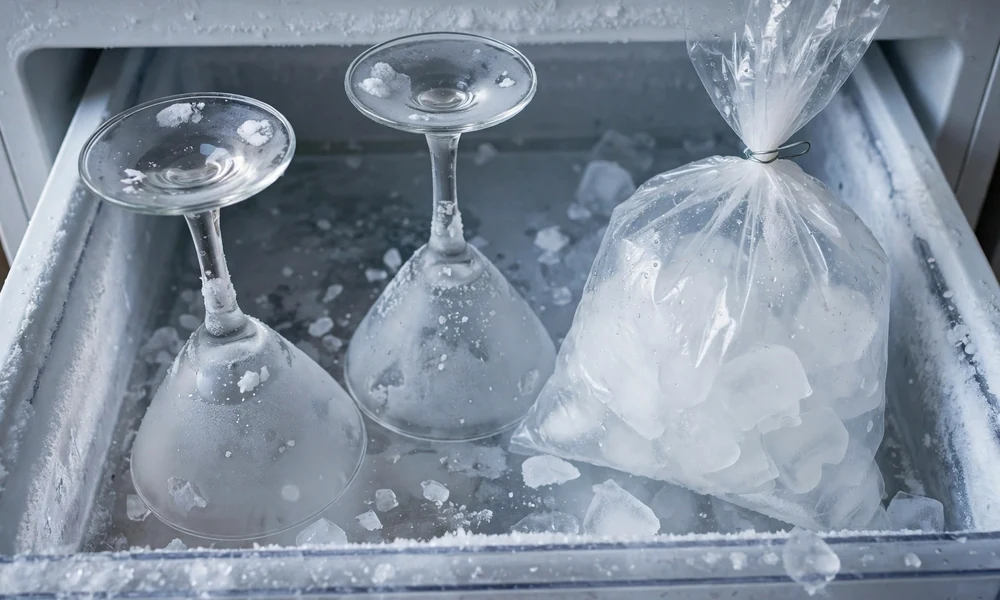
Chilling the glass is the easiest upgrade you can make to a martini, and it costs nothing. Put the glasses in the freezer for thirty minutes before you pour, standing upright so they do not knock together. If the freezer is full, fill the glass with ice and cold water while you mix the drink, then tip it out: five minutes of ice water takes a surprising amount of warmth out of the glass. Or keep the glasses in the fridge permanently, so they are always ready.
Do not chill a glass with crushed ice left standing: the melting ice leaves water that dilutes the drink. Do not put a hot glass into the freezer, and do not pour a hot liquid into a frozen glass: sudden temperature changes can crack even good crystal. And do not skip the chill because the drink itself is cold: a cold drink in a warm glass warms faster than most people expect. Clear ice helps too: it melts slower and chills without diluting, which is why it is worth learning how the best ice molds for clear cocktail cubes keep a drink cold.
How to Choose the Right Martini Glasses
Start with the martinis you actually drink. If you stir yours, buy four classic V glasses first, in the smaller 150 to 200 millilitre size. If you shake yours, buy four coupes, because the shallow bowl suits a shaken drink served up. If you drink small, cold pours, buy four small stemmed glasses. Four of one shape, bought well, beats a mixed set of twelve you never reach for, and a matched set means every martini at the table is served the same way.
Material decides how the glass feels and how long it lasts. Lead-free crystal is the best choice: thinner, clearer and lighter than ordinary glass, with a rim fine enough to disappear on the lip. Ordinary soda-lime glass is cheaper and tougher, but thicker and heavier, and a thick rim feels clumsy. Tempered glass sits in the middle, stronger than ordinary glass but rarely as fine as crystal. Whatever you buy, hold it empty first: balanced, not top-heavy, and comfortable through a whole drink.
Check the rim before you buy: it is where a martini glass succeeds or fails. Run a finger around it: smooth, even and thin, with no rolled edge or rough seam. A thick, rolled rim feels like drinking from a jar; a fine rim lets the drink reach your lips cleanly. Check the base the same way: set the glass on a flat surface and press gently on the rim. If it rocks, the base is uneven. The same eye for quality helps everywhere, and our guide to wine glasses that make any bottle taste better shows how thin, balanced thinking applies to every glass you own.
Care: Keeping Martini Glasses Clear and Unchipped
Thin crystal and dishwasher racks are not natural friends. Most martini glasses survive the dishwasher loaded so they cannot knock against plates or each other, but hand washing is safest: warm water, a drop of mild soap, and a soft cloth, holding the glass by the base. Never twist the bowl while holding the stem: the joint is the weakest point, where most breaks happen. Dry with a soft cloth, especially in a hard-water area, where drops leave spots.
Clouding is usually limescale or detergent film, not damage, and a soak in white vinegar and warm water restores most glasses. Avoid abrasive pads, which scratch crystal and make clouding worse. Store martini glasses upright, never upside down on their rims, and never stacked inside each other. A chipped rim is the end of a martini glass: it ruins the sip, catches on the lip, and cannot be repaired. Retire it.

Martini Glass Buying Checklist
- Check the capacity: 150 to 200 millilitres for a classic V, 120 to 150 for a small stemmed.
- Hold it by the stem: your fingers should stay clear of the bowl.
- Run a finger around the rim: it should be smooth, even and thin, with no rolled edge.
- Set it on a flat surface: the base should sit flat with no wobble.
- Buy four identical glasses, so every martini is served the same way.
- Confirm the glass can be chilled in the freezer and washed the way you wash.
Frequently Asked Questions
What is the best glass for a martini?
A classic V of 150 to 200 millilitres, in thin crystal with a long stem, for a stirred martini. A coupe suits a shaken one; a small stemmed glass suits a smaller, colder pour.
Should martini glasses go in the freezer?
Yes: thirty minutes in the freezer, standing upright. Short of time, fill the glass with ice water for five minutes, then tip it out.
Can I use a coupe instead of a martini glass?
Yes. A coupe suits shaken drinks served up, though its wider bowl warms a little faster, so chill it well.
How big should a martini glass be?
Around 150 to 200 millilitres. Oversized bowls are the biggest problem: heavy, spill-prone, and they warm the drink before you finish it.
Should martini glasses go in the dishwasher?
Most glassware survives the dishwasher loaded so glasses cannot knock together. Thin crystal lasts longer hand-washed, held by the base.
Why does my martini warm up so fast?
Usually the glass was warm. A martini without ice depends entirely on the glass for chill, so chill it and hold it by the stem.
The Bottom Line
The best martini glasses in 2026 are thin, balanced and cold: a classic V for stirred drinks, a coupe for shaken ones, a small stemmed glass for the coldest pours. Chill the glass, hold it by the stem, and buy four identical glasses in the smaller size. The glass is not decoration; it keeps a martini a martini, cold and bright to the last sip.