
Top Roman Shades for Soft Light and a Tailored Finish in 2026
The top Roman shades soften a window with a single panel of fabric that folds into neat horizontal pleats as it rises, and hangs flat and tailored when lowered. A Roman shade is a fabric blind that moves up and down on cords or a cordless lift, stacking into soft folds at the top of the window instead of rolling away or tilting like slats. This guide explains how to choose the top Roman shades in 2026, from flat linen shades for living rooms to blackout Roman shades for bedrooms that need real darkness.
Roman shades suit rooms where a blind would feel too hard and a curtain too heavy. The trick is choosing the right fabric, fold, and lift for the room: a shade that is perfect in a living room can be a poor choice in a steamy bathroom.
Key Takeaways
- A Roman shade is a single fabric panel that folds into horizontal pleats as it rises; it is not a roller shade, which winds onto a tube, or a Venetian blind, which tilts slats.
- Flat-fold shades are the best first buy: they hang smooth and tailored when lowered and stack into neat folds when raised.
- Blackout lining matters more than fabric colour in a bedroom: a pale blackout shade blocks more light than a dark unlined one.
- Measure the recess carefully and decide between an inside fit and an outside fit before you order, because a wrong measurement is the most expensive mistake.
- Choose cordless or motorised lifts for homes with children and pets, and for wide windows you open and close every day.
How We Picked the Top Roman Shades
We judged every Roman shade on the things that matter at the window. Fabric quality came first: the cloth must hang flat without sagging, fold evenly, and keep its colour in sunlight. We also weighed the lift, the lining, and the fit: a shade that is hard to raise will stay in one position all year, and one that does not fit will leak light at the edges.
We also checked what a Roman shade is not. It is not a roller shade: a roller winds fabric onto a tube, while a Roman shade folds its fabric into pleats with cords and rings, which gives a softer, more tailored look. There is no dedicated roller-shade guide on this site. Our guide to the best blind for every room in your home covers the blind family room by room, and mentions Roman shades only in passing. It is also not a curtain: curtains stack to the side, while a Roman shade sits close to the glass and moves up and down.
Top Roman Shades 2026 at a Glance
| Roman shade type | Best for | Look when lowered | Light control | Price |
|---|---|---|---|---|
| Flat-fold linen | Living rooms | Smooth and tailored | Light filtering | Mid |
| Hobbled, soft folds | Bedrooms and cosy rooms | Soft cascading folds | Light filtering | Mid to high |
| Blackout Roman | Bedrooms and nurseries | Flat and opaque | Near-total darkness | Mid to high |
| Relaxed, waterfall | Informal rooms | Loose swag at the base | Light filtering | Mid |
| Cordless, top-down-bottom-up | Kitchens and offices | Flat, adjustable | Flexible, day and night | High |
Top Overall Roman Shade: The Flat-Fold Linen Shade
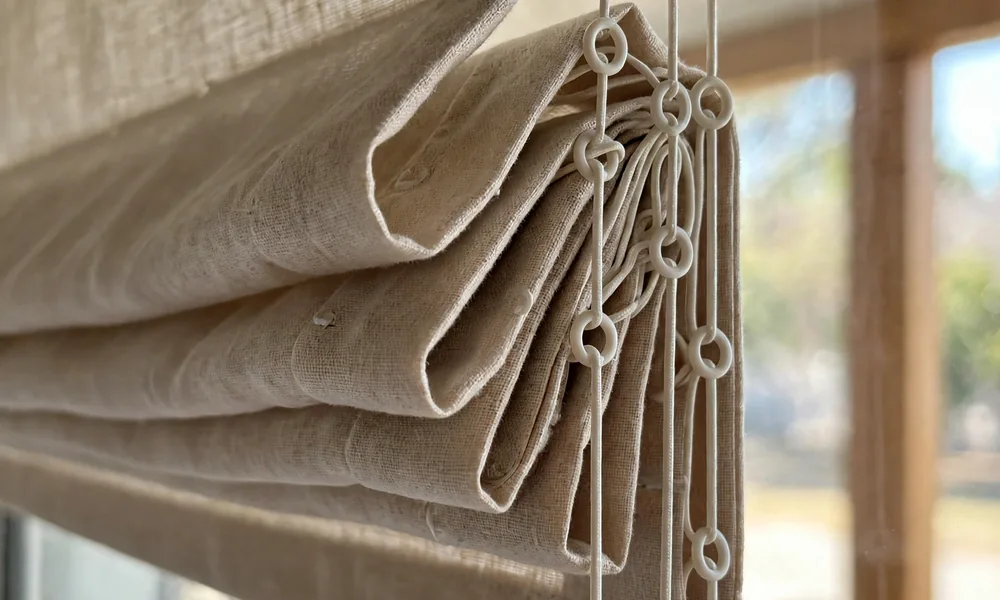
If you can only buy one kind of Roman shade, buy a flat-fold linen shade. When lowered it hangs as a smooth, flat panel; when raised it stacks into neat pleats, leaving most of the glass clear. Linen is the classic fabric: natural texture, soft filtered daylight, and a look that suits almost any room.
Look for a fabric with enough body to hang flat: a cloth that is too light will sag between the battens, and one that is too heavy will not fold neatly. Check that the battens are evenly spaced and the bottom bar sits level.
Top Roman Shade for Bedrooms: The Blackout Roman Shade
For a bedroom, a blackout Roman shade is the best choice, and the lining matters more than the fabric. A true blackout shade blocks 99 to 100 percent of light through the fabric, so the room stays dark at dawn. A pale blackout shade blocks more light than a dark unlined shade, which is the mistake most buyers make.
Light leaks around the edges more than through the fabric, so fit matters as much as lining. Fit the shade outside the recess, overlapping the wall by a few centimetres on each side, and add a cassette at the top. Our guide to blackout curtains that actually block the light explains the same edge-leak problem for curtains. Layering a blackout Roman shade with curtains gives the darkest bedroom of all.
Top Soft Roman Shade: The Hobbled Shade
A hobbled Roman shade is the softest style, and it suits bedrooms and cosy living rooms where a flat panel would feel too crisp. The fabric is sewn into permanent soft folds, so even when fully lowered it keeps a gentle cascading shape, warmer and more traditional than a flat-fold shade.
The trade-off is bulk and cleaning. A hobbled shade is thicker when raised, because the folds never flatten out, so it covers more of the top of the window. It also gathers dust in the folds, so it needs a regular light vacuum with a brush attachment. Check that the folds are even across the full width: a shade with one deep fold and one shallow fold will always look lopsided.
Top Relaxed Roman Shade: The Waterfall Shade
A relaxed Roman shade, also called a waterfall shade, is the most informal style. When lowered it falls in a loose swag at the base, with a gentle curve instead of a straight bottom edge. It suits kitchens, breakfast rooms, and cottages, where a tailored shade would feel too formal. The fabric is usually a light cotton or linen blend, often unlined, so it filters daylight.
The trade-off is privacy and light control. A relaxed shade does not hang flat, so it cannot give the crisp look of a flat-fold shade, and an unlined one will not darken a room. But for a window where the shade is mostly decorative and mostly raised, a relaxed shade is the prettiest option, and the soft swag makes a plain window feel finished.

Top Practical Roman Shade: Cordless and Top-Down-Bottom-Up
A cordless Roman shade is the safest and simplest lift, and it suits homes with children and pets. You raise and lower it by pushing the bottom bar up or pulling it down, with no cords hanging at all. A good mechanism holds the shade at any height without drifting down.
A top-down-bottom-up shade adds a second trick: it can lower from the top as well as rise from the bottom, so you can let daylight in at the top while keeping the bottom covered for privacy. That suits kitchens, bathrooms, and street-facing rooms. The trade-off is cost: cordless and top-down-bottom-up shades cost more than a simple corded shade, and the mechanism needs a shade that is not too heavy.
Fabric, Lining, and Room-by-Room Choices
Fabric decides how a Roman shade looks and behaves. Linen blends are the classic choice: natural texture, soft light, and a tailored hang. Cotton is crisper and easier to clean, which suits kitchens. Polyester blends resist fading and creasing, which suits sunny windows. Velvet gives a rich look for a bedroom, but it is heavy and needs a strong lift. Avoid sheer cloth on a large window: it will sag and give no privacy at night.
Lining decides what the shade does with light. An unlined shade filters daylight for living rooms, a light-filtering lining softens the sun, a blackout lining blocks almost all light for bedrooms, and a thermal lining adds insulation for cold rooms. Choose the lining for the room, not the fabric. For rooms where fabric is not the right answer, our guide to the best shutters covers the solid-panel alternative.
How to Measure and Fit a Roman Shade
Measure carefully before you order, because a wrong measurement is the most expensive mistake. For an inside fit, measure the width in three places and use the smallest, and the drop in three places and use the longest. For an outside fit, add at least 5 centimetres on each side and 10 above the frame, so the shade overlaps the wall.
Fitting is a simple job: two brackets, a headrail, and a level. Check the brackets are level before you clip the headrail in, because a headrail out of level will make the shade hang crooked. Test the lift a few times, and check the shade lowers to the same length every time. If the shade is wide, consider a motorised lift.

What to Avoid When Buying Roman Shades
The worst Roman shades share the same faults. The first is the wrong fabric for the room: a light unlined shade in a bedroom, or a heavy velvet shade on a small kitchen window. The second is a bad fit: too narrow leaves bright stripes at the edges, too short leaves a gap at the bottom. The third is a flimsy lift: cords that tangle, a mechanism that drifts down, or a headrail that sags. The fourth is a fabric that cannot be vacuumed or spot-cleaned.
Your Roman Shade Buying Checklist
- Choose the fold first: flat for a tailored look, hobbled for softness, relaxed for an informal room.
- Pick the lining for the room: blackout for bedrooms, light filtering for living rooms, unlined only where privacy does not matter.
- Measure the recess in three places and decide inside or outside fit before you order.
- Choose cordless or motorised lifts for homes with children and pets, and for wide windows.
- Check the fabric has enough body to hang flat, and that the folds are even across the full width.
- Test the lift after fitting, and check the shade lowers to the same length every time.
Frequently Asked Questions
Are Roman shades better than roller shades?
For softness and style, yes: a Roman shade folds into fabric pleats and feels tailored, while a roller shade winds onto a tube and looks plainer. For a bathroom or a very sunny window, a roller shade in a wipe-clean fabric can be the more practical choice.
Do Roman shades block light?
Only with a blackout lining. An unlined Roman shade filters light but does not block it. A blackout-lined shade fitted outside the recess blocks almost all light through the fabric, though some may leak around the edges.
Can you put Roman shades in a bathroom?
Yes, if you choose the right fabric. A polyester or faux-linen shade resists moisture and wipes clean, while pure linen or cotton will absorb steam and can mark. Keep the shade out of direct splashes from the bath or shower.
Are cordless Roman shades safe for children?
Yes, cordless shades are the safest choice for homes with children and pets, because there are no hanging cords to tangle. Motorised shades are equally safe, and they suit wide windows too.
How do you clean Roman shades?
Vacuum regularly with a brush attachment, and spot-clean marks with a damp cloth and a mild detergent. Do not machine-wash a Roman shade unless the maker says so, because the battens and cords will not survive it.
Do Roman shades work on wide windows?
Yes, but a wide shade is heavy. Choose a motorised lift or a cordless mechanism rated for the width, and check that the headrail does not sag in the middle. Very wide windows may need two shades side by side.
The Bottom Line
The top Roman shade for most people in 2026 is a flat-fold linen shade with the right lining for the room: tailored in a living room, blackout-lined and fitted outside the recess in a bedroom. Hobbled shades suit cosy rooms, relaxed shades suit informal windows, and cordless lifts suit kitchens and homes with children. Measure carefully and test the lift after fitting.


