What Is the Best Blind for Every Room in Your Home in 2026?
The best blind for every room in your home in 2026 is not one blind at all. It is a different blind for each room, chosen for what that room actually needs: darkness and quiet in the bedroom, wipe-clean practicality in the kitchen, privacy without gloom in the bathroom, and a tidy, light-controlling fit in the living room and home office. Get the room right first, and the type of blind almost chooses itself.
Key takeaways
- There is no single best blind: bedrooms need blackout, kitchens and bathrooms need moisture resistance, and living rooms need light control with warmth.
- Roller blinds are the simplest and cheapest option, and blackout rollers are the best choice for bedrooms and nurseries.
- Wooden and faux-wood Venetian blinds give the most precise light control, but real wood should stay out of damp rooms.
- Measure the recess carefully and decide between an inside fit and an outside fit before you order, because a wrong measurement is the most expensive mistake.
- Motorised blinds are worth it for high windows, wide doors, and rooms you use every day; manual blinds are fine everywhere else.
How blinds control light, and why it matters
A blind does three things at once: it blocks light, it gives privacy, and it changes how the room feels. The balance between those three is different in every room. A bedroom needs to block light almost completely at night and give total privacy. A living room needs to soften bright sun without turning the room dark, and to give privacy in the evening without shutting out the garden during the day. A bathroom needs privacy above all, even when the blind is partly open for air.
Light gaps are the detail people forget. No blind seals a window perfectly, and a small gap at the edge can let in a surprising amount of light at dawn. If you are a light sleeper, look for blackout blinds with side channels or a cassette that covers the top, and hang the blind outside the recess so it overlaps the wall. The curtains versus blinds comparison for bedrooms goes deeper into this trade-off, and it is worth reading if sleep is your main concern.
The living room: light control with warmth
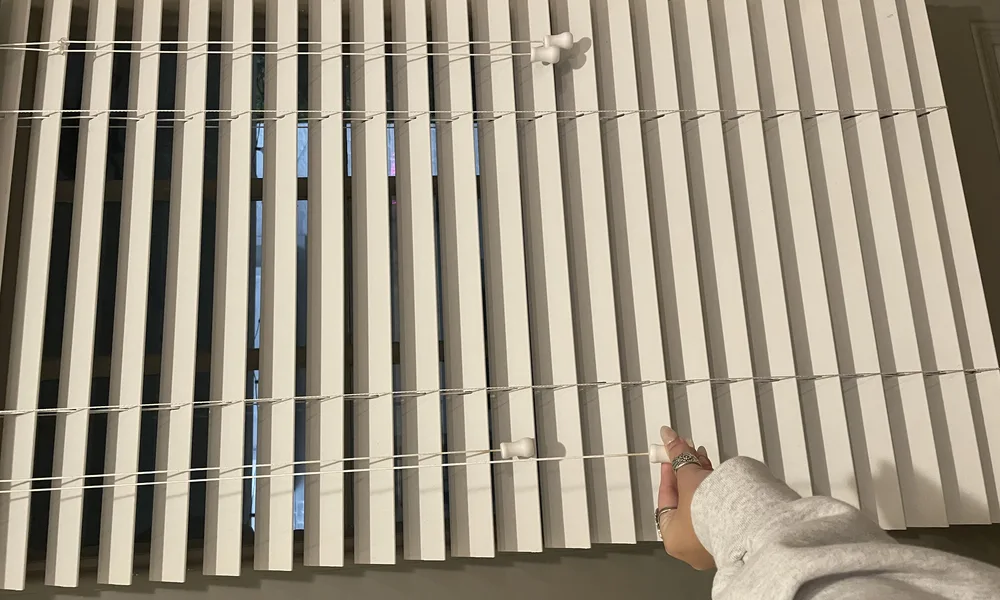
The living room is where blinds need to do the most subtle work. You want to cut glare on the television in the afternoon, keep the room private in the evening, and still let in as much daylight as possible in the morning. A Venetian blind in wood or faux wood is the classic answer, because tilting the slats lets you fine-tune the light through the day. Faux wood is the safer choice if the room gets strong sun, because it will not fade or warp the way real wood can.
The bedroom: darkness above all
The bedroom is the one room where darkness is the priority, and it is the room where the wrong blind is most keenly felt at six in the morning. A blackout roller blind is the simplest and most effective answer: a single sheet of fabric that blocks light, with no slats for light to leak through. Fit it outside the recess, overlapping the wall by a few centimetres on each side, and add a cassette at the top to cover the roll, and you will cut out far more light than a blind fitted inside the recess ever will.
Layering is the bedroom trick that solves the light gap problem completely. A blackout roller blind for darkness, plus a pair of curtains for warmth and softness, gives you the control of a blind and the comfort of a curtain, and the curtains cover the light leaking around the edges of the blind. The best curtains of 2026 cover the curtain half of that pairing, including which fabrics work best with a blackout blind behind them.
The kitchen and bathroom: wipe-clean and moisture-proof
Kitchens and bathrooms are the rooms where blinds get dirty and damp, so the material matters more than the style. A roller blind in a wipe-clean vinyl or a moisture-resistant fabric is the obvious choice for a kitchen window above a sink, because it can be wiped down after cooking and it will not absorb steam or smells. Choose a light colour that will not show splashes, and a bottom bar that is easy to grip with wet hands.
The home office: beating screen glare
A home office blind has one main enemy: glare on the screen. A Venetian blind is the best tool for the job, because tilting the slats lets you block the sun from hitting the screen while keeping the room bright. A light-filtering roller blind is the second-best option: it softens the sun into a gentle glow without darkening the room. Avoid a blackout blind in a home office unless you work nights; a dark room at midday is bad for concentration and worse for your eyes.
Blind types compared
| Type | Best rooms | Light control | Cleaning | Price |
|---|---|---|---|---|
| Blackout roller | Bedroom, nursery, kids room | Full block | Wipe clean | Low |
| Light-filtering roller | Living room, home office | Softened light | Wipe clean | Low |
| Wooden Venetian | Living room, bedroom, dining room | Precise tilt | Dust slats | Medium |
| Faux-wood Venetian | Kitchen, bathroom, living room | Precise tilt | Wipe clean | Medium |
| Aluminium Venetian | Kitchen, bathroom, office | Precise tilt | Wipe clean | Low |
| Roman blind | Living room, bedroom | Up or down | Vacuum or dry clean | Medium to high |
| Vertical blind | Patio doors, wide windows | Tilt and draw | Wipe or wash slats | Medium |
| Motorised blind | High windows, wide doors | As per type | As per type | High |
Measuring and fitting: the part nobody enjoys
Measuring a window for blinds is simple, but it is also the step where most orders go wrong, and a blind cut to the wrong size cannot be fixed. Start by deciding whether the blind will fit inside the recess or outside it. An inside fit sits within the window frame and looks neat and tidy, but it leaves a light gap at the edges. An outside fit covers the whole recess and overlaps the wall, which blocks more light and hides an uneven frame, but it looks bulkier and it needs enough flat wall around the window.
Measure the width in three places, at the top, the middle, and the bottom of the recess, and use the smallest measurement for an inside fit and the largest for an outside fit. Measure the drop in three places too, and use the longest. Write the measurements down in millimetres, and measure twice before you order. If the window is not square, which is common in older houses, the three measurements will differ by a centimetre or more, and that difference is exactly why you measure three times.
Motorised and smart blinds: worth it or not
Motorised blinds are no longer a luxury reserved for large houses. Battery-powered motors that fit inside the roller, charged by USB-C every few months, have brought the price down sharply, and they are now a sensible choice for high windows you cannot reach, wide patio doors you open every day, and bedrooms where you want the blind to open gently with the morning.
The real value of a motorised blind is in routines. A blind that opens at sunrise and closes at sunset, or that closes when the afternoon sun hits the television, is doing work you would otherwise have to remember to do yourself. The best smart home hubs of 2026 explain how to tie blinds into a wider routine with lights and heating, so the whole house adjusts itself through the day.
Cleaning and looking after blinds
Blinds are easy to clean if you do it little and often, and a chore if you leave it for a year. Venetian slats can be dusted with a dry cloth or a feather duster once a week, and wiped with a damp cloth once a month. Roller blinds can be wiped down with a damp cloth and a little mild soap, and they should be left down to dry rather than rolled up wet. Roman blinds need vacuuming with a brush attachment, and most should be dry-cleaned rather than washed.
What to avoid when you buy blinds
Avoid real wood in damp rooms, fabric blinds in bathrooms, and any blind with a loose cord in a child’s room. Avoid ordering without measuring three times, and avoid assuming all your windows are the same size: even windows that look identical can differ by a centimetre, and a blind made for one will not fit the other. Finally, avoid a blind that is too short. A roller blind that stops a few centimetres above the sill looks unfinished, and a Venetian that does not reach the sill lets in a band of light at exactly the height where it is most annoying.
Shopping checklist
- Match the blind to the room first: blackout for bedrooms, moisture-proof for kitchens and bathrooms, tilt control for offices.
- Decide inside fit or outside fit before measuring, and measure width and drop in three places each.
- Choose faux wood or aluminium, never real wood, for any room with steam or splashes.
- Go cordless in every child’s room and nursery, with no loose loops or chains within reach.
- Check the blind clears the window handle when lowered, and that brackets are fixed into something solid.
- Consider a motor only where it saves a daily effort: high windows, wide doors, and the main bedroom.
Frequently asked questions
Are blinds or curtains better?
Blinds give more precise light control, take up less space, and are easier to clean. Curtains give more warmth, softness, and insulation. Most rooms do best with blinds for control, and bedrooms do best with both layered together.
What is the best blind for a bedroom?
A blackout roller blind fitted outside the recess, ideally with a cassette at the top and side channels. It blocks the most light for the least money, and it pairs well with curtains if you want extra darkness and warmth.
Can blinds go in a bathroom?
Yes, if you choose the right material: faux wood, aluminium, or a moisture-resistant roller blind. Avoid real wood and fabric Roman blinds in a bathroom, because steam will damage them.
How do I measure a window for blinds?
Measure the width at the top, middle, and bottom of the recess, and the drop on the left, middle, and right. For an inside fit use the smallest width and the longest drop; for an outside fit, add at least five centimetres of overlap on each side.
Are motorised blinds worth the money?
For high windows, wide patio doors, and bedrooms, yes: they save a daily effort and they can run on a schedule. For small or rarely used windows, a manual blind does the same job for much less money.
How do I clean Venetian blinds?
Dust the slats weekly with a dry cloth, and wipe them monthly with a damp cloth and a little mild soap. Close the slats flat to clean one side, then tilt them the other way to clean the reverse side.
The bottom line
The best blind for every room in your home in 2026 is the one that matches the room: a blackout roller for the bedroom, a wipe-clean faux-wood or aluminium Venetian for the kitchen and bathroom, a tilting Venetian or a soft Roman for the living room, and a cordless blackout blind for the kids room. Measure three times, fit the blind outside the recess if darkness matters, keep real wood out of damp rooms, and put a motor only where it saves you a daily effort. Get the room right, and the blind will quietly do its job for years.