
Don’t Buy the Hype: The Worst Kayakers of 2026
The worst kayakers of 2026 are not bad because kayaking is hard. They are bad because they skip the skills that keep a paddler safe, overload the boat, paddle the wrong water, and treat a life jacket as optional. A good kayaker makes it look easy: the paddle enters cleanly, the boat tracks straight, and the roll is there if it is needed. A bad kayaker makes every outing an incident waiting to happen: the boat wanders, the gear floats away, and the capsize turns into a rescue. This guide ranks the worst kayakers of 2026 by type and pattern, not by name, so you can recognise the habits in your own group or in yourself.
Key takeaways
- The worst kayakers never learned to roll or self-rescue, so every capsize becomes someone else’s emergency.
- Skipping the life jacket is the single most dangerous habit on the water, in any conditions.
- An overloaded kayak is slow, unstable and hard to rescue, however good the paddler thinks they are.
- Paddling the wrong water, whitewater skills on a flat lake or none on a river, is how trips go wrong.
- Check the roll, the jacket, the load, the plan and the water before you judge a kayaker by their boat.
How the worst kayakers of 2026 were chosen
Every type below was scored on four measures. Safety comes first: does the paddler wear a life jacket, know how to get back in the boat, and respect cold water and moving water? Boat control is second: tracking, edging, bracing, and steering without a rudder doing all the work. Judgement is third, because choosing the right water, the right weather and the right group matters more than any stroke. Preparation is the fourth measure: a float plan and a boat loaded so it can still be rescued. Two notes before the list. First, no single person is named as the worst. Second, these are kayakers as paddlers, not the craft they sit in: for the boats themselves, our guide to the worst kayaks of 2026 ranks the hulls that tip, wander and wear out, while the standing cousins of kayaking get their own treatment in our guides to the worst paddleboards of 2026 and the worst canoes of 2026.

Comparison table: the worst kayakers of 2026
| Rank | Kayaker type | Main fault | What it costs |
|---|---|---|---|
| 1 | The paddler who cannot roll | No roll, no self-rescue | Every capsize is a rescue |
| 2 | The no-life-jacket paddler | Jacket left in the car | A swim can turn fatal |
| 3 | The overloaded gear-hoarder | Boat packed above the deck | Slow, tippy, hard to rescue |
| 4 | The wrong-water paddler | Whitewater boat on a lake, or none on a river | Trips that fall apart fast |
| 5 | The rudder-dependent paddler | Cannot steer without the rudder | Helpless when it jams |
| 6 | The solo paddler with no plan | No float plan, no one told | Nobody knows where to look |
| 7 | The standing fishing paddler | Stands to cast, anchors in current | Tips over, loses the gear |
The worst kayakers of 2026
1. The paddler who cannot roll: one capsize from a rescue
The paddler who cannot roll is the worst kayaker of 2026 because the fault turns a routine event into an emergency. Capsizing is part of kayaking, in rapids and on flat water, and the difference between a story and a rescue is whether the paddler can roll back up or get back in the boat alone. The paddler with no roll and no self-rescue cannot do either, so they swim, lose the paddle, the boat drifts away, and the whole group stops to collect them. The fix is a few evenings in a pool learning the roll, practised until it works on both sides. Learn the roll before you need it, because the river will not wait for a lesson.
2. The no-life-jacket paddler: the habit that can kill
Every other fault on this list costs speed, comfort, or a trip. This one can cost a life, which is why the paddler who leaves the life jacket in the car ranks second. The excuses are always the same: the water is calm, the swim is short, the jacket is uncomfortable, they are a strong swimmer. None survive contact with cold water, where the shock of the first seconds steals the breath and the strength to swim. A good life jacket holds your head up when you cannot, keeps you warm, and gives rescuers something to grab. Wear it, zipped and fitted, every time the boat is on the water.
3. The overloaded gear-hoarder: a floating tackle shop
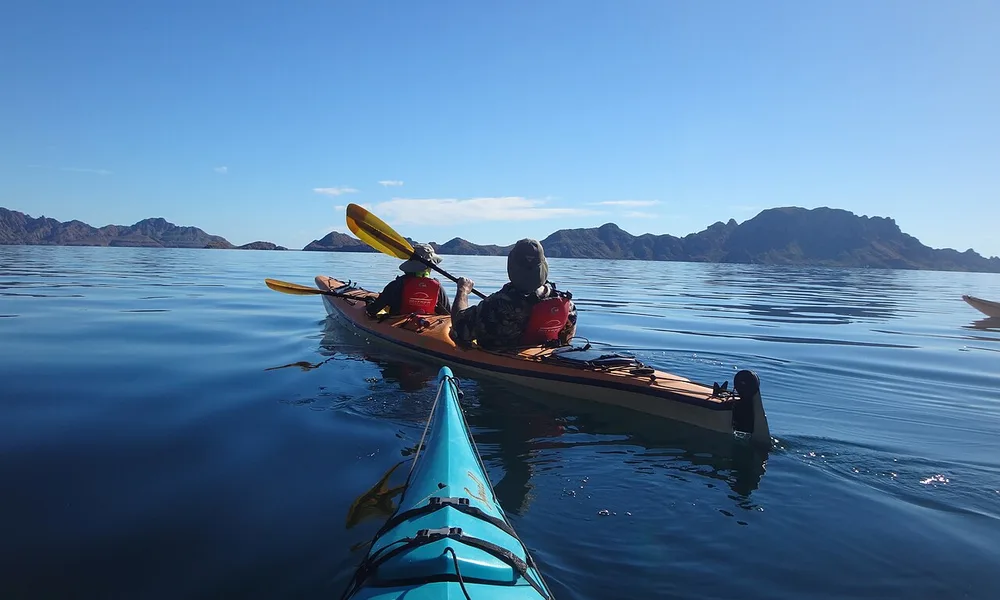
The overloaded gear-hoarder treats a kayak like a removal van, and the boat answers by becoming slow, unstable, and almost impossible to rescue. Coolers, chairs, three rods, a crate of tackle and a tent are strapped to the deck until the kayak sits low, catches every gust, and rolls at the slightest lean. When it does roll, the gear floats away, the paddler cannot right a boat that heavy, and the rescue turns into salvage. The cure is a ruthless packing list: if you have not used it on the last three trips, leave it behind. A kayak that can be rolled, emptied, and rescued is worth paddling.
4. The wrong-water paddler: the right skills, the wrong river
The wrong-water paddler is not unskilled, which is what makes them dangerous. They are the whitewater paddler who takes a short, twitchy playboat onto a big open lake and spends the day being blown sideways, or the flat-water tourer who drops into a river with real current and finds a long sea kayak will not turn or brace the way a river boat does. Either way the trip falls apart, because the paddler chose the boat and the water independently, as if any kayak works anywhere. It does not. Match the boat to the water, check the weather and the flow, and be honest about what you can do on that water, in that boat, on that day.
5. The rudder-dependent paddler: steering by crutch
The rudder-dependent paddler can only go straight because a piece of metal at the back of the boat does the steering for them. Take the rudder away, or jam it with weed, sand, or a knock against a rock, and they cannot hold a course at all: the boat weathercocks into the wind, spins in the current, and the paddler flails with corrective strokes that make it worse. This is the worst kayaker to paddle with in a crosswind, and the worst to rescue, because they cannot manoeuvre to the bank or a tow line. The fault is never learning the strokes that make a rudder unnecessary: the sweep, the draw, the edge, and the brace. Learn to steer without it, then enjoy having it.
6. The solo paddler with no plan: nobody knows where to look
Solo paddling can be the best kind of kayaking: quiet water, your own pace, and nobody to wait for. The solo paddler with no plan turns it into the riskiest kind, because nobody knows where they went, when they should be back, or what they were wearing. They launch without telling anyone, leave the phone in the car, and paddle alone into water where a capsize or an injury leaves them on their own. If they do not come back, the search starts from nothing: no route, no return time, no description of the boat. The fix costs two minutes and a text message: where you are going, when you expect to be back, and who to call if you are not.
7. The standing fishing paddler: casting from a tightrope
The standing fishing paddler is the seventh worst kayaker of 2026 because the habit looks impressive right up to the moment it fails. Standing in a kayak to cast or sight fish feels like freedom, and in a wide, stable fishing kayak on flat water it can be done safely. This paddler does it in the wrong boat, in moving water, or with an anchor down in the current, which is where the trouble starts. An anchor in current pins the kayak sideways, the water piles against the hull, and the boat can be pulled under in seconds. Standing raises the centre of gravity so far that a small wave or a hooked fish sends the paddler over the side. Sit down to fish, anchor only in still water, and keep the rod work low.
What to avoid when judging kayakers
The most common mistake is judging a kayaker by the boat. An expensive kayak does not make a good paddler, and a battered old boat does not make a bad one; the paddler is the person, not the plastic. The second mistake is confusing confidence with competence. The loudest paddler at the launch is often the one who cannot roll, cannot steer without a rudder, and has no float plan. Watch what a kayaker does, not what they say.
Checklist: spotting the worst kayakers in 2026
- Ask about the roll: no roll and no self-rescue turns every capsize into a group rescue.
- Check the life jacket: worn, zipped and fitted, not in the car or under a bungee.
- Look at the load: a deck piled high with gear is slow, tippy and hard to rescue.
- Match the boat to the water: a whitewater boat on a lake and a sea kayak on a river are both wrong.
- Ask for the plan: a solo paddler with no float plan leaves nobody knowing where to look.
- Watch the steering: a paddler who cannot hold a course without a rudder is one jam away from helpless.
Frequently asked questions
Do I really need to learn to roll?
If you paddle whitewater, yes, and anywhere else you still need a self-rescue. A roll is fastest, but a practised paddle-float rescue will do. The paddler with no way back into the boat is the one the group has to rescue.
Is it safe to kayak alone?
Yes, if you plan for it. Tell someone your route and return time, carry a phone in a dry bag, wear your life jacket, and paddle well within your limits. Solo paddling without a plan is the risk, not solo paddling itself.
How much gear is too much for a kayak?
If the deck is piled high, the boat sits low, or you cannot roll and rescue it loaded, you have brought too much. Pack what you will use, keep the centre of gravity low, and test the loaded boat in safe water before the trip.
Can I use one kayak for everything?
One kayak can cover a lot, but not everything. A long sea kayak is poor on a river, and a short whitewater boat is miserable on a lake. Choose the boat for the water you paddle most.
Should I use a rudder?
A rudder is useful, especially in wind, but learn to steer without it first. The sweep, the draw, and the edge will hold your course when the rudder jams, and they make you a better paddler with the rudder down too.
Is standing to fish from a kayak safe?
It can be, in a wide stable fishing kayak on flat, still water, with no anchor in current. Standing in a narrow boat or in moving water is how kayaks tip.
Bottom line
The worst kayakers of 2026 share one habit: they paddle as if nothing will go wrong. They skip the roll, leave the life jacket behind, overload the boat, and launch without a plan, and the water collects the bill. The fix is not a better boat. It is a roll you can rely on, a jacket you actually wear, a load you can rescue, and a plan someone else knows. Paddle like the capsize is coming, and the day you need the skill, it will be there.


